 \n
\n
UCLA's Historic First National Championship: UCLA vs South Carolina
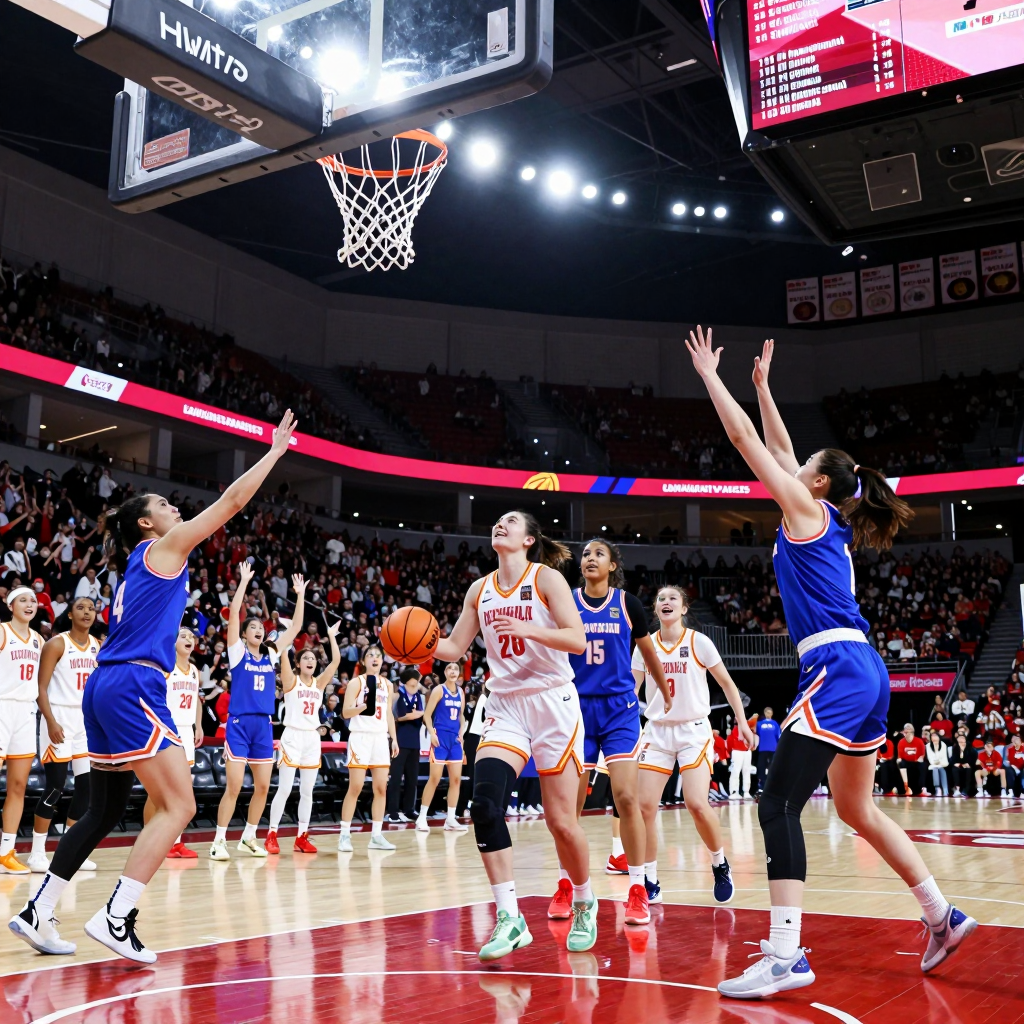
79-51. An overwhelming margin of victory that’s hard to believe in a championship final. The game between UCLA and South Carolina was less a “classic showdown” and more a “complete domination,” as UCLA secured the program’s first-ever NCAA Women’s Basketball National Championship in Phoenix. So, how was this astonishing win possible?
Throughout the game, UCLA never relinquished control, demonstrating exactly what “championship-level game management” looks like. Both teams were No. 1 seeds, but UCLA dominated the pace from the start with intense defense and relentless rebounding, maintaining their lead once established and shutting down every attempt by their opponent to mount a comeback.
At the heart of the victory were two undeniable pillars. Gabriela Jaquez (21 points, 10 rebounds) set the offensive tone with her scoring and energy, while Lauren Betts (14 points, 11 rebounds) anchored the paint, recording a double-double and securing rebounds and defensive presence that consistently tipped the scales in UCLA’s favor. The takeaway from this game is clear: UCLA didn’t rely solely on star power but built their championship through superior rebounding and defense, executing complete basketball for 40 minutes to become the champions.
From the Elite Eight to the Championship: UCLA’s Strategy and Flawless Game Management (UCLA vs South Carolina)
How did UCLA, competing as a No. 1 seed alongside a powerhouse like South Carolina, rise to claim the nation’s top spot? The answer lies not in simply having great players, but in the crystal-clear consistency of their strategy and the precision of their game management that only sharpened deeper into the tournament.
From the Elite Eight through the final, UCLA steadfastly maintained their priorities on both ends of the court. Offensively, they resisted reckless perimeter shooting, instead building a high-efficiency scoring attack centered around the paint and the basket. Defensively, they disrupted their opponent’s flow early with intense pressure right from the tip-off, stifling any momentum before it could build. This unwavering “fixed plan” minimized the chaos typical of tournament play and allowed UCLA to steadily build advantages every game.
The pinnacle of this approach came in the championship showdown: UCLA vs South Carolina. Both top seeds, yet the game ended in a commanding 79-51 victory. UCLA controlled the pace flawlessly, limiting turnovers, dominating the boards, and locking down the paint. Gabriela Jaquez (21 points, 10 rebounds) anchored the offense, while Lauren Betts (14 points, 11 rebounds) carved out space and commanded dominance inside, turning tactical execution directly into winning results.
Ultimately, UCLA’s championship was not a flash of brilliance in a single game, but the validation of a repeatable winning formula sustained from the Elite Eight through the final. When elite teams clash, it’s the details that decide the outcome — and UCLA executed those details at the highest level, clinching the first-ever national title in program history.
Shining Performances of Star Players at the Center: UCLA vs South Carolina
Gabriela Haquez’s 21 points and 10 rebounds, along with Lauren Betts’ double-double of 14 points and 11 rebounds, speak volumes. But what’s even more fascinating is that this wasn’t a “fluke explosion.” In the UCLA vs South Carolina final, these two players dominated the game in their own unique ways, orchestrating UCLA’s commanding 79-51 victory.
Haquez’s secret lay in her unwavering efficiency. She didn’t just focus on scoring, but actively created the link between rebounds and fast breaks, maintaining the flow without interruption. As scenes of generating additional scoring chances before the opponent could find their counterattack accumulated, UCLA didn’t just ‘hold’ the lead—they expanded it.
Betts changed the game in a simpler, yet more lethal way. Her presence in the paint forced defensive adjustments, opening opportunities both outside and on cuts. The double-double was the result, but the key was how her stability in the paint broadened the team’s offensive options. Defensively, repeatedly ending possessions with rebounds effectively shut down South Carolina’s second-chance efforts.
Ultimately, the UCLA vs South Carolina showdown wasn’t about “who scored more,” but who consistently maintained their team’s offensive structure and defensive order. Haquez controlled the flow, Betts anchored the paint. Because these two pillars stood firm, UCLA’s first national championship wasn’t a mere upset—it was a masterfully crafted victory.
A New Milestone for UCLA Basketball: The Historic Impact of UCLA vs South Carolina
Curious about what this victory means for UCLA women's basketball history and the changes it will bring? The UCLA vs South Carolina championship game was more than just a win. With a commanding 79-51 score, UCLA firmly established itself not just as a “contender,” but as the definitive “champion,” signaling a transformative shift in the program’s trajectory.
The biggest change is the resetting of standards that come with the ‘first title.’ From now on, UCLA will be designed not just as a strong team but as a program aiming for national championships every season. Especially with key players like Gabriela Jaquez (21 points, 10 rebounds) and Lauren Betts (14 points, 11 rebounds) proving their composure in high-stakes moments, the team culture and management will move from a “challenger” mindset to one focused on “defense” of their crown.
Another significant aspect is the validation of competitiveness at the very top level. Since both teams were No. 1 seeds, this result is less about South Carolina faltering and more about UCLA’s system and performance being genuinely championship-caliber. This victory will create ripple effects in unseen areas such as recruiting, fan base growth, and program investment, marking the beginning of UCLA women’s basketball’s era in setting the ‘new standard.’
Aftermath of Victory and Envisioning the Future: The Shifting Landscape Post UCLA vs South Carolina
A first national championship never ends with just one trophy. The overwhelming 79-51 scoreline in the UCLA vs South Carolina final sent shockwaves that have shaken both UCLA’s goals for the upcoming season and the entire power structure of NCAA women’s basketball. The key question now is crystal clear: Will UCLA make this victory a ‘one-time peak’ or transform it into the ‘foundation of a dynasty’?
The Biggest Takeaway from UCLA vs South Carolina: “UCLA Is a Sustainable Powerhouse”
This championship wasn’t a mere upset but a showcase of structural completeness in their roster and strategy. Gabriela Jaquez’s 21 points and 10 rebounds, alongside Lauren Betts’s double-double, proved that star power and consistent stability can coexist. Especially notable was their unshaken productivity on the big stage, signaling it’s replicable next season. In other words, UCLA is no longer seen as a “team that had one great game,” but as a “team built on a strong, systematic foundation.”
UCLA’s Roadmap After UCLA vs South Carolina: The Goals Are ‘Continuity’ and ‘Expansion’
Post-victory, UCLA must focus on two crucial words.
- Continuity: The biggest trap for championship teams is soaring expectations followed by inevitable instability. It’s vital to keep the roles of key players clear and maintain a stable rotation framework.
- Expansion: Once opponents start analyzing UCLA, repeating the same patterns won’t guarantee repeated success. The next challenge will be how quickly they develop “additional weapons” beyond the Jaquez-Betts core, such as outside shooting and transition scoring.
How UCLA vs South Carolina Changed the Gaze on NCAA Women’s Basketball: Cracks in the Era of ‘Absolute Dominance’
This resounding triumph over South Carolina offers top-tier teams tangible proof that “beating the elite is possible.” As a result, next season is likely to see shrinking gaps between high seeds, more marquee matchups, and increased unpredictability in the tournament. For fans, this is the ultimate scenario: a league where championship contenders multiply, elevating both excitement and competitiveness.
The Lingering Question After UCLA vs South Carolina: Can They Set a ‘New Standard’?
The true greatness of this title rests on one simple condition: proving it again. Their dominant performance in the final reflects UCLA’s now, but next season’s results will decide their future. If UCLA returns to the finals or consistently ranks among the elite, 2026 won’t be remembered as “the year of their first championship” but as “the rise of a new powerhouse.”
Comments
Post a Comment