 \n
\n
Chaos in the AI Agent Market: What’s the Real Problem?
With every AI solution now being packaged as an ‘Agent’ amid the rise of the ‘Agent Washing’ phenomenon, how can we discern the true value? The AI Agent market in 2026 is unusually chaotic not just because technology is advancing rapidly. It’s because fundamentally different product types are being lumped under one name—Agent—leading buyers and frontline teams to use the same word while imagining completely different things.
The Illusion Created by ‘Agent Washing’ in the AI Agent Market
Today, the label “Agent” is used far too broadly. From coding tools, RPA, workflow builders, customer support chatbots, industry-specific SaaS to infrastructure components (SDKs, MCPs, evaluation, tracking)—all claim to be Agents. The problem? Their value cannot be compared on the same scale.
- Some products are closer to tools that excel at writing code,
- Some lean toward automation that clicks through work screens on your behalf,
- While others resemble integration platforms that connect multiple systems.
Yet when all are bundled under “Agent,” decision-makers expect these solutions to “autonomously complete tasks from start to finish.” After adoption, disappointment often sets in: “It’s not as automated as expected,” or “Compliance feels insecure.” This expectation-versus-reality gap is the heart of the confusion.
Technical Reasons Why True AI Agent Value Gets Blurred
The chaos goes beyond marketing buzzwords—it masks critical differences in technological architecture. A truly “operational Agent” in enterprises typically combines the following elements:
- Actual Execution Capability: Completes multi-step tasks rather than just responding superficially
- System Integration: Connects with ERP, CRM, document management, authorization systems, etc.
- Policy Enforcement: Automatically applies regulations and business rules, handling exceptions
- Safe Operations: Minimizes privileges, blocks risky actions, and includes human approval (human-in-the-loop)
- Auditability: Keeps evidence and logs to support decisions made
In contrast, many “Agent” products offer only some of these features while presenting themselves as full-package solutions. For example, the chat may be fluent but the product lacks write permissions to backend systems, or integration exists but policy/enforcement and audit frameworks are weak—causing roadblocks during operations.
Why AI Agent Confusion Is Risky from an Enterprise Perspective
Agent Washing isn’t just a linguistic mix-up—it creates structural risks that multiply exposure:
- Security/Authorization Risks: Unclear which accounts the Agent uses and what actions it performs
- Compliance Risks: Without decision evidence and traceability, audits cannot be passed
- Operational Risks: Poor design around exception handling, escalation, and retries leads to accumulating failures
- Hidden Total Cost of Ownership: Contrary to “easy” promises, integration, testing, and guardrail implementation drive costs sky-high
In the end, the question in 2026 isn’t “Is this product an Agent?” but rather: “Can this Agent safely and auditable execute our organization’s actual workflows?” The following sections will dive deeper into how to differentiate product categories amid this confusion and what criteria to use for evaluation.
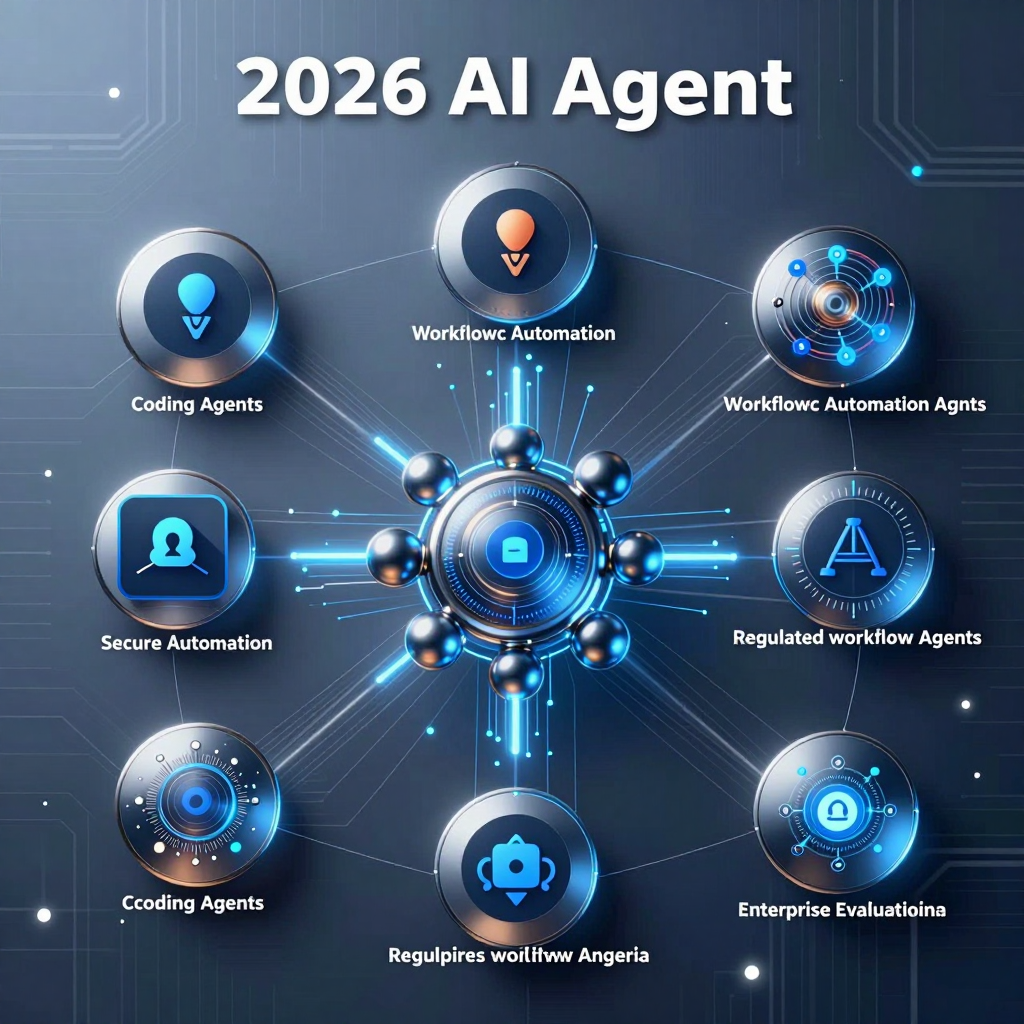
Unveiling the Reality of the 7 AI Agent Market Categories
From Copilots to regulatory workflow agents, what are the true functions and risks hidden within a market where seven distinct types of AI Agents collide? Today’s market, under the single label "Agent," mixes various product groups, creating a wide gap between expectations and actual functionalities from a buyer’s perspective. Distinguishing these seven categories clarifies exactly what to buy and which risks must be managed.
AI Agent Type 1: Coding Agents — The Two Sides of “Developer Productivity” and “Repository Risk”
What it does: Engages in the entire development lifecycle including code writing, editing, testing, reviews, PR creation, and refactoring suggestions. LLMs, now connected to IDEs and repositories, have evolved beyond “conversational coding” to actually making changes in the codebase.
Real value: Shortens repetitive tasks, generates drafts, expands test cases, and reduces codebase exploration time.
Core risks (enterprise):
- Excessive permissions: Broad write access to repositories and CI/CD triggers increases the impact of mistakes.
- Security and license issues: Risk of introducing vulnerable code, dependency contamination, and license violations.
- Misleading test coverage: Code that “appears to work” does not guarantee real quality.
Checkpoints: Track all change histories, enforce PR-level reviews, detect secrets (keys/tokens), and apply policy-driven merge gates.
AI Agent Type 2: Browser & Computer-Use Agents — Power and Vulnerabilities of UI Automation
What it does: Directly manipulates browser and desktop UIs to perform web app tasks. By mimicking human actions such as clicking, typing, and navigating, it accesses systems lacking APIs.
Real value: Quickly automates processes in hard-to-integrate environments like legacy systems, partner portals, and internal tools.
Core risks (enterprise):
- Credential management: Risks of account sharing, session hijacking, and privilege misuse.
- Sensitivity to UI changes: Workflow breaks when button locations or labels change; lack of recovery logic poses operational risks.
- Dangerous clicks: Potential mishaps in irreversible operations like transfers, deletions, or submissions.
Checkpoints: Confirmation steps before actions, blocking policies for sensitive tasks, UI change detection, and audit logs capturing screen and behavior.
AI Agent Type 3: Workflow Automation Agents — “Multi-Step Orchestration” Meets “Integration Vulnerabilities”
What it does: Links multiple systems (ERP, CRM, email, databases), orchestrating multi-step processes with conditional branching, exception handling, retries, and approvals. Usually combines existing iPaaS/RPA platforms with an agent layer.
Real value: Automates operational workflows, reduces handoffs, shortens SLAs, and standardizes work.
Core risks (enterprise):
- Exploding flowchart complexity: Increasing exceptions drive up maintenance costs dramatically.
- Fragile integration points: API schema changes, expired tokens, and rate limits cause frequent failures.
- Lack of audit trails: Without traceability into “why a decision was made,” compliance and audits falter.
Checkpoints: Reproducible execution logs, failure isolation (partial rollbacks), connector version control, and policy-based exception handling.
AI Agent Type 4: Vertical AI Agents — The Battle for Industry-Specific Accuracy and Compliance
What it does: Automates workflows in domains like finance, insurance, legal, and healthcare (loan underwriting, insurance claims, medical document review) combined with domain expertise.
Real value: Optimized for domain data, rules, and document templates, directly driving real-world impact.
Core risks (enterprise):
- Domain accuracy: Plausible answers may fail actual business standards.
- Compliance demands: Operations can’t proceed without “evidence” of source documents, decision criteria, and processing histories.
- Data bias and accountability: Clear ownership of model errors must be established.
Checkpoints: Citation of evidence (document/section links), hybrid rule+model systems, sample-based QA, and change management reflecting regulation updates.
AI Agent Type 5: Agent Infrastructure — Invisible Costs and Distributed Ownership
What it does: Provides the “foundation to build Agents” including memory, tool calls, MCP (Model Context Protocol), evaluations (Evals), observability (Tracing), and guardrails.
Real value: Establishes corporate standard frameworks, reusable components, and quality measurement systems.
Core risks (enterprise):
- Implementation burden: Purchasing infrastructure does not mean Agents automatically “complete tasks.” Design, data, and policies remain essential.
- Distributed ownership: Models, tools, workflows, and permissions scattered across teams blur operational accountability.
- Hidden total cost of ownership (TCO): Accumulated costs include token usage, observability storage, and evaluation pipeline staffing.
Checkpoints: Standardized templates, cost visibility, secure boundary controls (tool permissions), end-to-end observability (input → tools → outcomes), and regression testing.
AI Agent Type 6: Customer & Employee Agents — “Not Just Conversation” But “Permissions and Escalation” Are Key
What it does: Handles ticket-based tasks like customer support, IT helpdesk, and HR requests by responding to questions, retrieving information, and executing actions (account unlocks, policy guidance).
Real value: Automates front-line inquiries, reduces ticket volumes, shortens response times, and improves internal knowledge access.
Core risks (enterprise):
- Escalation quality: Failure to escalate unresolved issues timely worsens customer and employee experiences (CX/EX).
- Permission management: Principle of least privilege is critical in sensitive areas like employee accounts, personal data, and payroll.
- Accuracy and freshness: Answers based on outdated documents become immediate risks.
Checkpoints: Role-based tool access (RBAC/ABAC), automatic stops on low-confidence results, human review queues, and knowledge update pipelines.
AI Agent Type 7: Regulated Workflow Agents — Agents That Prove ROI Through “Policy-Driven Operations plus Evidence”
What it does: Executes tasks in regulated industries with a policy-first approach. Beyond mere automation, it verifies compliance conditions, branches on exceptions, and leaves auditable evidence for every decision and action.
Real value:
- Structurally reduces the risk of regulatory violations
- Shortens audit response times
- Justifies investment through “risk reduction + clear production value” rather than mere “automation scale.”
Core risks (enterprise): - High implementation discipline: Requires robust policy definitions, evidence collection, approval flows, and control design to be effective.
- Backfire risks from poor design: Incomplete evidence can turn automation into an audit liability rather than a benefit.
Checkpoints: Policy engines and rule frameworks, automatic attachment of decision rationales, immutable audit logs, human approval (4-eyes) options, and suspicious action rejection/isolation.
Summarizing the AI Agent Market in One Sentence
Today’s confusion stems from the fact that although the label “Agent” looks uniform, these are actually seven entirely different markets distinguished by functionality (what they automate) and risk (where failures occur). Viewing the market through this lens explains why operational feasibility, integration, policies, auditability, and permissions—not flashy demos—are now at the heart of purchasing decisions.
AI Agent Evaluation Criteria: How Enterprises Verify if It ‘Works’
The term “Agentic” no longer guarantees functionality. What truly matters in enterprises is not the label but whether the AI agent is genuinely integrated with business systems, consistently enforces policies, and leaves an audit trail (evidence). The criteria below serve as a checklist to rigorously verify operational effectiveness and risks rather than flashy demos.
The 5 Core Pillars of AI Agent Evaluation: Execution, Connectivity, Policy, Safety, Evidence
1) Execution: Does it “finish the job” rather than just “talk”?
- Verify that the agent can handle multi-step processes (e.g., receipt → validation → approval → execution → reporting) without interruption, not just single tasks like email drafting.
- Operational control flows such as retries, rollbacks, queuing, timeouts, and partial completion handling must be implemented.
- Validation questions:
- To what extent are exceptions (missing data, duplicate requests, policy conflicts) automatically handled, and when is human intervention triggered?
- Can long-running tasks maintain state management and recover from interruptions?
2) Business System Connectivity: Is it truly connected to ERP/CRM/document systems?
- The bulk of an Agent’s value in enterprises derives from the quality of integration with internal systems.
- It requires operational-grade integration that includes permissions, data models, rate limits, and audit log policies beyond simple API calls.
- Check technically for:
- Identity and access system integration like SSO, SCIM, RBAC/ABAC
- Connector authentication lifecycle (token rotation, secret management), and network boundary controls (proxy, VPC/private link)
- Data consistency (duplication/conflict handling) and transactional boundaries (compensation on partial failure)
3) Policy Enforcement: Does it “automatically enforce” rules and regulations?
- A good agent is not about smart answers but a system that works while following rules.
- A policy engine capable of rejecting, holding, or escalating requests—not just recommending—is vital.
- Must-verify policy types:
- Approval policies: routing approvals based on amount, risk score, customer tier
- Data policies: masking PII/PHI, prohibition on storage, regional data residency
- Operational policies: adherence to SOPs, mandatory evidence attachment, dual review (4-eyes principle)
- Practical test tip: When you throw a “policy violation request,” check not if it continues plausibly but if it stops clearly with reasons and next steps.
4) Safe Operations: Autonomy only matters when controlled
- Enterprise agents prioritize “accident prevention” over mere “automation.”
- Essential safety mechanisms:
- Least Privilege: temporary rights per task, scoped tokens
- Risky action guardrails: blocks and approval demands for bulk deletion, mass transfer, account changes
- Human-in-the-Loop (HITL): review UI, change diffs, and clear accountability for approvals/rejections
- Sandbox/Simulation: “dry run” capabilities to predict outcomes before operational deployment
- The key is not how autonomous the agent is but who/how the autonomy’s scope is limited.
5) Auditability and Explainability: Is every decision backed by evidence?
- In regulated industries and large enterprises, auditability often determines ROI.
- Required logs/evidence:
- Input data (supporting documents), decision paths (policy evaluation results), execution records (API calls/file changes), outcomes, responsible approvers
- Reproducibility: when conclusions change under identical conditions, it must be traceable why (model/prompt/policy version control)
- Questions to ask:
- “On which regulation/policy clause and what evidence was this decision based?”
- “Can an auditor reconstruct a single case end-to-end on demand?”
Practical Verification Scenarios to Use Immediately in Demos Before Deploying AI Agents
- Scenario A: Policy Conflict
“Urgent processing request but the amount exceeds approval limit” → does it hold/escalate based on policy priority rather than proceeding automatically? - Scenario B: Insufficient Privileges
“Request to modify CRM record” → if lacking permissions, does it switch to an alternative flow (generating approval request)? - Scenario C: Missing Evidence
“Contract modification processing” without attached documents → does it halt requesting evidence and log the incident? - Scenario D: Partial Failure
“ERP update succeeds but billing system update fails” → is there a compensation/rollback strategy?
Conclusion: Don’t Evaluate ‘Agentic’ Labels, Assess If It’s an “Operable Agent”
The true value of enterprise AI agents lies in integration with business systems, enforced policies, and audit-compliant evidence frameworks. Checking these five pillars in place of flashy demos protects against agent washing and ensures real productivity gains and risk reduction simultaneously.
The New Growth Engine for AI Agents: The Emergence and Importance of ‘Regulated Workflow Agents’
In heavily regulated industries like finance, healthcare, and legal services, the idea of “boosting productivity by adopting Agents” sounds appealing—but in practice, questions immediately follow: Can these Agents be guaranteed to comply with regulations? Can they prove on what grounds decisions were made if issues arise?
At this juncture, the rising new growth driver for 2026 is the Regulated Workflow Agent. The key is not automation itself, but instead a ‘policy-first’ design philosophy.
How Policy-First AI Agents Differ from Traditional Automation
Where typical workflow automation or agents are optimized to simply “get the job done,” Regulated Workflow Agents are optimized to “complete tasks while strictly adhering to policies.” Technically, this involves a combination of components that accelerates adoption in regulated industries:
- Policy Engine: Models regulations, internal controls, and business rules into machine-executable forms (rules, conditions, approval hierarchies, blacklists, etc.)
- Evidence-Backed Execution: Bundles justification data (documents, data snapshots, reference clauses, model outputs) alongside results
- Audit Trail & Explainability: Logs who/when/what/why/under what authority actions were taken, storing them reproducibly
- Access & Risk Controls: Enforces least-privilege access; automatically blocks high-risk behaviors or escalates to human-in-the-loop (HITL) approval
- Exception Handling & Escalation: Avoids “force-fitting” ambiguous or risky cases, instead routing them according to compliant paths such as escalation, hold, or rejection
In other words, the priority shifts from “Agents working smartly” to “Agents working strictly within compliant boundaries.”
How Regulated Workflow Agents Reduce Risk in Finance, Healthcare, and Legal (Operational Mechanics)
Reducing risk with Regulated Workflow Agents is not simply about “increasing accuracy.” It involves structurally limiting potential points of failure and, when failure occurs, preserving evidence and control logs to mitigate damage.
1) Finance (Loans/AML/KYC/Internal Controls)
- In workflows like customer identification (KYC) and suspicious transaction detection (AML), Agents collect and summarize customer data and supporting documents, but:
- Automatically prohibit approvals if risk scores exceed certain thresholds
- Automatically reject or hold cases failing compliance checklists or regulatory criteria
- Store justification data and regulatory references with every decision
- The result is not just “faster processing” but faster processing with significantly lowered regulatory violation risk.
2) Healthcare (Pre-authorization, Claims Review, Clinical Document Analysis)
- Insurance claims and prior authorizations require medical validity, regulatory/policy compliance, and document completeness simultaneously.
- Agents extract necessary evidence from medical records, generate document request templates when items are missing, and:
- Restrict patient/sensitive information access based on role-based permissions
- Escalate uncertain or high-risk decisions to medical specialists for review
- This architecture dramatically reduces audit and dispute resolution costs beyond simple automation.
3) Legal/Compliance (Contract Review, Clause Compliance, Regulatory Interpretation)
- Beyond just “finding risk clauses” in contract review, Agents:
- Quantify deviations versus a standard clause library
- Propose amendments and enforce approval workflows if company policies (e.g., indemnity caps, governing law, data handling terms) are violated
- Retain foundation clauses and change histories along with final outputs
- This reduces bottlenecks in legal teams while clarifying “who approved what and why,” thus lowering after-the-fact risk.
ROI Derives More from ‘Audit-Ready Operations’ Than Speed
ROI in regulated industries cannot be explained by labor cost reduction alone. Regulated Workflow Agents create value in ways such as:
- Reducing regulatory violations and incident probabilities: Structural reduction of high-risk operations via auto-blocking and approval workflows
- Cutting audit response costs: Automated audit trails lower data collection and recreation expenses
- Shortening processing lead times: Quicker handling of repetitive tasks and proper routing of exceptions ease overall bottlenecks
- Standardizing quality: Policy absorbs variability in staff expertise to ensure consistent outputs
- Controlling hidden costs (TCO): Prevents failures from deploying seemingly functional but uncontrollable Agents
In summary, Regulated Workflow Agents embed policy enforcement + evidence + control within workflows, elevating Agents to ‘operable systems’ at the compliance level demanded by regulated industries. In 2026, this capability will directly equate to competitive advantage and become the critical yardstick determining the success of any “Agent adoption.”
The Future of the AI Agent Market in 2026: Execution and Transparency Are the Keys
In an oversaturated market, only solutions that truly work will survive. Today, countless products carry the label “Agent,” but a name alone does not guarantee capability. The winners in 2026 will not be those with flashier demos, but those Agents that operate fully in real environments, safely halt upon failure, and leave every decision traceable.
Beyond the ‘Agent’ Label: Conditions for an Actionable Agent
In the enterprise world, “working” doesn’t simply mean giving good answers. The real standard is execution power that actually completes tasks.
- Execution to the very end of business processes: From request reception → data retrieval → decision-making → approval/exception handling → to follow-up actions, the workflow must never break.
- Seamless integration with business systems: Without connections to ERP/CRM/ITSM/document management, an Agent remains just an “advisor.” Integration means more than API calls—it must include permissions, data schemas, error handling, retries, and transaction consistency.
- Policy-based decision enforcement: Regulations and internal policies should be applied not by “prompts” but as execution control mechanisms. Examples: approval thresholds, personal data masking, change management procedures, mandatory attachments.
- Ability to handle exceptions as normal workflow: Real-world business involves 80% exceptions. When exceptions occur, the Agent must escalate to humans, record what information was missing, and link to rules preventing recurrence.
Agents Without Transparency Are Risks: Survival Criteria for 2026
Once Agents start operating with real authority, companies will immediately demand “explainability” and “auditability.” In 2026, products failing to meet these demands are likely to be pushed out of the market.
- Audit trails: Evidence must remain showing what data was used, what rules/policies were applied, which tools were called, and the final outcomes.
- Permission management and least privilege principle: Handing an Agent a “master token” inevitably causes incidents. The scope must be segmented by system, and approvals, expirations, and revocations must work at granular task levels.
- Safe stop-and-escalate mechanisms: Agents must be able to reject or pause suspicious operations. Examples: mass deletions, external fund transfers, sending messages with sensitive information, decisions that potentially violate regulations.
- Reproducible decision-making: Operations become impossible if results vary from the same input. It’s not about prompt experiments but about systems with policy, tool, and data version management that qualify as “operational Agents.”
Conclusion: In 2026, Success Hinges Not on “Agent-ness” but on Operational Viability
While the market will see more Agents, only those that securely execute actual workflows and transparently record actions will endure. From a buyer’s perspective, the questions are simple:
- Does this Agent complete the task fully within our systems?
- Does it enforce policies through actions, not just words?
- Does every execution leave behind auditable evidence?
- Can it safely reject risky requests and escalate to humans?
The future of the AI Agent market in 2026 will ultimately converge on solutions boasting execution power and transparency. Evaluation must be based not on labels but on operational performance and control.
Comments
Post a Comment