2026 Memorial Day: A Special Day of Remembrance Marking the 250th Anniversary of the Nation and the 25th Anniversary of 9/11
 \n
\n
Memorial Day 2026: Why Is America’s Memorial Day in 2026 So Special?
While Memorial Day in the U.S. often gets reduced to just a “three-day holiday,” Memorial Day 2026 poses a weighty question. With the 250th anniversary of America’s founding (America 250) and the 25th anniversary of the 9/11 attacks coinciding in the same year, this year’s Memorial Day goes beyond a simple day off—it becomes a symbolic turning point asking, “What does America choose to remember, and how will it move forward into the next era?”
The First Question Memorial Day 2026 Asks: “Where Has ‘Sacrifice’ Lived in 250 Years of History?”
The year 2026 marks 250 years since the Declaration of Independence in 1776. While celebrations and commemorations often take center stage in such milestone years, Memorial Day pushes us to reflect on the void left by those who gave their lives in service behind America’s prosperity.
In other words, when we speak of “America 250,” we must also speak of the cost of war—from the Civil War to the World Wars, the Korean War, Vietnam, the Gulf War, and the wars in Iraq and Afghanistan. What makes this year’s Memorial Day special is that this vast historical narrative inevitably needs to be reexamined through the language of remembrance.
The Second Question Memorial Day 2026 Poses: “25 Years After 9/11, What Have We Learned?”
Though 9/11 differs from Memorial Day’s traditional focus on honoring those fallen in war, the war on terror triggered by the attacks has cost many American lives. As the generation born after 9/11 enters adulthood, Memorial Day 2026 asks:
- Has 9/11 now become ‘history,’ or is it still a living, ongoing memory?
- What have the military choices and interventions of the last 25 years left behind, and who has borne the sacrifices?
This question also transforms how we honor the fallen. It pushes us beyond merely venerating past heroes to also confronting the enduring impact of war on families, trauma, and community responsibility.
The Third Question Memorial Day 2026 Raises: “How Can Remembrance and Everyday Life Coexist?”
Memorial Day is also known as the “start of summer,” naturally accompanied by barbecues, travel, and shopping. But in a year as symbolically charged as 2026, this contrast becomes sharper.
Ultimately, the final question this year asks is this:
How do we enjoy the holiday while maintaining a balance that keeps the memory of someone’s sacrifice alive?
The answer doesn’t have to be grand. A moment of silence, truly understanding the meaning of honoring the fallen, and tuning in to memorial events—such as the PBS Memorial Day Concert that tells powerful stories of remembrance—can elevate Memorial Day 2026 from “just another day off” to a profound day of collective reflection.
Memorial Day 2026: A Stage of Shared Remembrance by the Nation - National Memorial Day Concert
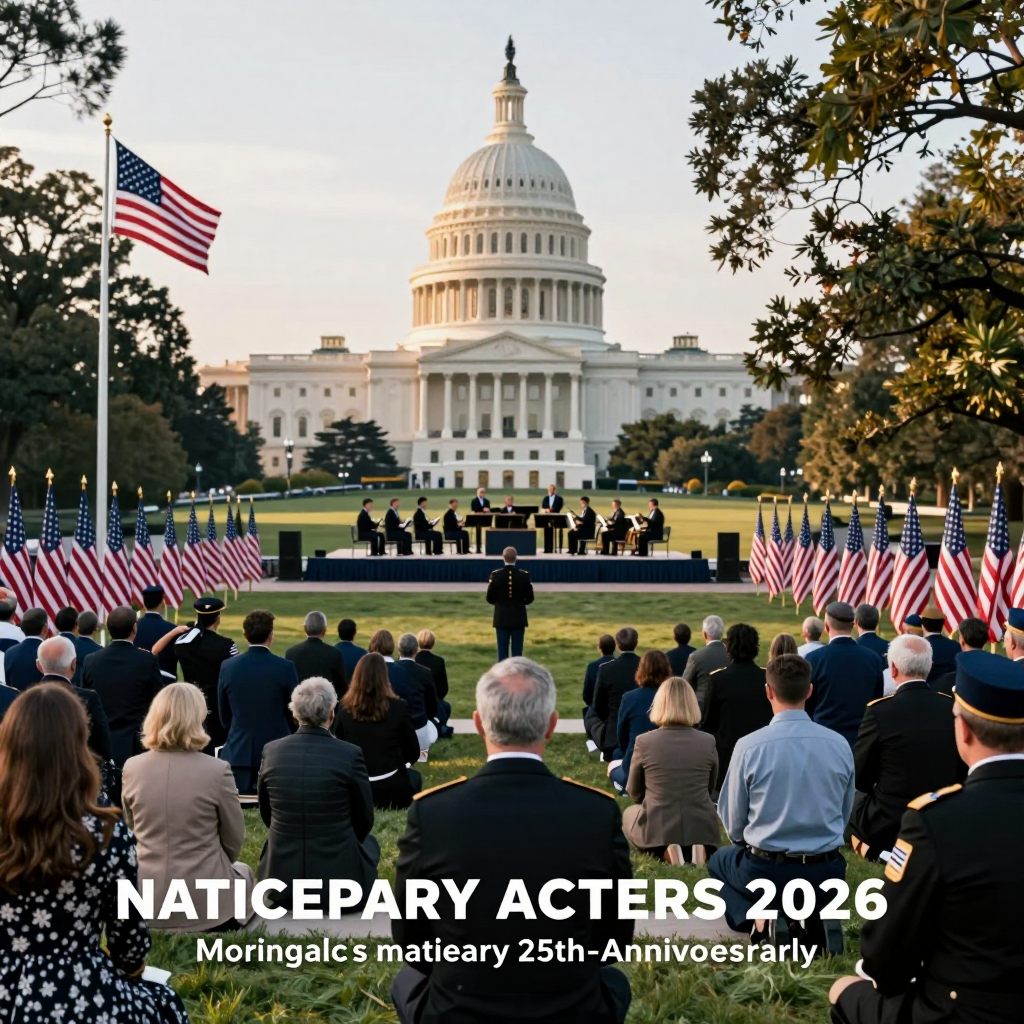
The PBS concert held on the lawn in front of the U.S. Capitol in Washington D.C. is more than just music and stories. Connecting 250 years of history with the scars of modern wars on one stage, it serves as a collective ritual affirming what America remembers and how it mourns. So, what kind of composition completes the meaning of this flagship event for Memorial Day 2026?
Basic Information of the Memorial Day 2026 Concert: A Live Stage Close to a ‘National Ceremony’
PBS’s National Memorial Day Concert 2026 is an iconic program of Memorial Day weekend.
- Date & Time: Sunday, May 24, 2026, 8 PM Eastern Time (8/7c)
- Location: Lawn in front of the U.S. Capitol, Washington D.C.
- Viewing Platforms: PBS broadcast, PBS app/pbs.org, official PBS YouTube Live
- Hosts: Joe Mantegna, Gary Sinise
The very fact that the stage is set against the backdrop of the Capitol sends a powerful message. It places individual sacrifice within the nation’s historical narrative, reminding viewers that “this memory is not private sorrow but public responsibility.”
Three Key Elements Running Through Memorial Day 2026: Music, Testimony, and Historical Narrative
This concert flows beyond mere performance. It crafts emotional direction by intersecting music (performances), testimonies (stories from families and veterans), and national context (historical connections).
1) Reaffirming the Origin of ‘Remembrance’
At its core, Memorial Day honors those who lost their lives in war and military service. To keep this origin front and center, the concert prominently features voices of bereaved families and communities, repeatedly emphasizing “the cost of freedom.”
2) America 250: Reflecting on 250 Years of History and Sacrifice Together
2026 marks the 250th anniversary of the founding of the United States. The concert uses this milestone as a connecting thread to explore what military sacrifice has meant throughout the nation’s 250-year history, expanding the gaze beyond patriotic emotion into historical reflection.
3) 9/11 25th Anniversary: The Scars of Modern War Come to the Fore
September 11, 2026, represents the 25th anniversary of the 9/11 attacks. By addressing this, the concert signals that Memorial Day now stretches beyond past wars to include memories of post-9/11 conflicts like those in Iraq and Afghanistan.
A Particularly Symbolic Moment at Memorial Day 2026: The Armed Forces Medley
One of the concert’s signature segments, the Armed Forces Medley, strings together the songs of each military branch, instantly invoking the identities of active duty members, veterans, and families alike. Notably, the inclusion of the U.S. Space Force’s “Semper Supra” symbolically reflects the expansion of American security domains into space and technology.
This medley, then, goes beyond “remembrance” to also spotlight “ongoing service” and “evolving battlefields.”
A Question Left by the Memorial Day 2026 Concert: Balancing ‘Remembrance’ and ‘National Narrative’
The National Memorial Day Concert moves hearts every year, and the reason is clear. It reveals personal names and stories while simultaneously overlaying 250 years of national history and 25 years of modern scars since 9/11 on the same screen.
Ultimately, this stage in Memorial Day 2026 asks: Are we truly remembering sacrifice enough, and are we transforming that remembrance into our responsibility today?
Memorial Day 2026: The Fine Line Between the Everyday and the Extraordinary
Big retail stores swing wide open, and sale alerts pop up on your phone like clockwork. Yet, on the very same day, public offices and postal services come to a halt, and financial markets quietly close their doors. Memorial Day 2026 is a day when two contrasting realities play out simultaneously: “everyday consumption amplified” on one side, and “national mourning and pause” on the other. So, on this day, do people choose remembrance or relaxation?
The Dual Emotional Tracks Created by What’s Open and Closed
Because Memorial Day is a federal holiday, society’s rhythm splits into two distinct currents.
- Places That Stay Open (Everyday Life Amplified): Large retailers like Target and Walmart, numerous grocery stores, and chain restaurants operate as usual. The “Memorial Day Sale” has become almost a seasonal ritual.
- Places That Close (Public Pause): Government agencies, USPS post offices, and stock exchanges like NYSE and NASDAQ shut down. Bank branches mostly run on limited hours.
This division makes the atmosphere of the day peculiar. Spaces filled with family barbecues and shopping carts rolling down the aisles coexist side by side with locations marked by flags at half-staff, moments of silence, and memorial ceremonies—all unfolding at the same time.
When Remembrance Becomes a “Sale Season”: Where the Discomfort Lies
The commercialization of Memorial Day is nothing new, yet the unease it brings hasn’t vanished. The root of the issue is simple: the day’s core meaning is to honor those who died in service during war, but often the dominant scene is the start of summer vacations and consumer promotions.
- Controversy grows when sales don’t just refresh but overwrite remembrance.
Even when people recognize the day’s significance, the sheer volume of shopping messages can feel like they’re shifting the priority away from memory. - The emotional temperature among veteran families and communities is notably more intense.
For some, this day is far from a holiday—it’s a solemn confirmation of absence—so a festive atmosphere can feel jarringly out of place.
It’s Not About Choice but Balance: Realistic Ways to Spend Memorial Day 2026
People don’t necessarily have to pick one side. For many Americans, Memorial Day 2026 is more about honoring first and then enjoying everyday life.
- Morning: Visiting cemeteries, laying flowers, attending local memorial ceremonies
- Afternoon: Sharing meals with family, grilling barbecues, taking short outings
- Evening: Watching national remembrance programs like PBS concerts
While this routine doesn’t fully resolve the tension between “remembrance vs. vacation,” it becomes a vital means of preventing the day from drifting into mere consumption stripped of meaning.
A Day on the Edge Raises the Question
Memorial Day always asks: “What do we choose to remember, and what do we let become just part of daily life?”
As long as public institutions and financial markets signal pause with their closures, the day can never be solely about shopping. At the same time, as long as big retailers operate on a regular schedule, it remains difficult to sustain the day as purely one of remembrance. The true landscape of Memorial Day 2026 begins with acknowledging this paradox. And on this very edge, each person strives in their own way to carve out a place for ‘memory.’
Memorial Day 2026: The Intersection of Remembrance, Consumption, and Social Discourse
How will America remember war and sacrifice in the future? Memorial Day 2026 sharply brings this question into focus. Set against the monumental backdrop of America’s 250th anniversary, it overlays 25 years of wars and military interventions post-9/11 with the enduring memories of fallen soldiers, bereaved families, and veteran generations. At the same time, this day remains widely consumed as “the start of summer” and a major sales season. It is at this convergence—where remembrance meets everyday life, national narrative collides with commercial culture—that social debates intensify more easily.
Why the Focus of Memorial Day 2026’s ‘Memory’ Changes: The Echoes of 25 Years Since 9/11
This year’s Memorial Day discourse draws special attention because 9/11 is no longer ‘breaking news’ but has shifted into ‘generational memory.’ The generation born after 2001 has come of age, while America has passed through the era of the “War on Terror,” including Iraq and Afghanistan. The questions society faces are straightforward:
- What are we commemorating? Traditionally, Memorial Day honors the fallen, but the prolonged wars post-9/11 have expanded the scope of remembrance beyond the fallen to include wounded veterans, PTSD, and the lives of families affected.
- Who leads the act of remembering? While national ceremonies and media (like PBS concerts) shape the ‘official memory,’ local communities, bereaved families, and veterans’ groups are intensifying the pressure to express the costs of war in their own voices.
- What conclusions does this lead to? The acts of “honoring sacrifice” and “evaluating the decisions that led to that sacrifice” often conflict. Memorial Day 2026 becomes not a moment to avoid this tension but a catalyst for society to reengage in dialogue.
Memorial Day 2026 and the Commercialization Debate: How Far Can ‘Sales’ Go?
Memorial Day sales are a fixed rhythm of American consumer culture, but so too is the annual debate over “Is it acceptable to consume a day of remembrance as a discount event?” This year’s debate shifts from whether sales exist to how to prevent sales from overshadowing the act of remembrance.
- For many citizens, the three-day weekend practically means reuniting with family, enjoying outdoor activities, and purchasing necessary goods. It is difficult to label these ordinary activities as outright disrespect.
- However, when the message shrinks from “Remember the fallen” to simply “Weekend deals,” Memorial Day’s meaning is reduced from a public memory to private consumption.
- Consequently, some communities and veterans’ organizations advocate not for banning sales but for integrating forms of remembrance (moments of silence, floral tributes, donations, participation in veteran and bereaved family support) into everyday life alongside consumer activity.
Can a ‘Common Ground’ Emerge Amid Memorial Day 2026’s Political Polarization?
As American society grows more divided, Memorial Day paradoxically often becomes a day to confirm the minimum shared value beyond partisan lines—the respect for sacrifice. Yet, for this consensus to endure, remembrance must go beyond ceremony and spark ongoing questions.
- Honoring the fallen is linked to a reaffirmation of national identity (especially in the context of the 250th anniversary),
- While the post-9/11 memory extends into the sensitive realm of evaluating policy choices and accountability.
- Meeting at Memorial Day 2026, these two strands issue a social call: “Honor sacrifice, but don’t stop thinking.”
Ultimately, this year’s Memorial Day is both a “day off” and a “day of inquiry.” How America will articulate its memory of war and sacrifice, and whether that memory will coexist or clash with consumer culture—the crossroads is now clearer than ever.
Memorial Day 2026: Reading America’s Present and Future
A history of war spanning 250 years, changes since 9/11, and the search for common memory amid political conflict. Following the message that Memorial Day 2026 sends to American society reveals that this day is far more than a simple “three-day weekend”—it is closer to how America explains itself.
The Three Timelines Memorial Day 2026 Reveals: Past, Present, and Future
The Past (250 Years of War History)
The year 2026 marks the symbolic 250th anniversary of America’s founding. While Memorial Day is a time for mourning rather than celebration, it paradoxically most vividly reveals “what the nation has protected and what it has paid” over two and a half centuries. The countless fallen soldiers who vanished without a name cast shadows on the national narrative, giving the 250th anniversary even heavier significance.The Present (25 Years of ‘War as Everyday Life’ Since 9/11)
The 25th anniversary of 9/11 adds a stark realism to Memorial Day 2026’s atmosphere. The post-2001 era of the War on Terror and overseas deployments—and the lives of fallen soldiers and their families—have transformed from “special events” into a generational experience. This is why Memorial Day no longer commemorates only distant wars; it has expanded into a stage that asks about the costs America bears from the choices it continues to make today.The Future (Expanding Security and the Emergence of ‘New Battlefields’)
The inclusion of the Space Force in the Armed Forces Medley at the Memorial Day concert isn’t just a simple change in lineup—it symbolizes the shift in American security beyond land, sea, and air into realms of space, cyber, and technological dominance. In other words, remembrance does not stay rooted in the past but extends into the question: “What forms will future sacrifices take?”
The Most Important Question Memorial Day 2026 Poses: Is ‘Common Memory’ Possible in a Divided Society?
As political polarization deepens, society loses a language that allows for consensus. Yet, the reason Memorial Day largely transcends partisan divides is clear.
A minimum respect for the fallen still functions as a shared value for many Americans.
The power of nationwide commemorative narratives, like the PBS concert, fits this context. People holding differing views may never fully agree, but at least in the face of the undeniable fact of sacrifice, voices quiet down temporarily. Memorial Day 2026 becomes a testing ground for that very possibility.
What We Can Learn from Memorial Day 2026
- Memory is a system, not just emotion: National events serve as mechanisms to repeat and preserve memory—and when these mechanisms weaken, social division deepens.
- We need the ability to balance mourning and everyday life: On days when “the start of summer” and “remembrance” collide, how society chooses what to center reveals its maturity.
- Historical commemoration is a question about the present: The 250th anniversary and the 25th anniversary of 9/11 both honor the past and ask what values should shape the next 25 years.
Memorial Day 2026 is a mirror reflecting how America articulates past sacrifices, clings to common memory amid current conflicts, and embraces new symbols for future security environments. How we read this mirror transforms Memorial Day from a mere ‘holiday’ into a society’s sense of direction.
Comments
Post a Comment