 \n
\n
Netflix and MVP MMA Shake Up the U.S. Fight Scene: The Groundbreaking Impact of MVP MMA’s ‘Live Transition’
Netflix is delivering its first-ever live MMA event in partnership with Jake Paul’s MVP MMA—and this collaboration is captivating not just because a new league is hosting a show, but because it represents an experiment challenging the very rules of the American fight industry: distribution, revenue, and fanbase. The seismic shift underway in the U.S. fight scene can be summed up in three key pillars.
Change 1 by MVP MMA: From ‘PPV-Centered’ to ‘Subscription-Based Live Viewing’
For years, American MMA has relied heavily on the PPV (pay-per-view) plus sports channel/platform model as the industry standard. MVP MMA, however, is boldly putting forward Netflix’s model where viewers can watch live events with just a subscription—no extra fees required.
This is more than a pricing tweak; it’s an attempt to shake up fans’ viewing habits and how money flows through the market.
- From the fans’ perspective: the fatigue of “big fights = extra payment” is reduced.
- From the industry’s perspective: success metrics shift from PPV sales to subscriber retention, watch time, and buzz.
- From the platform’s perspective: Netflix gains access to ‘prime-time’ slots ideal for high-value audience segments, potentially tied to the rollout of ad-supported plans.
Change 2 by MVP MMA: Star Casting That Cracks the ‘UFC-Centric’ Ecosystem
MVP MMA’s early strategy is clear: rather than compete head-on through rankings and league structure, they’re stacking the deck with familiar names known to the American public to create super events that dominate the scene.
This approach appeals not only to hardcore fight fans but also to casual viewers who happen to tune in via Netflix.
The key here is that armed with Netflix’s colossal entertainment distribution network, fight events can evolve beyond sports into pop-culture phenomena. This destabilizes the UFC’s longstanding monopoly over what defines a “major stage.”
Change 3 by MVP MMA: Turning the Fighter Pay Debate Into Concrete Market Numbers
The strongest statement MVP MMA makes is their “fighter-first” philosophy. With historic fight purses being discussed, especially around female star matchups, the long-standing fighter pay debate—once just theoretical or critical commentary—is now being reset with actual market benchmarks.
This shift isn’t limited to a few star contracts.
- Other organizations will feel pressure during negotiations, and
- Fighters gain realistic alternative options beyond “UFC is the only answer.”
In the end, the Netflix and MVP MMA partnership is less about “a new event” and more about rewriting where the American fight business makes money, how it distributes that money, and how it builds its fanbase. The single biggest question now is whether this experiment remains a one-off buzz or proves to be a new industry standard.
What Is MVP MMA? A ‘Fighter-First’ Innovation Targeting the UFC
In the American MMA market long dominated almost exclusively by the UFC, MVP MMA is less “just another promotion” and more of a rule-changing project. Leveraging the promotional flair built by Jake Paul’s Most Valuable Promotions (MVP) in boxing, it is fundamentally shaking up the established formulas in two crucial areas: fighter pay distribution (fight money) and media distribution (streaming).
MVP MMA’s Core Message: ‘Fighter-First’
The first provocative question MVP MMA raises isn’t simply about matchups, but rather “How much should fighters really earn?” The UFC has long been criticized for its low revenue share for fighters, and MVP is seizing this opportunity to establish a brand that puts fighter treatment front and center.
- Resetting market standards with high guaranteed purses: Especially in women’s superfights, MVP is pushing the narrative of “unprecedented payday levels,” raising the bar for future fighter negotiations.
- Sending a message of alternatives beyond the stars: By weakening the notion that “UFC is the only big league,” it creates leverage for fighters with expiring contracts.
MVP MMA’s Disruptive Power Lies in Its ‘Structure,’ Not Casting
Rather than following the traditional league model focused on rankings and titles, MVP MMA designs super events built around familiar names and narratives that the public already knows. The key isn’t just “who fights,” but how the event generates hype and shares revenue.
- Lowering entry barriers with legend- and star-centric matchmaking to attract casual fans,
- Using social and viral marketing to transform events into pop culture experiences rather than just sports matches.
This approach sharply contrasts with the UFC’s strong, hardcore fanbase-driven continuous operation model, opting instead for a “market-shaking knockout blow.”
MVP MMA’s Media Strategy: Shifting the Game from PPV to Streaming Subscriptions
What makes MVP MMA particularly threatening is its reimagination of media distribution—packaging events not around pay-per-view (PPV) but around streaming subscriptions (Netflix Live). For fans, this means no repeated PPV payments, but rather big events included in an existing subscription fee, effectively lowering price resistance.
- An experimental counter to UFC’s traditional revenue model (broadcast rights + PPV)
- Expanding potential through mainstream platform (Netflix) recommendations and data
- A content-driven sports approach that considers not only the fights but also highlights, clips, and algorithmic exposure
In summary, MVP MMA is not just competing with the UFC through fighting skill but is pressuring it via “cash flow” and “distribution channels.” The more successful this strategy becomes, the greater the likelihood that the U.S. MMA market will evolve beyond promotion rivalry toward reshaping fighter bargaining power and how fans consume the sport.
MVP MMA Ronda Rousey vs. Gina Carano: A Historic Showdown in Women’s Fighting and the Highest Pay Record
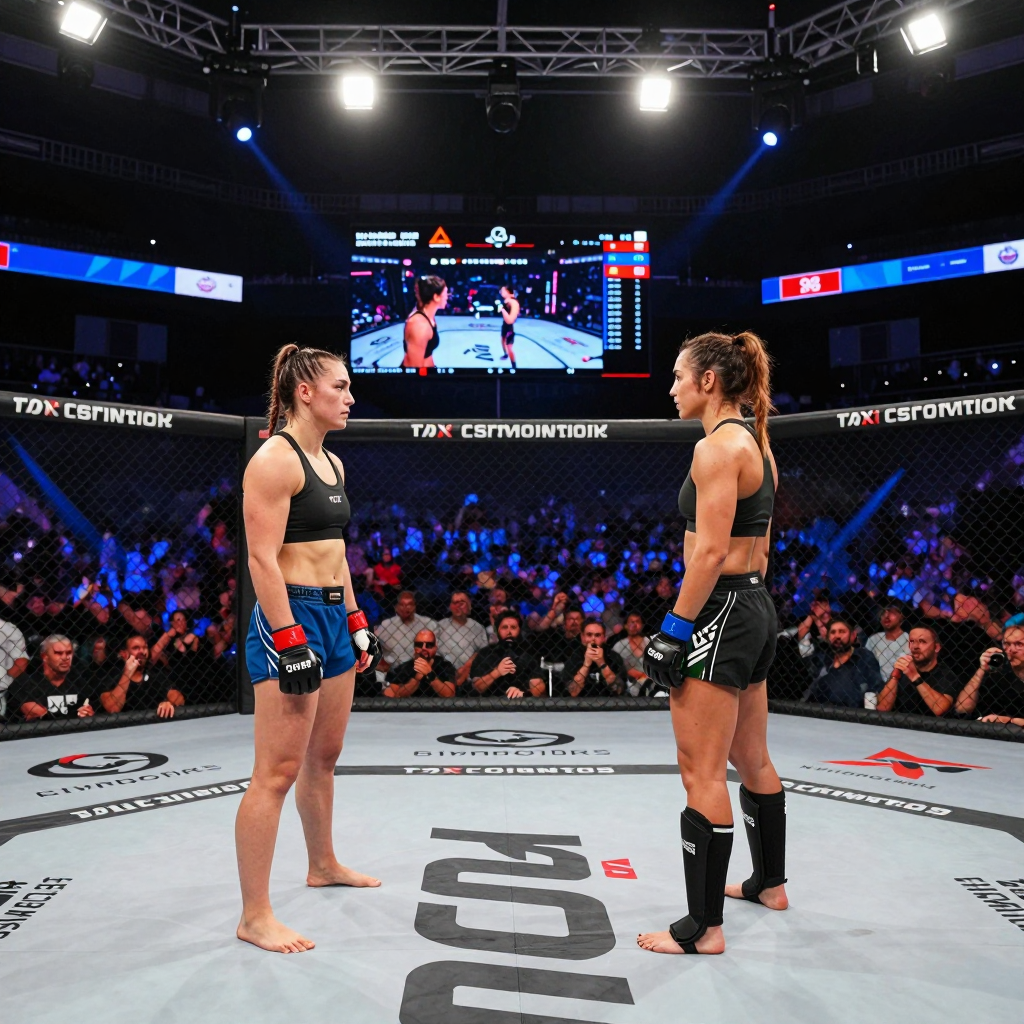
What once seemed like a retirement farewell has turned into Ronda Rousey’s comeback, and Gina Carano, who had long been away from the main fighting stage, has made a triumphant return. Calling their matchup a “dream fight” doesn’t even do it justice. What’s even more fascinating is that this bout wasn’t just a hot topic—it set the record for the highest-ever payday in women’s fighting history. So, what secret made this epic clash possible?
The ‘Clash of Icons’ Made Real by MVP MMA: The Significance of Rousey and Carano
Ronda Rousey was the very first global superstar who propelled UFC’s women’s division into the mainstream. On the other hand, Gina Carano is closer to an early icon who brought women’s MMA into pop culture’s spotlight.
This matchup isn’t just about who was stronger.
- It raises questions about how the female fighting star system was built.
- It challenges the boundary of sports versus entertainment and who wielded greater influence.
All these questions collide simultaneously on this stage. And the fact that this platform was created not by UFC but by MVP MMA sends an even bigger message to the industry.
MVP MMA’s Record-Breaking Pay: Why This Became ‘The Biggest Payday in Women’s Fighter History’
Behind this showdown being called “the highest payday ever for female fighters” lies MVP MMA’s fighter-first approach from the beginning. The key points are threefold:
1) Putting a premium on ‘event value’ over ‘pure performance’
This fight isn’t about rankings or title leagues; it’s about narrative that the public immediately understands—comebacks, reemergence, legend vs. legend. In other words, the structure easily guarantees a solid guaranteed purse for the “star at the heart of the event.”
2) Negotiation power amplified by Netflix Live
Traditional PPV models come with paywalls and sales forecasts that directly affect negotiations. In contrast, Netflix Live leverages a massive subscription-based audience, making it easier to create “mass public events.” Star fighters can negotiate harder with the argument: “I bring platform expansion and buzz.”
3) Intentionally resetting the baseline for ‘female fighter pay’
Women’s fight purses have always been tied to the conditional logic of “only going up if the event sells.” MVP MMA aims to raise the baseline with this blockbuster match and shift market expectations so other promotions will be pressured to offer similar pay levels going forward.
MVP MMA’s Bottom Line: This Fight Is Not a ‘Comeback’—It’s a ‘Market Price Tag’
For fans, Rousey vs. Carano is a grand event dripping with nostalgia. But from the industry’s view, it’s much closer to a new price tag for female fighters’ market value.
The more this fight succeeds commercially, the more often female fighters can confidently say at the negotiation table:
“If this amount is possible at MVP MMA, there’s no reason it can’t happen anywhere else.”
mvp mma: A New Business Model Created by Netflix Streaming and Sports Betting
When a major-level fight can be enjoyed on Netflix with “no extra payment” beyond the subscription, not only fan viewing habits change, but the entire money flow structure transforms. At the heart of this change is mvp mma. The key is simple: the “Lowered PPV barrier streaming” combined with the rapidly expanding “legal sports betting market” across the United States is redesigning the way “fight events are created.”
mvp mma’s Netflix Model: A Subscription-Based Supercard That Bypasses PPV
Traditional MMA success largely hinged on PPV sales volume and broadcaster contracts (cable/sports networks). But Netflix’s structure is different.
- From the fan’s perspective: It’s no longer a “one-time payment to watch a fight” but “discovering events within the subscription fee I already pay.” This especially attracts light fans.
- From a promotion viewpoint: Rather than maximizing PPV sales, Netflix aims for metrics like
- Subscription retention from event viewing
- Increase in new subscriber sign-ups
- Platform engagement time driven by buzz
- As a result, mvp mma is easier to position less as a “MMA league” and more as a Netflix-optimized event-style super fight package.
mvp mma and U.S. Sports Betting: The Economics of ‘Betting-Friendly’ Fight Cards
As legal sports betting becomes routine in the U.S., bigger events attract sportsbook marketing, which in turn fuels viewing motivation in a virtuous cycle. Fight cards like mvp mma fit this structure perfectly.
- Betting pressures the creation of more highlights.
Beyond just picking winners, a variety of prop bets—round-by-round, finish type (submission/KO), over/under, etc.—encourage fans to watch the entire match longer. - Star matchups drive betting participation.
Famous fighters, even with limited data, have strong public narratives that encourage “one-time try” bets. This increases engagement without hardcore analytical backgrounds. - Event composition itself considers betting consumption.
Early finish potential fights, popular brawler styles, and controversial judging possibilities all spark betting conversation, turning broadcasts into ‘interactive content.’
Implications from mvp mma: When Streaming and Betting Combine, Revenue Sources Diversify
This mix is powerful because the source of revenue is no longer concentrated in one place.
- Reduced PPV dependence: Lower “payment barriers” increase reach and push mainstream popularity.
- Increased advertising and sponsorship value: Live sports offer clear ad inventory (in-between rounds, broadcast segments, intermissions), aligning well with Netflix’s ad pricing and business strategies.
- Betting market acts as an ‘external expansion’: Even if betting is not done directly within the Netflix app, fans naturally shift to second screens (sportsbook apps on smartphones), making events more than just viewing—they become massive traffic drivers.
In summary, mvp mma is not just about “MMA events streamed on Netflix” but rather an experiment in combat sports revenue models in the streaming era. As subscription distribution opens doors wider and sports betting discourse deepens engagement, MMA transforms into an industry that can no longer be explained by PPV alone.
MVP MMA: Targeting the Future – Could This Be the Birth of a New Fighting Platform That Surpasses the UFC?
Riding on the ‘mainstream platform’ of Netflix Live, MVP MMA stands at a crossroads: will it be a one-off buzz event or a long-term project that reshapes the American MMA landscape? The core is simple. It simultaneously shakes the three pillars of the sport: the PPV-centered structure, the UFC-centered ecosystem, and fighter negotiating power. This is where the real drama begins.
Three Long-Term Changes MVP MMA Could Bring: Platform, Money, and the Fighter Market
1) Experimenting with an Alternative to ‘PPV Fatigue’
UFC’s high-priced pay-per-views have become a heavy burden even for American fans, leaving a growing opportunity for streaming subscription-based live events to fill the gap. If MVP MMA achieves meaningful viewership metrics on Netflix’s subscription model, it could shake the “big fights = PPV” formula to its core. This will put similar pressure on other fight promotions as well.
2) Raising Fight Purses from ‘Exception’ to ‘Standard’
When iconic matchups like Ronda Rousey vs. Gina Carano are talked about for their record-breaking payday, it sends a strong signal to the fighter market: “There’s money outside the UFC too.” If that payday is a one-off, it looks more like a show; but if deals of similar magnitude keep coming, the negotiation baseline shifts. Ultimately, fighters can leverage a “Netflix event option” as a bargaining chip during contract renewals.
3) The Rise of a ‘Super Event Platform’ Instead of a ‘League’
Rather than a ranking and title-focused league model, MVP MMA currently resembles a method of packaging story-driven super fights into blockbuster public events. If this model succeeds, MMA could expand beyond a “hardcore fan-only sport” into pop culture content with broader appeal.
Risks for MVP MMA: Challenges in Turning Success into Sustainability
- Dependence on Star Power: Legendary and buzzworthy casting is powerful, but to build a sustainable lineup, new star development becomes essential.
- Safety and Ethical Concerns: As more veterans with long layoffs return, debates over medical safety may intensify in the U.S., outweighing performance discussions.
- Netflix’s Revenue Model Choices: While “subscription-only viewing” is now a key appeal, introducing additional fees (in-app PPV) in the future could polarize fans.
Four MVP MMA Watchpoints for Korean Readers
- Will Netflix commit to a ‘series’ rather than a ‘one-off’?: Multi-event contracts could be the ultimate turning point.
- The domino effect in the fighter market: Watch if fighters nearing contract expiration with UFC/PFL start using MVP MMA as a bargaining chip.
- How the promotion reveals success metrics: Netflix traditionally doesn’t release ratings, but rankings, watch time, and social media trends reveal the real impact.
- The direction of the second card: Whether the next event becomes “another legendary showdown” or a “top-tier active fighter clash” will define MVP MMA’s true identity.
In the end, it’s still too early to say if MVP MMA will truly ‘replace’ the UFC. However, backed by Netflix, the fact that it has begun to crack the PPV model and fighter pay structure means this is less “the rise of a new king” and more “an experiment in new rules.” The more these experiments repeat, the more likely it becomes that negotiation dynamics and the very center of the American MMA ecosystem will gradually shift.
Comments
Post a Comment