 \n
\n
Stroke: A Life-Threatening Emergency—How Much Do We Really Know?
What if suddenly one side of your face becomes paralyzed and your speech turns slurred? That moment isn’t just a minor discomfort—it could be the start of a critical “race against time” that threatens both your life and your family’s. Stroke is a prime emergency condition where the chances of recovery and the severity of aftereffects depend greatly on how quickly treatment begins after symptoms appear.
Simply put, a stroke occurs when a blood vessel in the brain is either blocked (ischemic stroke) or bursts (hemorrhagic stroke), impairing brain function. When oxygen supply to brain cells is cut off due to vascular problems, damage can progress alarmingly fast. Knowing about strokes, therefore, isn’t just medical trivia—it’s life-saving knowledge that keeps you from hesitating at a critical moment.
Stroke is closely linked to everyday habits and chronic conditions like high blood pressure, diabetes, high cholesterol, smoking, obesity, and lack of exercise. Issues you might think you can “deal with someday” are often the very reasons someone ends up rushing to the emergency room without warning.
This article won’t bog you down in complex explanations; instead, it will highlight the essentials so you can instantly recognize the signs in real life. The key message is simple: the person who quickly thinks, “This could be a stroke right now,” is the one who ultimately preserves the golden hour for treatment.
Major Causes of Stroke: Everyday Risk Factors Creating Hidden Enemies
From high blood pressure to smoking and diabetes—the risk factors leading to stroke often hide within the “ordinary routines” of daily life. The problem is that most of these risks show almost no symptoms until one day they suddenly block (ischemic stroke) or rupture (hemorrhagic stroke) a brain blood vessel, causing an emergency. Check whether your lifestyle triggers warning signs with the points below.
Stroke Cause 1) Hypertension: The Most Powerful ‘Basic Risk’
High blood pressure continuously stresses and weakens blood vessels in the brain while accelerating atherosclerosis. This increases the risk of brain hemorrhage, and as vessels narrow, the chance of ischemic stroke rises as well.
- Especially be cautious if your blood pressure is regularly high or if you take medication only “when you feel off.”
Stroke Cause 2) Diabetes (High Blood Sugar): The Silent, Rapid Destroyer of Blood Vessels
Sustained high blood sugar damages both small and large vessels, making blood vessel walls fragile and increasing the risk of blood clots. Diabetes alone is dangerous, but combined with hypertension and high cholesterol, the risk of stroke spikes dramatically.
Stroke Cause 3) Dyslipidemia (High Cholesterol): The Fuel for Atherosclerosis
Poor lipid levels, such as elevated LDL cholesterol, cause buildup inside blood vessels, leading to atherosclerosis and narrowing. When vessels supplying the brain narrow, even minor changes can cut off blood flow and cause ischemic stroke.
- Don’t assume “I’m fine because I’m not overweight”—this area must be monitored by checking your numbers.
Stroke Cause 4) Smoking: The Habit That Narrows Vessels and Triggers Clots
Smoking reduces blood vessel function, causes vessel constriction, and raises the risk of clot formation. This ultimately increases the chance of blocked brain vessels, lowering the threshold for a stroke.
- The crucial point is that any amount of smoking is a risk factor, not “I don’t smoke much.”
Stroke Cause 5) Obesity and Lack of Exercise: The Combo That Amplifies Multiple Risks
Weight gain and inactivity worsen blood pressure, blood sugar, and lipid levels simultaneously, collectively boosting major stroke risk factors. Especially when a sedentary lifestyle becomes the norm, it’s harder to sense the danger of “not exercising” daily.
Stroke Cause 6) Excessive Alcohol Consumption: Raising Blood Pressure and Arrhythmia Risks
Heavy drinking elevates blood pressure and increases the chance of irregular heart rhythms (arrhythmias), both linked to stroke. If you find yourself “falling asleep and waking up with alcohol,” you could be ignoring serious health warnings.
Stroke Cause 7) Heart Disease (Atrial Fibrillation, Valve Disease, etc.): Clots Flying from the Heart
Conditions like atrial fibrillation and valve disease can cause clots to form inside the heart, which then travel to the brain and block vessels, resulting in cardioembolic stroke.
- It’s not a matter of “Why do we check the heart if the problem is in the brain?”—the heart is actually the cause in many cases.
Key Takeaway: Stroke happens “suddenly,” but is usually the result of risk factors accumulated over a long time. Managing blood pressure, blood sugar, and lipids, along with quitting smoking, moderating alcohol, and maintaining steady physical activity, is less a choice and more a survival strategy.
Stroke Symptoms: ‘Slurred Speech and Weakness in One Arm?’ Critical Warning Signs
The most dangerous moment in a stroke is the urge to “wait a little longer.” Especially changes in speech, face, and arms or legs are quite obvious, yet many mistake them for fatigue or feeling unwell, missing the golden hour. Even more surprising is that symptoms easily overlooked by anyone, like abnormal eye signs, can be the very start of a stroke.
Early Stroke Symptoms: Sudden, One-Sided, and Unusual
If any of the following symptoms occur suddenly, it’s safest to “suspect a stroke first.”
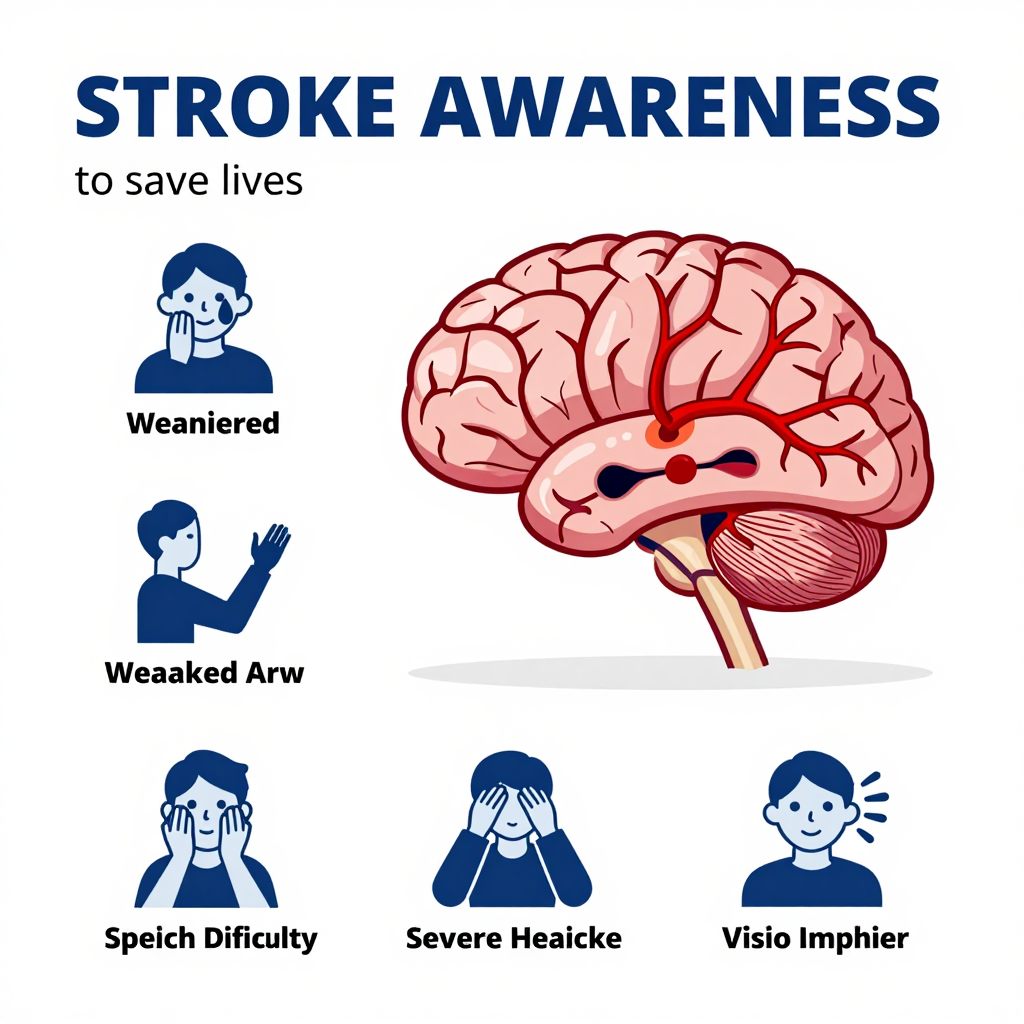
- Slurred speech (word jumbling, unclear pronunciation, saying strange things)
- Weakness in one arm or leg (dropping objects, one side drooping, staggering)
- One side of the face drooping (mouth corner sagging or uneven facial expression)
- Sudden severe headache like never before (especially a warning sign in brain hemorrhage)
- Dizziness, loss of balance, vision problems (difficulty walking, trouble maintaining balance)
The key is “sudden + one-sided.” If one side acts strangely unlike usual, it’s hard to dismiss as simple muscle pain or fatigue.
Warning Signs from the Eyes That Could Signal Stroke
Stroke doesn’t only show as paralysis of limbs—it can first send signals through vision and eye movement. If any of these happen suddenly, don’t take it lightly.
- Sudden impaired or darkened vision in one eye
- Partial loss of visual field (black spots or empty edges)
- Double vision (seeing overlapping images)
- Eyes don’t follow well (abnormal eye movement), along with dizziness or balance loss
These symptoms are easy to brush off as “just need a short rest,” but they might be signs of disrupted brain blood flow affecting vision function. Sudden vision changes especially require immediate emergency evaluation.
Self-Check for Stroke: The 10-Second FAST Test
If you suspect symptoms, don’t hesitate—quickly check with the FAST method.
- F (Face): When smiling, does one side of the face droop?
- A (Arm): When raising both arms, does one arm fall?
- S (Speech): When repeating phrases, is speech slurred or jumbled?
- T (Time): If any signs appear, call emergency services immediately (119) and note when symptoms started
FAST isn’t for diagnosis, but a prompt tool to decide emergency action. Even if uncertain, if any sign appears, act on the assumption it might be a stroke.
A Dangerous Misconception in Stroke: “It Got Better Just for a While”
If symptoms appear for minutes or hours then vanish, it’s tempting to think “thankfully, it’s gone.” But this could be a Transient Ischemic Attack (TIA) — a warning sign for a major stroke ahead.
- Never be reassured by temporary improvement; always seek medical evaluation.
How to Handle a Stroke Emergency: From What to Avoid to Essential Actions
The most crucial factor the moment a stroke is suspected is not “judgment” but “speed.” Even if the symptoms seem unclear, waiting it out can cause irreversible brain cell damage. The takeaway is simple: If you suspect a stroke, call 911 immediately—this single decision can determine the outcome.
Why Calling 911 Is the Most Important Step When a Stroke Is Suspected
- To protect the golden hour
The sooner treatment starts for a stroke (especially ischemic stroke), the better the chances of recovery. Knowing “when the symptoms began” is key to deciding treatment options. - 911 means ‘fast transport’ plus ‘proper hospital choice’
An ambulance not only speeds things up but also increases the chance of being taken directly to an emergency room equipped for stroke treatment, with preparations starting even before arrival. - Driving yourself or having a relative drive is dangerous
There’s a risk of accidents if the patient drives, and symptoms may worsen during transit if driven by a family member. In emergencies, professional medical transport is safest.
Essential Actions You Must Take in a Stroke Emergency
- Immediately call 911 and clearly state ‘suspected stroke’
Briefly describe symptoms like slurred speech, one-sided paralysis, facial drooping, vision problems, or severe headache. - Note the exact time symptoms started
An exact timestamp is best. If uncertain, record the last time the patient was completely normal. - Quickly gather and relay patient information
If possible, provide the paramedics or ER with:- Medications being taken (especially anticoagulants or antiplatelets)
- Medical history (hypertension, diabetes, atrial fibrillation, prior stroke, etc.)
- Allergies, recent surgeries, or bleeding episodes
- Maintain a safe position
If consciousness is impaired or there’s vomiting, lay the patient on their side to keep the airway clear, and loosen any tight clothing.
What You Must Never Do When a Stroke Is Suspected
- Don’t force them to stand or walk
Saying “try walking” or “snap out of it” can cause falls or worsen their condition. - Don’t give water, food, or medication without medical advice
Swallowing difficulties raise the risk of choking or aspiration into the lungs, especially if consciousness is clouded. - Don’t be reassured if symptoms improve briefly
Temporary relief may indicate a transient ischemic attack (TIA), which can quickly escalate into a major stroke. Immediate medical evaluation is essential regardless. - Don’t rely on massage, acupressure, or hot compresses
Folk remedies like “clearing the blood” only waste precious time. What’s needed now is immediate transport to a hospital.
One Line to Save the Stroke Golden Time
When you suspect a stroke, do this:
“Call 911 → note symptom onset time → don’t feed or make them walk → get to the emergency room ASAP.”
Stroke Prevention Means Life Itself: The Lifelong Importance of Managing From Recurrence Prevention to Rehabilitation
Stroke does not always end with just one episode. The moment you feel relieved because symptoms have passed, the risk of recurrence quietly grows. From managing blood pressure and eating habits to participating in rehabilitation programs, here are essential strategies to safeguard your healthy life.
The Key to Preventing Stroke Recurrence: “Managing Causes Is an Extension of Treatment”
Even after acute treatment ends, if risk factor control weakens, stroke can recur. The following areas are especially lifelong challenges:
- Blood Pressure Control: The biggest burden on cerebral blood vessels. Regular measurement at home and never stopping prescribed medication arbitrarily are fundamental.
- Blood Sugar and Lipid (Cholesterol) Management: Diabetes and abnormal lipid levels accumulate vascular damage and increase the risk of cerebral infarction.
- Quitting Smoking: Smoking causes vascular constriction and increases the risk of blood clots—one of the strongest lifestyle prescriptions to prevent recurrence.
- Moderate Alcohol Intake: Excessive drinking raises blood pressure and the risk of arrhythmia, so controlling alcohol consumption is necessary.
- Weight and Exercise: Aerobic exercises such as walking help regulate blood pressure and blood sugar. The principle is “stay consistent without overdoing it.”
Managing Stroke Diet: Break the Habit of Eating Too Salty
Diet has more of a long-term cumulative effect than a short-term one. The core is simple.
- Reduce salty foods (soups, salted fish, processed foods) → directly helps control blood pressure
- Cut down on saturated fats, fried foods, and processed meat → detrimental to vascular health
- Make a vegetable- and fruit-based diet your foundation
- If dining out often, start with small habits like “leaving the broth or asking for sauce on the side”
The Importance of Stroke Rehabilitation: Early Start Is Key to Functional Recovery
After a stroke, aftereffects such as paralysis, speech disorders, loss of balance, and cognitive changes may remain. Rehabilitation is not optional but a treatment process that speeds up recovery.
- Physical rehabilitation: Recovery of walking, balance, and arm/hand functions
- Speech rehabilitation: Assessment and training of pronunciation, speaking, and swallowing functions
- Cognitive and daily living rehabilitation: Training memory, attention, and basic daily activities like washing and dressing
If possible, participating in rehabilitation trial programs or health classes run by hospitals or local institutions helps patients and caregivers create a “rehabilitation routine to continue at home.”
Recognizing Stroke as a ‘Lifelong Management Disease’ Changes Survival Rates
The goal after a stroke is not simply “not to fall again.” The real aim is to reduce recurrence, minimize aftereffects, and return to daily life. Starting today, choose one thing—measuring blood pressure, quitting smoking, walking, controlling your diet, or engaging in rehabilitation—and keep it up consistently. Small habits become the most practical insurance against the next crisis.
Comments
Post a Comment