 \n
\n
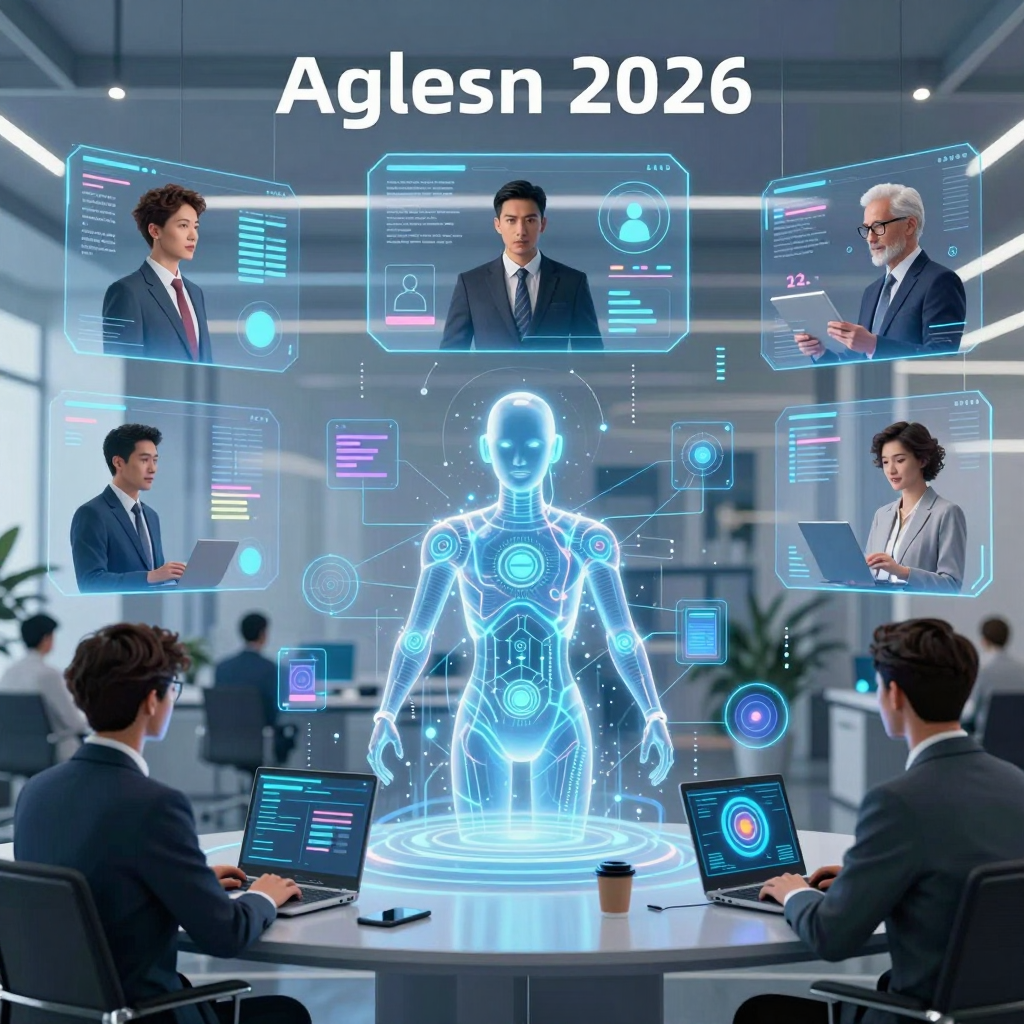
The Dawn of the AI Agent Revolution in 2026: The Rise of Autonomous Agents on the Enterprise Frontline
Simple automation is now a thing of the past. Imagine 2026, when AI Agents think and decide on their own, handling core business tasks for enterprises—how will our daily lives transform? Many companies have already moved beyond viewing Agents as mere “tools to assist tasks” and are deploying them as autonomous executors that complete tasks from start to finish. The result is a shift from one-off automation like report writing or message sending to a seamless process: problem definition → information gathering → reasoning/planning → execution → feedback learning—all embedded into real operational workflows.
The Essence of Enterprise-Grade Agentic AI: The Fusion of Autonomous Reasoning, Planning, and Execution
Agentic AI in the enterprise is fundamentally different from “conversational AI.” The key lies in the Agent’s ability to break down complex multi-step tasks independently (planning), collect necessary data (research/integration), make optimal decisions (reasoning), and carry out real-world actions (execution).
Another crucial transformation is the feedback loop generated throughout task execution—Agents create a data flywheel by feeding outcomes and feedback back into their learning process, continuously improving speed and accuracy over time. This is not just “automation built once,” but a system that evolves with accumulated operational performance.
The Transformation Unveiled by Sales AI Agents: Automating Every Stage of Sales
The most tangible impact emerges in sales. By 2026, Sales AI Agents go far beyond drafting emails—they dissect the sales process into detailed stages from lead generation (SDR) through pipeline management, proposal creation, to timing alerts, managing each with precision.
For example, an SDR-type Agent conducts personalized outreach across multiple channels, reading the tone and sentiment of responses to dynamically adjust follow-up timing. Meanwhile, a pipeline management Agent detects purchasing signals from customer behavior, suggesting the next action with context at critical moments sales reps might overlook. This shift isn’t mere efficiency—it reshapes sales operations into a “system of continuous optimization.”
Multi-Agent Systems: Not Just a Single Assistant, but a Collaborative ‘Team’ in Motion
A standout feature in 2026 is the rapid expansion of multi-Agent teams with distinct roles, moving beyond sophisticated single Agents.
For example, a lead generation Agent finds prospects, a verification Agent assesses quality, and an outreach Agent executes messaging and channel strategies. This approach forms not a rigid rule-based workflow automation, but a specialized task division system where each stage performs expert judgments before handing off. Enterprises ultimately seek “operationally viable automated units,” not just “tools,” and multi-Agent systems represent the closest realization of this vision.
Critical Questions Raised by Empowered Agents: Control, Transparency, and Safety
With Agents actually “doing the work,” they inherently possess authority. When they access external systems, retrieve data, send messages, and sometimes execute actions, enterprises must inevitably ask:
- On what basis did this Agent make its decisions?
- Where exactly did failures or errors occur?
- Are there effective guardrails to prevent abuse of power or malfunctions?
As highly autonomous agent capabilities emerge, the industry faces rapid moves in a tense balance between safety and regulation. Enterprise adoption of Agents in 2026 moves beyond “how well technology is used” into an era where success depends on designing controllable autonomy.
Agentic AI Agent: Ushering in an Era of Autonomous Reasoning and Planning for Complex Problem Solving
What’s the secret behind AI agents that solve complex multi-step problems without any human intervention? The key lies not in merely being a “model that answers well,” but in the Agentic AI Agent architecture that independently breaks down goals (planning), interprets contexts (reasoning), calls upon necessary tools (acting), and verifies outcomes (self-checking) to complete tasks from start to finish. Moreover, as this process repeats, a data flywheel boosts performance, elevating Agentic AI from “automation” to “autonomous operation.”
How Agentic AI Agents Work: Reasoning + Planning + Acting
While typical chatbots excel at “question → answer” in a single turn, Agentic AI Agents thrive in “goal → multi-step execution → completion.” Their internal mechanism includes:
- Goal Definition and Constraint Identification: Instead of taking user requests as simple sentences, success criteria (e.g., accuracy, deadlines, policy compliance) and prohibitions (e.g., no personal data access) are clearly outlined.
- Task Decomposition: Large problems are divided into smaller sub-tasks. For example, “create a market research report” breaks down into data collection → reliability evaluation → summarization → insight extraction → documentation.
- Planning: The sequence and dependencies among sub-tasks are defined, with alternative routes (plan B) prepared if needed.
- Tool Use and Acting: External systems such as search engines, databases, document generators, or CRM platforms are invoked to actively perform work.
- Self-Verification: The execution results are checked against goals; if insufficient, the agent re-explores options and replans.
This fusion of reasoning and planning means the Agent’s core strength is not “getting the right answer at once,” but rather “completing the task fully to the end.”
The Real Differentiator of Agentic AI Agents: Evolving Themselves Through a Data Flywheel
The reason Agentic AI becomes so powerful in real work is that it’s not just about performing well once; it’s about building a structure that gets smarter the more it is used—this is the data flywheel.
- Execution logs become data: Every step’s order, which tool calls succeeded or failed, and where delays occurred are recorded.
- Feedback turns into learning signals: Human edits, customer reactions, and KPI shifts inform “what should be improved next time.”
- Policies and guardrails are refined: Safety rules (e.g., pre-payment verification, external transfer restrictions) get strengthened during operation to increase reliability.
- Workflows become standardized: Successful execution patterns are templated and locked in as best practices across teams.
In other words, Agentic AI Agents evolve beyond one-off automation to become systems that accumulate operational experience, boosting both performance and stability simultaneously.
Key Technical Points of Agentic AI Agents from a Practical Standpoint
To deploy Agentic AI in enterprise environments not as a “demo” but as a “workhorse,” the following elements are effectively essential:
- Memory and Context Management: Securely storing and retrieving long-term info like customers, projects, and policies to maintain consistency.
- Permissions and Auditability: Tracking what the agent did and why, with sensitive operations requiring approvals by design.
- Failure Recovery and Retry Strategies: Automatic retries or escalation paths to humans in case of API failures, missing data, or exceptions.
- Evaluation Systems (Evals): Quantitatively verifying accuracy, reproducibility, policy compliance, and cost-effectiveness—not just plausibility of outputs.
Ultimately, by 2026, Agentic AI Agents will transcend “smart responders” to become execution-oriented systems that plan, perform complex multi-step tasks, and self-improve through feedback. Autonomous problem-solving from start to finish and cumulative enhancement via the data flywheel—this is where the true value of Agentic AI begins.
Granular Sales AI Agents: 7 Types That Automate the Entire Sales Process
From lead generation to personalized customer proposals, how do these 7 AI Agents revolutionizing sales capture customers’ hearts? The key lies in systematizing what was once human intuition—“who to approach, when, with what tone, and what to offer”—through sentiment analysis (understanding emotions and intent) and dynamic learning (reaction-based optimization). Now, Sales AI Agents have evolved from mere email-sending tools into entities that specialize and automate decision-making throughout the entire sales funnel.
Sales AI Agent Type 1: Lead Prospecting & SDR Agent
The front-line agent scans multiple channels (websites, social media, databases, communities) to identify potential leads matching the Ideal Customer Profile (ICP), initiating first contact with personalized messaging.
- Context Gathering: Automatically summarizes company news, roles, recent issues, technology stacks
- Tailored Outreach Creation: Crafts customer-specific messages following the “situation-problem-value” flow
- Sentiment/Intent Analysis: Classifies responses into interest, rejection, pending, or aversion to decide next steps
- Dynamic Timing Adjustment: Optimizes follow-up intervals based on engagement patterns (opens, clicks, reply times)
Sales AI Agent Type 2: Lead Scoring & Qualification Agent
Not every lead turns into an opportunity. This Agent automatically evaluates incoming leads to identify those who are ready for immediate sales engagement.
- Data Integration: Combines CRM data, web behavior, email responses, and industry/size/budget indicators
- Qualification Frameworks: Applies BANT/CHAMP criteria through a hybrid of rule-based and machine learning methods
- Priority Queue Creation: Delivers a “contact today” sorted list directly to sales reps
Sales AI Agent Type 3: Meeting Setup & Calendar Coordination Agent
Meetings cost the most until they’re confirmed. This Agent automates scheduling while playing an operational role that boosts real conversion rates.
- Multi-stakeholder Coordination: Proposes meeting times based on time zones, priorities, and meeting types
- No-show Reduction: Sends reminders, pre-meeting agendas, and manages attendee changes
- Refines Meeting Purpose: Gathers customer questions and concerns in advance to shape the agenda
Sales AI Agent Type 4: Conversation Intelligence & Sentiment Analysis Agent
Signals from calls and meetings are sales goldmines. This Agent analyzes conversations to convert emotions and purchase intent into structured data.
- Real-time/Post-call Summaries: Extracts key needs, competitor mentions, security/pricing concerns, and decision-maker details
- Tracks Sentiment Shifts: Highlights turning points from positive → neutral → negative with triggers like price, timing, features
- Coaching Points: Recommends rebuttals and questions to address in upcoming meetings
Sales AI Agent Type 5: Pipeline Management & Forecasting Agent
A pipeline is not just a “record” but a “state machine.” This Agent judges deal stages based on signals to trigger the next optimal action.
- Detects Buying Signals: Spotlights pricing inquiries, security document requests, internal sharing behavior as “forward signals”
- Risk Detection: Flags disconnection, rising negative sentiment, increased competitor mentions as “churn signals”
- Optimal Timing Alerts: Pushes context-rich notifications to reps on “what to do now”
Sales AI Agent Type 6: Proposal, Quotation & Content Generation Agent
Creating tailored proposals is time-consuming and inconsistent in quality. This Agent automatically generates proposal documents reflective of customer context, delivering consistent messaging.
- Reflects Customer Context: Structures proposals considering industry regulations, team size, current tools, and target KPIs
- Automates Packaging: Crafts flows from features → value → case studies → ROI → risk mitigation
- Version & Approval Management: Automatically checks pricing policies, legal clauses, and security items based on guidelines
Sales AI Agent Type 7: Post-Sales Growth Agent (Upsell & Cross-sell)
Sales don’t end at contract signing. This Agent detects expansion opportunities through usage data and feedback, linking sales with customer success teams.
- Onboarding Risk Detection: Identifies risk signals like declining usage, unused features, and repetitive inquiries
- Expansion Signal Detection: Recommends upsell timing when teams grow, usage spikes, or new feature demands arise
- Consistent Customer Experience: Automatically generates and updates handover documentation between sales and customer success teams
Why Do “7 Specialized Agents” Deliver Results?
Instead of one AI replacing all sales functions, distinct agents expertly handle the unique capabilities each stage demands—exploration, judgment, conversation, documentation, and prediction—ensuring stable performance gains. Notably, sentiment analysis transforms ‘rejections’ into meaningful signals, and dynamic learning continuously optimizes messaging, timing, and channels accordingly. Ultimately, sales teams break free from repetitive tasks, dedicating more time to critical decisions and relationship building.
Agent Multi-Agent Systems: A New Paradigm of Work Division Created by Collaborative AI Teams
The era when one AI “does it all” hits its limits faster than expected. As tasks multiply—from lead generation to verification to outreach—data sources diversify, and exception cases surge, a single model suffers from context overload, cumulative errors, and difficulty in tracking accountability.
Thus, the core change in 2026 isn’t a “do-it-all Agent” but a multi-agent system where multiple role-specialized Agents work in harmony. How exactly does this flawless collaboration strategy operate internally from lead generation through verification to outreach?
The Key to Agent Role Separation: Split by “Decision Units” Instead of “Work Steps”
Multi-agents aren’t just about dividing tasks. Actual design favors splitting by decision units, which boosts performance and reliability.
- Exploration Agent (Lead Generation): Gathers candidates broadly from various channels, databases, and the web. At this stage, “recall (not missing leads)” outweighs “accuracy.”
- Verification Agent (Consistency & Quality Assessment): Scores purchase likelihood based on company size, industry, tech stack, recent events, etc., while cleansing duplicates and false data. “Evidence-based judgment” is crucial here.
- Outreach Agent (Message Creation & Execution): Crafts personalized messages grounded on verification results and sends them via channel-specific methods (email, LinkedIn, etc.). Adjusts follow-ups based on responses.
- Coordinator Agent (Orchestration): Collects results from each Agent, decides whether to forward to the next step, revert, or escalate to human operators.
This separation means you don’t have to cram “lead finding,” “lead evaluating,” and “lead convincing” into the same brain. Consequently, each Agent targets a simpler objective function, improving quality and recall.
How Agent Collaboration Works Internally: Message Bus + State Management + Handoff Rules
For multi-agents to operate like a ‘team,’ mere conversation isn’t enough. Usually, these three technical elements combine:
1) Message Bus (Task Handoff Channel)
Each Agent passes structured outputs such as lead candidate lists, verification reports, personalization points, or forbidden expression checks.
The key is sending not only “natural language summaries” but also structured fields (scores, evidence links, confidence, next actions).
2) State Management (Case Files / Memory)
One “case file” per lead stores and shares the entire state among all Agents.
- Where each piece of data originated (source)
- What was confirmed or pending in verification
- Messages sent and responses received
This record enables the next Agent to reuse previous judgments while simultaneously tracking errors.
3) Handoff Rules (Safety Nets for Workflow)
Explicitly define “when to pass on to the next Agent.” For example:
- Move to Outreach if verification scores exceed a threshold
- Request re-collection from Exploration if evidence links are insufficient
- Escalate to human review if sensitive industry or regulatory keywords appear
Such rules become enterprise-grade control points that balance speed and risk reduction.
Why Agent Teams Outperform Single Agents: Structure That Isolates Errors and Boosts Quality
The advantage of multi-agent systems isn’t mere “parallel processing.” Crucially, it’s a structure that cuts off error propagation paths.
- Error Isolation: Even if the Exploration Agent floods the system with too many candidates, the Verification Agent filters them to minimize harm.
- Accuracy Through Specialization: The Verification Agent focuses solely on judgments, allowing deep optimization of evidence gathering and scoring logic.
- Auditability: Logs detail which Agent made which decision and on what basis, reducing operational risks.
- Continuous Improvement (Data Flywheel): Each stage captures failure patterns (e.g., low response rates, mis-verifications) separately, enabling targeted Agent upgrades.
Practical Multi-Agent Design Tips: “Boundary Conditions” Decide Success More Than “Role Names”
The most common failure point in real-world deployments isn’t naming roles but fuzzy boundary conditions (defining exactly what falls under each Agent’s responsibility). You need clear answers to:
- Does the Verification Agent only assign scores, or also conduct additional research?
- Does the Outreach Agent just create messages, or also handle sending and scheduling follow-ups?
- Is the Coordinator Agent “rule-based,” or a “planner” that dynamically re-plans based on situations?
Sharper boundaries produce higher-quality handoffs and stable system scalability.
Multi-agent systems don’t simply make “AI smarter.” They embody an operational philosophy of breaking down work into finer grains and distributing responsibilities to amplify overall performance. Only when we abandon the illusion that one Agent can solve everything can we truly kick off ‘practical automation’ with seamless lead generation–verification–outreach workflows.
Expansion and Challenges: From Small Businesses to Regulatory Frontiers, the Future of AI Agents
With AI Agents becoming accessible to everyone, the question is no longer "Can we adopt them?" Instead, we’ve entered an era where enterprise-level automation capabilities are available starting at just $20 per month, bringing with it growing tensions around regulation and control focused on safety and transparency.
AI Agents Reaching Small Businesses: A Revolution in ‘Accessibility,’ Not Just ‘Price’
The biggest recent shift in the Agent ecosystem is the democratization of advanced features. Automation that was once exclusive to large corporations can now be accessed through solutions like Manus AI, Clay, and Lindy AI at relatively low subscription costs. The following factors are especially decisive for small businesses:
- Extensive app connectivity and data integration: By linking thousands of apps and integrating multiple data providers, fragmented tasks involving CRM, email, calendars, documents, and payments are unified into seamless workflows.
- No-code workflow builders: Without any development resources, users can configure agents that understand real work contexts, going beyond simple “if-then” rules.
- Multi-agent division of labor: By assigning roles—such as lead generation → verification → outreach—to different agents working collaboratively, failure rates drop and scalability rises compared to single-agent automation.
This shift means more than just cost savings. The key is empowering small teams to operate like large organizations, reshaping competitive dynamics across sales, customer service, operations, and nearly every function.
Growing Risks as ‘Action-Taking’ AI Agents Multiply: The Cost of Safety and Transparency
The challenge intensifies as Agents move beyond “recommendations” and “summaries” to active execution. Actions like sending emails, confirming schedules, updating CRM, requesting payments, or manipulating internal systems mean even small errors can cause real damage. This drives heightened regulatory and industry caution.
For example, with the emergence of functionality like OpenClaw—AI Agents that actually perform tasks—the spotlight on safety concerns has intensified. Reports have surfaced of some platforms restricting or outright banning such capabilities. This is not merely an issue of particular tools, but a clear sign that as autonomous action capabilities grow, the boundaries of ‘acceptable automation’ are being redrawn.
Technically, risks can be summarized into four main areas:
- Over-permission: Granting account privileges beyond what’s necessary amplifies the scale of damage if the agent errs.
- Opacity: When it’s impossible to trace why decisions were made or which data was used, audits become unfeasible.
- Cascading actions: One wrong decision can trigger a domino effect of automated processes (e.g., bad leads → mass outreach → brand damage).
- Data boundary breakdown: Connecting multiple apps and data sources can cause unintended information leakage or mixing.
Regulatory and Industry Compromises: Designing AI Agents for ‘Controllable Autonomy’
Does this mean the future is a dead end? Far from it. Regulators and companies are generally moving toward restrictions that limit autonomy in controlled ways rather than banning it outright. Practically, the following design principles become crucial:
- Human-in-the-loop checkpoints: High-risk actions (payments, contracts, external communications) require approval steps, while low-risk tasks run automatically for speed.
- Action logs and reproducibility: Agents must record what inputs they received, the reasoning processes they followed, and the actions taken—vital for incident response and compliance.
- Least privilege: Permissions are assigned not by what the agent “can do,” but strictly what it “must do,” with defined time frames and scopes.
- Guardrails (policies, prohibitions, contextual boundaries): Defining forbidden actions, restricted data, and conditional execution policies reduces exceptions.
Ultimately, from 2026 onward, the competitive edge of AI Agents will hinge not only on model performance but also on product and operational design that balance scalability (accessible to anyone) and reliability (safe, transparent, auditable). Now that the $20 monthly entry barrier has fallen, the true barrier lies not in technology but in the frameworks of control and accountability.
Comments
Post a Comment