Cloud Innovation in 2024: Core Strategies Transforming the LLM Ecosystem with Google Vertex AI Gemini 1.5
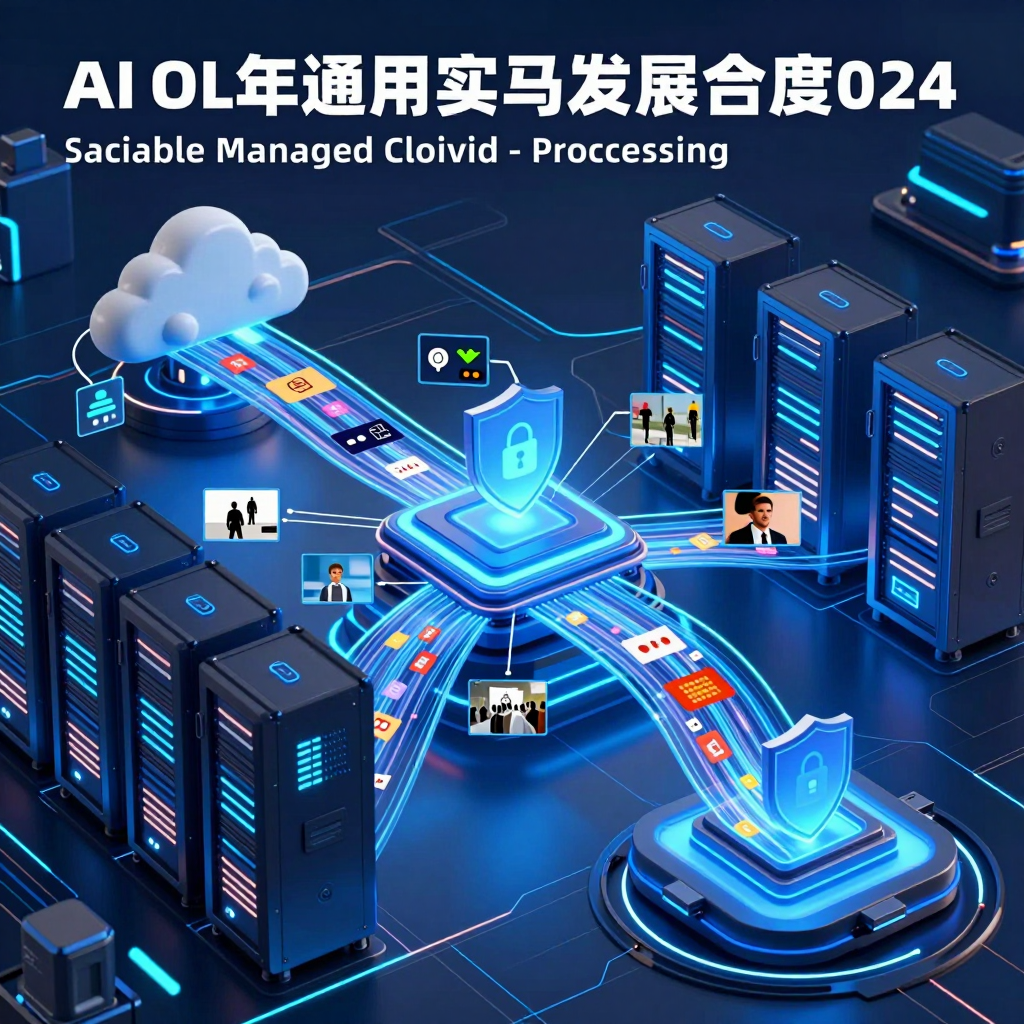 \n
\n
The Innovation of Cloud AI: What is a Long-Context Multimodal LLM?
Traditional AI models often revealed a critical limitation: they were “smart but short on memory.” Handling long and complex data like lengthy contracts, massive codebases, or days’ worth of error logs required chunking documents, storing them in vector databases, and retrieving selective parts via search (RAG) to piece together prompts—making pipelines increasingly complicated. But now, the question changes: How is Google Cloud’s groundbreaking technology, ‘Gemini 1.5,’ which can process hundreds of thousands of tokens at once, transforming the world by surpassing previous AI limits?
The essence can be summed up in one sentence:
- Offering Long-context + Multimodal + Fully Managed LLMs as a Cloud service
In other words, the era is shifting from “hosting and operating LLMs yourself” to “calling them via API whenever needed.”
Why Long-Context LLMs Are ‘New’ in the Cloud Environment
1) Long-context: A context window enabling “everything in at once” reasoning
At its public debut, Gemini 1.5 (especially the 1.5 Pro) demonstrated support for a context size up to around 1 million tokens. This matters because the context length directly relates to the model’s working memory available in a single query.
- Current reality with short context
- Break documents/code/logs into small chunks
- Retrieve only the “seemingly relevant” parts via search for the LLM
- Quality can suffer due to missing pieces, and pipelines get complicated
- Shift enabled by long context
- Feed “bundled documents,” “entire repositories,” or “long log timelines” all at once
- The model can reason across the whole flow to infer cause-and-effect
Of course, this doesn’t mean infinite data fits at once—large datasets still require RAG/search. But the range of medium-sized knowledge chunks (tens to hundreds of MBs) that can be processed without the “preprocessing nightmare” has dramatically expanded. From a Cloud architecture perspective, this translates directly into simplified system design.
2) Multimodal: Reading the entire reality of business, not just text
Real-world business data isn’t just text. PDFs contain tables and images, field issues come in photos/videos, and call centers accumulate audio. Gemini 1.5’s significance lies in its ability to process multimodal inputs—text, images, video, audio—within a single model in a fully managed Cloud environment.
A typical Cloud architecture looks like this:
- Store originals (images, video, PDFs, audio) in Cloud Storage
- Optionally preprocess for document/video recognition (or use originals as-is)
- Send to Vertex AI’s Gemini API for analysis, summarization, and Q&A
- Connect results to BigQuery, databases, search indexes, or business systems
This is powerful because it moves away from “stitching multiple services into complex pipelines” toward a design where one model call covers a broader business context across modalities.
3) Managed Cloud LLM: Shifting the operational burden
Previously, adopting an LLM meant “securing GPU servers → setting up serving stacks → managing autoscaling and failover → building security and audit systems.” In contrast, Vertex AI’s Gemini 1.5 offers fully managed model serving on Google Cloud’s massive GPU/TPU infrastructure, with users accessing the model via API calls.
What changes with this shift?
- Companies reduce the burden of model operation (infrastructure and serving)
- Meanwhile, they can focus their expertise on prompt design, evaluation, data governance, and cost optimization
Long-context calls mean larger token counts per request, making cost and latency critical design variables. In practice, a common two-step strategy emerges:
- Use fast, low-cost models for initial summarization and organization (e.g., Flash series)
- Delegate only complex reasoning tasks to the large, high-capacity models (e.g., Pro series)
Conclusion from the Cloud Perspective: “The Moment AI Becomes Infrastructure”
With long-context multimodal LLMs delivered as managed Cloud services, AI is no longer a separate experimental feature but a fundamental infrastructure managing an organization’s knowledge flows—including documents, code, logs, and images. The change symbolized by Gemini 1.5 is not just “a smarter model” but a profound restructuring of cloud architecture itself toward simplicity and directness.
A Deep Dive into Cloud Technology: The Secrets of Long-Context and Multimodal Architectures
Imagine an AI that can grasp millions of pages of documents, images, and videos all at once — what’s the secret behind this? The key isn’t just the evolution of the model itself, but the fact that the traditional LLM architecture’s "preprocessing and retrieval-centric" setup has been restructured into a "model-internal reasoning-centric" framework, made possible by the extension of context length and input modalities (multimodal inputs).
What Cloud Long-Context Has Changed: From “Chunk-and-Search” to “Read and Reason Whole”
Conventional LLMs, limited by context size (e.g., 4k–32k tokens), inevitably made handling long data complex. The classic workflow looked like this:
- Splitting documents into chunks
- Generating embeddings for each chunk
- Storing them in a Vector DB
- Retrieving top-k results during queries → constructing prompts → calling the LLM
The problem? This approach causes “structural loss” even before accuracy issues arise.
When crucial clues in long documents, logs, or codebases scatter across different chunks, the retrieval phase can miss them, or the prompt assembly disrupts contextual connections. From an operations standpoint, embedding pipelines, index updates, re-indexing, and tuning search quality result in ongoing infrastructure costs.
Long-context (on the scale of hundreds of thousands to a million tokens) flips the choice.
- Medium-sized datasets (e.g., bundled policy documents, service runbooks, single repos, long-term failure logs):
→ Provided as intact original chunks without search
→ The model itself internally manages flow, cross-references, and inference
In other words, it’s not that “RAG disappears,” but rather the role of RAG is redefined.
- RAG shifts from ‘essential’ to ‘optional/accelerator’
- For extremely large corpora (entire corporate documents, years of tickets/emails), retrieval is still necessary, but
Long-context allows you to feed more top-N search results into the model (increasing recall),
enabling a hybrid approach where the model can handle contradictions, duplication, and evidence linking between documents.
The Core of Cloud Multimodal: Not “Convert-then-Merge” but “One Model Understands Together”
Traditional enterprise AI pipelines often separate models by input type:
- Image: Vision models
- Documents (PDF/scans): OCR + Document AI
- Video: Video analytics
- Text: LLMs
Then, results were “normalized” into text for the LLM to summarize or respond to. While workable, this method faces major limits:
- Information Loss: OCR errors, frame sampling losses, loss of layout/table/annotation meaning
- Consistency Issues: Weak evidence linking between “what was seen in images” and “what was read in documents”
- Pipeline Complexity: Increased operational points and potential failure spots in preprocessing chains
Multimodal LLMs structurally simplify this. When a single model is designed to handle text, images, video, and audio together in one shared context space, it enables:
- Using tables, diagrams, and screenshots inside documents as direct evidence alongside the text for the same question
- Directly cross-checking specific video scenes (e.g., violation of installation procedures) against text SOPs
- Producing conclusions from a single inference process that combines customer photos, symptom descriptions, and past support records
Crucially, this “unified understanding” drives Cloud architecture from being ‘preprocessing-centric’ to orchestration-centric.
Instead of spending excessive time fully transforming every piece of data:
- Store originals in object storage like Cloud Storage
- Attach only essential metadata/access controls
- Reliably operate model calls via workflows (Cloud Run/Functions, pipelines)
This naturally becomes the favored approach.
What It Takes for “One-shot Understanding” in the Cloud: Context Windows + Serving Infrastructure + Operational Design
For long-context and multimodal setups to deliver real-world value, model performance alone won’t do. Serving infrastructure and operational design must co-evolve.
- Stable serving on large-scale accelerator infrastructure (e.g., GPU/TPU)
Longer contexts inflate memory and bandwidth demands. Handling this at an enterprise cluster level is tough, with complex capacity planning, scaling, and fault tolerance. Managed Cloud LLM services abstract away this burden via API calls. - Cost and latency-aware model tiering
Feeding entire long contexts every time can explode costs. Practically, a two-step method prevails:- Fast, inexpensive models for initial summarization or candidate reduction
- High-precision long-context models invoked only when necessary
- Governance-inclusive design (permissions, auditing, data boundaries)
Multimodal inputs easily mix sensitive data (faces, document scans, voice), making Cloud IAM, audit logs, and data locality controls intrinsic architectural components.
In summary, the feeling of "understanding millions of pages at once" is no mere exaggeration — it’s enabled because long contexts reduce the need for “search and assembly” steps, multimodal inputs simplify “input transformation”, and Cloud-managed serving lowers operational complexity. Together, this combination fundamentally lowers the “pipeline complexity” barrier that previously hindered LLM adoption.
A New Operational Paradigm Created by Cloud Infrastructure and Managed Services
What if you could instantly use long-context LLMs with hundreds of thousands to a million tokens without having to design, build, and operate complex GPU/TPU clusters yourself? This is the fundamental question posed by Google Cloud’s Vertex AI Gemini 1.5. The era in which users shoulder the burden of “infrastructure operations for running LLMs” has ended, opening up an operational paradigm where large-scale inference is consumed reliably simply by calling the model via API.
The New Operational Default Driven by Cloud Managed Serving: From “Clusters” to “Calls”
Traditionally, for enterprises to properly operate large models, the following were essentially mandatory:
- GPU/TPU capacity planning: Overprovisioning based on peak traffic or facing delays due to shortages
- Scaling/scheduling: Kubernetes + GPU Operator, separating node pools, tuning autoscaling
- Model serving stack: Triton/TF Serving/vLLM, batch/streaming inference, caching strategies
- Failure handling: Driver/CUDA/library compatibility, node failures, rolling update failures
In contrast, Vertex AI Gemini 1.5 absorbs these operational burdens into a cloud managed service layer. Users no longer “own or operate” large accelerator infrastructure (e.g., TPU v5p, H100-based A3) but instead shift their focus to designing API call volume and policies (IAM, network boundaries, regions, etc.). Consequently, the fundamental unit of operation changes from “GPU clusters” to requests, costs, and governance.
Reliability Layers Provided by Cloud Infrastructure: Built-In Scaling, Versioning, and Failover
The innovation of managed LLMs goes beyond mere convenience. By standardizing the points where operational risks concentrate, the layers that define service quality shift:
- Automatic scaling and multi-tenant optimization: The platform absorbs the toughest challenge of LLM workloads—peak traffic fluctuations
- Version/release management: Model updates, performance improvements, and patches are decoupled from application operations with increased rollback possibilities
- Observability-centered operations: Instead of infrastructure metrics (GPU memory, node status),
- request latency/error rates
- token consumption
- response quality (evaluations)
become the core product metrics for operation
In other words, the operational goal is no longer “Is the serving system alive?” but rather “Is inference being delivered with the quality and cost required by our business?”
Cloud-Centric Architecture Reorganization: RAG Pipelines Shift from ‘Mandatory’ to ‘Optional’
With long-context now offered as a managed service, the previously essential complex pipelines become optional:
- Past (short-context focused):
Document chunking → embedding → vector DB → top-k retrieval → prompt construction → LLM - Change (leveraging long-context):
Medium-sized datasets (tens to hundreds of MBs) can be loaded “as large chunks” into context for single-step inference
The implications are clear:
- Fewer infrastructure components: Reduced operational points like vector DBs, indexing, synchronization, and reprocessing
- Shift in engineering effort: Governance/quality engineering such as
- prompt structuring
- input data cleansing/masking (PII)
- evaluation and policies (prohibited words, security guardrails)
become more important than fine-tuning retrieval infrastructure
Of course, for massive corpora (hundreds of GB to PB), hybrid RAG remains necessary. But the operational paradigm has shifted from “impossible without RAG” to “simplified RAG can suffice” in many areas.
The Core of Cloud Enterprise Operations: Security, Boundaries, and Auditing Become Prerequisites for LLM Adoption
As large-scale LLMs become easily accessible via APIs, the first question organizations ask is not about performance but about controllability. The Vertex AI-based approach combined with Cloud security tools makes the following practical operational mandates:
- IAM-based least privilege access: Segment which teams or service accounts can call which models
- Boundary setting with VPC Service Controls: Restrict calls to within corporate network boundaries to reduce data leakage risks
- Audit logs: Trace who requested what and when (for compliance response)
- Region/data sovereignty considerations: Incorporate data locality requirements into architecture
Ultimately, operating managed LLMs on the cloud reduces infrastructure operations while bringing organizational governance (permissions, auditing, data flow) to the forefront. This is the biggest innovation Google Cloud has created. The moment large-scale LLMs are adopted, the operational focus shifts from servers and clusters to policy, quality, and cost control.
Cloud Enterprise Security and Governance: Essential Preconditions for Adopting Cloud AI
The demand “The data is mine and must be securely protected” always tops the discussion when adopting LLMs. Especially for companies handling high-risk assets like contracts, customer information (PII), source code, or operational logs, the priority is not model performance but “How to control, audit, and localize the data.”
Google Cloud’s Vertex AI (including Gemini) focuses on bundling these realistic enterprise requirements into a cloud-native security and governance framework.
Core of Cloud Data Protection: Viewing “Prompts/Responses as Customer Assets”
The most sensitive question enterprises ask is:
“Are the documents and prompts we submit reused for model training?”
Google Cloud has consistently emphasized strong principles for processing and isolating customer data (such as no usage for training, as per 2024 disclosure guidelines) across the Vertex AI service suite. The practically important points include:
- Defining Data Boundaries: Systematically managing what data enters the model (prompts) and what results go outside (responses) with clear separation.
- Minimizing Sensitive Information: Designing preprocessing (e.g., DLP policies) to mask or filter PII, secret keys, and contract information before model input.
- Establishing Retention Policies: Formalizing where (or whether) to store prompts/responses and specifying retention periods.
In other words, calling a “model” is not just an application feature but a data processing activity, so it must be handled within the cloud security lifecycle.
Implementing Least Privilege and Separation of Duties with Cloud IAM
Once permissions are granted to an LLM, it can generate answers based on “what it can see.” Hence, the safest enterprise approach is to break down permissions finely. The following combinations are commonly utilized on Google Cloud:
- Service Account-Based Access: Calling Vertex AI with service accounts tied to workloads (Cloud Run, GKE, Functions), not individual user keys.
- Role Minimization: Separating roles for “model invocation only” and “model/resource management” to reduce operator misuse.
- Governance by Project/Folder/Organization: Segregating projects by department and enforcing common security rules through higher-level organizational policies.
This enables a state where “who can call which model with what data” is explained and enforced through permission policies, simplifying security and audit responses.
Cloud Network Boundaries: Preventing Data Exfiltration with VPC Service Controls
Incidents in enterprises usually occur as data leaks through “unauthorized pathways.” Google Cloud’s VPC Service Controls (VPC-SC) apply service perimeters even to managed services like Vertex AI, enforcing:
- AI API access only via internal VPCs and approved network paths.
- Blocking abnormal data movement to external networks/projects through policy enforcement.
- Grouping sensitive projects (e.g., customer data/finance/source code) into separate perimeters to restrict accessible callers.
The key is that this is not “just a few firewall rules” but a model that keeps Cloud-managed API calls inside strict boundaries. As LLM calls increase, the value of these network boundaries grows stronger.
Cloud Auditing and Traceability: Proving “Who Called What, When, and How”
Because LLM outputs are textual, post-incident questions inevitably arise:
- Who generated that answer?
- What documents were used as input?
- Which model/version was employed?
- Where was the output delivered?
Google Cloud provides Audit Logs that capture API call traces, which can be fed into SIEM/log analytics systems to power security monitoring and post-event audits. Recommended operational designs include:
- Aggregating Vertex AI call logs into a central logging repository.
- Creating detection rules for high-risk events (e.g., abnormal token surges, sudden spikes in dataset access, large night-time invocations).
- Change Management: Recording and approving changes to models and prompt templates with deployment records.
Ultimately, enterprise AI is not “done once it works,” but a system that must be provably auditable to be operated securely.
Cloud Data Residency and Sovereignty: Deciding Where Data Resides
Domestic enterprises often face demands around data export abroad, data sovereignty, and financial/medical regulations. The critical point is to fix the “regions supported by services” and the “physical locations where data is processed, stored, and transmitted” during the design phase.
- Region Strategy: Maintain consistent regions where data is created and stored alongside model invocation paths.
- Policy-Based Controls: Ban calls outside specific regions or allow only approved regional combinations.
- Integrate Data Classification: Separate “allowed regions” and “allowed services” based on sensitivity levels.
This is not simply about “using the Korean region” but requires thorough inspection of the entire data path including logs, backups, monitoring, and integration services.
For enterprise success in adopting Cloud AI, models must be regarded not as “smart features” but as controllable operational systems. Managed LLMs like Vertex AI + Gemini provide the tooling (IAM, VPC-SC, Audit Logs, data residency) at the cloud platform layer. Enterprises combine these to technically enforce their own security principles, completing the design as a rigorously controlled system.
Real-world Cloud Applications and Future Outlook: Work Innovation Driven by Cloud AI
From large-scale codebase analysis to multimodal customer support, achieving “AI that works effectively on the ground” requires more than just model performance. The locations where data resides (storage, databases, logs), where it runs (serverless, Kubernetes, CI/CD), and where it’s controlled (IAM, auditing, networking) must be seamlessly integrated into a single workflow. The impact of Vertex AI’s Gemini 1.5 was significant because it realized this connection as a cloud-managed service.
Cloud Use Case 1) Large-scale Code and Infrastructure Analysis: Automated Operations That “Read Entire Repositories”
Traditional LLM-based code analysis often faced these limitations:
- The longer the code, the more essential pipelines like chunking, vector search (RAG), and summary caching become.
- While answers about “top few files” are possible, enterprise-wide questions like inter-module dependencies, deployment structure, and security boundaries often suffer accuracy issues.
With the introduction of long-context LLMs, the approach changes. It becomes possible to load entire context — code, configurations, and documentation — all at once for inference, as much as feasible.
Example Cloud-native Architecture:
- Periodically snapshot code repositories (GitHub/GitLab/CSR) into Cloud Storage
- Package build artifacts, IaC (Terraform), K8s manifests, and SRE runbooks into query-level bundles using Cloud Run/Functions
- Call Vertex AI Gemini 1.5 Pro to generate outputs such as:
- Service topology (internal/external communication), module dependencies, and likely failure points
- Impact analysis for “Which services does this change PR affect?”
- Configuration security audits (excessive IAM permissions, public buckets, open network ports)
- Store results in BigQuery/document tools and automatically create issues in Slack/Jira
Technical Highlights:
- Long-context LLMs expand the “system understanding scope” rather than just “search accuracy,” elevating tasks traditionally done by architects or lead engineers to candidates for automation.
- Because processing entire codebases every time can be costly, a practical approach is a two-step call: Flash for initial summarization → Pro for detailed inference.
Cloud Use Case 2) Enterprise Document Q&A: RAG is Not ‘Replaced’ but ‘Reimagined’
When internal documents exceed hundreds of thousands of pages, “just loading everything” becomes impossible. The practical solution is a hybrid of RAG + long-context.
Recommended pattern (for large organizations):
- Step 1: Narrow down candidate documents via Vertex AI Search/vector search to get the top-N candidates
- Step 2: Load these top-N documents (full text or key excerpts) at once into long-context to perform sophisticated reasoning such as:
- Comparing conflicting policy clauses
- Detecting exception clauses
- Citing supporting sentences with sources
Technical Highlights:
- The bottleneck in existing RAG often lies not in “search” but in the manual effort of reading multiple retrieved documents and synthesizing a conclusion. Long-context automates this step.
- Quality depends more on cloud governance design—especially integrating document access control (ACL), sensitive information filtering, and audit logs—than just model performance.
Cloud Use Case 3) Multimodal Customer Support: Handling Photos, Videos, and Documents Seamlessly in Workflows
Multimodal is not just a “demo feature” but an area delivering immediate ROI in customer support and field operations. Customers send not only text but also photos, videos, PDF manuals, and voice recordings.
On-the-ground scenario:
- A customer uploads a photo of a broken product + PDF purchase receipt + voice describing the issue
- The system stores these in Cloud Storage and processes events via Eventarc/Pub/Sub
- Gemini 1.5 comprehensively analyzes multimodal inputs to:
- Estimate product model/serial number
- Classify failure type (possible causes/follow-up questions)
- Guide the relevant manual’s troubleshooting steps with references
- Automatically create an AS service ticket if needed
—all in one go
Technical Highlights:
- The key in multimodal is not just “the model sees images” but that the workflow no longer depends on media conversion (e.g., image→text OCR).
- However, in regulated industries, considering possible PII in images/documents requires strict weaving of DLP + storage encryption + access controls (IAM, VPC Service Controls).
Future Outlook for Cloud: Opportunities Open to Your Organization — From “Attaching AI” to “Redesigning Work”
The future opportunity goes far beyond simply adding a chatbot. The fundamental shifts in cloud over the long term revolve around three aspects:
Work units shift from ‘documents/tickets’ to ‘context packages’
- Even handling a single incident will become standard as bundling logs, change histories, configurations, runbooks, and conversation records into “packages” delivered to LLMs.
Platform teams’ role evolves: from Kubernetes optimization to AI governance, cost control, and evaluation systems
- While model calls become easier, enterprise quality depends on operational systems such as
- automated evaluation (Eval)
- prompt and policy version management
- data boundaries (region, VPC, IAM)
- cost guardrails
- While model calls become easier, enterprise quality depends on operational systems such as
Hybrid architecture becomes the norm: it’s not ‘long-context vs RAG,’ but a ‘combination’
- Small, frequent requests are handled by lightweight models/caches/summaries, while critical decisions (audits, legal, root-cause analysis) leverage deep inference with long-context.
In conclusion, as long-context multimodal models like Gemini 1.5 become available as managed services on cloud, the greatest advantage organizations gain is not just “smarter answers” but a design option to simplify workflows and expand automation scope itself. The question evolves from “Should we implement AI?” to “Which parts of our code, documents, fieldwork, and operations should we restructure so AI can understand them?”
Comments
Post a Comment