Hanwha Aerospace Daejeon Factory Explosion: 6 Casualties... Presumed to Occur During Explosive Cleaning Process
 \n
\n
Explosion Accident at Hanwha Aerospace Daejeon Plant: What Really Happened That Day?
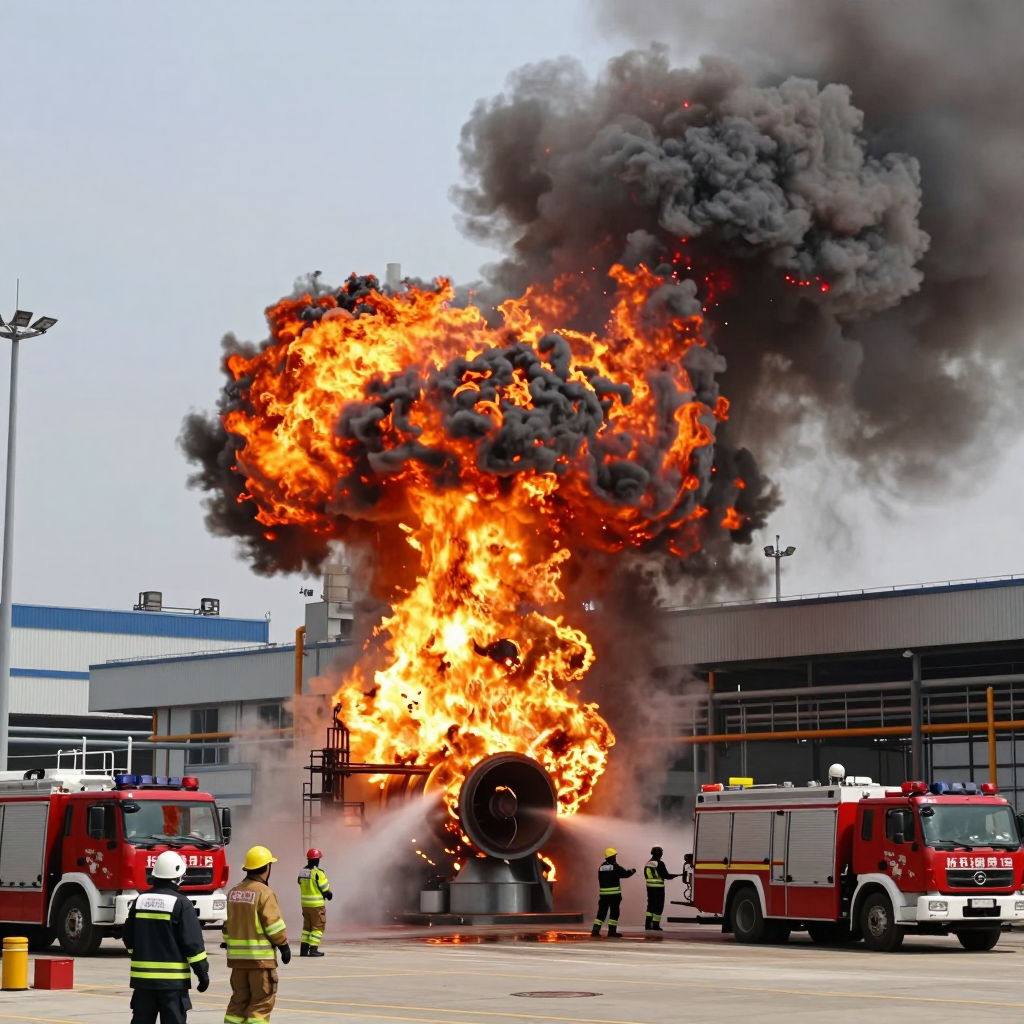
On the morning of June 1st, an unidentified explosion and fire broke out at Hanwha Aerospace, a defense contractor in Daejeon. Reports of “a loud explosion” and “thick smoke billowing” quickly poured in, triggering an immediate disaster response. As casualties were confirmed, the impact of the accident grew significantly. So, what exactly unfolded at the scene, minute by minute?
Timeline of the Hanwha Aerospace Incident: From Explosion to Massive Fire
Based on all reports released so far, the sequence of events is as follows:
- Around 10:59 a.m.: Explosion and fire erupted at Hanwha Aerospace Daejeon Plant in Oesam-dong, Yuseong-gu, Daejeon
- Explosion site: According to sources, the blast originated on the first floor of the factory
- Reports filed: Over 30 emergency calls to 119 reporting explosions and thick black smoke nearby
- Firefighting response: Around 11:17 a.m., Level 1 fire response was declared, deploying dozens of equipment and 30 to 80 firefighters
- Containment progress: By approximately 11:49 a.m., major flames were brought under control
- Damage extent (facility): The fire spread rapidly, leaving one building almost completely destroyed
In short, this was no ordinary fire—it was a large-scale blaze triggered by an explosion, and right from the start, the possibility of human casualties was strongly raised during firefighting efforts.
Why Are Reports on Hanwha Aerospace Casualties Conflicting?
Immediately after the incident, the number of casualties reported varied widely across different media outlets and authorities, a common phenomenon in the chaos of early disaster stages:
- Discrepancies in reporting timeframes (updates differing between fire department, police, and news media)
- Changes in condition of seriously injured victims (worsening during treatment)
- Delayed confirmation of unaccounted individuals (later accounting for those who evacuated the site)
What’s clear for now is the “minimum of six casualties,” but the exact numbers of deaths and injuries are expected to be officially confirmed through upcoming briefings. Therefore, future news updates must prioritize the “final verified tally.”
Explosion During Gunpowder Cleaning? What Remains Unclear About the Hanwha Aerospace Accident Cause
While the exact cause has yet to be determined, the company suggests a possible explosion during the cleaning process involving gunpowder. This point is crucial because while cleaning may seem like a routine task, when combined with certain factors, the risk can skyrocket:
- Residual chemicals and flammable components
- Static electricity, friction, and tiny ignition sources
- Sufficiency of ventilation and explosion-proof facilities
- Compliance with Standard Operating Procedures (SOP) and on-site control measures
The key focus of ongoing joint investigations will be to uncover not only the direct cause (which substance ignited by what ignition source) but also the “systemic factors” such as Process Safety Management (PSM), equipment status, training, and supervision frameworks. This in-depth analysis will be the critical lens for understanding the full scope of this tragic accident.
Hanwha Aerospace Casualty Status Amid Scattered Information: What Is the Truth?
As the reported death toll keeps changing amidst the confusion, how many true victims are there? When we examine the hidden story between sporadic reports and official announcements, the numbers we see now are less “confirmed figures” and more like “ongoing figures from different reporting points in time.” Especially in incidents like the explosion and fire at Hanwha Aerospace’s Daejeon plant, where the site is controlled and rescue and investigation are conducted simultaneously, it is not uncommon for initial numbers to fluctuate.
Why Different Numbers Appear: “Who counted, when, and by what criteria?”
The core reason for the conflicting casualty reports is simple. Different institutions disclose data at different times and classify victims by different standards.
- Some reports: “4 dead, 2 injured, 1 self-evacuated”
- Other reports: Based on firefighting announcements, figures read as “6 dead, 1 minor injury”
- Police and fire agency tallies: Estimate “4 dead, 2 injured,” noting that one previously unconfirmed person was verified as self-evacuated
This discrepancy is less “misreporting” and more a natural result of the information update process distinctive to disaster early stages. In other words, figures captured from different timelines of the same event circulate simultaneously.
Typical Patterns Behind Changing Early Disaster Numbers
There are several recurring mechanisms causing fluctuation in casualty counts.
- Restricted site access: Fire and explosion scenes delay internal verification until safety is secured.
- Changes in critical patient conditions: Victims’ conditions may worsen or official time of death may be reassessed during treatment.
- Double counting or reclassification: Numbers shift as “missing → self-evacuated confirmed” or “injured → minor/moderate injury reclassification.”
- Different announcing bodies’ roles: Firefighters focus on rescue and recovery, police on identification and investigation, resulting in varying tally processes.
Ultimately, the confusion readers feel is less from unclear facts and more because the fact-confirmation process is unfolding transparently.
The Most Reasonable Conclusion at This Point: “About 6 to 7 People, 4 to 6 Deaths”
Based solely on currently disclosed information, the safest understanding of the casualty scale is approximately:
- Total casualties: At least 6 people (roughly 6 to 7 depending on reports)
- Death toll: Between 4 and 6, with conflicting numbers
- Possibility of change: Likely to be finalized through joint investigation and final briefing
What truly matters is not the competition over numbers but ensuring no omissions in the final confirmation. Especially for high-risk substance-handling sites like Hanwha Aerospace, it must be kept in mind that confirmation can be delayed due to remaining hazards at the scene (secondary accidents).
The ‘Real Reference Points’ Readers Should Check in the Final Briefing: 3 Key Elements
When following this news, rather than chasing sensational numbers, it is more accurate to verify the following three:
- Final confirmed death and injury numbers (joint institutional standard)
- Victims’ identities and type of work (regular employees/contractors, process and job scope)
- Reasons behind tally changes (misidentification, duplication, condition changes, self-evacuation confirmation) disclosed
Amid fluctuating casualty figures, the ultimate question remains. Why did such harm occur?—And does that answer reach into Hanwha Aerospace’s entire safety system (process, equipment, procedure, culture)?
Hanwha Aerospace ‘Explosion During Explosive Cleaning Operation’? The Root Cause and the Dark Reality of High-Risk Defense Manufacturing Processes
Why did another explosion accident occur in the defense industry, where advanced technology and strict safety are paramount? The recent incident at Hanwha Aerospace’s Daejeon facility cannot be simply explained as a “field mistake.” Especially, the possibility of an explosion during the ‘explosive (propellant) cleaning operation’ revealed in reports exposes both the structural dangers inherent in defense manufacturing and the gaps in the management system.
Clues to the Cause of the Hanwha Aerospace Accident: Why Is ‘Cleaning’ Such a Dangerous Process?
At first glance, cleaning might sound like a process of “removing hazardous materials,” but in explosives and propellant handling, it can actually become a phase where risks are amplified.
- Residue Variables: Trace amounts of explosive components left on equipment, containers, and pipes can detach during cleaning and unexpectedly accumulate to hazardous concentrations.
- Static Electricity, Friction, and Impact: Friction, equipment operation, the condition of protective gear or work clothes, and dry environments during cleaning can act as ignition sources triggered by static electricity.
- Solvents, Vapors, and Ventilation Issues: If solvents or cleaning agents used—or their reactive byproducts—produce flammable vapors, and ventilation or explosion-proof design is inadequate, the danger escalates sharply.
- The Trap of ‘Routine Work’: Repetitive cleaning tasks often breed familiarity among workers, so minor procedural deviations can accumulate and push conditions beyond critical thresholds, leading to accidents.
In short, if the statement that the explosion occurred during cleaning is accurate, the key point is not that cleaning itself is inherently risky, but that the cleaning process is a high-risk crossroads where ignition sources, residues, and environmental factors intersect.
The Harsh Reality of Hanwha Aerospace’s Defense Manufacturing: Systemic Causes More Terrifying Than Direct Triggers
Major accidents usually hinge less on “what exploded” and more on “why that situation became possible.” When a joint investigation takes place, the focus will likely be on system-level questions such as:
- Did the Process Safety Management (PSM) design align with actual work practices?: Often, documented procedures (SOPs) are perfect on paper but hard to follow in the realities of workflow, timing, and workforce composition.
- Were explosion-proof, isolation, and ventilation facilities adequate?: Engineering controls—such as electrical/mechanical equipment ratings for explosive zones, local exhaust systems, and explosion pressure relief designs—directly influence accident severity.
- Was the hazard assessment a mere formality or actively operational?: It’s critical to verify if pre-task checks led to real work stoppages or modifications, or if they were reduced to just a checklist.
- Did the near-miss reporting culture function properly?: If minor warning signs accumulated but reporting and corrective action were delayed due to production schedules or performance pressures, the risk of recurrence remains high.
The forthcoming investigation will clarify whether this accident is a problem specific to Hanwha Aerospace’s line or a common manifestation of “misalignment among people, equipment, and procedures” in high-risk processes.
Key Insight For Interpreting the Hanwha Aerospace Accident: Don’t Stop at Finding the Ignition Source
If future statements conclude with vague lines like “presumed static electricity” or “possible negligence,” readers should be even more wary. What truly matters is whether, alongside the direct causes (ignition source, materials, operator actions), there is transparency about:
- Vulnerabilities in process design,
- Safety investments and aging equipment,
- Supervision, training, and permit-to-work systems,
- The degree of automation and remote operation for hazardous processes.
The defense and aerospace sectors are both “precision manufacturing” and “high-energy materials industries.” As technology advances, safety must advance at the same pace—otherwise, accidents are destined to recur.
Government Emergency Response and Recurrence Prevention Challenges: What Does the President’s Directive Mean? (Hanwha Aerospace)
The recent accident reported all the way to the Presidential Office is far more than a mere industrial mishap. The explosion and fire at Hanwha Aerospace’s Daejeon plant not only resulted in casualties but also served as a national-level wake-up call about “what kind of damage high-risk defense and aerospace industry processes can cause in reality.” The government’s emergency response is a signal that gauges not only the speed of containment but also the intensity of future recurrence prevention.
The Core of the President’s Directive: “Full Mobilization” Means More Than On-Site Recovery
According to reports, upon receiving the briefing, the President instructed to mobilize all available resources for life rescue and accident containment. This phrase generally includes three key points:
- First, integrated command centered on the golden hour: It means clearly prioritizing rescue, transport, and site control to avoid fragmentation among fire, police, local governments, and medical institutions.
- Second, blocking secondary damage: At explosion and fire sites, residual chemicals, risk of further explosions, and toxic gases pose greater threats than lingering flames. Immediate expansion of control zones and checking hazardous material management status are included.
- Third, ‘speed’ and ‘quality’ of post-accident investigation: It signals politically and administratively not to end with simple accident handling but to swiftly move forward with root cause identification, accountability, and system improvements.
Critical Checkpoints in the Government’s Emergency Response
Speed alone is not enough. For sites dealing with explosive materials like the Hanwha Aerospace accident, the quality of response determines the outcome.
- Centralizing information and briefing system: In the early stages, casualty counts may vary due to differing reporting times among agencies. What matters is not a “numbers game” but a transparent system explaining official counting standards and changes.
- Preserving the site and preparing for joint inspection: Alongside firefighting, it is essential that explosion points, work records, CCTV footage, and equipment logs are preserved to the maximum extent for subsequent investigation.
- Safety measures for nearby areas: Even if the accident is inside a factory, adjacent areas may include residential or research facilities. Evacuation guidance, air quality monitoring, and traffic restrictions must be implemented simultaneously to reduce community anxiety.
Challenges for Recurrence Prevention: Targeting Systems, Not “Individual Errors”
For the President’s directive to be effective, the conclusion must not simply blame “worker negligence.” High-risk process accidents are usually systemic issues tangled in process design, equipment, procedures, training, supervision, and investment.
- Check PSM (Process Safety Management) effectiveness: If the explosion is indeed tied to cleaning work, the key is whether basic explosion-proof designs such as static electricity, ventilation, and ignition source controls were properly functioning.
- Prioritize engineering controls: “Stronger training” alone cannot prevent recurrence. It must be verified whether structural investments to reduce risk—like remote operation, automation, and explosion-proof equipment upgrades—follow.
- Safety culture and reporting system: Organizations that hide near-misses repeatedly suffer major accidents. It is crucial to see if the government scrutinizes corporate reporting cultures and KPIs (safety performance indicators).
Prospective Policy Direction: Increased ‘Management Intensity’ for High-Risk Sites
The fact that this incident was reported up to the Presidential Office paves the way for potential regulatory changes. Particularly for high-risk sectors like defense and propulsion, the following trends may emerge:
- Strengthened regular safety inspections and special audits: A broadened whole-government inspection of similar processes is likely
- Discussion on effective work stoppage rights and risk assessment: Reducing “paper evaluations” and enhancing on-site applicability
- Increased pressure for corporate transparency: Public disclosure of accident causes and scales/timelines of recurrence prevention investments may become de facto standards
Ultimately, the President’s directive does not end with “extinguish quickly.” The conclusion of handling the Hanwha Aerospace accident—whether it leads to strengthened systems, investment, and supervision—will decide if this remains a one-time event or becomes a turning point in industrial safety.
The Warning Left by the Hanwha Aerospace Accident: Industrial Safety, ESG, and Future Investment
What message does this accident send to the Daejeon community, corporate trust, and the domestic defense industry? The ripple effect goes far beyond a simple "factory fire." The explosion and fire at Hanwha Aerospace’s Daejeon plant exposed the structural risks inherent in industries handling high-energy materials, while simultaneously expanding into a larger framework concerning ESG evaluations and investment risks.
Hanwha Aerospace and the Local Community: Safety Doesn’t End ‘Inside the Factory’
In areas like Oesam-dong, Yuseong-gu, Daejeon, where industrial facilities and residential zones are close, a major accident immediately disrupts daily life.
- Community Anxiety and Trust Decline: The explosion noise, smoke, and numerous emergency calls leave residents wondering, “Will it be safe next time?”
- Regional Image and Value: Safety incidents harm the brand of regions densely packed with companies and research institutes.
- Expansion of Employment and Labor Safety Issues: Repeated accidents raise social questions about “who is assigned the hazardous processes” (subcontractors, non-regular workers, shift work, long hours).
In short, industrial safety is not just an internal compliance issue but a social contract with the local community.
Hanwha Aerospace from the ESG Perspective: Both ‘S’ and ‘G’ Are Shaken
This accident directly impacts especially the Social (S) and Governance (G) aspects of ESG.
S (Social): Major disasters immediately affect ESG scores
Industrial accidents involving casualties raise serious doubts about the company’s commitment to social responsibility. Safety is not about welfare programs or campaigns; it is judged by the performance of systems that prevent accidents.G (Governance): Did the risk management system function effectively?
The market and stakeholders ask, “Why was this not prevented?”- Board-level safety and health management systems
- Whether top management incorporates safety KPIs
- Transparency and speed of information disclosure after the accident
These factors determine corporate credibility.
Ultimately, ESG is not about image management but a method to verify management’s ability to reduce disasters.
Investment Risks in Hanwha Aerospace: Beyond Immediate Costs, the Fear of Losing ‘Trust Premium’
From an investment perspective, short-term losses and long-term reputational costs must be distinguished.
- Short-term risks: Production disruptions due to halted processes, restoration costs, potential compensation and lawsuits, and regulatory penalties may materialize.
- Medium- to long-term risks: In the defense and aerospace sectors, trust is built not only on timely delivery and quality but also on safety and control capabilities. Clients and partners will scrutinize whether “this company’s processes are stable,” which could undermine competitiveness in securing contracts.
Thus, the core question is not “how fast they recover” but how structurally they change.
Key Checkpoints to Watch After the Hanwha Aerospace Accident
By following the news with these points in mind, you can get closer to the truth behind the event.
- Final Confirmation of Casualty Numbers: Watch for the settling of discrepancies between agencies’ reports.
- Depth of the Joint Investigation Results: Beyond direct causes (ignition source, process, materials), the critical issue is how much information is disclosed about system causes such as PSM, explosion-proof facilities, training, and supervision.
- Level of Recurrence Prevention Measures: Look for results beyond declarations like “strengthened training,” focusing on engineering controls (automation, remote operation, safety design).
- Regulatory and Institutional Changes: Expect policy discussions to translate into realities, such as mandatory safety audits for high-risk processes and enhanced effectiveness of risk assessments.
This accident goes beyond a single company’s issue at Hanwha Aerospace; it is a warning questioning whether the domestic defense and aerospace industries can elevate safety as a competitive advantage. What is needed now is not just swift recovery but structural reform to ensure these conditions never happen again.
Comments
Post a Comment