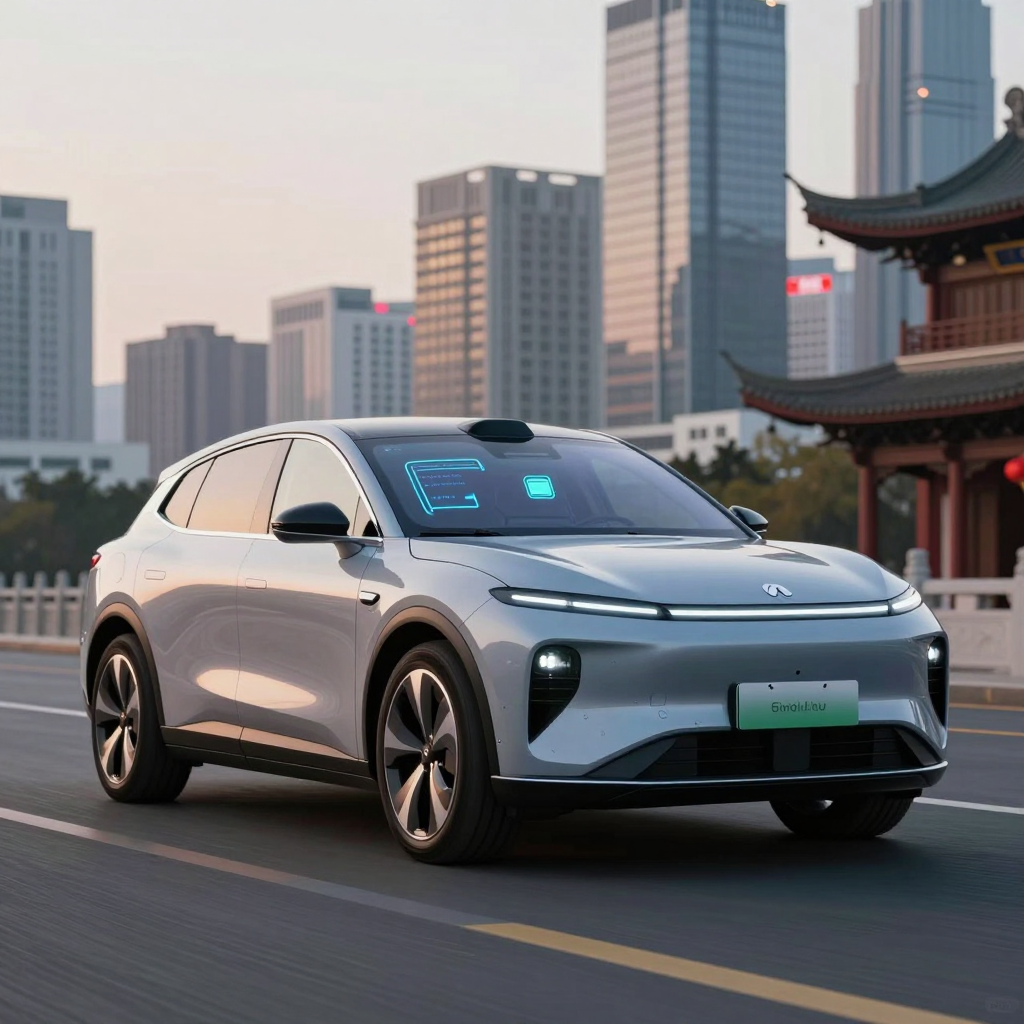
 \n
\n
Hyundai Ioniq Emerges at the Heart of the Electric Vehicle Revolution
In 2026, how is the Hyundai Ioniq, positioned at the center of the global electric vehicle market, redefining the future of the automotive industry beyond being just another model? Today, the Ioniq is no longer just news about “one more electric car on the road”; it has become a barometer showing how far Hyundai Motors’ electrification strategy has evolved.
The key is clear. The Ioniq operates as an electrification platform that moves the market, technology, and brand simultaneously—beyond the success or failure of any single model.
- Market Perspective: By layering its lineup with the Ioniq 5, 6, and 9, it tightly covers major demands from SUVs to sedans and even three-row flagship models.
- Technology Perspective: Featuring ultra-fast charging and driving stability based on the E-GMP platform, it raises the baseline for what “electric vehicle fundamentals” should be.
- Strategic Perspective: With localization reflecting regional characteristics—such as the China-tailored Ioniq V—it proves that the competition in the EV market is expanding into product + ecosystem + partnerships.
Ultimately, the rise of Hyundai Ioniq is not just the success of a single brand; it is the realization of the essential answers needed for the EV era—platform-centered scalability and region-specific optimization—brought to life through concrete products and strategies. The reason we must pay attention to Ioniq now is not because it’s simply a “currently best-selling car,” but because it is moving in a way that sets the next standard first.
Hyundai Ioniq V: A Strategic Gamble to Re-enter the Chinese Market
The staggering drop in sales—from a peak of 1.14 million units in 2016 to just 130,000 units projected in 2025, an 88% plunge—is not merely a slump but a clear warning that “the rules of the game have changed.” So, how can Hyundai Motor Company turn this crisis around? The ace up their sleeve is the China-tailored electric SUV, Ioniq V. This model is designed as the most realistic rebound mechanism for Hyundai to regain its presence in China.
Why Hyundai Ioniq V is the ‘Chinese Solution’
The key lies not in simply transplanting a global model, but in developing it based on Chinese consumers and market structure.
- Redefining Class and Space: At around 4.9 meters in length and a 2.9-meter wheelbase, the Ioniq V maximizes rear-seat-centric space value—a design directly targeting the critical “second-row experience” prized by Chinese customers.
- Aggressive Range Messaging: Offering a 600 km single-charge range (some reports even cite higher figures), this move positions the Ioniq V at the starting line of specs competition in China’s fierce EV market.
- Living Room-Style Interior Experience: Featuring a 27-inch 4K large display, high-performance chipset, and AI voice assistant, Hyundai redefines the car not just as a vehicle but as a digital lounge. This choice reflects the marketplace shift where “experience” trumps hardware in purchase decisions.
Hyundai Ioniq V’s Core Weapon: Not Just ‘Localization’ but ‘Local Alliances’
In China’s EV market, speed is everything, and ecosystem equals competitiveness. The Ioniq V embraces this by placing a collaborative structure with local companies front and center.
- CATL: Battery supply secures not only supply chain stability but also a competitive cost structure.
- Beijing Automotive: Joint platform development allows rapid incorporation of local standards and production-procurement realities.
- Momenta: Collaboration on autonomous driving technology strengthens the “smart car experience” Chinese consumers expect.
This combo is far more than simple outsourcing—it’s a strategic joint front allowing Hyundai Ioniq to fight anew in China. If one reason for Hyundai’s lag was the timing of the EV transition, Ioniq V attempts to shorten that gap through “partnerships.”
The Challenges Hyundai Ioniq V Must Overcome Are Clear
However, product excellence alone won’t guarantee success. China is already a battleground for price, technology, and brand all at once.
- Price Competitiveness: Hyundai must confront rapid cost-cutting by local players head-on.
- Trust Rebuilding: Overcoming accumulated image risk post-THAAD tensions can’t be achieved with just “good cars.”
- Technology Experience: Autonomous driving and infotainment are judged through user experience, not specs.
The Ioniq V is not merely a question of “Can we sell in China again?” but a test of “Can Hyundai rise again using Chinese market’s own competitive logic?” Its outcome could well shape the future direction of Hyundai’s entire Ioniq lineup.
Hyundai Ioniq: Beyond Localization, the Future Unlocked by Collaboration with Chinese Companies
From the world’s largest battery manufacturer CATL to the innovative autonomous driving startup Momenta, Hyundai’s collaborative network in China is more than just “local parts sourcing”—it’s an experiment that’s changing the very way electric vehicles are developed. Especially with its China-specific strategic model leading the charge, Hyundai Ioniq’s trajectory marks a turning point that could reshape the global electric vehicle landscape, far beyond just succeeding in one region.
The Core of Hyundai Ioniq’s ‘Collaborative Localization’ Strategy
The Chinese market operates at a different speed and scale. Technology trends change rapidly, and consumers demand cutting-edge digital experiences instantly. In this environment, it’s nearly impossible for automakers alone to internalize all capabilities. Hyundai’s solution? Dividing roles with local champions.
- CATL (Battery): More than a supplier, a partner rapidly balancing performance, cost, and safety
- Beijing Auto (Co-development): The foundation that enables development speed and regulatory adaptation tailored to China’s market demands
- Momenta (Autonomous Driving): A catalyst rapidly enhancing ADAS/autonomous driving experiences optimized for China’s roads and data environment
This mix evolves beyond “building cars locally for local sales” into a structure that elevates locally validated technologies to global standards.
How Hyundai Ioniq’s Collaboration Rules the Game: Speed, Data, Experience
The true competitiveness in China’s EV market isn’t just hardware. The whole user experience—from battery cost and efficiency, software update cycles, to voice assistants and infotainment sophistication—sets the competitive stage. Hyundai’s collaboration directly targets this arena.
- Accelerating Development Speed: Leveraging local partner ecosystems to shorten the ‘planning-development-validation’ cycle.
- Data-Driven Refinement: Autonomous driving and AI features are ultimately a data war; China-centric collaboration creates fast learning and improvement loops.
- Enhancing the Digital Lounge Experience: Large displays, high-performance chipsets, natural language AI — competitiveness is built locally, with potential to scale to other markets.
In essence, collaboration in China is both a sales strategy and a catalyst for advancing Hyundai’s technology roadmap.
How Hyundai Ioniq’s ‘China Experiment’ Spreads Globally
What makes this collaboration model fascinating is its potential to alter Hyundai’s overall learning curve, beyond just China-specific models. As UX and software capabilities rapidly validate and accumulate in China, we are likely to see them transfer to Ioniq lineups across other regions in ways such as:
- Diversifying Battery Technologies: Strengthened supply stability and cost competitiveness broaden pricing strategies.
- Localized Autonomous Driving Features: Regional traffic environment-specific optimizations become more precise.
- Simultaneous Evolution of Hardware + Software: Vehicles become products that continue improving post-launch, helping restore brand trust.
Ultimately, Hyundai’s collaboration in China transcends mere “market penetration” and acts as a leading indicator of how Hyundai Ioniq will compete in the next generation of electric vehicles. Only those who elevate technology and experience through collaboration—and then scale these achievements globally—will maintain leadership in the electric vehicle era for the long haul.
Hyundai Ioniq’s Mutual Penetration Battle in the Global EV Market
As Chinese electric vehicle makers enter the Korean market, how is Hyundai fighting back across the global electric battlefield—including North America and China? The answer is not simply “price cuts” or “expanded lineups,” but rather reading the unique rules of each market and weaponizing the Ioniq accordingly. The EV competition has evolved beyond a single-country showdown into a phase of mutual penetration, where rivals invade each other’s home turf.
The Reality of ‘Reverse Penetration’ Hyundai Ioniq Faces
The Korean market has long been a familiar battleground for Hyundai. However, with Chinese EV brands entering domestically armed with competitive pricing, infotainment, and battery technology, the game has changed. This is not just a new car launch race, but an all-encompassing war involving:
- Resetting domestic consumer expectations (digital experience, option configurations, value for price)
- Competing brand trust (safety, after-sales service, residual value)
- Regulation, certification, and service network
In other words, the Korean market is no longer just a “defensive front” but has become the frontline where global EV trends are instantly reflected.
Hyundai Ioniq’s ‘Two-Pronged Operations’ on the Global Battlefield (China Localization vs. North American Premium)
In the mutual penetration battle, the key is not relying on a single strategy to conquer all markets. Hyundai pursues distinct approaches for China and North America through the Ioniq.
China: Re-entry through Localization
- Like the Ioniq V, Hyundai rapidly adapts battery, platform, and autonomous driving tech by partnering locally (CATL, Beijing Auto, Momenta, etc.).
- The essence lies not in “exporting models” but delivering an EV experience redesigned around Chinese consumer standards.
North America: Upgrading to Premium
- By fronting a large electrified SUV like the Ioniq 9, Hyundai competes not on price but through brand strength, product appeal, and trim strategies.
- Success here boosts not only sales but also the Ioniq’s symbolic global asset—a premium image.
Thus, Hyundai adopts a dual positioning of “penetrating China by localization” and “expanding in North America via premium offerings,” responding with multi-front warfare rather than a single battle line.
Defending the Korean Market: Hyundai Ioniq’s ‘Trust + Experience’ Rivalry
The stronger the Chinese brands’ advance, the clearer Hyundai’s winning strategy in Korea becomes. Korean consumers scrutinize not just specs when buying EVs but the entire ownership experience. Hence, Ioniq’s key advantages to safeguard include:
- Charging convenience and a refined user experience (software and UI improvements rooted in real-world use)
- The psychological assurance provided by a robust service/parts/after-sales network
- Long-term trust factors like residual value and recall responses
- Strengthening public engagement through brand events and test drives
Ultimately, competition in Korea shifts from “who offers the lowest price” to “who can be trusted more,” a battleground where the Hyundai Ioniq can leverage strengths equal to its technologies.
Conclusion: In the Mutual Penetration Era, Hyundai Ioniq Fights with ‘Regional Optimization’
The EV market has solidified into a structure of mutual territorial penetration and share theft. While Chinese cars grow their presence in Korea, Hyundai makes its comeback in China with the Ioniq V and reinforces its premium stance in North America with large electrified models. Even under the same Ioniq nameplate, strategic adaptation by market is Hyundai’s core survival play in this fierce global competition.
Hyundai Ioniq: Pioneering the Future Through Technological Innovation and Brand Value Synergy
The era of simple electric vehicle competition is over. The new battleground lies in platform innovation (how cars are made) and AI & autonomous driving (how cars are used). Hyundai Ioniq is preparing its “next step” by expanding its lineup based on the E-GMP platform while swiftly integrating region-specific technologies like the China-tailored Ioniq V. So, what exactly is Ioniq’s future strategy, and what challenges does Hyundai face?
Hyundai Ioniq’s Platform Strategy: Turning E-GMP into a ‘Scalable Competitive Advantage’
Ioniq’s strength transcends individual model success; it lies in the ability to rapidly replicate and expand products and technologies centered on the platform. The advantages of E-GMP are crystal clear:
- Segment scalability: Covering diverse demands on the same architecture—from the Ioniq 5 (mid-size SUV) to the Ioniq 9 (three-row flagship SUV)
- Ultra-fast charging experience: A key factor in reducing ‘charging anxiety’ for EV buyers
- Driving stability: Optimized center of gravity and packaging efficiency afforded by a dedicated platform
- Upgrade friendliness: A structural foundation that flexibly adapts to future battery and electronic architecture changes
In essence, Hyundai Ioniq’s platform is not just about “current performance” but embodies the ability to adapt to future changes as a core competitive edge.
Hyundai Ioniq’s AI & Autonomous Driving Roadmap: From ‘Tech Showcase’ to ‘Market Adaptation’
The essence represented by the Ioniq V is not merely pioneering autonomous and AI features but reconfiguring them to fit market-specific characteristics. For instance, elements emphasized in the Chinese market include:
- Large displays and digital lounge experience: Enhancing ‘immersive UX’ with technologies like a 27-inch 4K display
- Localized AI voice assistant: Integrating with local service ecosystems through natural language processing
- Autonomous driving collaboration: Optimizing for data, mapping, and regulatory landscapes in partnership with local autonomous driving firms
This approach deviates from the “one-size-fits-all global technology deployment” model. Instead, it champions completing technology locally through collaboration, then channeling it back globally. This is why the Ioniq V, while a ‘China-exclusive vehicle,’ also serves as a testbed for future technology.
Hyundai Ioniq’s Brand Value Strategy: Expanding Beyond Product to ‘Experience’
In the EV era, brands are not built on specs alone. Hyundai continues its role as a national team sponsor and organizes Ioniq test-drive events to transform Ioniq into a brand asset experienced directly by the public.
- Easing psychological barriers toward EVs (unfamiliarity, charging concerns, durability doubts) through hands-on experience
- Building broad-based trust by portraying a “cutting-edge yet approachable” image
- Strengthening brand storytelling via connections with global sports platforms
Ultimately, Hyundai Ioniq’s brand strategy focuses on the accumulation of user experience and trust, a force more powerful than traditional advertising.
Three Key Challenges Facing Hyundai Ioniq and Their ‘Overcoming Potential’
Even with a solid strategy, real-world hurdles are clear:
Price competitiveness (cost pressures)
Aggressive pricing by Chinese EV manufacturers is lowering the global benchmark itself.
→ Overcoming point: Optimizing supply chains through local partnerships (like CATL), and dispersing development and component costs via platform sharingRestoring Consumer Trust (especially in China)
Sentiments post-THAAD and rapidly shifting local brand preferences are tough to reverse quickly.
→ Overcoming point: Localizing the product philosophy entirely—as with the “China-style Ioniq”—and redefining service and UX to local standardsRealigning the Technology Gap (AI & autonomous driving race)
Autonomous driving is not just a standalone automaker competition but a contest of data, maps, regulations, and partner ecosystems.
→ Overcoming point: Forming alliances with regional leaders like Momenta to accelerate development speed
In summary, Hyundai Ioniq’s success hinges on how swiftly and convincingly it can transform from “an EV that builds great hardware” into “an ecosystem EV expanding through platform, AI, and user experience.”
Comments
Post a Comment