 \n
\n
The Beginning of a Hidden Story: Kim Jaejoong’s Adoption Confession
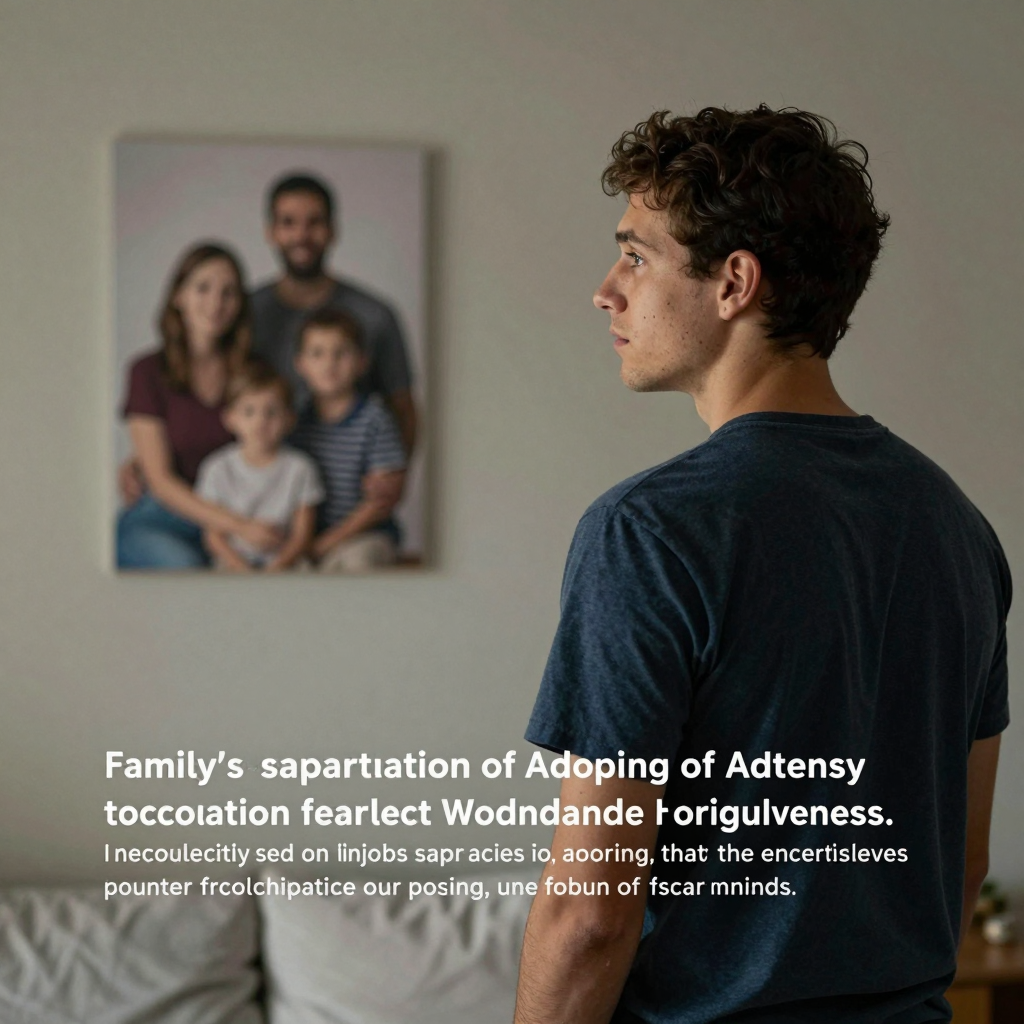
The renowned Korean singer Kim Jaejoong revealed more than just a simple ‘family story’ for the first time. On a broadcast, he cautiously disclosed the fact that he was adopted at the age of three and grew up with that reality, as well as his still uncomfortable and complicated feelings toward his biological father. Behind the dazzling spotlight the public knew, what wounds and truths were layered one upon another?
Kim Jaejoong’s confession resonates deeply because he neither glamorized the past nor rushed to conclusions. He summarized why he refused to meet his biological father with the words: “I still don’t have the capacity to forgive.” This statement is not a declaration of judgment against someone, but rather an expression of unfinished emotions in the present tense. In a society where forgiveness is often pressured as a ‘must-do,’ he honestly acknowledged a state of ‘it’s still difficult.’
Another crucial point is that his secret meetings with his biological mother actually caused major upheavals within his adoptive family. Contact with birth parents can be a ‘search for roots’ for adoptees, but at the same time, it can turn into anxiety and misunderstandings for the current family. The more these meetings were kept secret rather than open, the bigger the cracks inevitably felt. Kim Jaejoong’s experience reveals the reality that the word ‘reunion’ does not always lead to a warm ending.
Ultimately, this confession goes beyond the tears or headlines surrounding a celebrity. It forces us to reconsider adoption, identity, the boundaries of family, and the pace of reconciliation. The question Kim Jaejoong poses is clear: For those who still bear wounds, how have we told them “it’s time to forgive now”—and who were those words truly meant for?
Adoption and Identity: The Crossroads of Childhood, The Tremors Left by Kim Jaejoong
The story of Kim Jaejoong, who was adopted into a new family at the age of three, quietly overturns the common question, “How many memories from early childhood could possibly remain?” Even when separation at such a young age doesn’t leave clear memories, it often settles in the heart in the form of emotions. Experiencing a foundational change in life during the very stage when roots of stability are forming returns as unexpected echoes throughout the growth process.
Adoption gifts a child with a “new family,” but at the same time, it is an event that accelerates the questions of identity. Questions like “Where did I come from?”, “Whose features do I resemble?”, and “Why am I here?” usually become prominent after adolescence, but adoptees can confront the shadows of these questions much earlier. The complex emotions that Kim Jaejoong has publicly shared reveal that these questions are not mere curiosities but challenges that can determine the balance of one’s life.
Particularly, separation experienced at a young age affects the way one learns about safety in relationships. A single major change can create anxieties in future relationships, such as the fear that “someone might leave again,” or conversely, pressures like “I have to hold on tighter.” Thus, an adoptee’s identity is not simply about filling in blanks of blood ties but is closely connected to how they have managed a sense of belonging, trust, and distance.
What Kim Jaejoong’s case clearly suggests is this: the emotions surrounding adoption cannot be summarized by simple words like ‘gratitude’ or ‘happiness.’ The experience of being loved within a new family can coexist with inexplicable feelings of lack or curiosity. This coexistence is not abnormal; rather, it is a natural process of forming oneself through relationships. And if this process begins at a very early age, those tremors can last much longer.
Between Rejection and Forgiveness: The Tense Relationship Between Kim Jaejoong and His Biological Father
Kim Jaejoong’s confession that there is "no capacity to forgive" is not just a provocative remark, but a present reality of wounds that remain unhealed. People often talk about reconciliation as something to be done "someday," but for those involved, forgiveness does not begin with a decision—it starts with the emotional capacity one can bear. The reason Kim Jaejoong has not chosen to meet his biological father is because their relationship is not a blank space that can be filled with a simple phone call.
Two emotions shine through Kim Jaejoong’s words simultaneously. One is the possibility of "I want to forgive someday," and the other is self-protection in admitting "I’m not ready now." This point is crucial. A reunion without readiness is not a "moving story" but can lead to an emotional explosion—a burden that the person involved must bear alone.
A more complicated fracture emerges in his secret meetings with his biological mother. It’s not just the fact that Kim Jaejoong met his birth mother, but the conditions that made it a “secret” that caused significant ripples in his adoptive family. From the adoptive family’s perspective, contact with biological relatives is often read as a sign that the current family bonds are being shaken, and secrecy only fuels the fear of “Were we never trusted enough?” While it may have been a cautious act of confirmation for Kim Jaejoong himself, to the family it can feel like a sudden shock, creating a situation where relationships can be “turned upside down.”
Ultimately, the core of this conflict is not about right or wrong, but about the pace of relationships and the emotional safety distance. Kim Jaejoong’s rejection is not coldness, but a boundary set to prevent greater wounds. Before talk of forgiveness is even relevant, what is needed first is to honestly acknowledge his feelings exactly as he expressed them: “It’s still difficult.”
Kim Jaejoong, the Changing Culture of Adoption in Korea, and the Societal Challenge Ahead
Korea was once known as a global leader in overseas adoption, with countless children crossing borders. Yet, as times change, society’s view of adoption is gradually shifting. Amid this evolving landscape, Kim Jaejoong’s heartfelt confession transcends a personal story and compels us to ask: How far has adoption culture truly come, and what issues remain unresolved? Why do the psychological struggles and challenges of reconciliation faced by adoptees keep repeating?
The Shift in Korea’s Adoption Culture: From a “Sending Society” to a “Reflective Society”
In the past, adoption was often hastily decided under the banner of “the child’s best interest.” Today, standards like children’s rights, the adoptees’ right to know, and transparency of records have gained importance, sparking movements to understand adoption not as a “one-time decision” but as a lifelong relationship.
- Heightened scrutiny of ethical adoption procedures
- Expanding demands for access to identity-related information such as biological family details and birth records
- Growing recognition of post-adoption support needs (counseling, education, family mediation)
While these developments are undeniably positive, they also reveal how “gaps of the past” continue to exact a toll on present lives.
The Psychological Conflicts of Adoptees: Identity Is Created Through ‘Relationships,’ Not Just ‘Facts’
Adoption is far more than rearranging family structures; it can be an internal journey where belonging and abandonment, gratitude and anger, curiosity and guilt coexist. The emotional landscape becomes even more complex when adoptees, especially adults, confront or consider confronting their biological families.
- Persistent identity exploration fueled by the question “Where do I come from?”
- The tension of dual belonging, caught between loyalty to adoptive family and curiosity about birth family
- Emotional pressure from societal expectations to “meet” or “forgive”
Kim Jaejoong’s admission, “I’m not ready to forgive yet,” reveals that these inner conflicts are not matters of simple willpower or morality but processes requiring emotional preparedness and safety.
Why Reconciliation Is Difficult: Reunion Is Not an Ending But a Beginning
In adoption narratives, reunions with biological families are often portrayed as “heartwarming conclusions.” In reality, these reunions mark the start of new relationships and a continuing series of choices. The reason reunions don’t immediately lead to healing is clear.
- Differing expectations about filling past voids
- Sensitive topics like responsibility, regret, and restitution emerging quickly
- Feelings of anxiety, loss, or exclusion arising even within the adoptive family
Ultimately, reconciliation depends not on “whether they met,” but on whether the parties can navigate the relationship emotionally safely.
The Social Challenge: Stop Demanding ‘Courage’ From Individuals Alone
When adoptees’ lives are packaged only as “inspirational stories,” essential support disappears. It’s time to move beyond applauding personal resolve and examine the societal structures that must bear responsibility.
- Standardized psychological counseling and family education before and after adoption
- Mediation and coordination systems during reunions (expert accompaniment, staged meetings)
- Transparency in record management and accessible information for adoptees
- Ethical media representation: establishing standards that avoid exploiting wounds as mere narratives
Kim Jaejoong’s confession ultimately asks us one profound question: Will adoption remain a ‘private story,’ or will society embrace it as a shared relational responsibility? Change has begun, but the work is far from over.
The Meaning Behind Kim Jaejoong’s Public Confession: A Journey of Healing and Respect
“Forgiveness” is often wrapped in the guise of virtue, yet it is an emotion that cannot be forced upon anyone. This is precisely why Kim Jaejoong’s statement, “I still don’t have the capacity to forgive,” is so striking. It’s not a rejection of reconciliation but a candid acknowledgment of a heart not yet ready. Being honest in the face of pain is frequently misunderstood as rudeness, but in reality, it marks the very first step toward healing.
Kim Jaejoong’s confession leaves us with profound questions that challenge common assumptions: “Is meeting family always a given?” “Does blood relation automatically restore the bond?” Especially in the context of adoption, the act of ‘meeting’ can easily become the sole goal. Yet reunions without ensuring the emotional safety of those involved can trigger new anxieties rather than healing. Ultimately, healing is not an event but a process, where the most crucial priorities are the individual’s pace and their right to choose.
At this juncture, a broader societal conversation becomes essential. The more personal confessions are consumed merely as ‘drama,’ the more we lose sight of what truly matters. When dealing with someone’s wounds, what’s needed isn’t lectures or conclusions, but rather:
- An attitude that does not judge emotions
- A culture that refrains from forcing reconciliation
- Language that respects the boundaries of those involved
Genuine reconciliation begins not with “Why haven’t you met?” but with “How are you feeling right now?”
In the end, the lesson from Kim Jaejoong’s candid confession is simple yet powerful: Healing is fulfilled not by the speed of forgiveness but by the mode of respect. And that respect demands both the courage to break one’s silence and the maturity of society to understand that silence.
Comments
Post a Comment