 \n
\n
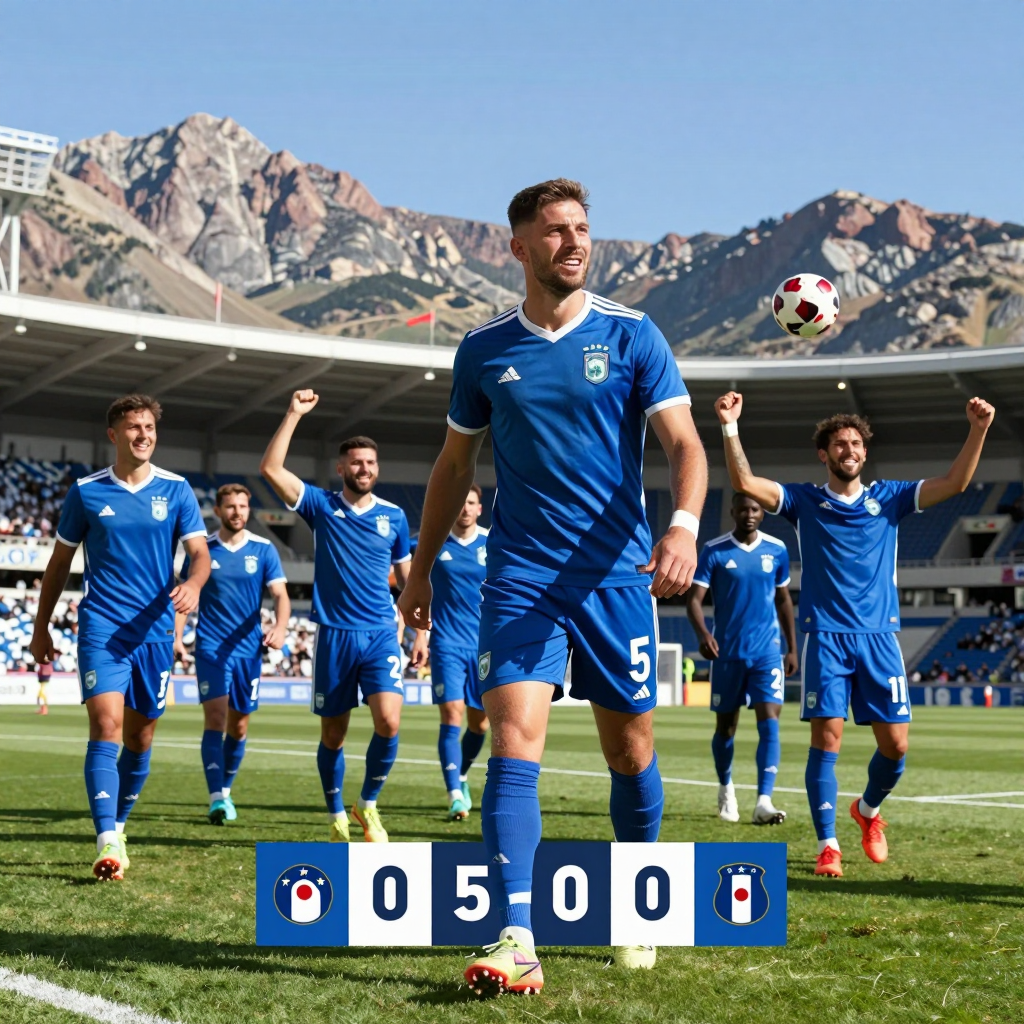
South Korea vs. Trinidad and Tobago: Korean Football’s High-Altitude Adaptation Triumphs with a 5-0 Victory
High-altitude away games in football present challenges that sheer “skill” alone can’t overcome. When the oxygen thins, pressing, sprinting, and decision-making all subtly wobble. So, what is the secret behind the South Korean national football team’s 5-0 rout of Trinidad and Tobago, a crucial test in their high-altitude adaptation?
This match was more than just a friendly—it was, as commentators noted, clearly a “first evaluation match for high-altitude adaptation.” And the result? A near-perfect start. As the score reveals, South Korea combined condition checks and tactical experiments with the unshakable certainty of victory.
The Power of a ‘Prepared Experiment’ Revealed in South Korea vs. Trinidad and Tobago 5-0
What stands out about this South Korea vs. Trinidad and Tobago game is that they “did not lose stability despite experimenting.” The starting lineup was built around a back three, an excellent choice to balance defensive numbers and buildup in the oxygen-thinned conditions that demand more stamina.
- Secured defensive stability with a 3-back base
- Pressed and advanced simultaneously through midfield resources
- Structured the attack around Son Heung-min as the pivot, boosting fast transitions and finishing efficiency
Ultimately, the 5-0 scoreline is evidence not just that “the opposition was weak,” but more importantly, that the speed and precision in executing the plan were impressively high. Keeping a clean sheet also signals positively on risk management (defensive transitions and sustained focus), a key aspect of handling high-altitude challenges.
Highlights from South Korea vs. Trinidad and Tobago: Son Heung-min, Cho Gue-sung, and the Depth of Attack Options
The fact that the Korea Football Association uploaded a separate highlight reel of Son Heung-min’s key moments speaks volumes about his role as the attack’s central axis in this match. When the ace controls the tempo before a high-altitude trip, the entire team can run the game smoothly without unnecessary energy drain.
Another iconic moment was Cho Gue-sung’s fifth goal, sealing the 5-0 win. This wasn’t just a padding goal but conveyed an important message for upcoming fixtures.
- Scoring wasn’t limited to starters; substitute players also contributed goals
- Confirmed the stability of attack rotation needed in multi-match settings
- Maintained concentration till the end for polished finishing, even in a dominant win
In essence, this 5-0 scoreline isn’t simply about “lots of goals,” but highlights that the attacking routes weren’t one-dimensional and options were plentiful. In high-variance matches like high-altitude away games, this kind of ‘Plan B scoring power’ is what ultimately decides the outcome.
Korea vs Trinidad and Tobago: The Back-Three Experiment and Son Heung-min-Centered Tactics—Core Strategies of This Match
How did the new defensive setup and Son Heung-min-focused offensive tactics combine to create five goals? The Korea vs Trinidad and Tobago match was more than just a crushing victory; it was a “designed experiment” that showcased how smoothly strategic planning can work in preparation for upcoming high-altitude away games.
Korea vs Trinidad and Tobago: The Back-Three Experiment Lays a Foundation of Stability
From the starting lineup, the message was clear. Korea deployed a back three (Lee Ki-hyuk – Lee Han-beom – Cho Yu-min) to first solidify their defensive shape. The advantages of a back three are clear:
- Minimizing the risk of conceding through numerical superiority in the backline: Even in a friendly, keeping a clean sheet matters. Reducing variables that could disrupt a commanding flow allows the experiment to proceed more comfortably.
- Diversifying the starting points for buildup play: With three center-backs spread widely, angles to evade the opponent’s first line of press increase. This creates quicker forward passes to midfield and rapid shifts to the flanks, raising the tempo of attack.
- Strengthening response to transition situations: At high-altitude away matches, fatigue increases, making moments after attack-to-defense switches critical. The back three divides coverage responsibilities, mitigating such risks.
Ultimately, the back-three experiment provided a “framework capable of controlling the entire match stably” before any flashy offense. Scores like 5–0 rarely come from attack alone; a solid defense empowers bolder offense.
Korea vs Trinidad and Tobago: How the Son Heung-min-Centered ‘Flexible Attack’ Sparked Five Goals
At the heart of the attack was naturally Son Heung-min. The frontline of Bae Jun-ho – Son Heung-min – Lee Dong-gyeong wasn’t just about Son as a finisher, but more as the reference point that structures the offense.
This tactic worked effectively because:
- Son’s movement unsettles defensive lines: By not staying fixed centrally and drifting into wide and half-spaces, opponents face constant dilemmas over whether to track or hold. This opens routes for midfield incursions, cutbacks, and long-range shots.
- Roles of surrounding players become clearer: Bae Jun-ho and Lee Dong-gyeong exploit spaces Son creates or link back to him, accelerating combination play.
- Progressive passing from midfield comes alive: Passers like Baek Seung-ho and Kim Jin-gyu can supply Son quickly, turning attack not just into development but into opportunity creation.
Add in active wing involvement (e.g., Kim Moon-hwan), and Korea’s attack transforms into a wide expansion followed by rapid piercing moves, not just a single-direction surge. In such a system, a successful press or winning second balls can quickly snowball into consecutive chances and accumulating goals.
Korea vs Trinidad and Tobago: Cho Gue-sung’s Fifth Goal Symbolizes “Plan A’s Completeness + Plan B’s Depth”
It is also significant that the final goal sealing the 5–0 scoreline came from Cho Gue-sung. This shows not only that the starting plan (Plan A) worked smoothly, but also that the substitutes (Plan B) could finish within the same attacking flow.
In other words, this match wasn’t a “Son Heung-min-centered tactic” relying solely on him individually;
- the attacking structure was maintained throughout the entire game, and
- decisive finishing continued after substitutions,
making it a game that structurally produced five goals.
South Korea vs. Trinidad and Tobago: Hidden Scoring Scenes and Decisive Moments Behind the Match Flow
Jo Gyu-sung’s fifth goal was not just an ‘additional score’; it symbolized how the momentum of the match remained firmly in South Korea’s favor until the very end. Even with a wide margin on the scoreboard, the speed and choice of attacks never faltered, and the substitute players successfully finished their chances, creating an atmosphere that “anyone could score today.”
Pressure That Carried Through to the Finish: The Common Factor That Made 5–0 Possible
The scoring scenes in the South Korea versus Trinidad and Tobago match share a common trait: no time was given to the opponent to organize. With constant pressure high up the pitch and quick transitions, the defense collapsed with a single mistake, and the defensive line gradually retreated. When such a flow unfolds, goals emerge less from a single moment of genius and more as the result of sustained dominance.
The Path Opened by Son Heung-min: Scenes That Created Decisive Moments
The fact that the Korea Football Association’s official channel released a separate video highlighting Son Heung-min’s key moments means the attacking focal point was clear in this game. Son didn’t just score himself; he repeatedly produced scenes destined to lead to goals by:
- Drawing defenders’ attention to create space,
- Opening angles for final passes near the box, and
- Raising the attack’s tempo.
In matches with such a big victory margin, this kind of “invisible starting point” plays an even more crucial role.
Jo Gyu-sung’s Finishing Touch: The Substitute’s ‘Perfect Goal’
As the highlight commentary exclaimed, “Jo Gyu-sung… makes it 5–0,” the final goal was his masterpiece. This demonstrates two things:
1) The intensity of the attack was maintained even after the score gap widened, and
2) The substitute players immediately contributed to the scoreline, confirming the breadth of attacking options.
Ultimately, the hidden decisive moments of South Korea versus Trinidad and Tobago were not about a specific single goal, but about the scenes that sustained the momentum generating goals throughout the full 90 minutes.
Key Players' Performances and the Potential of New Combinations: South Korea vs. Trinidad and Tobago
The 5–0 scoreline was not the whole story. The real intrigue in the South Korea vs. Trinidad and Tobago match went beyond “who performed well” to simultaneously confirm the presence of the ace and the synergy created by experimental combinations. In their first adaptation match ahead of a high-altitude away game, the national team managed to catch two rabbits at once: securing both the ‘result’ and a thorough ‘assessment.’
Son Heung-min: The Ace Who Set the Tempo
Son Heung-min’s value can’t be measured by attack points alone. What stood out in this game was how Son functioned as the pivot organizing the speed and direction of offensive play. From pressing timing upfront and choosing where to receive the ball to offering passing options that saved teammates, his role as a pacemaker who allowed the team to maintain superiority without overexertion was especially crucial in the unique context of acclimating to high altitude.
Cho Gue-sung: The Substitute Who Delivered the Decisive Final Blow
The fact that Cho Gue-sung scored the fifth goal holds more significance than just the number itself. Friendly matches typically involve frequent substitutions and interrupted flow, yet Cho’s ability to seal the score at 5–0 underscores a definite advantage in attack rotation.
In other words, whether starting or coming off the bench, anyone can provide a decisive finish, a message that broadens the coach’s options in unpredictable matches like high-altitude away games.
Experimental Defensive and Midfield Combinations: Could “Stability + Advancement” Happen Simultaneously?
The key takeaway from the starting lineup was that the team tested new combinations without compromising the result. The defensive line built on a back three and midfield setup was not just a conservative move to increase defensive numbers but seemed designed to manage build-up play and pressing concurrently.
The clean-sheet blowout at least indirectly proves that on that day:
- The defensive organization did not collapse significantly,
- Forward passing and second-phase pressing in midfield functioned well, and
- The frontline efficiently converted chances.
This broke the common assumption that “experimentation = instability” and demonstrated that experimentation can itself be a competitive edge.
Summary: The Impact of Stars and Combination Experiments Both Earned a ‘Passing Grade’
Ultimately, the South Korea vs. Trinidad and Tobago match was one where Son Heung-min set the rhythm, Cho Gue-sung put the final seal, and new combinations maintained balance from behind. The most welcome signal ahead of the high-altitude away trip is clear: the class of key players and the potential of new combinations were both confirmed in the same match—a synergy that raises expectations for how it will develop on the next challenge.
The Roadmap from South Korea’s Big Win over Trinidad and Tobago to the El Salvador Match: The ‘Next Step’ in High Altitude Adaptation
A 5–0 scoreline is not just a resounding victory—it signals that the preparation for the upcoming high-altitude away game is unfolding exactly as planned. So, what tactical insights and fitness management lessons does this overwhelming win offer? And where does South Korean football’s ‘next step’ lie for the El Salvador away match?
Tactics: Confidence That the Three-Back Experiment Brought “Stability and Efficiency”
This match centered on a three-back formation, with an emphasis on expanding attacks through the midfield and wings. The result—clean sheet plus multiple goals scored—confirms two key points at once.
- Priority on Defensive Stability: The high altitude intensifies physical fatigue and makes it harder to maintain pressing intensity. Preparing for this, the decision to bolster defensive numbers and coverage was a practical, realistic choice.
- Efficiency in Offense: The big win hints that football isn’t about constant running but about speeding up at crucial moments. The front line, led by Son Heung-min, served as the engine for tempo control and combination plays.
In other words, the South Korea vs. Trinidad and Tobago game was not just an “attack tactic trial” but functioned as a test to build a resilient foundation capable of withstanding away conditions.
Fitness Management: The True Value of the Big Win Lies in ‘Rotation’
High-altitude away games demand as much attention to managing playing time, recovery speed, and muscle fatigue as to pure performance. Jo Gyu-sung’s impact in scoring the fifth goal signals more than just a goal—it points to the future.
- Immediate Fortification of Bench Strength: Having substitutes who can enter and finish the game effectively serves as the most crucial insurance during a high-altitude schedule.
- Balancing Star Player Protection with Maintaining Form: Achieving such a dominant win without overexertion indicates that Korea can fine-tune tempo more precisely in the El Salvador match.
Ultimately, what matters more than “winning” is that the team confirmed methods to conserve energy throughout the victory process.
The Next Step Required Against El Salvador: ‘Management’ Over ‘Domination’
If the big win was the starting point, the character of the El Salvador away game will be different. The challenges at altitude become even clearer.
- Avoid Early Overexertion: Even if applying early pressure, the team must design variable intensity segments instead of sustaining the same high intensity for the full 90 minutes.
- Game Management When Leading: Once ahead, focus shifts from possession itself to second-ball battles, transition defense, and set-piece concentration.
- Realizing Plan B: Deploying prepared adjustments such as switching between three- and four-back systems, adjusting defensive line height, and combining substitution strategies will be critical.
In summary, while South Korea’s match against Trinidad and Tobago was the “first test of high-altitude adaptation,” the El Salvador game is likely to be the true exam of engineering and sustaining victory at altitude. The clues left by this big win are clear: the ‘next step’ South Korean football must show is not more dazzling offense, but more precise and calculated game management.
Comments
Post a Comment