 \n
\n
Lakers Down 0-3: Is There Any Hope for Survival?
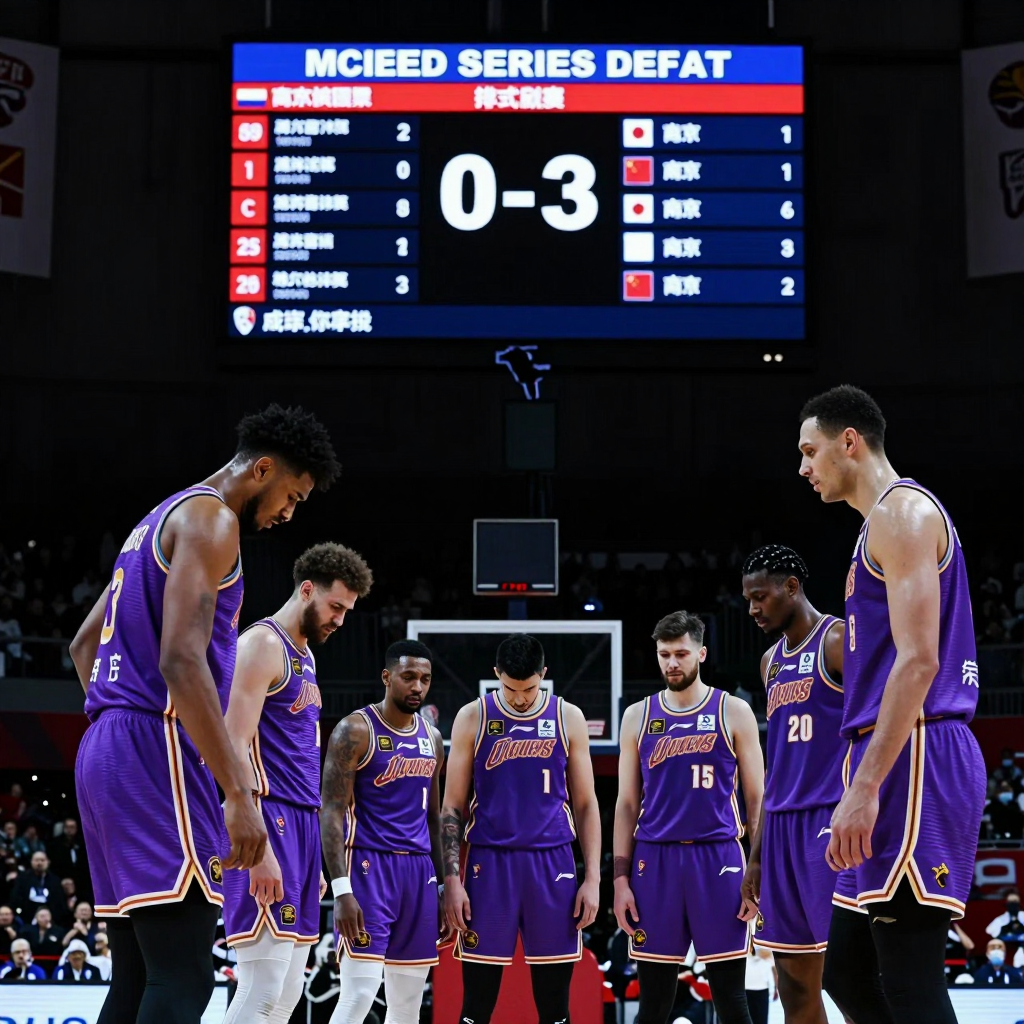
In NBA history, no team has ever come back from a 0-3 deficit to win a series. This means the reality facing the Lakers isn’t just “disadvantageous” — it’s an almost insurmountable, unprecedented wall. Yet fans remain glued to their seats until the very end because this series is more than a potential defeat; it represents a clash between team structure and the evolving tides of the era.
The core reason Lakers find themselves down 0-3 is clear. Oklahoma City carried a 7-game winning streak against the Lakers during the regular season, many of which were dominant victories with 15-plus point margins. The even scarier fact? Even with their MVP-caliber scorer Shai Gilgeous-Alexander somewhat contained (scoring 18, 22, and 23 points), OKC never wavered. In other words, the Lakers have little room to lean on the traditional solution of “stop the ace, change the game.”
So, where could a ‘miracle’ for the Lakers possibly come from? The answer lies in two things. First, the absence of Luka Dončić due to injury effectively shattered the initial premise of the series, so either returning to full strength or at least deploying a comparable replacement plan is critical. Second, there must be tactical innovations that shake OKC’s balance. But overcoming 0-3 isn’t about playing well in “one game” — it requires winning four straight games. Every factor piles up: stamina, matchups, mental resilience, even the burden of playing on the road. LeBron James, in particular, faces exponentially growing pressure with every game.
The cold, hard truth of this situation is that the Lakers’ survival depends not on “good performances” but on a series of events that would rewrite history itself. This nearly impossible challenge is what transforms the current Lakers crisis from a simple elimination possibility into a pivotal moment for the franchise’s strategic future.
The Strategic Edge Behind the Thunder’s Dominance Over the Lakers
With a seven-game winning streak and consecutive victories by 15 points or more, the Oklahoma City Thunder have consistently dismantled the Lakers. The crucial secret lies in their structural advantage — even if you stop one player, the next threat immediately emerges. It’s not just star power exploding; it’s a system that continuously forces the Lakers to respond, slowing down their adjustments.
The Unshakable ‘Multi-Layered Offense’ Despite Star Suppression
The Thunder controlled the game even as they limited Shai Gilgeous-Alexander’s scoring to 18, 22, and 23 points. This means their offensive engine isn’t reliant on one player, but rather distributed across multiple triggers—passes, cuts, second actions. When the defense blocks one option, another immediately opens up, so the Lakers never get the confidence that they’ve truly shut them down before the next scoring opportunity arises.
The Key to the 15-Point Wins: Tempo Control + Forcing Mistakes
Big leads don’t stem merely from shots falling. They emerge when you disrupt the opponent’s offensive efficiency. The Thunder continually ramped the pace up and down, preventing the Lakers from settling into a comfortable rhythm. By limiting the ball handler’s choices, they forced turnovers and rushed shots. When ‘one defensive stop’ instantly turns into ‘easy points,’ the gap quickly widens.
The ‘Fatigue Accumulation’ Effect from a Balanced Roster
The Thunder’s true weapon isn’t flashy highlights but the relentless matchup pressure repeated every possession. When rotation players share similar skill sets, the opponent gets no breathing room on any stretch of the game. For a team like the Lakers, which depends heavily on key resources, the longer the series stretches, the more their endurance and focus wear down, causing late-game decision-making to crumble.
In short, the Thunder are not just pressuring the Lakers with “one star,” but with a team-wide design. This creates a structural gap that’s hard to close with just one or two tactical tweaks—and that disparity is clearly reflected in the series score.
The Lakers’ Light and Shadow: Hope and Limits
Austin Reaves’ return and tenacious play were undoubtedly evidence of lingering hope for the Lakers. Yet, behind the bright spotlight lies a long shadow cast by Luka Dončić’s injury absence and LeBron James’ aging decline. The problem isn’t just a simple loss of manpower, but a shake-up in the very blueprint of the team’s offense and way of winning.
Reaves’ ‘Enduring Strength’ and Its Limits
Reaves’ comeback was more than just a rotation boost; it temporarily steadied the shaking core of the offense. His strong performance in the first round sent a message that “someone can step up” and gave the impression the Lakers were not easily broken.
However, against OKC in the second round, their disciplined teamwork exposed the hard truth that sheer individual grit or bursts of energy alone cannot patch the cracks. The more Reaves could do, ironically, highlighted just how thin the team’s depth truly is.
The Shocking Void of ‘Plan A’ without Dončić
Luka Dončić’s complete absence from this series means the Lakers’ offense essentially operated without a ‘Plan A.’ Dončić is more than just a scorer—he’s the engine that draws defenses, breaks down matchups, and elevates his teammates’ shot quality. When that engine stops, the offense instantly simplifies.
This starkly contrasts with OKC, who won despite holding SGA’s scoring in check. When the Lakers lose one key player, their structure collapses; when OKC’s star is contained, their system keeps rolling.
The Vanishing Margin Created by LeBron’s Aging
LeBron James still wields influence, but the most fatal playoff shift is the diminishing periods where he can flip the game’s momentum single-handedly. As he ages, the bar for championship conditions rises. The fading premise that “LeBron will fix it” demands the team adopt more refined tactics and a deeper roster.
Right now, the Lakers lean on past formulas instead of meeting those renewed demands. As a result, the crucial margin to win close games vanishes, turning minor mistakes and brief scoreless stretches into losses.
Conclusion: Hope Remains, But a New Direction Is Needed
Reaves’ return showed the Lakers haven’t lost the will to compete yet. However, Dončić’s injury and LeBron’s time tell a clear story: this team must enter a phase of reimagining how they win, not just patching the roster. Hope survives, but to make it real, they must transform into a team that wins by ‘structural strength’ rather than star power alone.
The Offseason Revolution: The End of the Lakers’ Outdated ‘Superstar Acquisition’ Strategy
The Lakers must break free from their ‘superstar acquisition’ strategy—could their current crisis be a signal of sweeping changes in the NBA’s structure? The 0-3 series defeat is not simply a matter of poor performance; it’s a warning that the team management formula that upheld an era no longer works. What OKC demonstrated was not “who has the bigger name,” but “who has the more complete system.”
For years, the Lakers found success through star-centered decision-making. However, the modern NBA has evolved into a league where stars are a necessary condition for championships, but not a sufficient one. The reason Thunder remained steady despite Shai Gilgeous-Alexander’s below-average scoring was clear: the game has shifted to a structure dominated by multilayered offensive routes, consistent defensive rotations, and lineup flexibility—all outweighing individual explosiveness.
This offseason for the Lakers must be about ‘redesign’ over mere ‘reinforcement.’ There are two key priorities:
- Philosophical Shift: The mindset must change from “Get a superstar and the rest will follow” to “Create an environment where superstars shine first.”
- Functional Roster Building: Break the team’s fragility caused by relying on the form or health of a single star (like Luka Dončić’s absence in this series). Instead, build strength through functional units such as ball handlers, wing defenders, and second units that can generate offense.
Especially as LeBron James’s future becomes more uncertain, the Lakers might be tempted to escape by “chasing the next superstar.” But while that may generate short-term buzz, it risks hitting the same ceiling when facing teams like OKC. The real question this offseason is singular: Can the Lakers transform from a ‘team that collects stars’ to a ‘team that provides a structure where stars can win championships?’
This crisis is uncomfortable but also undeniably an opportunity. With the league’s currents changing, the moment the Lakers let go of their old success formula could very well mark the starting point for the next era.
The Future of LeBron James and the Lakers, and a Glimmer of Hope
The cruellest question in the final stretch of LeBron James’s career is simple: “Where will he chase his last championship?” Down 0-3, he now faces a choice between being a ‘symbol of loyalty who stays until the very end’ and ‘leaving to maximize his chances of winning.’ That choice simultaneously becomes a test of what the Lakers organization truly prioritizes: the star’s pride or sustainable competitiveness.
LeBron’s Options: A Narrative of Loyalty vs. The Odds of Winning
We are used to hearing LeBron say, “There is still hope.” But playoffs don’t bend to optimism. Especially in this series, with the key player Luka Dončić not playing a single minute, it has become even clearer that LeBron cannot singlehandedly change the course of these games.
Ultimately, LeBron’s next move is a probability game, not an emotional one. If he wants a championship, he must seek a roster that can win right now. If he stays with the Lakers, he must prove the team’s structure can win next year.
The Lakers’ Core Challenge: The Expiration Date of a “Superstar-Focused” Philosophy
What OKC demonstrated was not just a tactical advantage—it was a balanced system and cohesion that dominates a series without relying solely on MVP-level stars shining every night. In contrast, the Lakers have long relied on acquiring and retaining superstars, a method that has been a shortcut to success but also one that easily places blame on individual players when things fail.
What is needed now is not “Who’s the next star?” but rather how to build a foundation that won’t collapse when a star is absent.
A Ray of Hope: Not a Rebuild, But a Redesign
A full rebuild isn’t the answer. With Luka Dončić and Austin Reaves forming the core, the Lakers’ task is not to start over, but to redesign the team into a championship contender.
- Operating a Plan B, anticipating Luka’s health risks
- Stabilizing defense and rotations to reduce dependence on a single superstar
- Constructing a philosophy-driven roster with a 2-3 year outlook, rather than quick fixes
Whatever decision LeBron makes about his future, this offseason will define whether the Lakers manage “the final chapter of a legend” or build “a championship structure for the next era.” And the clearer that answer becomes, paradoxically, the brighter the hope.
Comments
Post a Comment