Meta Manus: What Is a Self-Directed AI Agent That Plans, Researches, Codes, and Completes Tasks Independently?
 \n
\n
Meta’s Revolutionary AI Agent Manus from an Agent Perspective
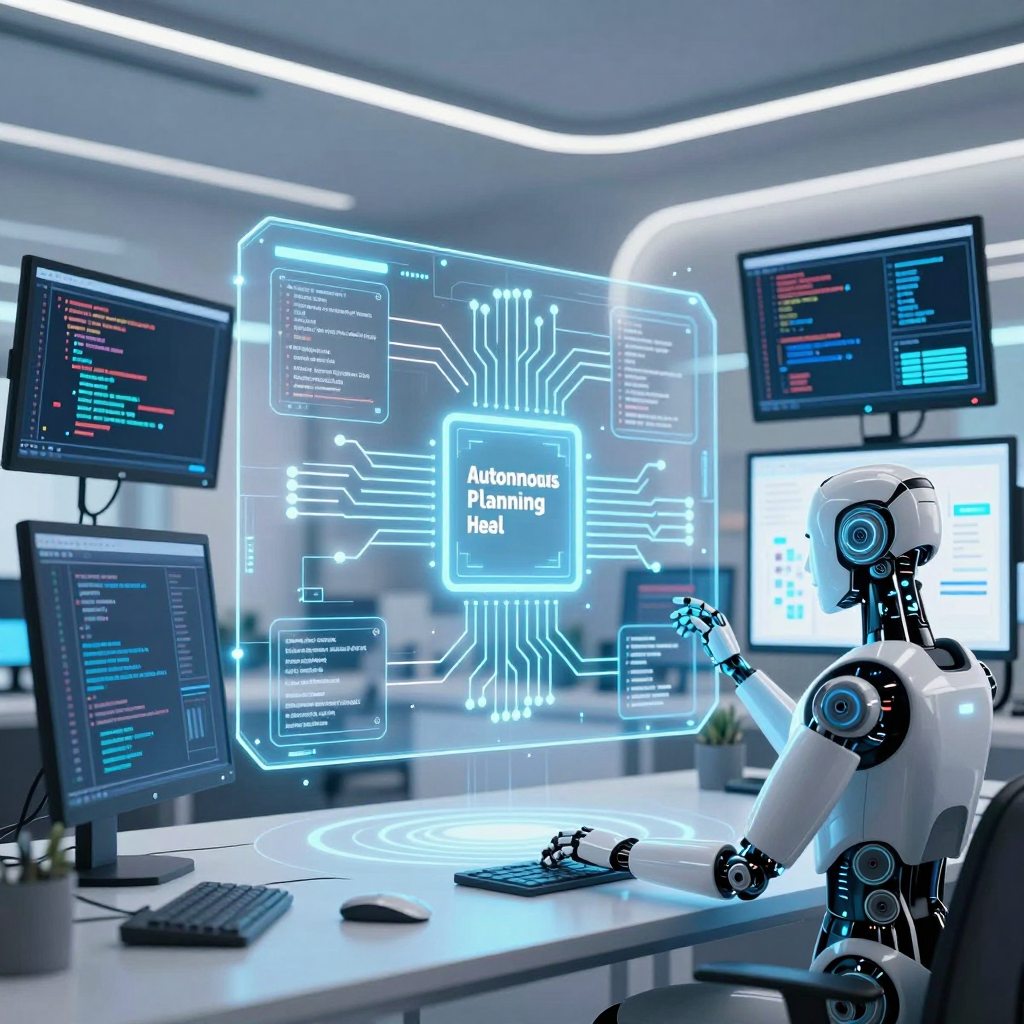
AI is evolving beyond mere conversational tools into true ‘digital employees.’ Manus, which autonomously plans, researches, and even codes atop a virtual computer, is the clearest example of this shift. So, what is Manus’s “amazing secret”? The key lies not in being a model that writes text well but in its Agent architecture that completes tasks from start to finish.
From Text Generation to Execution: How Agents ‘Get Work Done’
Traditional chatbots or copilots are largely optimized for question → answer interactions. Manus, on the other hand, resembles an autonomous agent that runs its own process from receiving a goal to producing a final deliverable. In other words, it’s designed to achieve a finished output rather than just a “plausible response.”
The workflow Manus follows is crystal clear:
- Plan: Outline steps and prioritize to meet the goal
- Research: Search for, compare, and verify information as evidence
- Code: Write and execute tools or scripts if necessary
- Deliver: Organize and present the final document or result
This structure matters because real work takes time not in “one-off answers” but through multiple cycles of iteration (exploration–decision–execution–review). Manus focuses on systematically carrying out these iterations.
Virtual Computer-Based Computer-Use Agent: Beyond ‘Talking’ to ‘Clicking’
What distinguishes Manus most from other AI is that it operates on its very own virtual computer. This means the model doesn’t just generate text—it possesses a layer that actually manipulates a computer.
Technically, this blends these capabilities into a single whole:
- Perceive: Understand screens, states, and task context
- Act: Navigate browsers, create files, operate apps, run code
- Loop: Review outcomes and independently decide next steps
Ultimately, Manus transcends being “an LLM that outputs answers” and expands into an Agent that acts as mouse and keyboard. At this point, AI shifts from advisor to the executing agent that performs real work on the user’s behalf.
Why Manus Is Symbolic Now: From Copilot to ‘Digital Employee’
The workplace impact is simple. Copilots usually have humans driving while AI guides alongside. Agents like Manus, however, plan routes, research paths, build necessary tools, and deliver results entirely on their own once given a destination.
As this agent archetype spreads, individuals and teams will work differently:
- Delegate repetitive clicks and organization tasks to Agents
- Humans focus on defining goals, reviewing, and making decisions at a higher level
- Productivity shifts from “draft generation” to full-process automation
Manus is a herald of this transition. Its emergence signals AI’s move beyond conversation into actionable units of labor. Far from merely a new feature, Manus marks the dawn of the Agent era.
Core Technology of Agents: Manus’s Breakthrough—Autonomous Task Innovation Unfolding in a Virtual Computer
We’re already familiar with AI that can generate “plausible” text. But Manus targets something distinctly different. It actually opens apps, operates browsers, creates files, and runs code inside a virtual OS (virtual computer) environment. In other words, beyond merely generating answers, it’s designed as an Agent that ‘executes’ tasks from start to finish. So, what kind of technical architecture makes this “working AI” possible?
Agent Architecture 1) LLM + Virtual Computer: From a “Talking Model” to a “Clicking Model”
Manus’s standout feature is that it runs its own virtual computer. This single sentence carries deep implications.
- Traditional Chatbots/Copilots:
- Input (prompt) → Text output
- Real-world actions are performed manually by humans
- Computer-use Agents like Manus:
- Input (goal) → Action in virtual OS (app/browser/file/terminal manipulation) → Output generated
Here, the virtual computer is not just a “tool” but an environment with which the Agent interacts. Once an environment exists from the Agent’s perspective, the following become possible:
- Perceive screen/state
- Decide next action
- Act (click, type, execute)
- Observe results and repeat the loop
This cycle forms the foundational structure that makes an Agent a true Agent.
Agent Architecture 2) Planning–Execution Loop: An Autonomous “plan → research → code → deliver” Cycle
Manus aims to independently carry out the full loop: plan → research → code → deliver. Technically, this boils down to a classic Planning–Execution Loop inside.
- Planner: Breaks goals down into subtasks.
- Example: “Write a market research report” → gather data → organize sources → summarize/compare → document
- Executor: Performs subtasks as real actions inside the virtual computer.
- Browser searches, tab switching, document editing, code writing/running, etc.
- Controller (Loop/Coordinator):
- Reviews intermediate results and decides whether to proceed, retry, or revise the plan
A key point: this loop is not a one-off reply but supports multi-stage, long-running workflows. This is why Manus is categorized not as a simple assistant but as a workflow-level Agent.
Agent Architecture 3) Multi-step Reasoning + Tool/Skill Integration: From “Single Answers” to “Process Accumulation”
To push work all the way through inside a virtual computer, simple reasoning is not enough. Manus-like systems are best understood as stacks combining:
- Multi-step reasoning: Progressing through tasks step-by-step while accumulating intermediate outputs
- Tool use: Leveraging computing resources like browsers, terminals, editors, and file systems
- State/Memory: Keeping track of “where it is now” and choosing next actions based on work history
When these elements combine, requests shift from “summarize this” to realistic automation like “search for data, compare findings, write and verify code as needed, then deliver a final document.”
A Paradigm Shift in Agent Design: Beyond Copilot to Systems with “Completion Responsibility”
The technological shift that Manus embodies is clear.
- While Copilot is designed to assist users in their tasks,
- Manus-like Agents take on full responsibility to complete assigned goals autonomously.
Through the fusion of virtual OS computer-use, planning–execution loops, multi-step reasoning, and state management, AI evolves from a mere “text generator” to an operating software that acts and produces tangible outcomes. This evolution forms the very heart of Manus’s autonomous task innovation.
Manus’s Position and Multifaceted Roles Within the AI Agent Ecosystem
Among the myriad AI Agent categories, where does Manus fit? To put it simply, Manus does not neatly slot into a single category. Due to its unique trait of directly manipulating a virtual computer and carrying out the entire process of planning–research–coding–delivery, it is more accurate to view Manus as a “multi-role Agent” that crosses multiple agent classifications.
Manus’s Triple Position Viewed Through AI Agent Classifications
When placing Manus on the ecosystem map, it can be defined simultaneously along at least the following three axes:
1) Browser & Computer-use Agent: A versatile executor that “operates a computer directly”
Manus’s core differentiation lies not in being a “text-generating model,” but in being an Agent that actually clicks, types, and runs commands within its own virtual desktop environment.
This type of agent goes beyond just web browsing and includes:
- Researching online materials, switching tabs to compare and organize
- Creating and editing files (documents, code, data)
- Writing, running, and testing code in a development environment
- Packaging and delivering the final outputs
In other words, Manus is best understood not merely as the “voice” of an LLM, but as its “hands” extended. Because of this, it can achieve far more powerful automation than simple chatbots or copilots—yet it also entails heightened risks where a single incorrect click could trigger real-world actions (mass sends, deletions, etc.).
2) Employee-style Agent: A “digital employee” amplifying individual productivity
From the user’s perspective, Manus is closer to a general-purpose knowledge worker assistant/agent that handles everyday PC tasks rather than a vertical agent tailored to a specific industry.
For example, if prompted with “Research this topic and generate a report,” Manus naturally follows through all intermediate stages autonomously (research → structure design → drafting → editing → delivery).
This position is significant because Manus is evolving from “one-off answer” behavior to taking end-to-end responsibility for entire tasks or projects. From the standpoint of productivity tools, this equates to “hiring an Agent that increases the throughput of an individual worker.”
3) Workflow Automation Agent: Designing and executing work at the workflow level based on goals
Manus is not a simple executor but has a strong character of planning (plan), decomposing tasks (sub-tasking), and iterating execution (loop) to achieve goals. Technically, this implicitly requires the following components:
- Planner: Breaking down goals into work stages and setting priorities/sequences
- Executor: Performing each step within the virtual computer (browser, IDE, document tools, etc.)
- State/Memory: Maintaining progress, outputs, and candidates for next actions
- Failure recovery: Handling exceptions like UI changes, login failures, code errors, and conducting retries or exploring alternatives
Framed this way, Manus transcends “a model that uses tools well” to classify as a workflow-level Agent that designs tasks and pushes them to completion.
Summarized in One Sentence: “A Versatile Computer-operating Multi-role AI Agent”
Manus secures execution ability as a Computer-use Agent, acts as a personal work proxy in the manner of an Employee-style Agent, and completes multi-step goals as a Workflow Automation Agent.
Thus, Manus’s unique position is clear: it is not a product belonging to a single category but a general-purpose executive Agent that integrates multiple agent layers into one—a core source of its competitive edge and simultaneously why robust security and governance design is indispensable.
Is an Agent Actually Feasible? Realistic Work Scenarios Executed by Manus
Let’s explore examples of tasks Manus can autonomously handle—from complex report writing, code creation and automatic execution, to repetitive jobs. The key is that this isn’t just a “chatbot that answers well,” but an Agent that completes goals end-to-end in a virtual computer environment. In other words, the user provides only the purpose and constraints of the deliverable, while Manus independently runs through the flow of plan → research → code → deliver to close the task.
Agent Scenario 1: Fully Automated Report Creation from Research to ‘Final Draft’
Manus excels most at long-range tasks that combine research and documentation. Ordinary LLMs stop at generating a “draft report,” but Agents use a virtual computer to gather and organize data, formatting outputs properly.
- Example input (user request)
- “Summarize 5 retention strategies for the 2026 B2B SaaS market with supporting links, creating a 1-page executive summary plus a detailed 5-page report.”
- Manus’s internal workflow (technical view)
- Break down the goal into detailed sub-tasks: data collection (with source credibility filtering) → clustering core points → structuring (table of contents) → writing → editing/proofreading → summary generation
- Repeatedly browse and explore on a virtual computer to accumulate evidence
- Organize the results into deliverable formats (e.g., document/slide text structure)
- Realistic expectations
- Can go beyond “draft” to produce a first-pass result ready to bring into meetings
- However, verification or additional input is needed regarding the quality, freshness, and integration of internal organizational data sources
Agent Scenario 2: ‘Working’ Deliverables from Code Writing + Execution + Testing
Manus’s “write code” means more than simple code snippet generation—it involves a flow of executing and refining the code in a virtual environment. This differs from Copilot-style “development assistance.” The Agent runs its own trial-and-error loops to achieve the goal.
- Example input
- “Create a script that crawls a specific site’s notices every morning at 9 AM and sends a Slack summary if there’s any change.”
- Likely steps Manus takes
- Break down requirements into functions (crawling/change detection/summary/notification)
- Research necessary libraries and APIs
- Write code, then run and fix errors (install dependencies, handle exceptions, add logs)
- Strengthen handling of edge cases like “this condition causes failure” based on run results
- Technically critical point
- The Agent’s strength lies in a multi-step loop where execution results (error logs, changes in HTML structure, etc.) are re-input for continuous correction
- It’s closer to a “system that closes problems completely” than just a “model that writes good code”
Agent Scenario 3: Repetitive Task Automation—Replacing Human Clicks with Computer Use
Many organizational tasks happen not via APIs but through web UIs/internal systems/spreadsheets. Computer-use Agents like Manus are powerful here because they can virtually reproduce the human routine of “opening, copying, pasting, saving, and sharing” on a virtual computer.
- Examples of repetitive tasks
- Weekly performance report updates (download data → organize tables → write summary → apply template)
- Classify customer inquiries and log tickets (summarize content → tag → assign responsible staff)
- Run internal operation checklists (access page → check status → alert if abnormal)
- Why especially useful in reality
- Even in legacy environments without API integration, Agents can automate workflows through UI manipulation
- Operational cautions
- UI changes can break functionality, so monitoring (logs/replay) and exception handling are crucial
- For irreversible actions like bulk sending/deleting/payments, incorporating an approval step is safer
Agent Scenario 4: Expanding as a ‘Digital Employee’—Delegating Work and Managing by Results
The best way to describe Manus is not as a “chatbot that answers well,” but as a digital employee you can delegate tasks to. Instead of giving micro-manual instructions each time, the user shifts to providing goals, quality criteria, and constraints, and then reviewing deliverables and logs.
- Shift in delegation style
- Traditional: micro-instructions like “change this sentence”
- Agent: outcome-driven commands like “achieve this goal (while following these policies and this format)”
- Expansion potential
- Individual productivity boost (research/documentation/automation)
- Can evolve into small teams permanently delegating parts of workflows to Agents
In the end, the question of “Is it actually feasible?” shifts from “Is Manus smart?” to “Can an Agent equipped with a virtual computer environment close tasks through planning and execution loops?” For tasks with clear endpoints like reports, code, and repeatable work, the role of ‘AI digital employee’ can expand faster than expected.
From Copilot to Fully Autonomous Agents: The Future of AI-Driven Work Innovation as Presented by Manus
As AI adoption spreads, many organizations ask, “Isn’t Copilot alone enough?” Yet, the prevailing trend points in the opposite direction. Beyond AI copilots (assistants), fully autonomous Agents that take a given goal and see tasks through to completion on their own are gaining the spotlight. The reason Meta’s Manus stands out is simple: Manus isn’t just a model that writes text well—it operates on a virtual computer, performing plan → research → code → deliver tasks and clearly demonstrating how AI can truly “complete work.”
The Crucial Difference Between Copilots and Agents: “Answering” vs. “Completing”
Copilots speed up users’ hands. They suggest email drafts, autocomplete code, and summarize documents. The user remains central, and the model stays as a proposer and assistant.
In contrast, Agents like Manus have a different structure:
- Goal Input → Multi-step Planning
- Acting on the Environment (Computer Usage): Browsing, file creation, code execution, and output delivery
- Iterative Feedback Loop: Detecting failures or exceptions and deciding on next actions
- Delivering Final Outputs
In other words, while Copilots help craft “phrases or snippets of code,” Agents carry out the entire “work process.” This shift is less about productivity tools evolving and more about transforming digital labor’s unit from “assistance” to “delegation.”
The ‘Always-On Digital Workforce Fleet’ Scenario Enabled by Manus-style Agents
Manus’ concept surpasses mere personal assistants, envisioning a realistic picture of always-on digital employees. The key is scalability through multiple agents sharing responsibilities—essentially, a fleet.
Individual Perspective:
This becomes a “one-person digital employee” handling repetitive research, organization, and documentation. Tasks heavy on clicking and copying—like product research, competitive analysis, and weekly report updates—are managed by the Agent on a virtual computer, freeing users to focus on review and decision-making.Team/Enterprise Perspective:
Agents can be fragmented by roles:
Example: “Research Agent (data gathering) → Analysis Agent (summarizing/insights) → Writing Agent (reports/slides) → Distribution Agent (document sharing/updates).”
This transforms workflow from bottlenecks in human inboxes into a streamlined agent pipeline.
Here, the essence of productivity isn’t “writing somewhat faster” but drastically reducing work latency—including handoffs, context switches, and revalidation.
What’s Technically Different: Computer-Use + Planning-Execution Loop
Manus-type Agents are powerful not just because of advanced large language models, but thanks to a combined tech stack enabling true work automation.
Virtual Computer Layer
Agents do more than generate text—they manipulate actual OS/browser environments. This layer makes it possible to “research, create files, run code, and save outputs” in practical settings.Planning & Multi-step Reasoning
Goals are broken down into sub-tasks and executed sequentially. Because real work involves many exceptions, repeated loops of observe → judge → act are vital over one-off calls.Workflow-level Orchestration
Rather than a single tool invocation, a series of operations spanning numerous tools/apps/files/webpages is composed. Agents automate ‘processes,’ not just ‘functions.’
Future Challenges: Safer Agents, Not Just Smarter Ones
With great autonomy comes risks far beyond mere “text errors.” Because these Agents manipulate real systems, security and governance are integral to product maturity.
Credentials and Permission Management
Browser/computer-use Agents cannot avoid logins, tokens, or account access. Essential safeguards include least privilege, secrets isolation, session protection, and permission boundaries per task.Controlling Risky Actions
Agents might click wrong buttons when UI changes or exceptions occur, triggering irreversible actions like deletions, sends, or bulk executions.
Hence, high-risk actions demand confirmation steps, policy-based blocks, rate limiting, and pre-execution simulations as safety nets.Observability and Auditing
To operate safely, systems must track “why this decision was made.” This requires action logs, screen/event tracing, replays, and failure analysis frameworks to allow Agents into enterprise processes.Standardizing Evaluations (Evals)
While Copilots end with reviewing output text, Agents require assessments of behavior quality. Evaluation frameworks must measure goal achievement rates, policy compliance, cost/time efficiency, and retry strategy robustness.
Manus sends a clear message: the next race is not about “better-looking answers,” but about how safely and operably we can build Agents that fully execute tasks from start to finish. If Copilots accelerated individuals, autonomous Agents will redesign how individuals and organizations work altogether.
Comments
Post a Comment