 \n
\n
The Heat of the Pumas - Cruz Azul Mexico City Derby Builds to a Climax
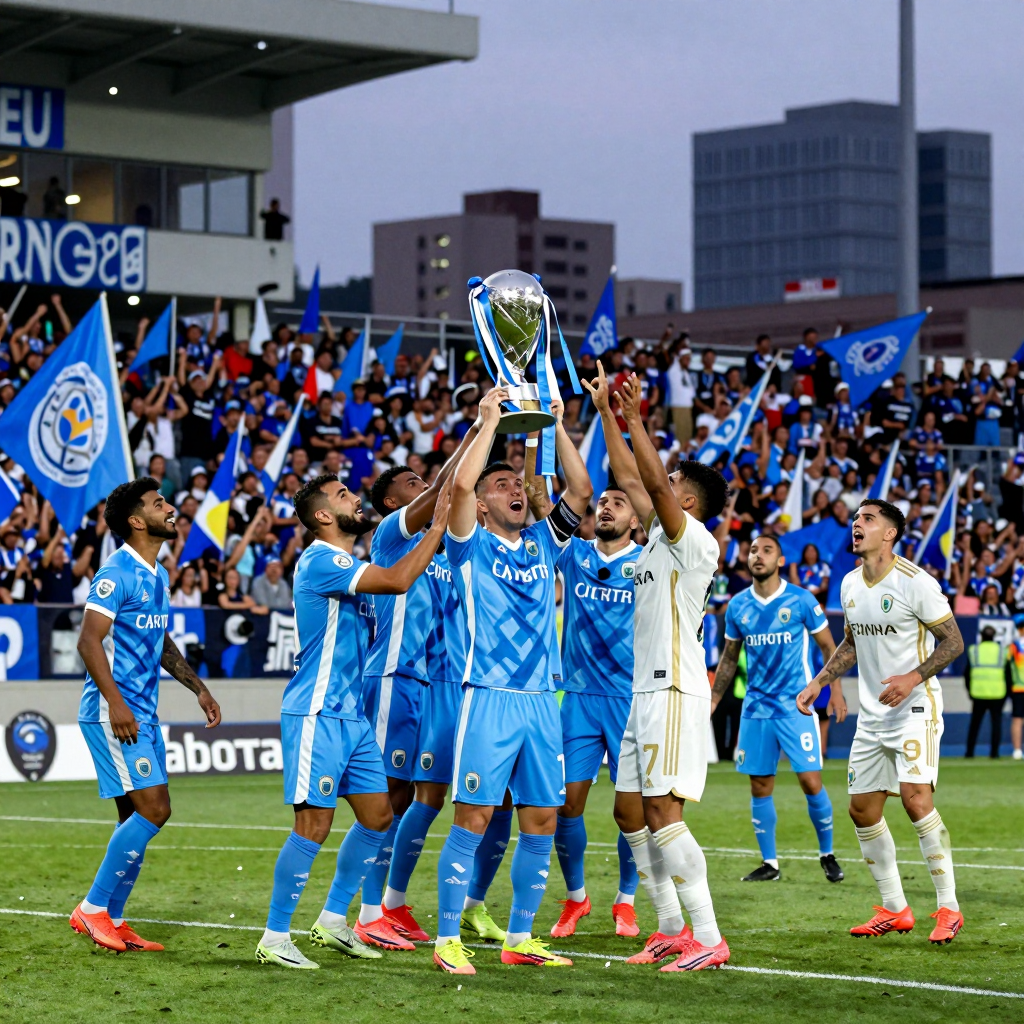
The second leg of the final between Pumas UNAM and Cruz Azul was truly a match where just 90 minutes changed everything. With the first leg ending 0–0 and neither team gaining the upper hand, the night in Mexico City simmered with tension from start to finish — the feeling that “this very moment will determine the direction of the trophy.” So, who conquered Mexico City and lifted the trophy? The answer was the away team, yet far from unfamiliar — Cruz Azul.
The stage was Estadio Olímpico Universitario. Amid the roaring home fans, Pumas exploded first. Robert “La Pantera” Morales' powerful opening goal shook the stadium like a festival, instantly tipping the atmosphere in Pumas’ favor. But the essence of this final was not about momentum, but about control. After taking the lead, a single slip, a single defensive choice, became the turning point that decided the champion.
Despite conceding first, Cruz Azul didn’t panic. They maintained steady midfield rotation and relentless wing attacks to create cracks, eventually forcing a own goal by Pumas defender Rubén Duarte that leveled the score. From that moment, the temperature of the match completely shifted. When the certainty of “we just need to win at home” turns into the fear of “what if we lose it again,” finals become their most brutal.
Then came the climax. In the final moments of the second half, Carlos Rodolfo Rotondi’s winning goal sealed the fate of the Pumas - Cruz Azul derby. Even with the complication of Uriel Antuna’s red card during the game, Cruz Azul knew how to protect their lead. These 90 minutes weren’t simply a victory — they condensed the fiery rivalry of the Mexico City derby into a final narrative centered on the question “Who holds firm without breaking until the very end?”
Pumas vs. Cruz Azul: The Dramatic Moments That Decided the Match
From the stunning opener by ‘La Pantera’ Morales, to an unexpected own goal, and finally Rotondi’s decisive late winner—this second leg final was a quintessential 90 minutes of drama, showing how a single flash of brilliance and one crucial mistake can change the fate of a trophy.
Pumas vs. Cruz Azul Highlight 1: Morales’ ‘Golazo’ Ignites a Explosive Start
The first game-changer was none other than Robert “La Pantera” Morales. His powerful right-footed strike from outside (or right at the edge) of the box wasn’t just an opening goal—it was a symbolic blast that instantly turned up the heat in the stadium. This goal set the tone for Pumas, creating a vibe of “Let’s finish this at home,” and clearly giving them early control of the match.
Pumas vs. Cruz Azul Highlight 2: Rubén Duarte’s Own Goal—The Cruelest Turning Point
But finals rarely go as planned. Amid a 1–0 lead, Rubén Duarte’s own goal did more than equalize at 1–1. The deflection that led to this slip-up rattled Pumas’ game management and handed Cruz Azul a psychological edge: “This match is still ours.”
Pumas vs. Cruz Azul Highlight 3: Rotondi’s Late Winner—The Clutch Moment That Crowned a Champion
The ultimate decider came late in the second half through Carlos Rodolfo Rotondi’s winner. As Cruz Azul turned up the pressure, relentlessly probing near the box, one sharp finish made it 2–1. In a final, away game, and in the dying moments—this goal proved the value of a clutch performance beyond mere tactics.
Pumas vs. Cruz Azul Twist 4: Maintaining the Lead Despite Antuna’s Red Card
Adding to the drama was Uriel Antuna’s sending off (red card), throwing the match’s certainty into question. Usually, such a moment sparks a major shift in momentum, but Cruz Azul reorganized their lines and held onto their lead, sealing the championship. Ultimately, this moment underscored the message: “The team that stands firm in crisis wins finals.”
Pumas vs. Cruz Azul: Two Matches with Contrasting Fortunes in the Finals
Though it was the same final and the same two teams, the first and second legs showcased two very different answers to the question: ‘What decides the outcome?’ The first leg was a night defined by Keylor Navas’s dazzling saves that stopped every momentum, while the second leg saw Cruz Azul’s experience and mental strength overturn even the home advantage to seal the fate. So, what was the secret behind Cruz Azul’s ability to maintain their undefeated streak in this Pumas vs. Cruz Azul series?
Pumas vs. Cruz Azul First Leg (0–0): Navas Creates a ‘Divide Between Performance and Outcome’
On paper, the first leg ended in a stalemate, but the feel was different. Cruz Azul controlled the match but found themselves stopped repeatedly right in front of the goal, resulting in a 0–0 draw. At the heart of that stood Keylor Navas.
- From Pumas’ perspective, despite being outplayed, Navas secured a “draw that kept them alive.”
- For Cruz Azul, although they didn’t score, the match structure and chance creation remained intact, leaving behind “a goalless draw filled with confidence rather than worry.”
This 0–0 was more than just a draw—it foreshadowed the emotional and intense pressure cooker that would erupt in the second leg.
Pumas vs. Cruz Azul Second Leg (1–2): Home Passion vs. Away Composure — The Battle Won Through ‘Control’
The second leg took place at Pumas’ home ground, where the early momentum favored the hosts. Morales’s opening goal instantly ignited the stadium, and the home advantage seemed real. Yet, the outcome was decided not by momentum but by how well each side managed the game.
- After taking the lead, Pumas dropped their defensive line, creating gaps and weakening their pressure. Cruz Azul exploited these spaces relentlessly, eventually forcing a crucial own goal to level the match.
- Following the equalizer, Pumas faced mounting impatience and anxiety over “having to push ahead” and “the fear of conceding,” which dulled their attacking sharpness despite possession.
- Meanwhile, Cruz Azul maintained their structure despite conceding first, and Rotondi’s late winner sealed the deal. Even with a player sent off, Cruz Azul’s focus held firm to protect their lead.
Ultimately, the second leg was a clash between home ground fervor (emotion) and away stability (experience), with experience proving mightier in the end.
The Verdict on Pumas vs. Cruz Azul: Familiarity with a ‘Quasi-Home’ + Mental Edge — The Formula Behind an Undefeated Run
The core reasons Cruz Azul remained unshaken in this away final come down to two factors:
Familiarity with the environment (the quasi-home field effect)
Though technically the away team, their experience and comfort playing at this venue eased psychological pressure.Mental strength in response to conceding (game management mindset)
Neither the scoreless first leg nor the early setback in the second leg weakened the team. Their steady management induced the own goal and eventually led to the match-winning strike at the clutch moment.
In sum, the Pumas vs. Cruz Azul final series underscores this truth: While heroic saves and the roar of a home crowd can define a night, the trophy ultimately belongs to experience and mental resilience.
Pumas vs. Cruz Azul: The Tactical and Psychological Battle Behind the Championship
Finals often see the team that breaks mentally before tactically losing the game. The second leg of Pumas vs. Cruz Azul perfectly demonstrated this formula. Pumas’ emotional fluctuations collided with Cruz Azul’s composure, and in the end, a single clutch moment shifted the direction of the trophy.
Pumas vs. Cruz Azul: Why Pumas Failed to Hold on to a ‘Strong Start’
Morales’ opening golazo was the perfect scenario on home turf. The problem came afterward.
- Lack of game management after taking the lead: The common “play it safe” strategy usually means dropping the line back, but Pumas allowed a gap to open between their defensive and pressing lines, loosening their midfield.
- Tactics shaken by emotional waves: The heightened atmosphere right after the goal hurried their decision-making. While transitions sped up, the angles of attack (patterns) became monotonous and finishing rushed.
- Own goal as a mistake and a warning: Duarte’s own goal wasn’t just an accident; it signaled that “safe clearance” under pressure had broken down. In other words, the entire team’s fragile psychological state showed in defensive moments.
Pumas vs. Cruz Azul: Cruz Azul’s ‘Calm Structure’ and Accumulated Pressure
Despite conceding first, Cruz Azul stayed unshaken. Their strength lay not in a single tactical card but in building pressure throughout the 90 minutes.
- Maintaining ball circulation (tempo control): They avoided hasty, direct passes and instead circulated the ball in midfield, easing the pressure applied by Pumas.
- Repeated wing attacks → forcing mistakes: By continuously attempting crosses and cutbacks, they forced defenders into repeated ‘decisive moments.’ The own goal can be seen as the result of this accumulated pressure.
- Psychological edge despite being the away team: Playing in an environment close to their familiar setting was critical, especially in a big game. Instead of tension from unfamiliar surroundings, they operated according to their usual routine.
Pumas vs. Cruz Azul: The ‘Clutch Moment’ That Decided the Outcome—What Rotondi’s Winning Goal Signifies
The final goal in a championship match demands not just skill but psychological resilience. Rotondi’s late winner wasn’t just a single strike but the result of the following conditions coming together.
- Only teams that withstand pressure get the last chance: Cruz Azul maintained their structure after conceding, allowing them to create ‘one more’ opportunity late in the second half.
- Calmness amid chaos and cutback situations: The final box is mostly chaotic. What’s needed here is not just skill but cool composure on the final touch, and Cruz Azul was the side that possessed it.
- Mental toughness despite unexpected setbacks like red cards: Abrupt events like Antuna’s sending-off usually reverse momentum. However, Cruz Azul grew even stronger after gaining the lead, sharpening their focus with a clear goal to “defend it.”
Ultimately, the conclusion of the Pumas vs. Cruz Azul second leg final is simple. Pumas failed to channel their emotional highs into effective game management, while Cruz Azul turned tactical repetition and mental stability into their clutch moment advantage. The trophy didn’t go to the “better team,” but to the one that stayed true to its style until the very end.
Pumas vs. Cruz Azul: A Message to U.S. Fans and the Future of Soccer Ahead
Though billed as the Mexico City derby final, Pumas vs. Cruz Azul was a far more personal match for fans living in the United States. Beyond a simple “road victory” or “theater goal,” this game was a moment for Latino soccer fans in the U.S. to connect simultaneously with their roots and their present lives, while also signaling where Liga MX and MLS might be headed in the future.
Why This Final Was Special for Latino Fans in the U.S.
A Match of Identity and Community
Pumas and Cruz Azul boast strong fanbases in the U.S.—especially in California and Texas. Because support is tied closely to family, neighborhoods, and immigrant histories, the final isn’t just “the weekend game” but a major event for our community.Bilingual Broadcasts as a Victory for Accessibility
English-speaking fans naturally tuned in via CBS Sports Network or streaming platforms, while Spanish-speaking fans gravitated toward Univision, TUDN, or ViX. This isn’t just about channel choice; it’s proof that the U.S. soccer market is reorganizing around Latino viewing habits and cultural contexts.European Stars + Liga MX = Broad Appeal
The presence of big names like Keylor Navas serves as a hook for American fans usually watching European leagues, tempting them to give Liga MX another shot. As a result, big matches like Pumas vs. Cruz Azul simultaneously unify Latino fanbases and attract new non-Latino followers.
Liga MX vs. MLS: Competition Heats Up, Borders Blur
The upcoming transformation can be summed up in one sentence: Competition will continue, but market and fan experiences are increasingly likely to be ‘shared.’
Leagues Cup and CONCACAF Tournaments Become the Norm
These two leagues now clash regularly—no longer occasional events but ongoing comparisons woven into the season’s flow. Liga MX leans on tradition and deep-rooted fandom, while MLS counters with investment and expansion, setting the stage for head-to-head battles.“Big Match Consumption” Becomes Easier in the U.S.
As broadcasting and streaming grows sophisticated, fans no longer commit rigidly to one league—they follow the biggest game of the week. The strong U.S. reactions to finals like Pumas vs. Cruz Azul reflect this shift toward consuming stories and rivalries, rather than leagues.North Americanization of Club Brands (Without Losing Identity)
Mexican clubs are ever more aggressive with preseason tours, merchandise, and local events in the U.S. But the key isn’t “becoming Americanized”—it’s how clubs preserve their unique Mexican culture and symbolism in U.S. communities. Teams that strike this balance will thrive longer in the North American market.
Ultimately, the Message This Final Leaves Behind
Pumas vs. Cruz Azul tells U.S. fans this:
“This game crosses borders. And moving forward, the heart of North American soccer will beat more often across those borders.”
Next season promises more thrilling matchups, a richer broadcast ecosystem, and greater star movement. For fans living in the U.S., it’s time to stop seeing Liga MX as just a “foreign league” and start embracing it as a vital part of the growing North American soccer landscape in your own backyard.
Comments
Post a Comment