 \n
\n
San Diego Shooting: Inside the Shocking Scene at the San Diego Mosque
Why has a religious facility once again become the target of a shooting? The tragic incident that unfolded in May 2024 at the Islamic Center of San Diego starkly reveals the brutal reality in the U.S., where “places of worship” can instantly turn into “places of refuge.” While this developing story is still under investigation, even the confirmed facts so far expose the deep structural vulnerabilities that American society faces head-on.
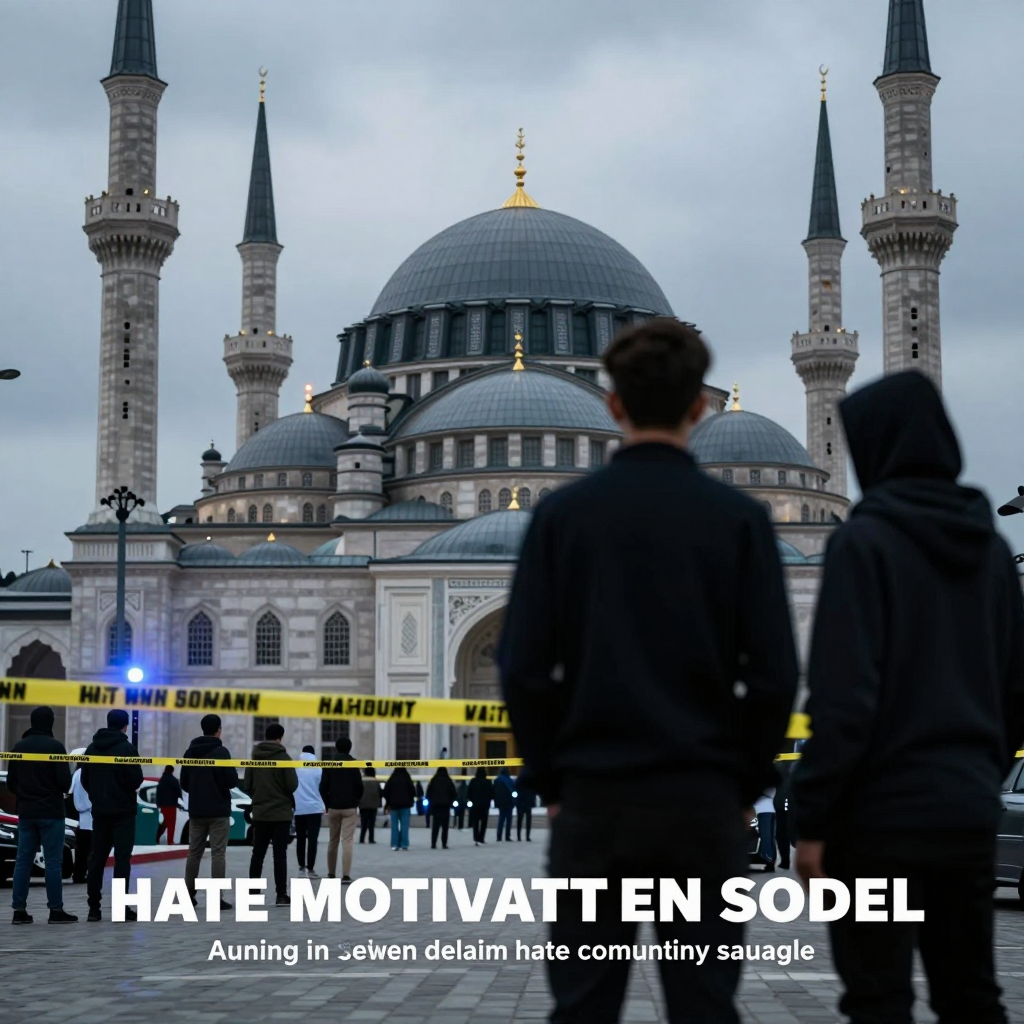
The events began around noon on May 18 (local time) in the Eckstrom Avenue area of San Diego. A report of an “active shooter” at midday prompted a massive police response, and the area surrounding the mosque was immediately locked down. Worshippers and nearby residents had to follow urgent evacuation orders, and a routine Monday afternoon was instantly transformed into a scene of terror and chaos.
According to reports, three adults were killed, and the two teenage suspects involved in the shooting were also confirmed dead. However, critical details such as “how these deaths occurred (whether in clashes with police or by suicide),” “the number of injured,” and “how many people were inside and around the mosque at the time” vary between news sources or have been revealed only sparingly. This is exactly where vigilance is needed in the early stages of the incident since information gaps allow rumors and assumptions to spread rapidly.
Yet one thing is clear: police have stated they are investigating the shooting as an incident with a high likelihood of being a hate crime. This is largely due to the significant symbolism of the mosque itself. In the U.S., houses of worship—including churches, synagogues, and mosques—serve as centers of community safety and identity, but at the same time, they are among the most vulnerable spaces to be targeted by prejudice and hatred. This is why the San Diego shooting should not be viewed simply as a local crime, but rather through a national lens.
In this section, we first focus on the question, “What exactly happened at the scene?” Next, we expand the perspective to explore why police mention the possibility of a hate crime and what the involvement of teenage suspects reveals about patterns of gun violence in America.
The Shadow of Hate Crimes: Why Classify It as a ‘Hate Crime’? (San Diego Shooting)
A simple shooting and a ‘hate crime’ carry very different weight in the U.S. legal and investigative system. Even though the San Diego shooting is a developing story, the police’s relatively early mention of a “possible hate crime” is not just about public sentiment or atmosphere—it is because there are clear legal criteria and evidence directions that must be verified. So, what makes this case appear as a “crime targeting a specific religion or group”?
What the Law Says About ‘Hate Crime’: It’s About ‘Motive,’ Not Emotion (San Diego Shooting)
In the U.S., a hate crime does not mean the act is merely “hateful”; it means a crime committed because of a protected characteristic. The core elements are twofold:
- Is the victim connected to a specific group (such as religion, race, ethnicity)?
- Is bias against that group a primary motive for the crime?
So, the fact that the shooting occurred at a mosque does not automatically confirm it as a hate crime. However, when the location, victims, and circumstances come together, investigators reconstruct the case from the start with ‘bias motive’ at the center.
Why Is the Mosque as a Location a Crucial Clue? (San Diego Shooting)
The strongest signal in this incident is that the target was a house of worship. Mosques, synagogues, churches—spaces where faith communities gather—have historically been repeat targets of hate crimes and mass attacks in the U.S. From an investigative standpoint, a religious place implies:
- A higher likelihood that this was not a random act, but involved deliberate targeting of a specific group
- The question changes from “Did it happen to anyone?” to “Were certain people deliberately chosen?”
- As a result, police regard the presence or absence of bias motive as a pivotal early branching point
In short, the mosque is not just a backdrop—it forces the question, “Why there?”
What Kind of ‘Evidence’ Are Authorities Looking For? Words, Records, and Traces of Choice (San Diego Shooting)
The key to establishing a hate crime is not what’s in someone’s heart, but whether that motive is provable through evidence. Typically, investigators focus on the following categories:
- Prior statements and messages: slurs, threats, derogatory remarks against a specific group before or after the crime
- Online activity: posts, chat logs, participation in extremist communities, presence of a ‘manifesto’
- Rationality of target selection: why that specific time and place (worship time, religious events, etc.)
- Symbols and possessions: anti-Muslim slogans, ideological insignias, hate symbols
- Past behavior: previous hate speech, violent history, fixation on a particular group in school or community
Importantly, no single element usually seals the case; rather, multiple pieces aligning toward a common ‘motive’ strengthen the hate crime framework.
Why This Could Escalate to a Federal Case: Beyond Local Crime (San Diego Shooting)
Violence targeting religious facilities often starts with local police investigations but can quickly draw in the FBI and the Department of Justice depending on its nature. Federal involvement becomes significant especially when:
- The case clearly involves violations of religious freedom or civil rights
- There are indications of networks spanning multiple states or online communities
- Links to similar cases (attacks on other houses of worship) suggest copycat or connected crimes
When the target is a house of worship as in this case, investigators consider defining the crime not just as isolated gun violence but as a threat to the entire community.
The ‘Hate Crime’ Label’s Impact: Social Ripples Beyond Punishment (San Diego Shooting)
Once labeled a hate crime, the incident transcends the tragedy of individual victims to become a message of violence against an entire group. This label affects more than just sentencing; it also triggers:
- Heightened fear in the Muslim community about everyday safety—during prayers, events, and movement
- Debates about increasing security for religious sites and related public funding
- Discussions about platform accountability amid expanding online extremism
That’s why the moment police raise the possibility of a hate crime, this case isn’t just the San Diego shooting—it becomes a test of how American society confronts bias-fueled violence.
San Diego Shooting: Teenage Suspect and the Recurring Pattern of Gun Violence in the U.S.
Why do teenagers reach for deadly weapons? The fact that the San Diego shooting suspect is reported to be a teenager forces us to see this incident not as a “rare exception,” but as part of a recurring pattern of youth involvement in American society’s gun violence. Although motives and pathways are not yet confirmed, following the structures shared by similar cases gives us clues about what may emerge next.
The Question Rekindled by the San Diego Shooting: How Does ‘Teen Radicalization’ Spill Over Into Real-World Violence?
A common trend in recent major U.S. shootings is simple: anger, hatred, and despair brewed online rapidly transform into targeted offline violence when triggered. Religious venues—mosques, synagogues, churches—are particularly vulnerable “symbolic targets.” Attackers often seek not just individuals but to instill fear across entire communities.
The key is not that “teenagers are inherently violent,” but that vulnerabilities during adolescence—when combined with specific environments—can sharply escalate risk.
Overlapping Patterns with the San Diego Shooting: The ‘Cycle of Extremism’ Created by Online Ecosystems
Youth radicalization rarely unfolds through grand organizational memberships alone. More common is a combination of:
- Algorithmic recommendations and community reinforcement: Just a few clicks on provocative content accelerate exposure to deeper hate, conspiracy theories, and glorification of violence.
- Hate cloaked in memes and irony: Prejudice spreads under the guise of “jokes,” dulling guilt and blurring boundaries.
- Copycat effects: Narratives from past incidents (perpetrators’ names, manifestos, videos) are recycled, fueling the temptation that “emulating gains attention.”
- Closed chat rooms as reinforcement labs: Spaces like Discord and Telegram, more secluded than public social media, amplify encouragement and feasibility.
Law enforcement’s upcoming investigations will likely focus here: the suspect’s digital footprint (posts, search history, chat logs, subscriptions), and whether the shooting was a “personal deviation” or the result of a “networked incitement.”
What Matters More After the San Diego Shooting: How Do Teenagers Get Their Hands on Guns?
Accessibility is as crucial as intent in shootings. Repeat patterns in teenage cases include:
- Home access due to negligent storage: Unlocked guns, poorly separated ammunition, failure of parents or guardians to manage firearms responsibly
- Acquisition via acquaintances or adults: Those legally able to purchase obtaining weapons for teens or linking them to illegal transactions
- Theft and black market circulation: Car thefts, home burglaries, and the blind spots in secondhand markets
- Possibility of homemade or modified guns (so-called ghost guns): Ready availability online of parts and assembly instructions
Even in California, a state with relatively strict regulations, incidents like this highlight the urgent need to examine how storage, distribution, and oversight failures intersect in the field beyond just legal strength.
The Warning Left by the San Diego Shooting: ‘Red Flags’ Often Appear Before the Incident
Many youth perpetrator cases end with bystanders saying, “We didn’t see it coming.” Yet, warning signs often exist, including:
- Obsessive expressions of hatred toward specific groups (religious, racial, immigrant)
- Glorification of violent attackers as “martyrs/heroes”
- Obsession with weapons and tactics, along with discussions of attack scenarios
- Isolation at school or home, sudden personality changes, and threatening remarks
Whatever conclusions arise from this case, the core issue converges on one question: Were there effective systems in place to slow down the radicalization of youth, block access to firearms, and intervene upon early warning signs? A failure to answer this will ensure these tragic patterns repeat in other cities once again.
The San Diego Shooting That Even California Couldn't Prevent: The Gap Between Policy and Reality
Why did such a tragedy occur even in California, the state with the most progressive gun regulations? The more comprehensive the laws and systems seem, the more people ask, “Then why did it still happen?” The core lesson from the recent San Diego shooting is simple: there is a much wider gap than expected between the strength of regulations and the actual safety on the ground.
Why Strict Gun Laws Don’t Guarantee “Zero Risk”
California is known as a state with strong gun control, implementing bans on assault weapons, mandatory waiting periods, and enhanced background checks. Yet, shootings continue to happen mainly because of the following issues:
- Illegal and informal gun distribution channels: The stricter the regulations, the more constrained the legal market becomes. However, stolen guns, black-market trades, and homemade firearms (so-called ghost guns) remain separate, unresolved problems in the shadow market.
- Negligent storage and secondary access: Even if laws control purchase, as long as guns exist in homes or within social networks, minors and youth still have access to them.
- Regulatory blind spots occur in ‘enforcement’: Even when policies are in place, if reporting is neglected, information sharing delayed, or risk signals underestimated, preventive mechanisms fail to operate.
In short, California’s gun laws are strong at keeping guns out of easy reach, but fully blocking the process by which existing firearms get into the wrong hands remains a challenge.
Moments When ‘Red Flags’ Are Missed
California has a Red Flag Law (Gun Violence Restraining Order, GVRO) designed to restrict gun possession among high-risk individuals. The problem is that for this system to be effective, several conditions must be met:
- Families, schools, and communities must recognize warning signs,
- Police or courts must be able to act quickly upon request, and
- Sufficient enforcement capacity (staff, protocol, evidence standards) must follow through.
In cases involving rapidly radicalizing youth, the signs often get dismissed with “Surely not,” only to gain tragic significance later. While the law exists, hesitation, information silos, and reporting burdens in reality create gaps.
The Speed Gap Between Online Radicalization and Local Policing
Amid investigations considering the shooting a possible hate crime, another critical gap emerges: the speed of online radicalization versus the pace of offline response.
- Online hate content can rapidly spread through algorithms and communities,
- While school authorities, families, and law enforcement take longer to detect and intervene.
Crimes targeting religious institutions carry strong symbolism, and the path from “target selection → imitation → execution” online can be alarmingly short. This is why even strong gun laws can’t immediately curb the underlying forces of hate and radicalization behind such attacks.
The Security Dilemma of Religious Spaces: When ‘Open’ Becomes Vulnerable
Places of worship like mosques, churches, and synagogues are by nature open, welcoming spaces. Yet that very openness becomes a vulnerability.
- Strengthening access controls, increasing security personnel, and installing more CCTV can help,
- But these measures may also undermine the community’s values of hospitality and accessibility.
Ultimately, the San Diego shooting reveals that the solution goes beyond simply “making laws tougher.” It demands a multifaceted approach combining illegal gun interdiction, responsible storage, early warning systems, online radicalization countermeasures, and support for religious site security. Regulation is only the starting point; true safety is approached only when multiple layers of potential failure are simultaneously managed.
The Question American Society Must Ask: Paths Through Hatred, Violence, and Healing After the San Diego Shooting
Beyond the wounds left by this tragedy, what can we learn and how do we move forward? The San Diego shooting leaves far too many questions to be dismissed as “just another shooting.” Let’s unpack the community’s response, policy debates, and signs of recovery all at once.
Three Core Questions Left by the San Diego Shooting: ‘Why’, ‘How’, and ‘What Next’
1) Why are religious institutions repeatedly targeted?
Mosques, synagogues, and churches are spaces where communities believe they are safest. When these places are attacked, the damage goes beyond loss of life—it normalizes fear in everyday life. Law enforcement’s consideration of this incident as a hate crime stems precisely from this deliberate targeting.
2) How does a teenager become a perpetrator of violence?
Knowing the assailant is a teen forces us to reconsider structural factors like online radicalization, copycat effects, and firearm access (including unsafe storage at home and illegal circulation). If we dismiss it as merely “individual deviance,” protections to prevent future tragedies vanish.
3) What must stop the next incident?
Mourning alone is not enough. The real challenge is whether the four pillars—security, education, investigation, and platform accountability—work effectively, and if society is willing to bear the cost.
The Language of Healing Available to Communities: ‘Solidarity’ as Strategy After the San Diego Shooting
Muslim communities grappling with fear and pressure to maintain normalcy find that solidarity goes beyond emotional support—it becomes a practical strategy for safety.
- Interfaith vigils and joint statements create social consensus that “this tragedy does not belong to one group alone.”
- Regular communication channels with local government and police lay the foundation for protection not just post-incident, but proactively before violence strikes.
- Culturally and linguistically tailored support services—like interpretation, legal aid, and trauma care—alter the pace and depth of recovery.
The Policy Debate Reality: Four Fronts Reopened by the San Diego Shooting
As this tragedy becomes a national agenda, the debate risks falling into familiar camps. The question is not “who wins,” but what genuinely works.
- Gun control vs. enhanced armed security: Strengthening security at religious sites might be a short-term fix, but danger remains if access to firearms is not restricted at the root.
- Tougher hate crime penalties: Harsher punishments send a message, but raising deterrence requires empowered reporting, investigation, and evidence gathering, together.
- Online platform accountability: With radicalization shifting online, neglect over algorithms and community management is no longer a side issue.
- Expanded security funding (e.g., Nonprofit Security Grant): Because many religious institutions struggle to afford self-defense, the fairness and sustainability of public support come under scrutiny.
The Final Message: Post-San Diego Shooting Hope Is Not ‘Returning to Normal’ but ‘Building Better Safety’
The future we hope for isn’t a return to a “normal” where nothing happened. It means breaking the cycle where hatred translates to violence, allowing those under threat to breathe again within their communities—creating a new normal.
- A society not leaving hate as mere “expression,” but detecting early signals before it erupts into violence
- A society where religious freedom is guaranteed not just on paper, but through real safety
- A society that doesn’t leave trauma on the individual, but designs recovery together as a community
Answering the questions left by the San Diego shooting will be slow and uncomfortable. But to evade them is to make the next tragedy not an “exception,” but a “pattern.”
Comments
Post a Comment