 \n
\n
Son Seung-won’s Repeated Drunk Driving: The Shocking Fifth Offense
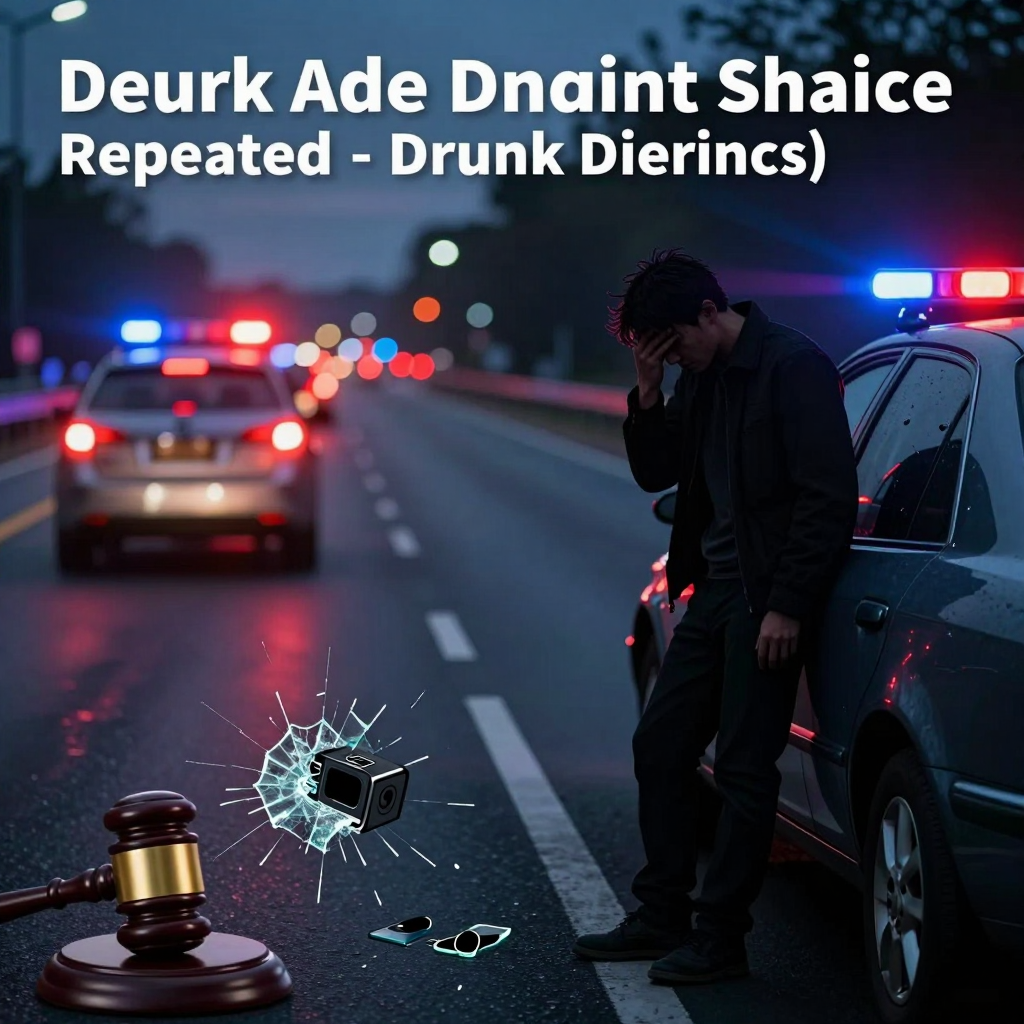
‘Blood alcohol level at 0.165%, driving the wrong way, even attempting to destroy evidence’… How can one actor continuously engage in such dangerous behavior? The gravity of this latest Son Seung-won incident hits especially hard because it reveals factors that cannot simply be dismissed as a “mistake.”
First and foremost, the 0.165% blood alcohol content is far from a borderline offense. It exceeds the license cancellation threshold (0.08%) by more than double, entering a “seriously intoxicated” zone where normal judgment and control are almost impossible. The fact that he drove against traffic on the Gangbyeonbuk-ro highway in this state alone constitutes one of the worst possible scenarios, endangering countless lives. Wrong-way driving can lead to head-on collisions in just seconds, quickly turning into irreparable tragedy.
What is even more troubling is his attitude after the incident. The suspicion that Son Seung-won instructed his girlfriend to remove the vehicle’s black box storage device can only be read as an attempt to destroy evidence rather than mere regret or repentance. While drunk driving is often excused as a “momentary lapse in judgment,” attempts to cover it up shatter this narrative. It is not a mistake but a choice to evade responsibility.
Adding to this, it has emerged just before trial that he was driving without a license. This shows that the dangerous driving habits continued despite legal penalties and public criticism. Ultimately, this fifth offense is not “just another incident” but the result of repeated choices and accumulated danger. This is exactly where readers feel a mix of anger and anxiety—not asking “Why again?” but rather “How can it keep happening?”
The Yoon Chang-ho Act and Son Seung-won’s Legal Dilemma: Why Did Repeated Offenses Occur Despite Harsher Penalties?
Since the 2018 Daegu Yoon Chang-ho incident, our society strengthened punishments for drunk driving with the hopeful expectation that “things will change now.” Yet, the fact that someone like Son Seung-won, who had already served prison time, committed repeated drunk driving offenses leaves an uncomfortable question lingering: Why did they fail to stop even though the law became tougher?
What the Yoon Chang-ho Act Targeted and What the Son Seung-won Case Revealed
The core purpose of the Yoon Chang-ho Act is clear. It regards drunk driving not as a mere “mistake” but as a “serious crime,” and imposes heavier penalties when casualties occur to deter repeat offenses. Indeed, since the law’s revision, punishments and social condemnation have significantly intensified.
However, the Son Seung-won case shows there is a limit to what “stricter punishments” alone can achieve. Repeated drunk driving often intersects with the following structural shortcomings:
- Limitations of Post-incident Punishment: Punishments activate only after the event. They function more as “devices for punishment” rather than “mechanisms to prevent accidents and risks.”
- Behavioral Patterns of Repeat Offenders: Habitual drunk driving often combines issues like dependency, impulsiveness, and ingrained habits—not merely ignorance of the law. Changing such behavior through “sentence length” alone is difficult.
- Continued Access to Driving: Even with license revocation, if access to vehicles remains or community oversight is weak, unlicensed driving can persist. For high-risk repeat offenders, “mechanisms that truly prevent driving” remain insufficient.
Why Repeat Offenses Occur “Despite Fear of Punishment”: Gaps in Deterrence
Son Seung-won’s repeated offenses cannot be explained simply by “the law being weak.” The key dilemma lies in the state of knowing the legal risks but being unable to stop the behavior. For deterrence to work, at least two conditions must be met:
1) A High Perceived Probability of Being Caught
No matter how harsh the penalty, if offenders believe “I might not get caught,” deterrence weakens.
2) Substantive Barriers to Repetition Must Exist
For example, those at risk of reoffending need systems that make vehicle access difficult, along with ongoing management, treatment, and educational programs to correct behavior.
The attempt to destroy evidence raised in Son Seung-won’s case also points to another issue. When deliberate intent to avoid unfavorable outcomes is involved rather than mere error in judgment, the law can impose harsher penalties but cannot reverse the risk that has already materialized.
Questions Raised by the Son Seung-won Case: Is the Law Truly “Preventing” Enough?
The Yoon Chang-ho Act raised society’s standards on how drunk driving is perceived and pushed for strict accountability. Yet if repeated cases like Son Seung-won’s continue to emerge, discussions inevitably must expand to:
- After toughened punishments, were repeat offender prevention measures (management, treatment, control) sufficient?
- Is the system designed not just to deliver “punishment after the act” but to make it truly “difficult to commit” drunk driving?
- Regardless of public status, what consistent standards does society apply in responding to repeat offenses?
Ultimately, the legal dilemma revealed by the Son Seung-won case is straightforward. Even with strong laws, if prevention design is weak, the same dangers will inevitably return to the roads.
Habitual Crimes Revealed in Son Seung-won’s Past: “Did Not Stop Even After the First Punishment”
Son Seung-won’s five instances of drunk driving after his first punishment can no longer be explained as mere “mistakes.” This case directly challenges us to consider how repeated crimes become normalized and where society should step in to stop them.
The Core of Son Seung-won’s Repeated Drunk Driving: Not ‘Recidivism’ but a ‘Pattern’
Drunk driving is deadly even once, but when repeated multiple times, its nature changes. It moves beyond a moment of poor judgment to a state where reckless choices have become habitual. In fact, after being sentenced to prison (1 year and 6 months) for drunk driving in 2018, Son Seung-won continued to be caught, totaling five violations including the most recent incident.
The fact that he did not stop despite experiencing punishment reveals the harsh reality that the fear of punishment alone cannot prevent certain types of repeat offenses.
The Question Raised by Son Seung-won’s Case: “Where Should We Draw the Line?”
Repeated drunk driving cannot be reduced to a matter of individual willpower alone. While the driver bears responsibility, society must decide at what point to intervene to stop the cycle.
- Was intervention sufficient after the first offense? It’s crucial to examine whether education, counseling, and treatment connections for at-risk individuals were genuinely effective or simply formalities.
- Were there measures to prevent him from getting behind the wheel again? License penalties alone may lack effectiveness. The very possibility of driving without a license indicates a failure to block repeat offenses.
- Was there inertia in allowing “just one more” offense? Warning signs had been triggered multiple times as repeat offenses accumulated.
The Social Message Left by Son Seung-won’s Habitual Crime
What makes the Son Seung-won case uncomfortable is the feeling that society ultimately responded too late despite repeated dangers. Repeat offenses don’t explode suddenly; they build up from small “permissions” and “delays” until a tipping point is reached.
Ultimately, the question converges on one point: Are we prepared to stop repeat crimes not “after punishment,” but “before recurrence”?
The Heavy Challenge That Son Seung-won’s Drunk Driving Poses to Public Figures and Society
Repeated offenses committed from a position of public prominence shake the trust in the effectiveness and fairness of the law. In particular, the Son Seung-won case reveals issues that cannot simply be dismissed as “individual lapses.” While recidivism accumulates, what has the system overlooked, and what changes must society prepare for?
The Son Seung-won Case Shakes the ‘Effectiveness of the Law’
The law is meant to suppress repeat offenses through punishment and safeguard the safety of society as a whole. Yet, when drunk driving persists even after imprisonment and is accompanied by evidence of wrong-way and unlicensed driving, it signals that the severity of punishment alone has not been sufficient to prevent repeat offenses.
This problem goes beyond a single individual; it calls into question how robust and finely tuned the system is for early identification and management of high-risk repeat offenders.
The Distrust in ‘Equality’ Exposed by the Son Seung-won Case
In incidents involving public figures, the same question always follows: “Are celebrities treated more leniently, or more harshly?”
The core issue isn’t the intensity of punishment but rather the consistency in procedures and application. Trust in the law is maintained only when identical standards apply to everyone, and investigation and trial processes are transparently explained. The social fatigue sparked by repeated celebrity crimes stems exactly from this lack of consistent clarity.
Changes Society Must Prepare For: Shifting Focus from Punishment to ‘Recidivism Prevention’
Drunk driving isn’t just a traffic violation—it’s a crime that threatens the lives of others. To reduce recidivism, changes should move forward in the following directions:
- Strengthening Driving Disabling Devices for Habitual Drunk Drivers: Concrete safeguards and thorough monitoring must be put in place to prevent these drivers from getting behind the wheel even after license revocation.
- Ensuring Effectiveness of Treatment and Correction Programs: Counseling, addiction treatment, and education programs aimed at lowering the risk of re-offense must be redesigned with a focus on measurable outcomes rather than mere formalities.
- Clarifying Responsibility for Aftercare: To avoid gaps in supervision after punishment, observation and monitoring systems for high-risk offenders must be reinforced.
The uncomfortable question left behind by the Son Seung-won case is clear: “How many more times must we face the same incident before we change?” Beyond blame and attention, society now urgently needs a structural consensus to prevent recidivism.
The Message of Road Safety and Change from the Son Seung-won Incident: What Must We Do?
This incident is not just about an individual's downfall. Son Seung-won's repeated drunk driving challenges the simplistic notion that “stricter punishment is the answer” and forces us to reconsider why that approach is insufficient, as well as how intricate our efforts to prevent recidivism and build a culture of road safety must be. The ultimate question comes down to one: What must we change to reduce tragedies like this?
The Reality Revealed by the Son Seung-won Case: Not a ‘Stroke of Bad Luck’ but a ‘Forewarned Danger’
The sequence—from a blood alcohol level of 0.165%, to driving the wrong way, to unlicensed driving, and even attempts to destroy evidence—resembles not an accidental mistake but the result of accumulating and neglected risks. Especially as drunk driving recurs, drivers easily fall into the distorted confidence of “It’ll be fine this time too,” with the price ultimately paid by innocent citizens on the road.
The Changes We Must Demand After the Son Seung-won Incident: ‘Blocking Recidivism’ as Important as Stricter Punishment
To reduce drunk driving, alongside debates about tougher penalties, we must implement structural measures that significantly lower the chance of repeat offenses.
- Enhancing the effectiveness of recidivist management: Habitual drunk drivers are highly likely to repeat if underlying lifestyle habits and dependence issues remain unresolved after punishment. Counseling, treatment, and education should be linked as mandatory conditions, not just “options,” rigorously monitored for compliance.
- Physically impeding driving itself: To prevent offenders from getting behind the wheel even after license suspension or revocation, effective restrictions must operate for high-risk individuals.
- Focusing on prevention over after-the-fact responses: Drunk driving accidents are irreversible once they happen. If enforcement and punishment are reactive measures after incidents, society’s central challenge is creating an environment where drivers simply cannot take the wheel at all.
The Challenge Son Seung-won’s Case Leaves for Road Safety Culture: ‘Immediate Cessation’ Over ‘Tolerance’
Drunk driving is easily framed as a mistake, but since a single choice can destroy lives and families, society’s stance must be clear.
- Beyond just saying “call a designated driver,” a culture that actively stops people from driving under the influence is essential.
- A workplace or social atmosphere that dismisses drunk driving lightly only fuels greater risks.
- Whether a public figure or an ordinary citizen, consistent law enforcement without exception builds trust.
The Son Seung-won case must not end as a personal lapse. When we recognize that repeated drunk driving is no longer “someone else’s news” but a collective safety issue, road dangers will finally begin to diminish.
Comments
Post a Comment