 \n
\n
The Unbeatable High Altitude: The War Kicks Off in the Toluca vs. LAFC Semifinals
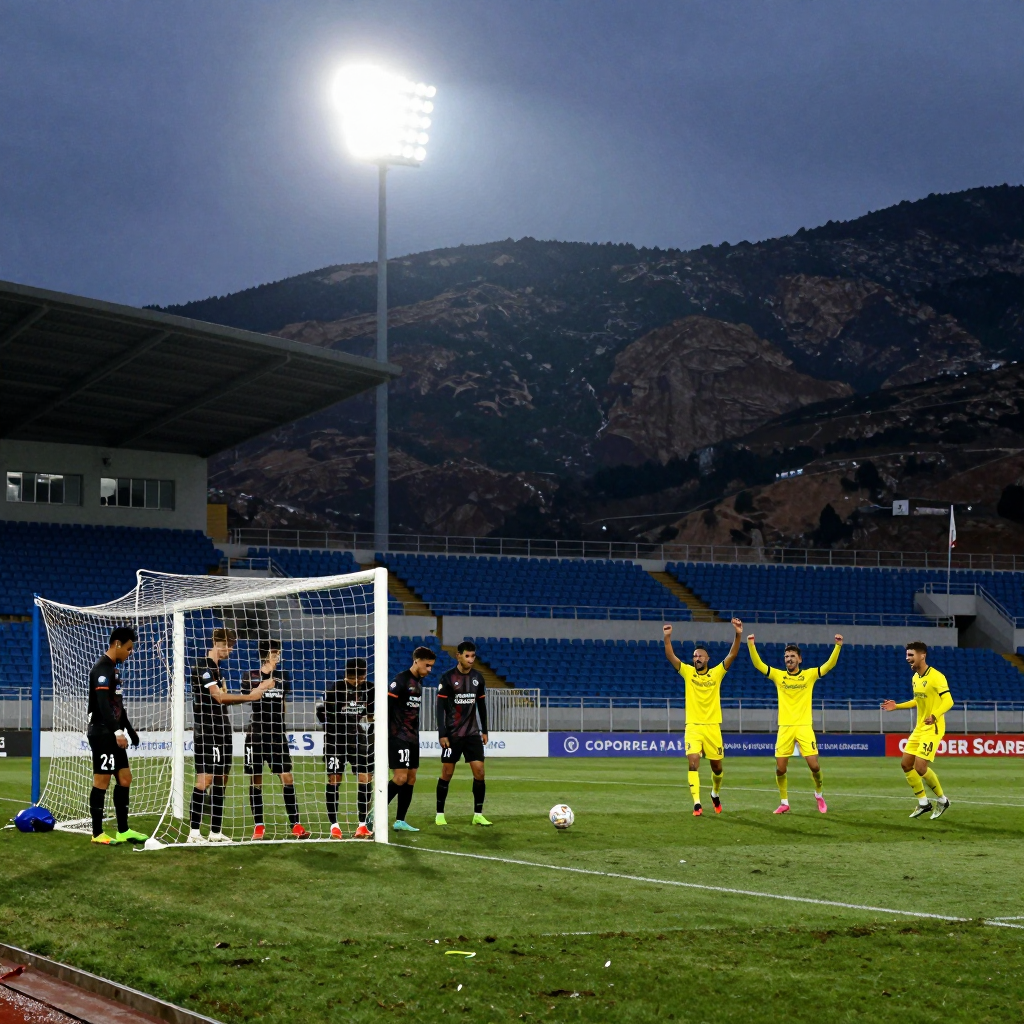
LAFC took a 2-1 victory at home in the first leg, setting their sights on the final. But what awaited them on the away trip was not just tactics—it was the environment that would challenge their very bodies. At an altitude of 2,600 meters, the same pitch and the same rules transformed the game as air density and breathing rhythms shifted. The second leg of the Toluca vs. LAFC semifinals began precisely at this critical altitude.
Toluca’s home, Nemesio Diez Reyna Stadium, is more than just a cauldron of fan fervor—it’s a weapon. In the oxygen-thinned highlands, repeated short sprints tax the lungs more than the legs. A mere 0.5-second delay in pressing creates passing lanes, and once a defensive line breaks, rebuilding it is a daunting task. LAFC’s slender one-goal lead from the first leg was, in this environment, a fragile insurance easily wiped away.
Conversely, Toluca operates with this environment as their baseline. Rather than launching reckless sprints from the start, they disrupt tempo and modulate pressing intensity, gradually draining their opponents’ oxygen supplies. As the second half unfolds and rival stamina falters, Toluca ramps up the pace. No team knows the “second-half gaps” created by altitude better than Toluca, and that knowledge dictated the flow of the semifinal’s second leg.
Ultimately, this match wasn’t simply a contest of “who can run better.” It was a battle of “who can run longer and more precisely.” The reason LAFC’s hopes wavered right from the starting whistle—and the hidden secret behind this fierce clash—lies in the fact that the game unfolded according to the clock Toluca knows all too well: the timepiece of high altitude.
Second Half Comeback: Toluca vs. LAFC Storm of Goals and LAFC’s Crisis
At halftime, the momentum was still evenly poised. Thanks to Hugo Lloris’s continuous saves, LAFC signaled they could “hold on.” However, the second half told a completely different story. From the 4th and 13th minutes in the second half, when Toluca struck back-to-back goals, the entire landscape of the Toluca vs. LAFC clash flipped in mere minutes.
Two Lightning-Fast Goals That Shifted the Flow
- 4th minute of the second half: Toluca’s first goal wasn’t just a simple opener—it was a “crack” that rocked LAFC’s stamina and focus all at once.
- 13th minute of the second half: The second goal widened that crack completely. As the scoreline quickly leveled, LAFC was forced into a choice: either push their line forward or drop back and hold tight.
In this brief window, the key wasn’t “tactics,” but “rhythm.” Toluca maintained fierce pressure and quick transitions on their home turf at high altitude, while LAFC’s breath and leg strength slowed by a beat, causing them to lose their timing to respond.
41st Minute Red Card: The Final Thread of Resistance Snapped
Amid an intensely fought contest, the 41st-minute dismissal of defender Ryan Fortier was effectively the nail in the coffin. Reduced to ten men, LAFC struggled both to keep their defensive block tight and to retain enough players for counterattacks. Toluca capitalized by boldly increasing their attacking numbers in the remaining minutes, adding further goals as the match slid toward a crushing defeat for LAFC.
Summary: Minutes That Became the Turning Point for Finals
Toluca’s consecutive goals (4th and 13th minutes) → LAFC’s delayed response → 41st-minute red card and structural collapse. These three pivotal moments didn’t just narrate a single game—they altered the entire trajectory of the series. Toluca’s sprint toward the finals wasn’t due to a spectacular, one-off hit, but rather relentless pressure and focus seizing multiple decisive moments in succession.
Toluca vs. LA FC: The Victory Formula Shaped by Environment and Experience – Mexico’s Home Advantage
Why was Toluca inevitably strong in the highlands? The second leg of Toluca vs. LA FC demonstrated more than tactics—it showcased how the ‘environment’ alters the pace of the game and the options available. Situated at approximately 2,600 meters above sea level, Toluca is not just another away venue; it functions as a variable that simultaneously drains stamina and decision-making.
The Invisible Gap Created by High Altitude
At high altitudes, fatigue accumulates rapidly even when exerting the same effort. The real issue isn’t “running less,” but being a fraction of a second late at crucial moments.
- Decreased ability for repeated sprints: Pressures can be resisted once or twice, but from the third time onward, gaps start to emerge. Those gaps quickly translate into open shooting angles and passing lanes.
- Slowed recovery rate: Even if the first half ends 0-0, the early minutes of the second half bring heavier breathing and legs, hastening the timing of concessions. Indeed, Toluca overturned the momentum with consecutive goals early in the second half.
- Subtle wavering in judgment: Insufficient altitude adaptation leads to decreased concentration, losing that “split-second quicker decision.” Small differences accumulate in shot transitions, cover timing, and reactions to second balls.
The Winning Edge Forged by Mexican Clubs’ ‘Home Game Mastery’
Toluca’s strength lies not only in the high altitude itself but also in their experience turning that environment into a tactical advantage. Traditional Mexican powerhouses know exactly what tempo to impose at home to break their opponents.
- Acceleration timing early in the second half: When the opponent’s stamina starts to falter, pressure intensity is ramped up and battles for second balls are intensified to strike the decisive blow.
- Game flow management: Even after scoring, they avoid rushing, instead provoking mistakes when the opponents grow impatient to seek additional goals.
- Psychological superiority: Away teams often calculate “just hold on until time runs out,” but that calculation sharply unravels in the highlands during the second half. Toluca capitalized fully on that fracture.
Ultimately, the Toluca vs. LA FC match was a tactical duel intertwined with an ‘environmental adaptability’ challenge. The high altitude was no mere excuse—it was a tangible variable that reshaped the game’s rhythm and stamina curve, and Toluca, as the team that understood this variable best, perfected their winning formula.
Toluca vs. LAFC: Son Heung-min’s Challenge and Reality — Shootings That Failed to Shine at High Altitude
If even global superstar Son Heung-min couldn’t overcome the weight of high altitude, what’s the reason? In the second leg between Toluca and LAFC, Son’s attack stats were surprisingly blank despite his big name. Notably, his zero shots was not just poor form but a harsh ‘reality’ shaped by altitude, tactics, and game flow all at once.
The ‘One Beat Slower’ Attack Rhythm Caused by High Altitude
At around 2,600 meters above sea level, even short sprints repeatedly take longer to recover from. For a player like Son, who thrives on burst acceleration and continuous infiltration, lower oxygen levels easily degrade movement quality.
As a result, his timing to exploit spaces behind the defense is slightly delayed, and the tempo from first touch to shot breaks down, wiping out crucial scoring moments.
Tactical Isolation Revealed by Zero Shots
In this match, after LAFC conceded consecutive goals early in the second half, their plan unraveled, and their attack became more frantic. Amid this, Son often found himself waiting in areas where the ball wouldn’t arrive or dropping back under pressure instead of cutting inside from the flank.
This wasn’t just a matter of personal form; it highlighted a deeper issue where the midfield connection broke down, denying attackers the supply of finishing chances.
Game Flow Stripping Away Options
After the red card at the 41st minute of the second half, LAFC’s defensive balance collapsed, pushing them into survival mode and drastically limiting Son’s options. With little support for counterattacks and exhausting possession struggles, the vital link of penetration-pass-shot fell apart, leaving Son no choice but to appear less threatening and easier to contain.
Takeaway: The Environment Must Be Ready Before the Star
This Toluca away trip underlines that relying solely on “the star to solve it” is insufficient. At high altitude, priorities shift from individual skill to breathing, recovery, and build-up design. Son Heung-min’s zero shots are a shocking stat but also a vivid example of how quickly a forward can be erased when altitude and tactics strike simultaneously.
The Ultimate Showdown of Mexican Clubs: After Toluca vs. LAFC, Toluca vs. Tigres and the Fate of the Champions Cup
When two teams from the same country meet in the final, it’s more than just an internal battle. The moment Toluca overturned the tie with an astonishing 4-0 in the second leg against LAFC, this tournament evolved from an MLS vs. Liga MX rivalry into a stage to determine the very best of Mexican football itself. So, what message will the Toluca vs. Tigres final send to North American football?
Why the Final Is a ‘System Battle’ Rather Than a ‘National Battle’
A final between Mexican clubs isn’t a coincidence but the product of structure. Just as Toluca turned their high-altitude home advantage (2,600m) into performance dominance, Liga MX teams excel at converting home environment design, adaptability, and experience into competitive edges on the continental stage. Now, the final is less about “who has better players” and more likely to be decided by who runs a more refined operation and controls the variables better.
Toluca’s Momentum: Not Just ‘Home Advantage,’ But Perfectly Timed Decisiveness
Toluca’s strength against LAFC lay in their ability to ramp up the pace boldly exactly when goals were needed, scoring consecutively early in the second half to seize control. Facing Tigres in the final, if they repeat this approach — focusing on precise moments rather than cautious probing early on — the game could tilt dramatically in an instant. In other words, Toluca’s weapon isn’t altitude itself, but the accuracy of their game-changing transitions.
The Significance of Tigres: The Embodiment of Elite ‘Strong Team Management’ in Mexico
Tigres is more than just a strong team; they are often cited as the embodiment of the experience and management skills required on the continental stage. Should Toluca triumph over this kind of opponent, it would mark a moment where a new champion’s operational model gains recognition within Liga MX, going beyond the “stability of traditional powerhouses.”
The Impact This Final Will Leave on North American Football
- Liga MX’s Continental Dominance Reaffirmed: An all-Mexican final underscores the league's sustained top-tier competitiveness.
- Clearer Challenges for MLS: Adapting to away conditions, managing stamina and rhythm late in matches, and handling unpredictability become even more pressing hurdles.
- A Shift in the Champions Cup Narrative: Attention moves from “national pride” to “proving who is best within the league,” intensifying the final’s stakes.
Ultimately, Toluca vs. Tigres means more than just a trophy. It’s the ultimate test of two teams from the same league, challenging each other’s football philosophies and operational mastery. After this clash, it will be fascinating to see which way the benchmark for North American club football shifts.
Comments
Post a Comment