 \n
\n
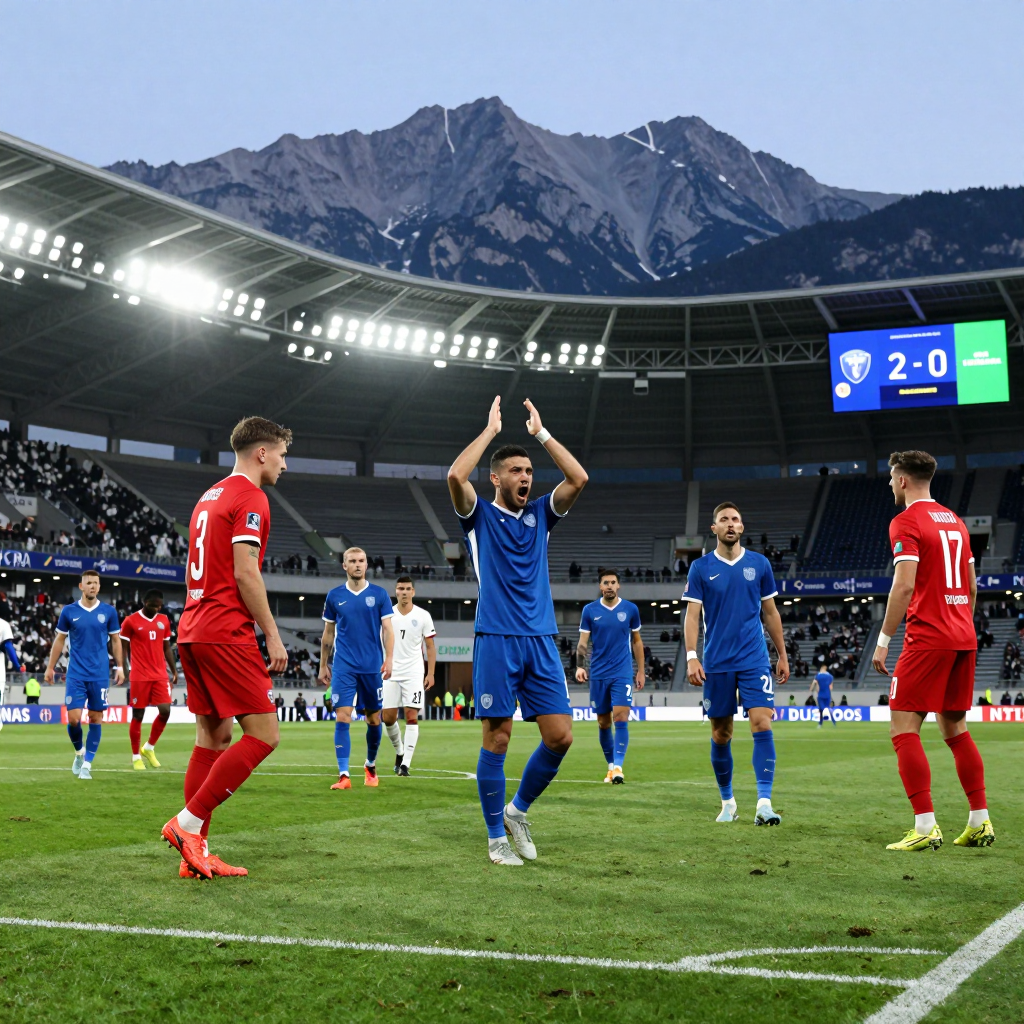
Toluca vs. LAFC: A Stunning 4-0 Rout! Toluca’s Dramatic Comeback
Despite LAFC’s 2-1 victory at home in the first leg giving them a favorable advantage, why did they collapse 0-4 in the second match? The battle between Toluca and LAFC cannot be explained by “strength” alone. On the unique stage of high altitude, momentum and adaptability decided the outcome.
Right from the start, Toluca pushed their lines up to maintain intense pressure, cutting off LAFC’s buildup outlets. LAFC’s strategy, seemingly aimed at protecting their first-leg lead, grew increasingly defensive as time passed—a tactic that proved deadly under the draining conditions of high altitude. Even if they survived the first half, one crack in the second half led to a chain reaction of collapse.
The turning point came early in the second half. At the 4th and 13th minutes, consecutive goals widened the scoreline dramatically, shattering LAFC’s game plan. The moment Toluca took the lead instead of drawing level, LAFC lost the justification to play “management football” and had to go on the offensive. However, this left gaps in their defense, making Toluca’s counterattacks and battles for the second ball much easier.
Adding insult to injury, a red card in the 41st minute sealed the deal. Reduced in numbers, LAFC lost any remaining composure to organize their lines, while Toluca exploited space and numerical superiority to add more goals, completing a crushing 4-0 victory. Ultimately, LAFC’s one-goal lead from the first leg failed to hold up against the environment and momentum of the second.
This match delivers a clear message. The Toluca vs. LAFC semifinal is a prime example of “what to prepare for in an away game,” and Toluca expertly turned those variables completely to their favor.
Toluca vs. LA FC: The Hidden Power of High Altitude That Changes the Game
Lack of oxygen and altered ball trajectories make the 2,600m high altitude not just a backdrop but an invisible variable that shakes both tactics and stamina. The extreme 4-0 scoreline in the second leg between Toluca and LA FC was deeply influenced by these environmental factors.
Less Oxygen Means Heavier Pressure
At high altitudes, the oxygen concentration is low, so you get tired faster even when running at the same speed. The problem is that fatigue doesn’t just make the second half “a bit tough.”
- Teams under forward pressure have less ball possession time,
- Defensive transitions slow down, and
- Players lose a crucial step in second-ball battles.
Toluca’s early second-half scoring spree perfectly demonstrated what happens when accumulated fatigue leads to loss of concentration and breakdown of spacing.
When Ball Trajectories Change, Judgments Waver
At high altitude, lower air resistance makes the ball seem to travel more ‘lightly’. This impact is especially felt on crosses, mid-range shots, and long passes.
- Defenders tend to judge landing spots as if on flat ground, causing delayed reactions, and
- Goalkeepers pay an extra adaptation cost in reading shot speed and bounces.
As a result, passes or clearances that would normally be safe choices become risky, turning into potential triggers for conceding goals.
The Gap Between ‘Adapted Home Team’ and ‘Visiting Team’ Widens in the Second Half
Home teams at high altitude train with these conditions in mind and tailor their game plans accordingly. Visiting teams, even sticking to their usual tactics, often face a drop in execution capacity. This is why high-altitude matches often pivot in the second half.
In this game, although LAFC held on in the first half, their rapid collapse with consecutive goals early in the second half reaffirmed the formula: “The high-altitude variable grows stronger as time goes by.”
Psychological Warfare Victory: The Counterattack Strategy Displayed by Toluca vs. LAFC
The first-leg loss left Toluca with more than just a need to revise tactics. Rather than simply overhauling their game plan, their hidden edge in the second leg was a strategy designed to shake the opponent’s mentality first by combining vengeance with the energy of the home crowd. Conversely, although LAFC held on through the first half, consecutive goals conceded early in the second half triggered cracks that ultimately collapsed their entire game.
Focus Born from Defeat: Toluca’s Emotion-Controlled Pressing
Toluca transformed the emotional setback of the first leg into operational energy rather than dwelling on it. They pressed hard from the start but avoided reckless gambles, ramping up pressure only when the opponent showed signs of fatigue or hesitation. This approach was not about relentless pounding but more about "waiting for the door to crack and striking precisely then."
Patience in the First Half, Explosion in the Second: Toluca’s Timing on the ‘Wavering Moment’
LAFC’s goalkeeper Yorris made several key saves to extinguish early fires, but the effort exacted a psychological toll. While they held the scoreline, the cumulative strain made the team vulnerable to a loss of focus once the second half began. Toluca seized this very gap, and their back-to-back goals early in the half carried weight far beyond the scoreboard:
- First goal: The belief in “just hold on” started to falter
- Consecutive goals: Fear transformed into the conviction that “the game can be turned around”
Ultimately, Toluca’s scoring broke LAFC’s emotional rhythm, leaving LAFC no time to reorganize their intended game plan.
Why LAFC Wavered: When Leading Defense Turned into Anxious Defense
In a second-leg away game, the greatest threat to the team holding the lead isn’t necessarily the opponent’s attacks but their own insecurity. After conceding twice early in the second half, LAFC hesitated whether to push their line forward or retreat, and that indecision led to errors and broken defensive cohesion. With a red card adding to their woes, the remaining time morphed from a tactical battle into a period of psychological salvage.
Summary: Toluca’s Victory Was a Win of ‘Psychological Flow’ Before ‘Tactics’
The second leg between Toluca and LAFC was a showdown of skill and stamina, but ultimately, the key deciding factor was who controlled the psychological momentum. Toluca fueled their second-half burst with the fire of their first-leg defeat, while LAFC failed to manage the classic ‘away team’s anxiety after conceding while leading.’
Toluca vs LAFC: Numerical Disadvantage and Son Heung-min’s Silence, the Symbolism of Defeat
What rendered LAFC’s offense powerless in this match, marked by a numerical disadvantage due to a red card and Son Heung-min’s zero shots? Simply put, LAFC’s collapse wasn’t a single moment but the result of a chain failure in tactics, stamina, and psychology, all unleashed simultaneously in the second half.
Numerical Disadvantage: The Red Card Was Not Just ‘Conceding More Goals’ but a ‘Plan Breakdown’
Ryan Fortier’s dismissal late in the second half was not just about losing one player. With momentum already slipping away, the red card caused LAFC to
- lose the defensive line’s spacing,
- abandon forward pressing, making second-ball recoveries impossible, and
- suffer a reduction in passing options during attacks, wiping out the very starting point of counterattacks.
In other words, the red card acted as the decisive accelerator, turning a manageable 0-2 into an insurmountable 0-4.
Son Heung-min’s Zero Shots: Not Individual Slump but a Result of ‘Supply Line Cut Off’
Son Heung-min’s zero shots in the Toluca vs LAFC match is a startling figure, but it’s hard to attribute it solely to his form. The attacks were dead before Son even had the chance to prepare a shot.
- Passes from midfield to the front were late and short, erasing his penetration timing,
- Toluca’s intense pressure blocked switching play to the wings, making 1-on-1 situations nearly impossible, and
- After consecutive goals in the second half, the entire team dropped back, limiting Son’s options to receive the ball to pressure-relief passes near the halfway line.
Ultimately, Son’s silence wasn’t a striker’s failure but a symptom of a team structure where the striker simply couldn’t exist.
The Essence of Powerlessness: Fatigue and Psychological Shakes Eliminated Offensive Options
Exertion in high-altitude conditions reduced pressing intensity; with weaker pressing, the opponent advanced more easily. The pressured-back team fell into a vicious cycle of
- relying on long balls → losing possession → forced defense.
Add to this the early-second-half goals, and LAFC’s mindset shifted from precise buildup to desperate recovery. From that moment, offense ceased to be an organized effort and became mere sporadic attempts—leaving barely any shooting chances for Son Heung-min.
In summary, this match symbolized defeat not merely through one red card or one zero-shot performance but from the structural collapse caused by the numerical disadvantage and the paralysis of the offensive system starved of supply lines.
The New Power in North American Soccer: The “Toluca vs Tigres” Signal Ignited by Toluca vs LAFC
Toluca’s advance to the finals—carrying the profound significance of victory through environment, strategy, and psychology—sends a clear message to North American soccer. The 4-0 scoreline in the second leg against LAFC is far more than just numbers; it is a declaration that “from now on, the team prepared for the finals will reign supreme.”
High Altitude Is No Longer a Variable but a Tactical Advantage — The Hidden Battlefield of Toluca vs LAFC
Nemesio Diez Stadium, perched at 2,600 meters, is no longer an excuse or a matter of chance. Toluca has woven this environment into their game plan. Their stamina management to sustain intense pressing, calculated ball speed and trajectory, and tempo control that disrupts the opponent’s rhythm all combined to neutralize LAFC’s strengths.
In essence, Toluca has ascended beyond merely having “home advantage” to become a team that utilizes the environment, not just overcomes it.
Dominance of Mentality and Momentum — The Tournament Truth That One Collapse Means the End
The first-leg loss was not a burden for Toluca but a driving force. When LAFC, who withstood the first half, faltered after conceding early goals in the second half, Toluca swiftly shifted to a game-ending mode. This moment sends a critical message to Tigres, their final opponent.
The final is not just a tactical battle but a contest where the team that seizes momentum and delivers decisive blows without hesitation draws closest to the championship.
Toluca vs Tigres: “League MX Internal Rivalry” Becomes the Continental Benchmark
Ultimately, the all-Mexican final is symbolic. The difference revealed against LAFC was not about individual player quality but about environmental adaptation, tactical refinement, and the nuances of game management. Toluca’s comprehensive victory elevates the showdown with Tigres from a mere “big match” to a battle for supremacy.
The key point to watch in the final is simple: can Toluca replicate the package of ‘environment mastery + tactical execution + psychological edge’ proven against LAFC against a tougher opponent like Tigres? The answer will decide the next ruling power in North American soccer.
Comments
Post a Comment