 \n
\n
What Is the ‘Transistor Moment,’ a New Turning Point in Quantum Computing?
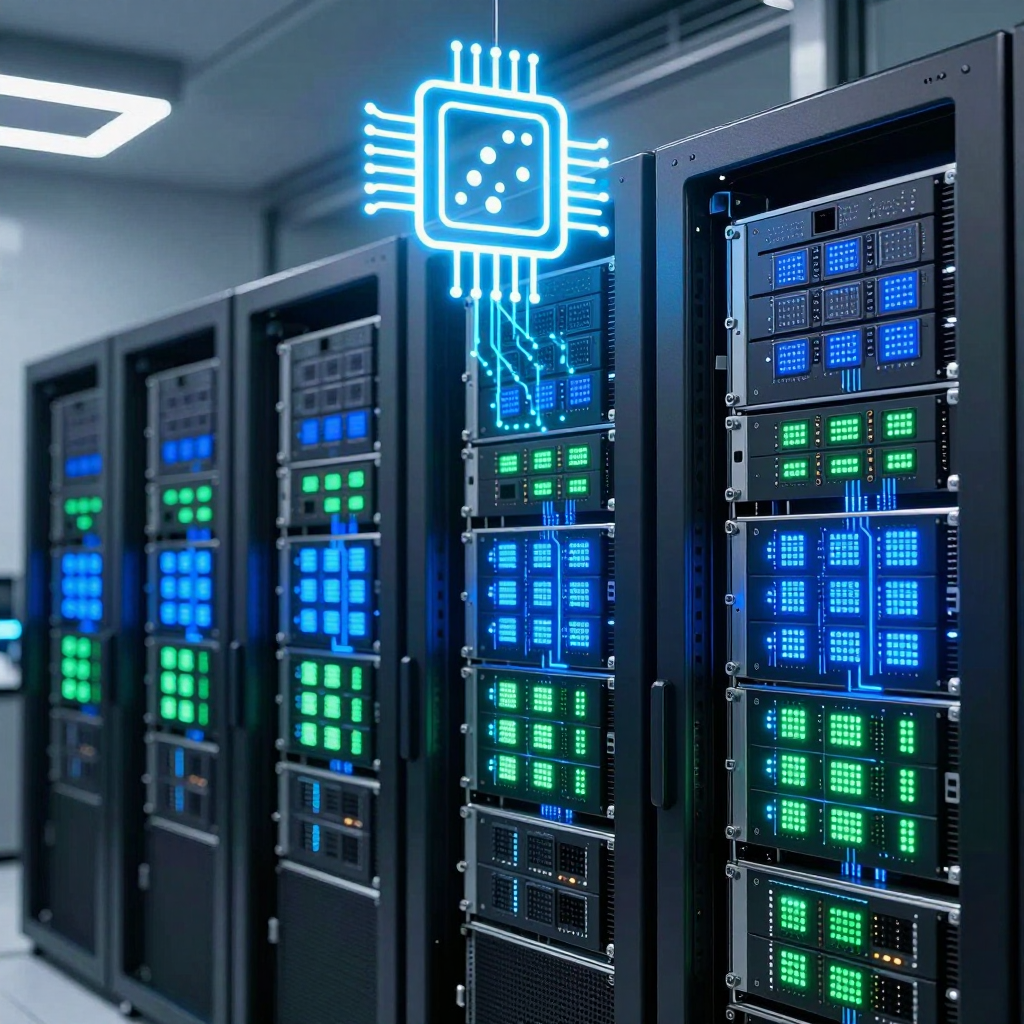
Why did Quantum Motion declare a ‘transistor moment for quantum computing’ alongside a $160 million investment? Imagine the transformation this technology could bring to our daily lives. Picture quantum computing—which used to look like massive experimental lab equipment—one day fitting “like a server” inside a standard data center rack.
What the ‘Transistor Moment’ Means in Quantum Computing
The ‘transistor moment’ is not just a metaphor. The transition classical computers underwent—from vacuum tubes → transistors → integrated circuits (ICs)—marked a revolutionary inflection point characterized by three shared shifts:
- Size drastically shrank (from bulky equipment to compact products)
- Power consumption dropped (lower operational costs)
- Cost plummeted (the market itself expanded)
Quantum Motion’s vision of a ‘transistor moment’ aims for that very trajectory. It is a declaration to push quantum hardware beyond “operable demos” into mass-producible industrial computers ready for large-scale deployment.
Quantum Computing Hardware’s Bottleneck: The “System,” Not Just the Number of Qubits, Collapses First
Many discussions about quantum computers focus chiefly on “how many qubits can be scaled.” However, the bigger, more persistent bottleneck on the ground lies in system engineering.
- Increasing qubits causes an explosion in control lines (wiring) and electronic equipment
- Enormous cooling systems (dilution refrigerators) and RF/microwave measurement gear balloon in size and cost
- Space requirements, power consumption, and maintenance complexity all soar in tandem
In other words, quantum computing’s challenge isn’t merely physical qubits; unless a data center-scale form factor and operational cost structure is established, commercialization stalls. Quantum Motion’s message strikes this fundamental bottleneck head-on.
Quantum Motion’s Answer: Silicon Transistor-Based (= CMOS-Compatible) Spin Qubits
Quantum Motion leads with an approach that implements spin qubits on a silicon chip. The essence is summarized in one key statement:
We will leverage the semiconductor manufacturing ecosystem (CMOS) optimized over decades as the scaling engine for quantum computing.
The technical reasons connecting this approach to the ‘transistor moment’ are clear:
Utilizing Existing Semiconductor Infrastructure (Realistic Manufacturing Scale)
Silicon-based qubits align with foundry processes. This shifts the conversation from “a chip that works once in the lab” to an industrial narrative of repeatable production and yield improvement.Potential for Density
Just like transistors, silicon platforms have a roadmap for miniaturization and integration. In the long run, this can pack more qubits into the same footprint, opening pathways to large-scale error correction.Close Integration with Control Circuits (Easing Wiring/Power Bottlenecks)
Running a quantum chip demands precise control. Silicon allows integrating CMOS control circuitry near the qubits (e.g., 3D stacking, in-package solutions), key levers to reduce cable bulk, latency, and power consumption.
Of course, silicon qubits still require ultra-low temperatures and face hurdles like noise, thermal effects, and two-qubit gate scaling. Nevertheless, their essence lies in the ability to redesign the conventional bottleneck—from chip to package to rack—for systems that become impossible to operate when scaled up.
Targeting “100x/1,000x Reduction” Not in Performance but in ‘Deployability’
Quantum Motion claims reductions of 100× in cost and space, and 1,000× in energy consumption compared to competitors. While these figures may serve as optimistic marketing bounds, the more important interpretation is this:
- The goal is not “one world-record-breaking machine” but
- Economics that allow running multiple machines in data centers
For quantum computing to truly become an industry, it needs not only performance (qubit count and precision) but also installable size, manageable power demand, and budget-friendly cost structures. The ‘transistor moment’ marks a turning point fulfilling the criteria for widespread adoption.
What Changes Will This Bring to Daily Life? “Cloud Functionality” Becomes an “Infrastructure Option”
If quantum equipment fits into standard rack form factors and cuts power and operational costs, the change transcends tech headlines.
- Cloud providers can organize quantum computing not as an “experimental service” but as a data center infrastructure option
- Enterprises will consider quantum not as a “technology of the distant future,” but as an accelerator attachable to specific workloads
- Consequently, quantum computing will shift from being a research event to becoming a computing resource as accessible and on-demand as GPUs in everyday life
Quantum Motion’s $160 million investment signals a push to elevate this scenario from “possibility” to “competitive productization.” The ‘transistor moment’ ultimately signifies not when quantum computers get smarter, but when they become widely deployed.
Silicon Transistor-Based Quantum Computing: Revolutionary Difference from Existing Technologies
The superconducting qubit approach led by IBM and Google carries the challenge of “working fine but the system becoming exponentially heavier as it scales.” Quantum Motion takes a completely opposite route. Their strategy is to fabricate quantum chips using the ‘smartphone chip manufacturing method (CMOS process)’ and scale them to fit within data center racks. The core here is not “quantum mechanics” but rather how to leverage the semiconductor manufacturing, integration, and packaging industrial infrastructure for quantum hardware.
Structural Differences Between Mainstream (Superconducting) and Silicon Spin Qubits from the Quantum Computing Perspective
To summarize the difference in one sentence:
- Superconducting Qubits (IBM/Google, etc.): Macroscopic quantum states generated in metal circuits (Josephson junctions) controlled by microwaves
- Silicon Spin Qubits (Quantum Motion): Use the spin of electrons (or holes) confined within silicon transistor structures as qubits, controlled by electric fields and microwaves
Why does this difference matter? Superconducting qubits are relatively “large” circuit structures and require many microwave lines, control electronics, and wiring. In contrast, silicon spin qubits are designed on the premise of microminiaturization and integration like semiconductor devices. In other words, their starting point for “what becomes the bottleneck when scaling qubit numbers up” is fundamentally different.
Core Principle of Silicon Transistor-Based Quantum Computing: “Handling Spin Like a Transistor”
What Quantum Motion means by “silicon transistor-based” goes beyond simply fabricating on silicon. It refers to trapping electrons with transistor gates (quantum dots) and encoding their spin states as 0 and 1.
Qubit Formation (Confinement)
- Using gate structures similar to CMOS, create extremely small potential wells (quantum dots) inside silicon to confine one (or a few) electrons.
Information Storage (Spin State)
- Use the two spin states of the electron (e.g., ↑ and ↓) as the qubit’s |0⟩ and |1⟩.
- Spins are relatively weakly coupled to their environment (under appropriate conditions), offering great potential in coherence.
Performing Operations (Control & Gates)
- Single-qubit gates are implemented by rotating spins using electron spin resonance (ESR) or similar techniques.
- Two-qubit gates create entanglement through precise control of interactions (exchange interaction, etc.) between adjacent quantum dots.
Measurement (Readout)
- Readout is performed by converting spin states to charge signals (spin-to-charge conversion), accompanied by sensitive sensor structures.
In summary, the essence of silicon spin qubits lies in making ‘quantum devices’ but coding their manufacturing language close to that of ‘semiconductor devices’.
How CMOS Processes Transform the Quantum Computing Scaling Game: “Manufacturing/Integration/Packaging” as the Roadmap
Quantum Motion’s approach is particularly notable because the roadmap centers not only on qubit performance competition but also on productivity and system engineering.
Leveraging Mass Production Infrastructure
It can exploit the maturity of existing semiconductor processes, yield management, and equipment ecosystems. This approach aims to reduce reliance on “laboratory artisan craftsmanship” often seen in quantum hardware.Ultra-High Integration Density
The decades-long experience of integrating billions of transistors fuels the expectation that, long-term, qubits can also be densely packed. (Though qubits present far more challenging process and noise issues than simple devices.)Close Integration with Control Circuits (3D Stacking/In-Package)
As quantum chips increasingly depend on external equipment connections (wiring, cables), bottlenecks grow. Silicon-based qubits allow classical control CMOS circuits to be integrated closer—or ultimately at the package level—easing wiring complexity, latency, and power issues.
Here lies Quantum Motion’s vision of “data center rack deployment.” It’s not merely about creating qubits but a declaration to engineer quantum systems into an operational product form.
The Reason Behind “100x/1000x”: What Must Change to Bring Quantum Computing into Data Centers
The figures in press releases (100x reductions in cost and space, 1000x reduction in energy) may contain marketing elements, but their underlying concern is clear.
- Superconducting systems tend to see dramatic growth in dilution refrigerator size, microwave control equipment, wiring complexity, and maintenance burden as qubit numbers increase.
- Silicon-based approaches seek to increase integration density and shift control toward on-chip and packaging layers, shrinking system footprint, power consumption, and complexity at the rack level.
That said, challenges remain. Silicon spin qubits still generally require ultra-low temperatures (millikelvin range), and hurdles lie in achieving uniform performance across hundreds to thousands of qubits (process variability), high-fidelity two-qubit gates, and managing heat dissipation in cryogenic control circuits. In essence, the “potential direction” is attractive, but “engineering completion” is the critical hurdle.
Conclusion: Silicon Transistor-Based Quantum Computing Focuses on ‘Industrialization Path’ over ‘Physics’
Quantum Motion’s differentiation is not about “better qubits” but rather about growing quantum computers under the scaling rules of the semiconductor industry. If IBM and Google’s superconducting approach has produced today’s results, silicon spin qubits seek to answer the next question:
“What must quantum computers be made of to be small, affordable, and operable enough to truly deploy in data centers?”
As long as this question holds weight, silicon transistor-based architectures are poised to remain a central pillar in the future competition of Quantum Computing.
Quantum Computing: 100x Cost Reduction, 1,000x Energy Savings? The Practical Changes Brought by Silicon-Based Quantum Computers
Is a ‘storm-like reduction’ in cost and energy consumption really feasible? Quantum Motion’s claim of “100-fold savings in cost and space, 1,000-fold savings in energy” sounds bold at first glance. However, this assertion is not mere exaggeration; when you consider the structural bottlenecks inherent in existing superconducting quantum computing systems alongside the engineering breakthroughs potentially unlocked by a silicon (transistor/CMOS) approach, you begin to see under what conditions these numbers could become reality.
From the Quantum Computing Perspective: Why Are Existing (Superconducting) Systems Expensive and Grow Even More Costly as They Scale Up?
Currently, the dominant commercial quantum computing platforms rely on superconducting qubits, which tend to get larger and more complex as performance is pushed higher. The core reason lies not in the "qubit chip" itself, but in the surrounding infrastructure required to operate those chips (cryogenic systems plus RF/microwave control).
Nonlinear increase in ultra-low temperature maintenance costs
Dilution refrigerators create millikelvin (mK) environments by employing multiple temperature stages and expensive cooling, vacuum, and shielding mechanisms. As the number of qubits grows, heat dissipation, wiring complexity, and filtering demands increase, dramatically reducing cooling headroom.Wiring and control channel counts block scalability
Each superconducting qubit (or small group) requires dedicated high-frequency control lines, readout lines, filters, and attenuators. As qubit count rises, both “wires” and “room-temperature electronics” multiply, leading to simultaneous explosions in space, cost, and power consumption.Control equipment’s power consumption dominates total system power
Despite the quantum chip itself operating at minuscule power, driving it demands racks full of high-frequency sources, amplifiers, ADCs/DACs, and synchronization hardware, resulting in significant overall power needs.
In many cases, the bulk of a "quantum computer’s" cost is decided by these bulky non-data-center-friendly peripheral devices—not the qubit chips. This is precisely where the silicon-based approach aims to challenge head-on.
Silicon (Spin Qubit + CMOS) Approach in Quantum Computing: What Enables These ‘Savings’?
The core of Quantum Motion’s silicon-based quantum computer vision can be summed up in one sentence:
"We will build qubits using the language of the chip industry (transistors/CMOS) and bring control as close to the chip as possible."
This approach leverages three major technical levers impacting cost, space, and energy:
1) Density: Packing More Qubits into the Same Area
Silicon spin qubits take advantage of semiconductor fabrication’s nanoscale patterning capabilities.
This promises higher integration density in the long run—meaning far more computational resources per physical footprint.
2) “Chip-Proximate” Control: Reducing Dependence on RF Equipment
Superconducting systems require extensive high-frequency analog control gear, which grows bulky. By contrast, silicon spin qubits open possibilities for CMOS integration (in-package, 3D stacking, etc.).
- Placing control logic closer to the chip shortens wiring → lowers signal delay and noise
- Enables multiplexing many channels or digitizing part of the control to reduce room-temperature equipment scale
- Ultimately, this leads to smaller rack footprints and lower power consumption
However, this “proximity” is challenging—CMOS power dissipation at millikelvin temperatures is critical and requires careful thermal and architectural design for success.
3) Economic Viability in Manufacturing and Operation: Riding on the ‘Semiconductor Supply Chain’
Silicon-based quantum computing’s strong selling point is production scale.
- Leveraging existing semiconductor infrastructure means moving beyond painstaking lab manual crafting toward a game of reproducibility, yield, and mass production.
- Smaller systems shrink cooling, maintenance, and installation space needs, directly lowering operational expenditures (OPEX).
What Do “100x / 1,000x” Mean in Quantum Computing? Translating Numbers Into Real-World Language
Claims like these usually don’t compare against “today’s best specs” but instead focus on the unsustainable cost blowup governments and companies face when scaling current mainstream implementations. The point is not merely cheaper machines, but:
- Making cost scale roughly linearly with qubit count
(current systems see nonlinear cost explosions from wiring, control, and cooling) - Moving from “quantum experimental gear” toward a format deployable as data center rack units
Thus, 100x/1,000x is less about instant miracles and more about approaching that scale once these conditions are met:
- Maturation of architectures reducing control channels (multiplexing, on-chip control)
- Accumulated fabrication expertise suppressing yield variability and defects
- System-wide optimization encompassing error correction—not just chips but entire racks
Data Center Mainstreaming Scenario for Quantum Computing: The Real Impact of “Quantum in a Rack”
While the silicon-based final vision is spectacular, the real impact lies in practical applications:
On-Premises Data Center Deployment Potential
For industries like finance, defense, and manufacturing, where “cloud migration of workloads” is challenging, rack-mounted quantum systems dramatically lower adoption barriers.Simplified Hybrid Computing Operations
Quantum computing rarely operates alone—it works tightly orchestrated with classical computing. Physically co-locating these in the same data center or reducing network distance lowers latency, operational complexity, and costs.Transition from ‘Lab Equipment’ to ‘Infrastructure’
Commercial proliferation will hinge not only on performance but also on installation, operation, and scalability. The silicon approach bets aggressively on this axis.
In summary, the “100x / 1,000x” figures should be viewed less as literal immediate results and more as a measure of how much silicon integration can absorb the superconducting method’s scaling bottlenecks (wiring, control, cooling, power). Quantum Motion’s message signals that quantum computing is evolving beyond research curiosities into data center-grade engineered products.
Quantum Motion in the Global Quantum Computing Race: Racing to Become the Silicon Quantum Computing Leader
The battle in quantum hardware has shifted from “who can build more qubits first” to who can scale systems small, cheap, and efficient enough to fit into data centers. Quantum Motion’s Series C funding round, raising $160 million, sends a clear message: in a field dominated by silicon heavyweights like Intel and HRL, they aim to seize the market for low-power, rack-mount quantum computers by leveraging the UK’s largest capital base and a CMOS-friendly architecture.
Why Has the ‘Silicon Camp’ Become the Battleground in Quantum Computing?
Silicon spin qubits (CMOS-based) represent a strategy to import decades of semiconductor industry expertise in manufacturing, integration, and packaging directly into quantum chips. This approach is powerful for three reasons:
- Competing on manufacturing scale: Rather than relying on laboratory equipment, it rides on the foundry ecosystem for repeatable production and yield improvements.
- Reducing wiring/control bottlenecks: In large-scale quantum computing, as qubit numbers grow, the barrier shifts from “the qubits themselves” to the control lines (cryogenic wiring), control electronics, and heat dissipation. Silicon allows bringing control circuitry closer to the chip (in-package/3D stacking).
- Converging on data center form factors: Ultimately, the commercial rollout’s final stage isn’t a lab — it’s a data center. A “rack-mounted” system fundamentally transforms deployment, operation, and maintenance models.
Quantum Motion’s claim of 100x cost and space reduction, along with 1,000x energy savings matters less for raw precision than for signaling a direction: the question of whether quantum systems can be redesigned around data center infrastructure logic.
Quantum Motion’s Positioning Among Quantum Computing Competitors (Intel, HRL, etc.)
Strong players already exist in the silicon-based quantum space.
- Intel: Wields overwhelming strengths in semiconductor processes, packaging, and production infrastructure. It continues pushing “manufacturable quantum” through silicon spin qubit research.
- HRL Laboratories: Possesses deep academic and technical expertise in silicon/germanium spin qubits, excelling in precise device physics and co-design.
Against this landscape, Quantum Motion’s differentiation lies less in “highest-performance demos” and more in execution speed to clinch a commercialization path.
- Startup focus: Unlike large corporate research groups, startups can aggressively drive architecture, packaging, and control integration toward a unified goal aligned with productization.
- Leverage of capital: This round signals a stage beyond “promising research”; it demands heavy investment in talent, equipment, manufacturing partnerships, and systems engineering. Silicon qubits require substantial funding not just for device physics but also for managing process variability, cryogenic electronics, and test automation.
- Harnessing the European/UK ecosystem: Building on UK government and institutional funding, European research networks, and regional industrial partnerships to cement the status as the UK’s flagship quantum hardware representative boosts negotiating power in follow-up collaborations (cloud, data center, defense, semiconductor sectors).
In other words, while Intel and HRL lean on “technology accumulation and infrastructure,” Quantum Motion seeks to capture the product definition of data-center-oriented quantum computers first through capital and focused execution.
Why Is ‘Low Power & Rack-Mount’ the Critical Battlefield in Quantum Computing?
The phrase “quantum computer in the data center” isn’t just marketing—it fundamentally changes technical requirements. Once rack mounting is the goal, these conditions become practically mandatory:
Low-power, integrated control electronics
Superconducting and ion-trap approaches see exponential growth of high-frequency analog equipment as channel counts rise. Silicon spin qubits, by contrast, have greater potential for CMOS-based digital control integration, smoothing power and volume growth during scaling.Optimizing the cooling-heat-wiring triangle
Silicon spin qubits need ultra-cold temperatures, but the real challenge is not “how cold” but how many signals can be brought in with minimal heat load (wiring), and how close control can be performed (cold control electronics).- Placing control circuits close reduces wiring but increases heat dissipation
- Lowering heat constrains control performance and bandwidth
Managing this tradeoff through system engineering is what truly enables “rack” deployment.
Change in operational model (the real commercialization threshold)
Rack-mount capability transforms quantum computing from a “specialized equipment deployment” into a scalable, replaceable, and standard-operable asset—much like servers. This dramatically lowers adoption barriers for cloud providers and colocation companies.
Quantum Motion characterizes this battleground as the “transistor moment”—reflecting that industry demands not “cutting-edge physics experiments” but computing resources plug-and-play ready for data centers.
What Exactly Is Quantum Motion Trying to ‘Preempt’ in Quantum Computing?
This funding round suggests a focus not on “utility-scale quantum machines right now” but on defining and locking down the market space early.
- Architecture standardization grounded in low power and cost: Alongside a roadmap for increasing qubit counts, there’s a drive to unify control, packaging, and rack integration into a cohesive product form factor first.
- Command over partnerships: Positioning as a data-center-ready solution expands collaborative scope beyond mere research institutions to include cloud providers, IDCs, semiconductor fabs, cooling, and instrumentation supply chains. Capital strength translates directly into trust here.
- Competing as the silicon quantum flagship: Even with heavyweights like Intel, a startup’s route to victory lies not in scientific breakthroughs but in completeness and speed of commercial system design and execution.
In summary, within the global quantum computing competition, Quantum Motion is aiming to lead the next phase—the market for “data center-deployable quantum computers”—with a winning formula built on the UK’s largest capital pool, CMOS spin qubit technology, and rack-mount orientation.
Technological Challenges and Future Roadmap: The Obstacles Silicon Qubits Must Overcome (Quantum Computing)
The vision of a “quantum computer fitting inside a data center rack” is impressive, but the reality—from ultra-low temperature cooling to integrating high-performance control circuits—is formidable. For Quantum Motion’s touted transistor moment to become the new standard in quantum computing, the following challenges must be tackled simultaneously.
Ultra-Low Temperature (Millikelvin) Environment: Maintaining Stability Is Harder Than Miniaturizing
Silicon spin qubits also require a dilution refrigerator environment at tens of millikelvin temperatures. The problem isn’t just the “refrigerator” itself.
- Heat budget: The millikelvin regime permits only an extremely limited amount of heat dissipation. Even a little heat generated by control lines, filters, amplifiers, or nearby control circuits can destabilize qubit performance.
- Vibration and Electromagnetic Interference (EMI): Dilution refrigerators induce mechanical vibrations and electrical noise. The extremely delicate energy levels of spin qubits are highly sensitive to this interference, making system-level shielding and design a must.
- Wiring bottleneck: As qubit count increases, so do the wires — which in turn increases heat inflow and complicates spatial constraints and assembly. The key to “rack-mount” viability ultimately boils down to architectures that reduce wiring.
Qubit Quality: Wrestling with Coherence, Gate Fidelity, and Manufacturing Variability
While silicon’s CMOS compatibility is a strength, ironically, semiconductor process variability proves much more detrimental in the quantum qubit realm.
- Sources of noise: Interface defects, charge traps, residual nuclear spins—all contribute to decoherence in spin qubits. Minute changes in material purity and fabrication conditions drastically affect performance.
- Gate fidelity: Moving beyond “qubits just existing” to useful utility-grade requires error rates to be stably maintained below thresholds manageable by error correction.
- Uniformity and reproducibility: It’s one thing for a single chip to work well in the lab; quite another for many chips made via production to perform “consistently similar.” Silicon spin’s battleground is ultimately statistical quality at scale.
The Core of Scaling: Making Two-Qubit Gates and Coupling Structures ‘Deployable’
Large-scale quantum computing cannot rely on single-qubit performance alone. The gateway to scaling is robust and controllable two-qubit gates.
- Choice of coupling methods: Exchange coupling between adjacent qubits, resonator-based coupling, long-range coupling structures—each has pros and cons, all tightly linked with “layout, wiring, and integration.”
- Crosstalk: As qubits become denser, unwanted interactions and control signal leakage increase. Given silicon’s advantage in integration density, designs suppressing crosstalk become even more critical.
- Layout feasibility: Error correction (e.g., the surface code) often demands 2D lattice connectivity. Thus, coupling is no longer just a physics problem but also a chip layout and wiring challenge.
The Paradox of “CMOS Control Circuit Integration”: The Closer It Is, The Worse the Heat and Noise Problem
Quantum Motion’s envisioned future is close integration of qubits and control circuits (3D stacking/in-package)—the most powerful solution to reduce wiring and latency, yet the most demanding technically.
- Cryo-CMOS: Transistor properties shift at low temperatures (threshold voltage, mobility, etc.), requiring modeling and design optimization very different from room temperature.
- Heat management: Placing control circuits “beside the qubits” instantly makes heat dissipation a survival issue for the system. Hence, a hierarchical control architecture distributing computation—deciding what functions live at millikelvin, 4K, or room temperature—is crucial.
- Noise injection: Switching noise from digital circuits can affect qubits, pushing power isolation, shielding, and signal integrity design to extend into chip packaging stages.
Roadmap Toward Error Correction: ‘Error Budget’ First, Not Just ‘Qubit Count’
“Utility-grade” ultimately means reliable error correction capability. Crucially, even with high qubit density, the overhead for error correction is enormous.
- Short term (1–3 years): Achieve repeatable two-qubit gate quality on tens to hundreds of physical qubits, and demonstrate small-scale error detection/partial correction.
- Mid term (3–7 years): Demonstrate logical qubits (error correction code based) on hundreds to thousands of physical qubits and verify practical use on limited problems.
- Long term (7–10+ years): Reliably operate many logical qubits, reaching a “product” stage including data center operations aspects like uptime, maintenance, and cost structure.
The key takeaway? It’s not “how many qubits?” but whether the system can consistently meet the error budget required to run target algorithms.
Commercialization 10 Years from Now: From ‘Lab Equipment’ to ‘Operational Infrastructure’
If Quantum Motion’s vision materializes, quantum computers a decade hence may look like this:
- Rack-scale quantum accelerators (Quantum Appliances): Packaged cooling, control, and monitoring deployed directly in data centers.
- Classical-quantum hybrid operation: A scheduler distributes workload, offloading only specific subroutines to quantum accelerators.
- New performance metrics: Purchase decisions pivot from “qubit count” toward logical qubit numbers, logical gate speed, error rates, uptime, and total cost of ownership (TCO).
The ultimate question boils down to one:
Can silicon’s scalability (manufacturing and integration advantages) overpower the physical realities of ultra-cold environments, noise, coupling complexities, and error correction to become truly product-level? Quantum Motion’s Series C funding marks a critical step forward—the fuel for tackling these daunting engineering challenges on the road to commercialization.
Comments
Post a Comment