 \n
\n
Kumyang Delisting: How Did Kumyang, Once the Leading Battery Stock, End Up Being Delisted?
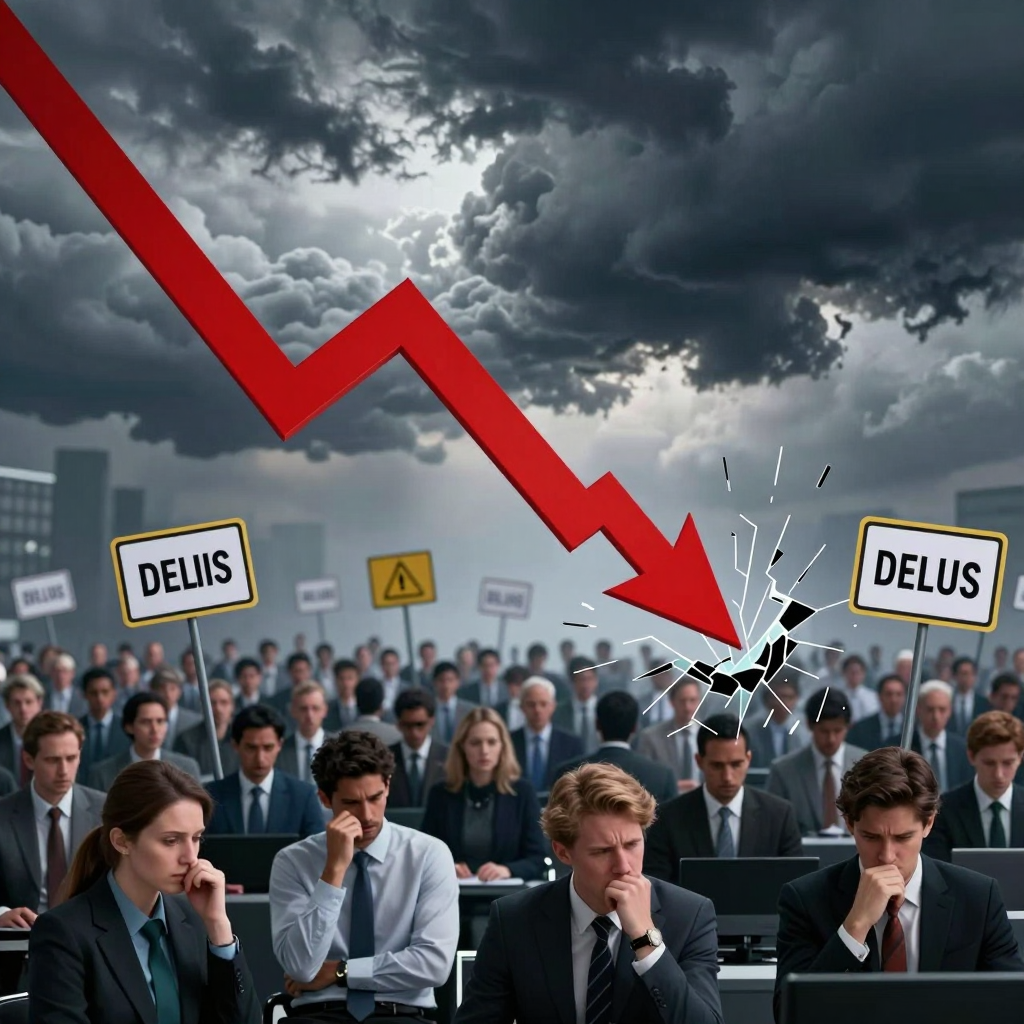
Why did Kumyang, which once dreamed of a market capitalization worth tens of trillions of won, face delisting after receiving “disclaimer of opinion” for two consecutive years? To get straight to the point, the core of this case is not the stock price but the collapse of ‘accounting trust.’
Kumyang was called the “leading stock” at the heart of the secondary battery craze, with its market cap hovering around 9 trillion won. However, regardless of the hype surrounding the theme, listed companies must pass at least the minimum trust threshold known as the external auditor’s audit opinion. Kumyang failed right at this crucial juncture.
The Decisive Blow to Kumyang’s Delisting: Two Consecutive Years of ‘Disclaimer of Opinion’
You don’t need to feel overwhelmed by complex delisting reasons. The sequence is straightforward.
- External auditor’s disclaimer of opinion (Year 1) → Trading suspension and delisting eligibility review
- External auditor’s disclaimer of opinion (Year 2) → Formal fulfillment of delisting conditions → Exchange’s decision to delist
Here, ‘disclaimer of opinion’ is far from “some ambiguous items.” It means the auditor could not obtain sufficient evidence to express an opinion on the financial statements as a whole. In other words, for investors, this is an official warning that says, “It is difficult to rely on these numbers for investment decisions.”
The Background Behind Kumyang’s Delisting: Going Concern Doubts and Financial Pressure
According to audit references cited in the media, the key issues revolve around ‘cash flow and liquidity.’ When operating losses and net losses accumulate, and current liabilities far exceed current assets, the central question in the short term becomes whether the company has the funds to survive. At this stage, auditors often raise concerns about the company’s ability to continue as a going concern.
In short, Kumyang’s delisting was not simply because “the theme cooled down,” but rather a result of the company simultaneously losing the financial stamina to survive immediately and the accounting credibility to prove it.
Structural Problems Leading to Kumyang’s Delisting: The Gap Between ‘Growth Story Expansion’ and the ‘Numbers’
According to market assessments, Kumyang aggressively pursued a growth story of expanding the value chain across the board amid the secondary battery boom, but the speed was widely criticized for outpacing their financial health and cash flow.
- Aggressive investments and new business launches → Increased capital needs
- Rising borrowings and expense burdens → Accumulated losses
- Lack of visible business results and cash-generating ability → Deepening financial instability
- As a result, the accounting firm struggled to secure trustworthy evidence
Ultimately, the essence of Kumyang’s delisting can be summarized in one sentence.
“The dazzling growth narrative failed to clear the real-world hurdle of accounting and finance.”
Fatal Timeline Leading to Kumyang’s Delisting: An In-Depth Look at Kumyang’s Downfall
What exactly happened to Kumyang from the scorching stock surge in 2023 to the delisting decision in 2026? This process is far from a simple “stock price drop”—it’s a textbook exit scenario that unfolds as auditor’s qualifications → trading suspension → listing eligibility review → delisting decision. The key point is not that the company “suddenly collapsed,” but that a prescribed procedure unfolded step by step.
A Snapshot of Kumyang’s Delisting Flow: “Two Consecutive Auditor’s Qualifications Denied” Sealed the Fate
The clincher for Kumyang’s delisting boils down to this single line:
- External auditor issues ‘disclaimer of opinion’ for two consecutive years
- → Formal delisting criteria met
- → Stock exchange decides on delisting
In other words, irrespective of market expectations or thematic hype, the audit results decisively tipped the scale toward “delisting is unavoidable.”
Kumyang’s Delisting Timeline: From the Peak of the Surge to ‘Trading Suspension’
Around 2023: Secondary battery theme frenzy
Riding the wave of excitement around secondary battery materials, Kumyang’s stock price soared, once placing its market cap around an astronomical 9 to 10 trillion KRW, positioning it at the very center of the market.
Investors believed in the “market leader premium” and embraced the company’s expansion story with great enthusiasm.Around March 2024: First ‘disclaimer of opinion’ and trading suspension
The external auditor abruptly issued a ‘disclaimer of opinion’ in the audit report, dramatically shifting the market atmosphere.
This disclaimer doesn’t just mean “poor performance”—it signifies that the financial statements are unreliable or there’s insufficient basis to form an opinion.
From this moment, stock trading was suspended, effectively cutting off retail investors’ “escape button.”
The One Year Road to Kumyang’s Delisting: Listing Eligibility Review and the Meaning of the ‘Improvement Period’
After trading is suspended, delisting isn’t immediately finalized; instead, the stock exchange follows established procedures:
- Listing eligibility review
- Granting an improvement period and monitoring compliance
- Verifying results of subsequent audits
The crucial takeaway is that the improvement period is merely “buying time,” not a guarantee of continued listing. The final verdict depends on the next audit outcome.
The Confirmed Phase of Kumyang’s Delisting: Second Disclaimer → Delisting Decision
2025 fiscal year audit report: Second ‘disclaimer of opinion’
With two consecutive disclaimers, Kumyang formally met the delisting criteria.
At this stage, the question isn’t whether the company can produce a turnaround, but whether the stock exchange still has grounds to maintain the listing.May 20, 2026: Stock exchange announces delisting decision
The Korea Exchange’s Securities Market Delisting Committee officially announced the delisting of Kumyang shares, turning a market rumor into an unavoidable fact.
Procedures Following Kumyang’s Delisting: Notice → Final Trading → Official Delisting (With Possible Variables)
Even after the delisting decision, the schedule unfolds “according to protocol”:
- Announcement of the delisting notice period
- 7 business days of final trading: Last chance to trade without price limits
- The day after final trading ends: Official delisting
One caveat remains:
- If the company files for legal injunctions such as a provisional suspension of effectiveness,
the final trading schedule may be delayed or suspended pending court ruling.
However, given the clear-cut reason of two consecutive disclaimers of opinion, many in the market view the possibility of injunction approval as low.
The message this timeline conveys is crystal clear. Kumyang’s delisting was not a “sudden event,” but rather a stepwise outcome triggered by auditor opinions that translated into trading suspensions and delisting procedures. In the following section, we will dig deeper into why the ‘disclaimer of opinion,’ the core trigger of this process, is so devastating.
The Core Signal Behind Geumyang’s Delisting: What Does an Auditor’s ‘Disclaimer of Opinion’ Mean? Why Is It a Death Sentence?
Do you know the real meaning of the most dreaded auditor’s opinion, the ‘disclaimer of opinion,’ and the danger signal it sends for a company’s future? Many individual investors think, “If a company is in the red, it can just turn around.” But a disclaimer of opinion goes one step deeper than losses—it signifies a ‘collapse of trust.’ And this very point is the crucial link leading to Geumyang’s delisting.
The Exact Meaning of ‘Disclaimer of Opinion’ That Directly Led to Geumyang’s Delisting
An external auditor usually comes to one of four conclusions after verifying a company’s financial statements:
- Unqualified (Clean) Opinion: Generally trustworthy
- Qualified Opinion: Some problems with specific areas (limited scope)
- Adverse Opinion: Significant overall distortion
- Disclaimer of Opinion: Unable to obtain sufficient evidence to form an opinion
Here, a disclaimer of opinion does not simply mean “poor performance.” The auditor is basically saying:
- “It is impossible to make a judgment based only on the materials provided by the company.”
- “Access to critical information is denied or there is insufficient evidence.”
- “The company’s viability as a going concern is itself doubtful.”
In other words, the issue isn’t just bad numbers—it’s that the very trustworthiness of the numbers is shaken.
Why Two Consecutive Years of ‘Disclaimer of Opinion’ Is Fatal in Geumyang’s Delisting
Listed companies survive on market trust. But when an auditor issues a ‘judgment impossible’ opinion for two consecutive years, the stock exchange’s basis for maintaining the listing drastically weakens.
- One year of disclaimer: Keeps the door open for “potential improvement” and discussions on review and improvement periods
- Two consecutive years of disclaimer: Highly likely to meet the ‘formal delisting requirements’
As in Geumyang’s case, the pattern of two consecutive years of disclaimer → accelerated delisting procedure is a classic one that every individual investor must remember.
Before asking “Could the stock price recover?”, the more fundamental question is whether the listing itself can even be sustained—a stage that is lost first.
The Terrifying Background Behind the Disclaimer That Led to Geumyang’s Delisting: Worse Than Just Poor Performance
Disclaimer opinions often arise alongside situations like:
- Short-term liquidity crisis (more debt due immediately)
- Going concern uncertainty (doubts about operational continuity)
- Distrust in asset values and ability to recover investments (lack of evidence, valuation uncertainties)
- Difficulty verifying the reality or terms of important transactions and contracts
In Geumyang’s case, even media reports pointed to massive losses, deteriorated financial structure, and liquidity burdens. As a result, the auditor issued the strongest warning: “unable to express an opinion.” This warning inevitably led to the conclusion of Geumyang’s delisting.
One-Line Summary Every Individual Investor Should Remember
Losses can be recovered—but a ‘disclaimer of opinion’ means trust has been shattered.
Geumyang’s delisting ultimately shows not a “business story,” but what conclusion the market reaches when the most fundamental safety net—the auditor’s opinion—is switched off.
The Cause Behind Geumyang’s Delisting: Reckless Expansion, Exaggerated Narratives, and Weak Financials
Behind every dazzling dream and growth story lies the undeniable truth of numbers. Geumyang once rode the wave of expectation as a leading secondary battery stock, expanding its value chain in every direction. However, the financial strength and proven performance needed to sustain such rapid expansion never materialized. As this gap widened, market trust quickly eroded, culminating in Geumyang’s eventual delisting.
Reckless Business Expansion: When “Doing Everything” Becomes “Unable to Handle Anything”
Amid the secondary battery boom, Geumyang painted a grand growth picture extending into CNT conductive additives, battery materials, and overseas resources like Mongolian mines. The real issue wasn’t the expansion itself but the cash flow and financial structure supporting it.
- Large-scale investment plans instantly translated into significant capital demands.
- Growing capital needs meant increasing borrowings and debt burdens.
- When debt burdens escalated yet results (revenue, profit, cash flow) lagged, the company’s financial lifeline tightened rapidly.
In other words, the bold gamble for “future growth” endangered the company’s liquidity before any tangible returns could materialize.
The Aftermath of an Exaggerated Story: Selling Expectations but Falling Short on Numbers
In a thematic stock phase, companies can sell “potential.” But what the market truly demands isn’t potential itself—it wants clear evidence that potential translates into contracts, sales, and cash flow.
For Geumyang, various projects, partnerships, and investments amplified its growth narrative. But over time, investors returned to one critical question:
- “So, what are the confirmed results?”
- “Who is executing the plan and with what money?”
- “Where exactly in the financial statements can the claims in disclosures be verified?”
The bigger the story grows, the tougher the scrutiny. When there’s a lack of ‘proof’ to clear that test, trust plummets. Once trust collapses, securing funding becomes even harder—creating a vicious cycle that exacerbates financial deterioration.
Fragile Financials and Audit Risks: When the “Going Concern Doubt” Becomes Reality
The final blow came when financial weaknesses were laid bare during external audits. According to reports, Geumyang grappled with accumulating losses and liquidity pressure, prompting auditors to question its ability to continue as a going concern.
- Continuous operating and net losses
- Current liabilities significantly exceeding current assets (pressuring short-term repayments)
- Uncertainty surrounding the value and recoverability of certain assets and investments
When an external auditor issues an “adverse opinion” or “disclaimer of opinion” for two consecutive years, it signals not just poor performance but an inability to express trust in the financial statements themselves. Since listed companies rely on trust to sustain trading, this effectively becomes a fatal signal that delisting is inevitable under exchange rules.
Summary: Geumyang’s Delisting Rooted Not in “Growth” But in “Unverifiable Growth”
The key path to Geumyang’s downfall was simple:
1) Expansion speed was rapid,
2) The narrative moved even faster, but
3) Financials and cash flow lagged far behind.
Stocks may rise on dreams, but ultimately what sustains a company are cash and trust. Geumyang’s delisting will likely stand as a prime example of what happens when both are shaken simultaneously.
Lessons from Kumyang's Delisting: A Stark Warning to 230,000 Investors and 5 Critical Takeaways to Remember
For over 230,000 individual investors, Kumyang's delisting was far more than just “the failure of a single stock” — it was a harsh reminder of recurring traps in the market. The moment investors hop onto a flashy ‘growth story,’ their survival strategy can crumble. So, what should you check next time? The key is to focus on numbers over stories and rely on verifiable evidence rather than mere expectations.
Kumyang Delisting Takeaway #1: Audit Opinions Are Not Mere “References” — They Are Survival Signals
An audit opinion denial is essentially a declaration that the financial statements are unreliable. The moment this warning appears, investors must shift their focus from potential returns to the likelihood of recovering their investment.
- Thinking “this time will be an exception” is dangerously naive.
- Especially if an opinion denial recurs two years in a row, it signals a risk that goes beyond just the investment idea — it threatens the company’s very ability to remain listed.
Kumyang Delisting Takeaway #2: Don’t Just Read the “Headline” — Scrutinize the Conditions, Funding, and Deadlines
The flashier the theme stock, the more eye-catching the disclosures. But investors must always focus on three core aspects:
- Legal binding power: Is it a confirmed contract or just a memorandum of understanding/agreement?
- Funding sources: Is the means of raising capital realistic?
- Execution timeline: When will these plans translate into actual sales and cash flow?
Throughout Kumyang’s delisting saga, the risk widened when there was a growing gap between “plausible plans” and “real numbers.”
Kumyang Delisting Takeaway #3: Prioritize Cash Flow and Liquidity Over Profit
Earnings on the income statement can fluctuate due to accounting methods, but cash flow rarely lies. Watch out especially for these warning signs:
- Continued operating losses despite increasing investments
- Long periods where current liabilities exceed current assets
- Growing dependency on borrowing with looming maturity risks
Investors need to focus less on the claim “the company is growing” and more on whether it has the liquidity to survive the next 12 months.
Kumyang Delisting Takeaway #4: The End of a Theme Stock’s Surge Isn’t Just Volatility — It Could Be Trading Suspension or Delisting
Most retail investors tend to view declines simply as “losses.” But the real nightmare in a delisting scenario is not just losses — it's getting trapped in trading halts, forced liquidation, and eventually delisting, where selling becomes impossible.
- Forced liquidation is the last exit, but it comes with extreme volatility due to the lack of price limits.
- There are phases where the hope of “it’ll bounce back someday” simply doesn’t apply.
Therefore, when investing in theme stocks, having clear exit rules—stop-losses, position limits, and signals to watch—is as vital as setting profit targets for survival.
Kumyang Delisting Takeaway #5: Concentrated Investments & Margin Trading Turn “Probability Games” into “Survival Battles”
The most sobering lesson Kumyang’s delisting leaves behind is that before mastering the skill of picking good stocks, building a structure that prevents total ruin must come first.
- Going all in on one stock risks wiping out your entire account with just a single delisting.
- Using margin loans or credit trading in falling markets eliminates choices (forced sales, margin calls).
Ultimately, the most crucial metric in investing is not returns but survival rate. Diversify your allocations, reduce leverage, and prioritize risk signals (audit opinions, liquidity, the substance behind disclosures) to protect your portfolio over the long haul.
Comments
Post a Comment