The True Meaning of Not Guilty Verdicts in Criminal Trials: A Legal Perspective on Evidence Failure through the Cases of Yoon Suk-yeol and Kang Byeong-sam
 \n
\n
The Two Words "Not Guilty" and Their Deeper Meaning
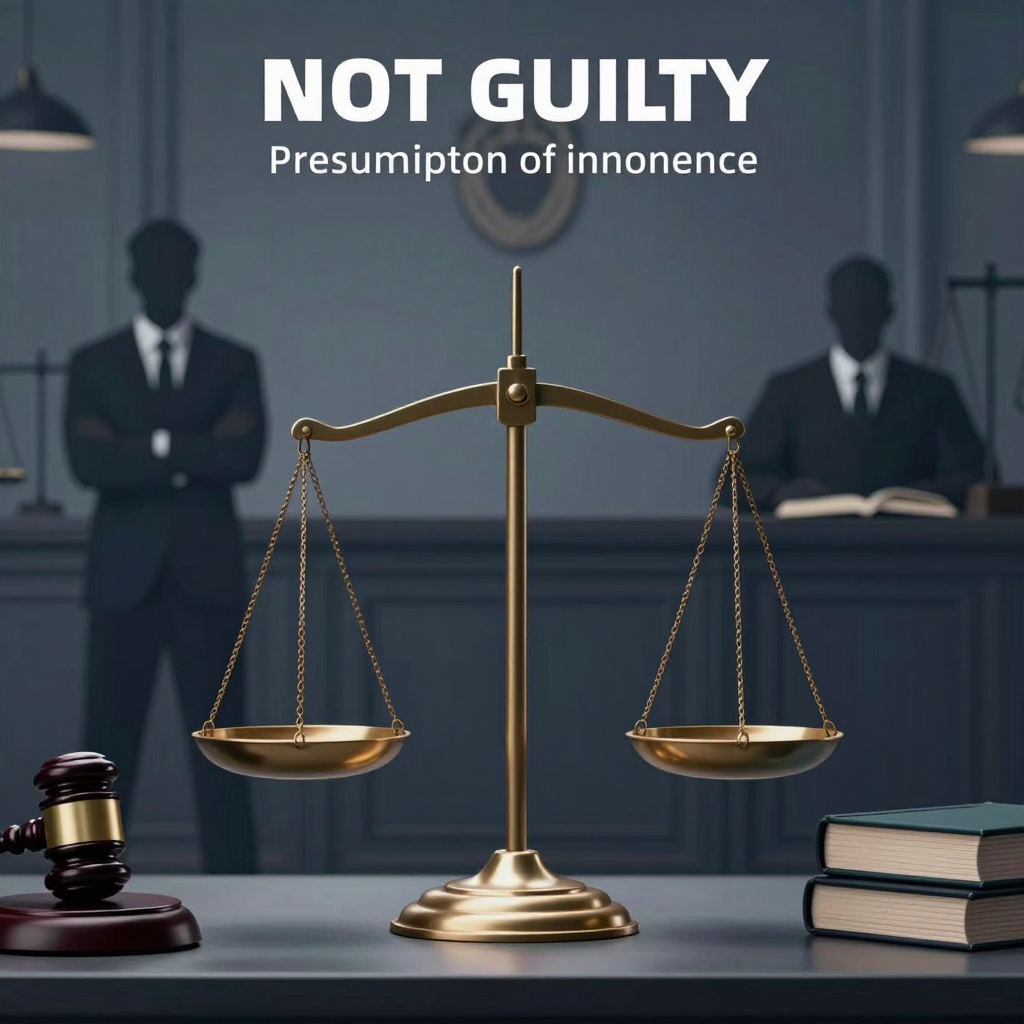
A not guilty verdict in a criminal trial is far more than just a notification of the outcome. What legal significance does “not guilty” truly hold? We often think of “not guilty” as meaning absolute innocence, but its real meaning in court is much more complex. Within these two words lie the burden of proof, the standard of proof, and the court’s method of evaluating evidence—all crucial hurdles the state must overcome to punish an individual.
To get straight to the point, a not guilty verdict in a criminal trial generally arises in one of two situations:
- When the crime is not proven
If the prosecution fails to prove the alleged charges beyond a reasonable doubt, the court cannot convict. If any reasonable doubt remains, the verdict is not guilty. - When the act occurred but is not a crime
Even if the behavior appears questionable on the surface, if it does not fulfill the legal elements of a crime or is exempted from punishment (such as self-defense), the verdict is not guilty.
This is where many misunderstandings begin. Not guilty can mean “that person definitely did not commit the act,” but more often in many cases, it means “the state failed to prove guilt.” The more a verdict repeats phrases like “insufficient evidence” or “not proven beyond a reasonable doubt,” the clearer it becomes that the not guilty decision especially reflects a failure of proof.
The principle behind this system is the very foundation: the presumption of innocence. The defendant is presumed innocent until proven guilty, and the burden of proof lies entirely with the prosecutor (the state). In other words, the court is not a place where “the accused must prove innocence,” but where the prosecutor must prove guilt. If the prosecution’s proof falls short of the legal standard, the verdict is not guilty.
Therefore, “not guilty” essentially leaves us with this question:
“What could we prove, and to what degree of certainty?”
Viewed from this perspective, a headline announcing a not guilty verdict is not simply a conclusion—it is a signal showing how the criminal justice system operated itself.
The Structure of Innocence: How the 'Presumption of Innocence' and Burden of Proof Shape Verdicts
In criminal trials, innocence is not about having “a good lawyer” or just leaving a favorable impression—it is the conclusion that the law is designed to reach from the start. Behind this lie two fundamental principles of criminal justice: the presumption of innocence and the burden of proof. The core question is this: Why does the prosecutor bear the heavier responsibility, and upon what standards does the court deliver a verdict of not guilty?
The Principle of ‘Presumption of Innocence’ That Makes Innocence the Default
The starting point of a criminal trial is simple:
- The defendant is presumed innocent until proven guilty.
- Therefore, the trial is not about “proving the defendant’s innocence,”
but about the state (the prosecutor) proving guilt.
This principle matters clearly because the state wields powerful tools—investigative powers, coercive measures, and prosecutorial authority—while individuals are structurally weaker in comparison. That’s why criminal procedures are designed deliberately to offer stronger protection to individual rights.
The Key to Determining Innocence: Why Does the Burden of Proof Rest Only on the Prosecutor?
In criminal trials, the burden of proof fundamentally lies with the prosecutor. Put simply:
- Since the prosecutor claims that “a crime occurred,”
they bear the responsibility to present evidence and argue to support that claim. - The defendant has the right to remain silent; defending oneself is a right, not an obligation.
Because of this setup, a familiar scene often plays out in practice: even if the defendant denies all charges and the court has suspicions from circumstantial evidence, if the prosecutor fails to prove critical links decisively, the verdict can be not guilty. This is not leniency but rather a safeguard built into the system.
The Standard Leading to Not Guilty: “Proof Beyond a Reasonable Doubt”
For courts to convict, criminal facts must be proven to a level that excludes reasonable doubt. Although this phrase sounds complex, its meaning is straightforward:
- “It probably happened” is not enough.
- If alternative explanations are plausible, guilt cannot be firmly established.
- Therefore, if doubt remains, the benefit goes to the defendant.
This standard usually functions at two critical points:
- Factual matters: Did the alleged event truly occur?
- Legal elements of the crime: Does the act fulfill the crime’s legal requirements (including intent)?
Especially for crimes that involve mental state elements—like perjury, abuse of power, or white-collar crime—proving subjective elements such as intent or awareness matters as much as proving objective facts in determining guilt or innocence.
Two Faces of a Not Guilty Verdict: “Did Not Do It” ≠ “Not Proven”
This is the most misunderstood point by the public.
- Not guilty means the charges were not proven to the legal standard.
- Not guilty does not mean the person absolutely did nothing (complete historical certainty).
If a verdict contains phrases like “lack of evidence” or “reasonable doubt cannot be excluded,” it usually means the not guilty is an “acquittal due to failure of proof.” In other words, the court is saying, not “the defendant is declared completely innocent,” but rather “there is insufficient proof to punish.”
Summary: Innocence Is Not a ‘Result’ but a ‘Victory of Procedure’
In criminal trials, not guilty is a favorable outcome for the defendant, but from a broader viewpoint, it is a mechanism that demonstrates how high the state’s threshold is to punish a citizen. The heavy burden of proof on the prosecutor and the high evidentiary standards mandated by the court ultimately say one thing:
“If it is not certain, do not punish.”
This is the promise of criminal justice concealed behind every not guilty verdict.
The Reality of Acquittals: A Comparative Case Study of Yoon Suk-yeol and Kang Byung-sam
The acquittal in the first trial for perjury against former President Yoon Suk-yeol and the shift from acquittal to conviction in the second trial of former Jeju Mayor Kang Byung-sam demonstrate that “not guilty” is not merely a verdict but a product of the evidentiary framework. Why does the same word—“not guilty”—sometimes feel like a “closed case” and at other times appear as a “reversible process”?
The First Critical Point Where Acquittals Diverge: Proving ‘Intent’, Not Just ‘Falsehood’
In Yoon’s case, the key issue was not whether his testimony was inaccurate, but whether he deliberately lied against his memory. The court judged that his statements could reflect his personal understanding and interpretation of the circumstances at the time, and even if some statements conflicted with records, it was hard to find that the intent to commit perjury was proven beyond a reasonable doubt.
In other words, this not-guilty verdict does not so much prove his innocence as it concludes—following criminal trial principles—that the prosecution failed to prove intent at the required level.
The Second Critical Point Where Acquittals Diverge: Cases Centered on ‘Intent’ Are Subject to Shifting Interpretation
The issue in Kang Byung-sam’s case also essentially revolved around his state of mind (his intent to engage in agricultural management). The first trial acquitted him, stating that “even if there are suspicions of profiteering, there is insufficient evidence to conclusively prove he lacked agricultural intent.” However, the appellate court reviewed the same case and convicted him, especially emphasizing the damage to public trust inherent in cases involving public officials.
The crucial takeaway here is one:
- The first trial’s acquittal often reflects a procedural conclusion of insufficient proof,
- While the appellate court can overturn the verdict by reinterpreting the evidence, recognizing facts differently, and assigning meaning to the act (particularly within the context of public office ethics).
The ‘Different Faces’ of Not Guilty: Not a Final Word, But a Result of Judgment
Juxtaposing the two cases reveals at least two layers within the notion of not guilty:
- Yoon Suk-yeol’s acquittal conveys a message closer to the prosecution lacking sufficient proof to punish “intentional perjury.”
- Kang Byung-sam’s first trial acquittal reflects the initial court’s inability to firmly establish lack of intent, leaving room for reversal to a conviction on appeal.
Ultimately, when we see “not guilty” in the news, what matters is not the word itself, but what failure to prove it signifies, and whether the judgment is likely to withstand scrutiny in a higher court. The reality behind the same “not guilty” verdict can operate in far more varied ways than commonly assumed.
Distinguishing No Charges, Dismissal of Indictment, and Exemption from Prosecution Based on Innocence Standards: Easily Confused Concepts
In everyday conversation, phrases like “They were found not guilty,” “Isn’t it no charges?” “If it’s dismissal of indictment, isn’t it over?” or “Exemption means not guilty, right?” are often mixed up. However, these terms differ in the deciding authority (prosecutor vs. court), the timing of judgment (investigation vs. trial), and whether the substance of the charges was examined. Understanding these differences is essential to accurately interpret the meaning of “not guilty” as reported in the news.
One Key Summary: “Who decided, what was decided, and how far was it decided?”
- No Charges (무혐의): The prosecutor decides “I will not bring this to trial” (decision during investigation)
- Not Guilty (무죄): The court decides “The evidence does not prove guilt beyond a reasonable doubt / it is not a crime” (trial verdict)
- Dismissal of Indictment (공소기각): The court decides “Due to procedural issues, we cannot (or will not) examine the substance” (trial termination)
- Exemption from Prosecution (면소): The court decides “Prosecution or punishment is no longer possible at this point” (extinguishment of conditions for prosecution)
Not Guilty: The Court’s Conclusion that Guilt Has Not Been Proven
“Not guilty” is a verdict rendered by the court in cases that proceed to trial. The core is not that “the defendant is innocent,” but whether the prosecutor’s charges have been proven to the guilt standard (beyond reasonable doubt).
- When evidence is insufficient to convict → Not guilty (failure of proof)
- When the act occurred but is not legally a crime → Not guilty (not a criminal act)
Therefore, not guilty is a conclusion reached after examining the substance (the merits of the case), distinguished fundamentally from the other terms.
No Charges: Prosecutor’s Decision Not to Prosecute Before Trial (Different from Not Guilty)
“No charges” (non-prosecution) is a decision made by the prosecutor based on investigation results, deciding “I will not prosecute.” It is not a court decision.
- Examples: insufficient evidence, no crime established, improper complaint, etc.
- Key point: It can end the matter before a trial even begins
Consequently, it is difficult to equate “no charges” directly with “not guilty.” No charges are a conclusion at the investigation stage that the case does not meet the requirements to go to trial, whereas not guilty is a judicial determination that guilt was not proven at trial.
Dismissal of Indictment: Not Not Guilty but a Procedural Termination of Trial
Dismissal of indictment is a court’s decision not to accept the prosecution due to procedural defects or requirements before examining the merits (guilt or innocence). Simply put, it is when “the door closes before the case is argued.”
- Key point: It is not a judgment on the merits, so it differs from “not guilty.”
- While it may result in no punishment, the reason is procedural defect, not innocence.
Exemption from Prosecution: Not Not Guilty but a State Where Prosecution Is No Longer Possible
Exemption from prosecution is a judgment by the court that “the state can no longer punish,” thus ending the lawsuit. Representative cases include:
- Completion of the statute of limitations
- Res judicata (when a final judgment has already been rendered)
It arises when the conditions for prosecution no longer exist, rather than when examining the substance. Therefore, exemption from prosecution, unlike not guilty, does not mean the court concluded that the charges were not proven on the merits.
At-a-Glance Comparison Chart (Centered on Not Guilty)
| Term | Stage | Decision Maker | Substance Judged | Core Meaning |
|---|---|---|---|---|
| No Charges | Investigation | Prosecutor | No | Does not prosecute |
| Not Guilty | Trial | Court | Yes | Guilt not established / not a crime |
| Dismissal of Indictment | Trial | Court | No | Termination due to procedural issues |
| Exemption | Trial | Court | Usually No | Termination due to extinction of prosecution conditions |
By differentiating these four, when you hear the word “not guilty” in the news, it automatically prompts the question:
“Is this a not guilty verdict based on the substance, or did the trial stop because of procedural or statute of limitations reasons?”
That single question greatly deepens your accurate understanding of what “not guilty” truly means.
Between Legal Not Guilty and Social Interpretation: How Do You Read ‘Not Guilty’?
Especially in political and power-related cases, a not guilty verdict doesn’t just stop at “this is what the court decided.” Those two letters in the news are immediately translated into interpretations like “a political signal,” “a free pass for power,” or “a message from the judiciary.” Yet in that moment, we often miss a crucial point: the language of the court (the reasoning behind the verdict) and the language society adds (the framing) are not the same.
Two Layers You Must Separate When Reading Not Guilty
- Legal layer of not guilty: What the court addresses in its verdict is not “who seems more plausible,” but whether the prosecution’s claims have been proven ‘beyond a reasonable doubt.’
- Social layer of not guilty: The public often immediately interprets not guilty as either “complete innocence” or—to the contrary—a “leeway.” At this stage, political biases, affiliations, and fatigue easily come into play.
Here lies an important question:
When we see the word ‘not guilty,’ do we distinguish what the court has ‘confirmed’ and what it has ‘failed to confirm’?
Why Does Not Guilty Sound Louder in Political and Power Cases?
Political cases usually involve high stakes and strong narratives. So as soon as a verdict comes out, this structure tends to form.
- Supporters: “In the end, it was not guilty → the investigation was excessive.”
- Opponents: “Though it’s not guilty, it feels uneasy → power is escaping responsibility.”
- Media: Headlines proclaim “not guilty” while emphasizing political repercussions over the verdict’s details.
But the court judges based not on public sentiment but on the grammar of law—evidence, elements of the offense, intent, and credibility of testimony. Therefore, the louder the political interpretations get, the more consciously readers must ask themselves whether the ‘not guilty’ they are reading is the not guilty based on the court’s reasoning or the not guilty based on “my side/your side.”
A Question for You: What Kind of ‘Not Guilty’ Are You Consuming?
Answering these questions will help you read ‘not guilty’ much more accurately:
- Did the article I read explain the reasons for the verdict (grounds for not guilty), or did it just state the outcome?
- Am I assuming “not guilty = innocent” or “not guilty = leniency” without question?
- Is my judgment coming from evidence and legal reasoning, or from political emotions?
Ultimately, not guilty is a conclusion reached by the court, but how that conclusion is received belongs to society.
When you encounter the word ‘not guilty’ in the news, how far do you separate the court’s legal reasoning from the political message?
Comments
Post a Comment