 \n
\n
The USA Soccer Home World Cup Kickoff: USA vs Paraguay, A Historic Opening Match
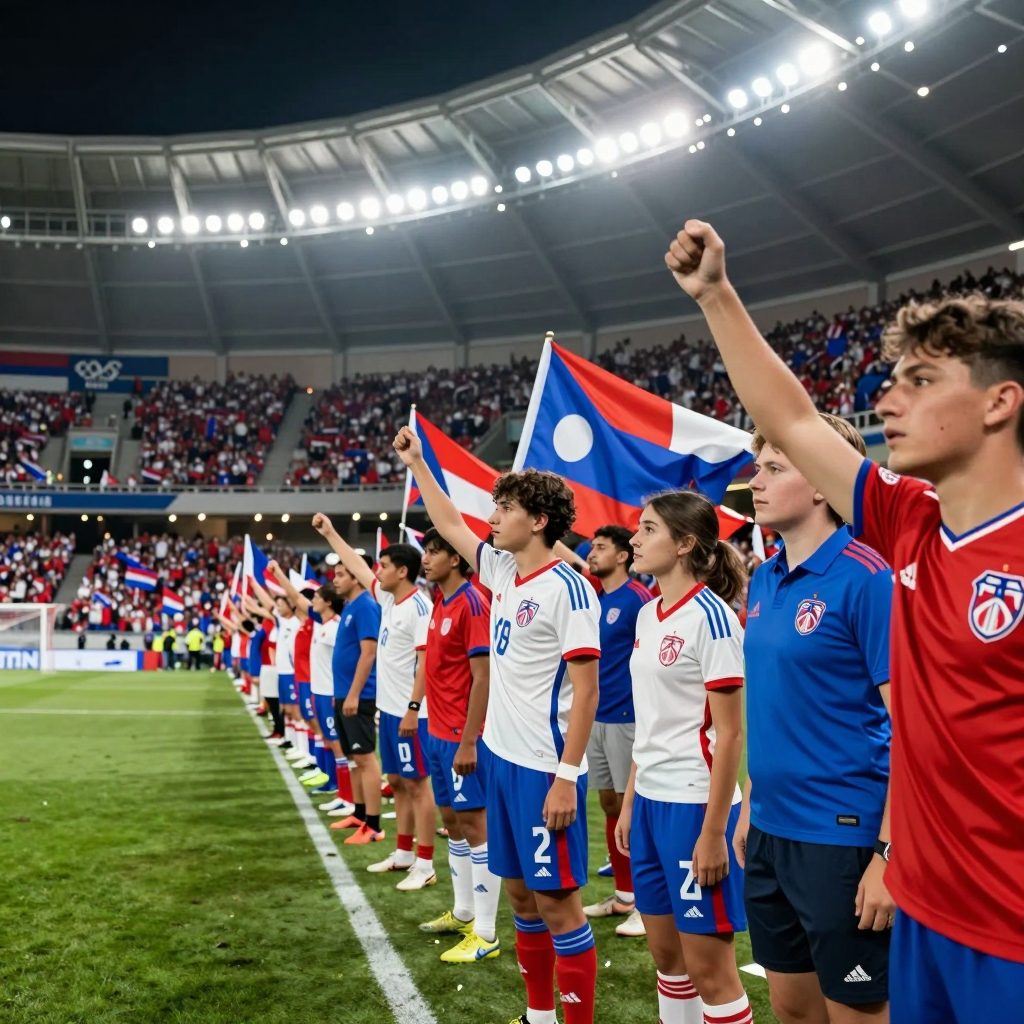
For the first time since 1994, the World Cup finals are being held again on American soil as “home games,” and the fact that the opening scene features Paraguay as the opponent instantly reshapes the atmosphere of this tournament. While the host nation certainly holds an advantage, playing the opening match in front of a home crowd is simultaneously the heaviest test of all. Thus, this game is far more than just the first match of the group stage—it is a symbolic stage where USA Soccer must prove how far it has come.
What makes this opening match truly special is that it captures the moment when “soccer has become a popular sport in the U.S.” and that popularity transforms into demands for results. In the past, simply “participating” was often celebrated as an achievement, but a home World Cup is different. Fans expect a home advantage and demand results to match those expectations. In other words, the passion of support and the pressure of expectation coexist within a single game.
Another critical point is that this match begins with a narrative of expectation vs anxiety. The market slightly favors the U.S., but recent losses in A-level matches leave the question, “Is this team fully proven yet?” Therefore, what we want to confirm in this opening match goes beyond just the score:
- Will the energy of the home crowd become a propelling force or lead to rigidity and tension?
- Can the team demonstrate a stable backbone to hold firm when the early momentum wavers?
- Can this grand event of a “World Cup starting at home” be translated into performance on the field?
Ultimately, the USA vs Paraguay match is not just a “first game,” but the opening sentence that defines the identity of the home World Cup. The tone in which this sentence is written will determine whether America’s 2026 journey unfolds as a festive celebration or a heavy burden.
usa soccer: A Red, White, and Blue Wave Sweeping Across America — The Evolution of Fan Culture
Thousands gathered at Oakland’s Raimondi Park were not just “there to watch a game.” As they collectively held their breath at the same moment in front of a giant screen, erupted into cheers together, and high-fived strangers, the scene transformed into what felt like a civic festival for the entire city. Amidst the swirling reds, whites, and blues, what emerged was far more than mere support—it was a communal sense that “we created this team together.”
The significance of this moment is clear. It signals that usa soccer is shifting from being ‘a sport for a specific fanbase’ to becoming a ‘nationwide event.’ Where soccer watching used to mean private streaming or hanging out in select pubs, today’s fan zones spill out into public squares. When soccer transcends passive viewing and becomes an interactive celebration, the sport finally speaks the language of the mainstream.
A New Viewing Paradigm Created by Fan Zones: Consuming a “Day,” Not Just a “Match”
What stands out in places like Raimondi Park is less the match itself and more the moments around it. Arriving early to claim a spot, matching colors with uniforms and face paint, snapping photos, eating, drinking, and waiting—all of it forms part of the experience. This mirrors America’s familiar tailgate culture—with one key difference: this culture now unfolds not in football stadium parking lots but in public viewing spaces for soccer.
The Moment It Becomes “Our Local World Cup”: Growing Excitement Outside Stadiums
Although the World Cup’s symbolism is usually cemented inside the stadium, this time it’s sharper outside. Scenes like a city park packed with people in Oakland transform “national team matches” into a community event. Spectators are no longer mere consumers but essential participants in the celebration itself. As this shift accumulates, usa soccer develops a fandom rooted in a daily rhythm of life rather than fleeting interest tied to wins or losses.
Why Now? The Home World Cup’s Power to Rally Expectations
This surge is no coincidence. Hosting the World Cup on home soil, coupled with the symbolism of “the first-ever home World Cup match,” magnetizes fans. Crucially, the emotions sparked here go beyond simple optimism. Beneath the festival atmosphere lies a tangible tension. With rising expectations come mounting pressure, which fans withstand through cheers and solidarity. Thus, the World Cup becomes not just a tournament schedule but a national event cutting through the American summer.
The Face of USA Soccer’s Golden Generation: From Pulisic to Balogun, the Present and Future of American Soccer
Who are the key players of the US Men’s National Soccer Team? Beyond simply naming the “best players,” looking at the roles they’re expected to shoulder and the burdens they carry in this home World Cup reveals where USA soccer stands today. From Pulisic’s finishing to Adams’s balance and Balogun’s goal-scoring instinct—this core could very well define America’s performance.
USA Soccer’s Christian Pulisic: The Freedom and Duty of the Ace
Pulisic remains the fulcrum of the attack. The catch? Being the “center” doesn’t just mean scoring goals. As the first target opponents seek to neutralize, Pulisic carries two simultaneous duties.
- Creative spark to unlock the game: Drifting from the wings or cutting into half-spaces to create passing and shooting options.
- Finisher’s responsibility: The home World Cup brings pressure that missing a chance could be final.
- Narrative burden: The “Captain America” label empowers but also raises expectations sky-high.
USA Soccer’s Weston McKennie: The Engine Symbolizing American Intensity
McKennie can’t be measured by highlights alone. Changing the game’s temperature and rhythm often comes not from goals but from collisions, transitions, and second-ball battles in midfield.
- Accelerates pace of play with his box-to-box role during offense and defense.
- Embodies the team’s energy in set pieces and pressing moments.
- But if fitness or focus wavers, the midfield risks unraveling at once.
USA Soccer’s Tyler Adams: The Invisible Player Who Wins Games
Adams’s value lies more in team structure than in attacking points. Especially in short tournaments like the World Cup, “stunning soccer” takes a backseat to unbreakable soccer, and Adams is the first domino.
- Intercepts and covers to stop opponent counterattacks.
- The initiator of buildup with first passes and tempo control.
- Above all, when Adams is healthy, the whole team transforms—a fact that magnifies anxiety during his absence.
USA Soccer’s Chris Richards: The Modern Center-Back’s Risk of One Mistake
Richards fits the profile of a “modern center-back,” excelling in aerial duels, one-on-ones, and ball-playing skills. While these strengths shine even brighter on home soil, the center-back position remains unforgiving.
- Stability at the heart of defense builds the team’s trust.
- Yet a single error can upend the flow of the game and public opinion.
- Richards’s true challenge isn’t flashy plays but delivering an unshakable 90 minutes.
USA Soccer’s Folarin Balogun: The Hope to End the “Goal Drought” and the Weight It Brings
Balogun seems to be the answer USA soccer has long sought for a traditional striker. His presence is a blessing but paradoxically leaves little room for excuses. The narrative shifts from “lacking finishing” to the pressure to convert.
- Completes attacks with smart movement and clinical finishes inside the box.
- Scoring boosts the team’s tactical credibility and eases Pulisic’s burden.
- Conversely, prolonged silence revives the question: “Why can’t we solve the number 9 problem yet?”
The Conclusion These Five USA Soccer Players Make: Expectations Grow—Now It’s Time to Deliver
The core of Pulisic, McKennie, Adams, Richards, and Balogun isn’t just a collection of stars—it’s proof of how far American soccer has come. The home World Cup is an advantage but also a stage that demands: “What can this generation leave behind?” Ultimately, the tournament boils down to one question.
Can this Golden Generation move from ‘potential’ to ‘performance?’
USA Soccer’s First Match Strategy and Vision for the Future: Content Determines Victory
Scores make headlines, but the real signals left by the first match are something else entirely. Especially for the 2026 World Cup “home opener,” this game is far more than just a win or loss; it is a showcase revealing what kind of soccer USA Soccer plays and how far it can go. Therefore, what we need to focus on is less the result and more the tactical execution and the performance details of key players.
Build-up Stability: It Must Be ‘Repeatable’ Not Just ‘Looking Decent’
The first thing to check in the opening match is the stability of the backline’s build-up play. Home advantage tends to speed up the early tempo, making it easy to fall into risky forward passes or turnovers in the central areas under pressure.
- Are the center backs (led by Richards) and the holding midfielder (Adams) establishing a pattern that breaks pressure with a single move?
- Is the backline, including the goalkeeper, clearly choosing between “clearing long to avoid pressure” and “playing short to maintain control”?
These two aspects form the team’s ‘basic stamina’ that will carry through the tournament.
High Press Efficiency: Where You Win the Ball Matters More Than How Hard You Run
The intensity of pressing naturally rises in a home World Cup’s opening game. But high pressing is not just about running hard—it’s about where and at what angle you intercept the ball.
- Are Pulisic and Balogun closing passing lanes up front, shaping a pressing trap?
- Is McKennie forming the second wave of pressure by contesting second balls?
- When the press fails, does Adams properly act as a break to the opponent’s counterattack?
When these elements align, attacking chances are not ‘created’ but ‘harvested’ repeatedly.
Balogun’s Impact: A Checklist to Watch Beyond Goals
Newcomer Balogun’s importance lies less in “whether he scores” and more in how he reshapes the team’s attack. Three key points stand out to watch in the first match:
- Does his movement inside the box pull defenders and open up half-space for Pulisic’s runs?
- Does his play with his back to goal time the arrivals of runners from the second line (including McKennie)?
- Even without decisive moments, does the team build shooting opportunities through the process Balogun initiates?
If Balogun doesn’t score but these signs appear, the attack has already risen to a new level.
Why ‘Content Over Result’ Matters: The First Match Is a Microcosm of the Future
Perfection in the first game is not required. However, it must be clear what is repetitive and what is incidental. If the build-up is stable, the press efficient, and Balogun visibly shifting the attack’s structure—then from that moment on, this team begins to be seen not just as the “host nation” but as a genuine contender.
USA Soccer: Between Expectation and Pressure – The Message Left by the Home World Cup
A home World Cup is both a celebration and a test. Especially in this tournament, fans’ focus has moved beyond just “making the Round of 16.” The aspiration to go further than the Round of 16, the evolving fan culture, and interactions with the sports betting market—this home World Cup vividly revealed how far USA soccer has grown and what burdens that growth carries.
Raising the Bar for USA Soccer: The Goal Is No Longer Just a Safe Performance
In the past, merely qualifying for the World Cup was big news, and reaching the knockout stage was a welcome bonus. But the home World Cup changes the standards.
- Playing on home soil leaves little room for excuses.
- Fans demand “results” over “experience.”
- If the core is hailed as a ‘golden generation,’ it now requires not just potential but proof.
This shift can strengthen the team, but it also creates an environment where even slight stumbles can spark excessive criticism. Home advantage inflates pressure as much as cheers.
The Evolution of USA Soccer Fan Culture: From a ‘Niche Sport’ to a ‘Citywide Event’
One of the most powerful scenes from this home World Cup happened beyond the stadiums. Fan zones and watch parties across the country have transformed from simple group watching into true community events.
American soccer fandom is evolving from a “quiet watching culture” to one of gathering, creating, and participating. This carries two major implications:
1) The team’s performance directly impacts the quality of the social experience.
2) As the fan base grows, the team faces more intense expectations and scrutiny from a larger market.
In other words, the growth of fan culture is both a metric of USA soccer’s success and a pressure mechanism pushing it toward the next level.
USA Soccer and Sports Betting: When “Perceived Strength” Becomes Numbers
The sports betting market removes emotion and quantifies a team’s current value. Information like the U.S. being labeled a “slim favorite” in certain matches is more than a casual detail.
- It signals the market sees the U.S. not merely as a “team that can win” but as a team that must win.
- At the same time, these numbers accelerate public opinion. If they win, it’s “as expected.” If they slip, it turns into “why did they lose?”
This interaction brings the team further into the mainstream, but it also intensifies results-driven scrutiny. This effect is maximized during a home World Cup.
The Home World Cup Conclusion for USA Soccer: With the Festival Comes the Demand for the ‘Next Step’
The message left by this home World Cup is clear. American soccer is no longer on the sidelines; it has become a nationwide event. And precisely because of that growth, the question is no longer “Did they do well?” but “How far can they go?”
Ultimately, the home World Cup leaves USA soccer with two simultaneous tasks:
- Transforming the immense energy generated by fandom into a sustainable culture
- Proving their worth on this elevated stage not with “potential” but through results and substance
The celebration may end, but the standards remain. And those standards are the most tangible proof that American soccer stands at the very threshold of becoming a truly strong team.
Comments
Post a Comment