 \n
\n
Brazil vs Egypt: The Hidden Truth Behind Their Final Showdown Before the World Cup
Set just one week before the 2026 World Cup, the Brazil vs Egypt match is far more than a friendly—it’s essentially the last real rehearsal for both teams. Brazil must prove its championship caliber without Neymar, while Egypt needs to build confidence that its so-called ‘Golden Generation,’ led by Salah, can truly compete on the world’s biggest stage. More than the result, what matters most is the unvarnished “truth of their readiness” this game reveals.
Why Brazil vs Egypt Is the ‘Final Test Match’
Pre-World Cup friendlies typically serve two purposes:
- Last tactical check: Minimize experiments and verify the core patterns to be used in the tournament at real match speed.
- Finalizing the starting lineup: Settle lingering questions about key positions (Brazil’s number 9, Egypt’s defensive pairing, for example).
In other words, this game is not about “checking fitness” but about perfecting the World Cup playbook—which naturally leads to a tightly contested match.
What Brazil Must Confirm: The Post-Neymar Offensive Order
Without Neymar, Brazil can’t rely on name alone. This match is a key test to see if Brazil has transformed into a team that doesn’t depend on one player for creativity.
- Can Vinícius Júnior evolve beyond a mere dribbler to become the central hub of the attack?
- Is Paquetá capable of withstanding pressure in midfield while delivering the crucial “final pass” to create chances?
- And realistically, can the number 9 option demonstrate the finishing ability needed to endure at the World Cup level?
For top teams, success depends not on one-off plays but on a repeatable attack structure. If Brazil maintains that structure even without Neymar, this friendly becomes not just a warm-up but a blueprint for a champion.
What Egypt Seeks: A Real-Game Answer Centered on Salah
Egypt’s question isn’t so much “Can we beat Brazil?” but rather, “How will we survive against teams like Belgium at the World Cup?”
There are three critical focuses:
- Salah’s position and role: Should he increase touches to control the game or focus on delivering a killer blow during transitions?
- Quality of the mid-block: Sitting back risks being exposed to crosses and second balls; pushing up leaves dangerous spaces behind.
- Transition speed: Can players like Trezeguet, Marmoush, and Mostafa Mohamed convert quick counterattacks into actual goals?
Egypt’s ideal scenario is not merely to “hang in there,” but to defend while remaining a genuine threat—and Brazil is the toughest yet most revealing opponent to test that.
The Real Meaning of Brazil vs Egypt: A Match of ‘Conviction,’ Not Just Victory
The last friendly before the World Cup often values one internal conviction more than a single win on the record. Brazil needs to confirm, “We function seamlessly even without Neymar.” Egypt must believe, “Our plan works against elite teams.”
So while Brazil vs Egypt looks like a friendly on paper, it is in truth the most honest stage where both teams answer a critical question they ask themselves ahead of the World Cup: “Are we truly ready?”
Brazil vs Egypt: Brazil Without Neymar, A New Offensive Landscape?
Neymar’s absence due to a calf injury turns the upcoming Brazil vs Egypt match into more than a mere friendly. Just a week before the World Cup, it serves as a de facto litmus test to see if Brazil can remain title contenders after ending their “Neymar-dependent” style of attack.
How Vinícius Júnior Takes on the ‘Ace’ Role
With Neymar out, the focal point of Brazil’s offense naturally shifts to Vinícius Júnior. However, this shift doesn’t mean “Vinícius replaces Neymar”; rather, the attack is redefined from a one-on-one dribble creativity approach to speed and penetration-driven power.
- Breaking defenders open one-on-one on the left flank,
- Forcing opponents to double-mark, then switching play centrally or to the opposite side (Rafinha) to create numerical superiority,
- Ultimately supplying the ‘finishing chance’ inside the box to the number 9 (Igor Thiago).
In other words, instead of Vinícius simply replicating Neymar’s “central playmaking”, the tactical blueprint starts from Vinícius’ strength: acceleration in wide spaces.
Paquetá’s Role to Fill Neymar’s Void: Dispersing Creativity
A crucial connecting link is Lucas Paquetá. Neymar’s absence risks the attack becoming one-dimensional along the flanks, but Paquetá simultaneously performs the following roles to prevent monotony:
- Receiving the ball in half-spaces to create forward passing angles,
- Making secondary runs from the second line to increase numbers inside the box,
- Occasionally holding possession under pressure and serving as a buffer to maintain transition speed.
Ultimately, Brazil’s solution isn’t “one player filling Neymar’s gap” but distributing creativity across Vinícius (destruction) + Paquetá (linking) + Rafinha (width).
Still a Title Contender? The Key Point: ‘Reproducibility of Offense’
For Brazil without Neymar to remain a World Cup favorite, the team must demonstrate repeatable scoring routes, not just moments of individual brilliance. The key questions to observe in this Brazil vs Egypt match are:
- When Vinícius is contained, does Paquetá unlock alternative central solutions?
- Does the opposite flank with Rafinha remain alive, preventing the attack from becoming one-sided?
- Does Igor Thiago make an impact in finishing, instilling confidence that “scoring can happen without Neymar”?
If these three work in harmony, Neymar’s absence is unfortunate but not fatal. Brazil could instead become a faster, more direct attacking team—potentially a tougher foe during the World Cup.
Brazil vs Egypt: Egypt’s Final Puzzle with Salah
Brazil vs Egypt is Egypt’s ultimate rehearsal before the World Cup, deciding what to confirm and what to discard. It all boils down to one core question: How can using Salah make the entire team stronger? Depending on whether Egypt bets everything on his wing runs or brings him inside as a second striker, their offensive and defensive plans will shift accordingly.
Two Ways to Use Salah: Winger vs Second Striker
Plan A: Stick to the touchline, maximize as a ‘transition weapon’
- The most straightforward design targets the space behind Brazil’s fullbacks.
- When Salah creates a 1-on-1 on the right wing, Trezeguet on the opposite side or Marmoush centrally can finish with timely box runs.
- Advantage: The potency of quick transitions is crystal clear, and the whole team easily understands their roles.
- Disadvantage: If Brazil’s double pivot (Casemiro–Guimarães) disrupts the initial pass in transition, Salah can become isolated.
Plan B: Shift Salah into the half-space as a ‘second striker’
- When Salah receives inside, it opens more options beyond mere dribbling: quick one-twos, through passes, and long-range shots become viable threats.
- If Mostafa Mohamed holds up play upfront and Marmoush cuts into the gaps, there’s a real chance to destabilize Brazil’s center-back line.
- Key point: The more Salah drifts inside, the clearer the role distribution on the right must be—whether the overlapping fullback or a midfielder covers width. Losing width lets Brazil’s defense easily congest the middle.
Brazil’s Midfield Pressure: ‘Cutting the First Pass’ Is the Key to Success
For Egypt to stand firm against giants like Belgium in the World Cup, today’s trial revolves around one challenge: How effectively can they disrupt Brazil’s buildup starting point (Casemiro–Guimarães)?
The task for Hamdi Fathi and Marwan Attia as double pivots isn’t just about high work rate; it’s about:
- Erasing passing lanes in the center first
- Timing pressure perfectly when the ball moves wide
- Safely intercepting or blocking the crucial first forward pass to Salah during transitions
If this line breaks, Salah becomes a “distant but dangerous card.” If it holds, Salah is an ever-present, close-range threat.
Defensive Strategy: Push the Line Up or Drop Back? The Answer Is ‘Mid-Block + Quick Transitions’
Facing the danger of Brazil’s Vinicius and Rafinha, Egypt taking an extreme high line carries heavy risks. Conversely, parking too deep invites crosses and second balls, surrendering control. The practical solution is:
- Maintain spacing within a mid-block
- Set pressure traps with 2-3 players as soon as the ball reaches the flanks
- Once possession is won, immediately launch a direct transition to Salah or Marmoush
The “final puzzle” Egypt must solve in this match isn’t Salah’s position—it’s the pathway by which the ball reaches Salah. When that route is secured, Egypt’s attack will not be just a one-off spark but a consistent pattern at the World Cup.
Brazil vs Egypt: The Mini World Cup Stage Unfolding in Cleveland, USA
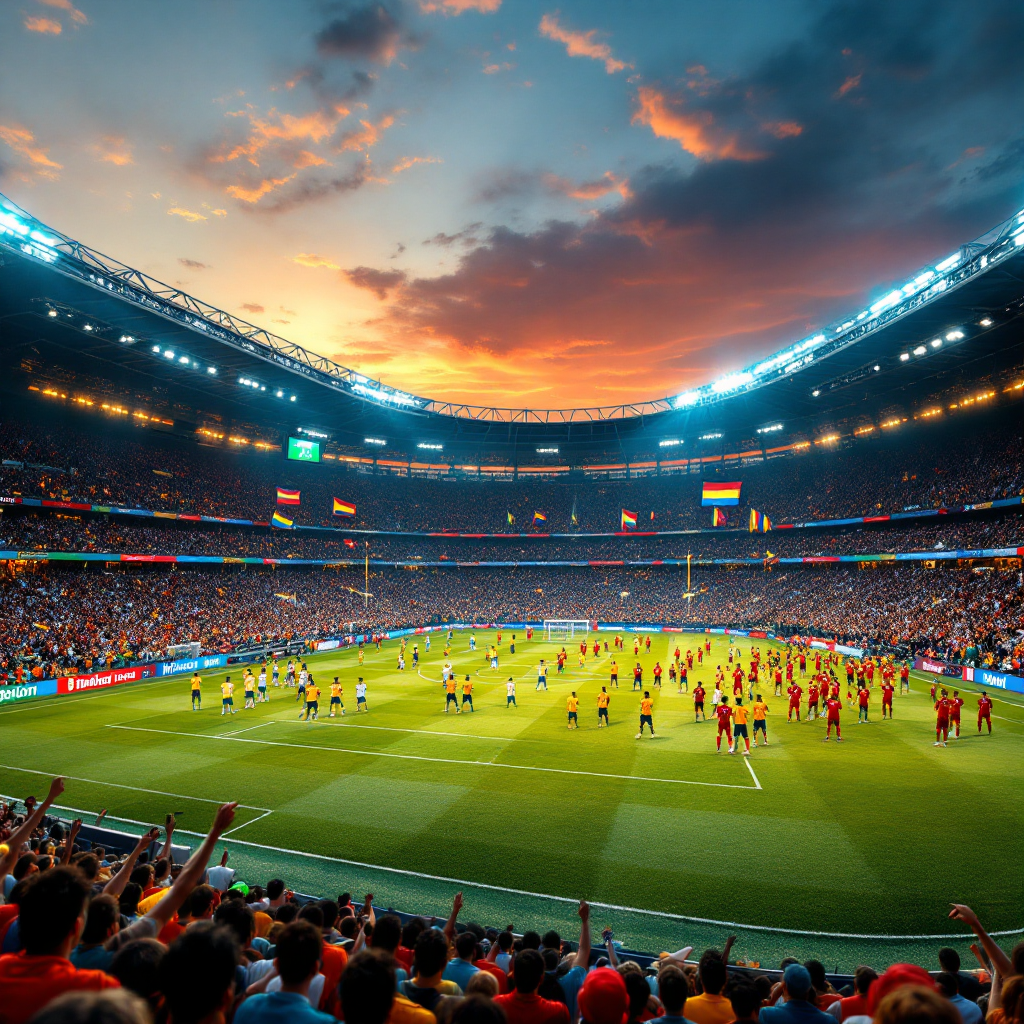
Held at Huntington Bank Field, home to the NFL's Cleveland Browns, this match may appear as a friendly on the surface, but the atmosphere is electrifying. With the timing being the final rehearsal just one week before the World Cup kicks off and the grandeur of a stadium seating over 60,000, Cleveland transforms overnight into a “mini World Cup” arena.
What makes this stage fascinating isn’t merely the presence of stars. Brazil vs Egypt is an event where, in a third space—the United States—diverse diasporas and soccer fanbases converge, creating a palpable sense that “the World Cup is coming.” The samba rhythms of Brazilian fans, the chants of Egyptian supporters, and the curiosity of neutral spectators blend, turning the stadium into a lively cultural map.
Another key point to watch is how soccer expands atop American sports infrastructure. The very fact that a stadium originally designed for American football hosts a world-class matchup on the eve of the World Cup sends a strong message. It almost feels like a declaration that the “main stage of soccer” is no longer confined to Europe and South America alone.
Ultimately, what unfolds in this match goes beyond the scoreline. While the two teams fine-tune their tactics ahead of the World Cup, an American city becomes a crossroads of global football—and that is why this Cleveland matchup is anything but a simple friendly.
Beyond the Final Rehearsal of Brazil vs Egypt: A Story Greater Than the World Cup
Calling this match a "friendly one week before the World Cup" makes it sound like a safe rehearsal. But when memories of past clashes, battles for starring roles, and the success of tactical experiments all collide in a single game, brazil vs egypt becomes more than just a test—it's a crucial turning point that will shape both teams’ World Cup fate. Here are the three real reasons why.
Echoes of Past Battles: A Friendly Match, But the ‘Narrative’ Is Anything But Friendly
Matches between Brazil and Egypt have always been remembered more for their game dynamics than the final score. The 4-3 slugfest in 2009 stands as a symbol that “Egypt can shake giants with a single swift break,” while the 2-0 friendly win in 2011 imprinted the stereotype that “Brazil always wins in the details.”
The Cleveland game falls somewhere in between. Egypt is digging up the memory of ‘we can do it,’ while Brazil aims to prove the habit that ‘we eventually win.’ That’s why small moments—like the intensity of the first 10 minutes or the direction of the opening goal—set a tone that echoes all the way through the World Cup finals.
The Essence of the Star Battle: It’s Not ‘Who’s Better’ but ‘How They’re Used’ for Vinicius and Salah
The heart of this match isn’t about who’s more famous but about who becomes their team’s official World Cup attacking formula.
- Brazil (without Neymar): Creativity shifts between Vinicius and Paquetá, forcing Brazil to evolve from “a team unlocked by one player” to “a team unlocked by multiple players.” Once this structure is complete, opponents can’t solve it by simply shutting down one player. But if it falters, Brazil’s offense risks becoming predictable against strong teams at the World Cup.
- Egypt (redefining Salah-dependence): Salah remains the undisputed number one option, but the real contest is not “how many times Salah breaks through” but how varied the routes to get the ball to Salah are. Whether Salah ends up isolated on the wing or pulled into half-spaces to open up combinations and shots determines just how far Egypt can go.
In other words, this isn’t a superstar showcase—it’s the moment to finalize the user manual on how these stars will be effective at the World Cup.
The Last Tactical Checklist: ‘Midfield’ and the ‘Number 9’ Decide the World Cup
The cruelest part of a friendly is that what coaches try to change is usually the team’s most sensitive area.
- Brazil must confirm that while Casemiro and Guimarães stabilize the midfield double pivot, the attack doesn’t lose continuity. If the midfield locks down, Vinicius’ speed gets isolated.
- Egypt’s key is how much Fathy and Atiya can disrupt Brazil’s buildup. To succeed against teams like Belgium at the World Cup, line spacing and pressing timing have to hold firm here.
- Brazil’s “Number 9 test” is symbolic. The striker is not just a finisher but, at the World Cup, the starting point of pressing and a vital link in attack. Failure here makes Brazil’s wing play easier to read against top opponents.
Ultimately, the reason brazil vs egypt matters is clear. This match demands answers to questions bigger than the result—Brazil’s attacking formula without Neymar, Egypt’s transition tactics centered on Salah, and the real competitiveness of the midfield. The World Cup isn’t won by teams claiming they’re ‘ready’ but by those who find a way to hide their weaknesses in the final check.
Comments
Post a Comment