 \n
\n
Canada vs Bosnia: Canada’s First World Cup Point, Home Fans’ Hope and Frustration
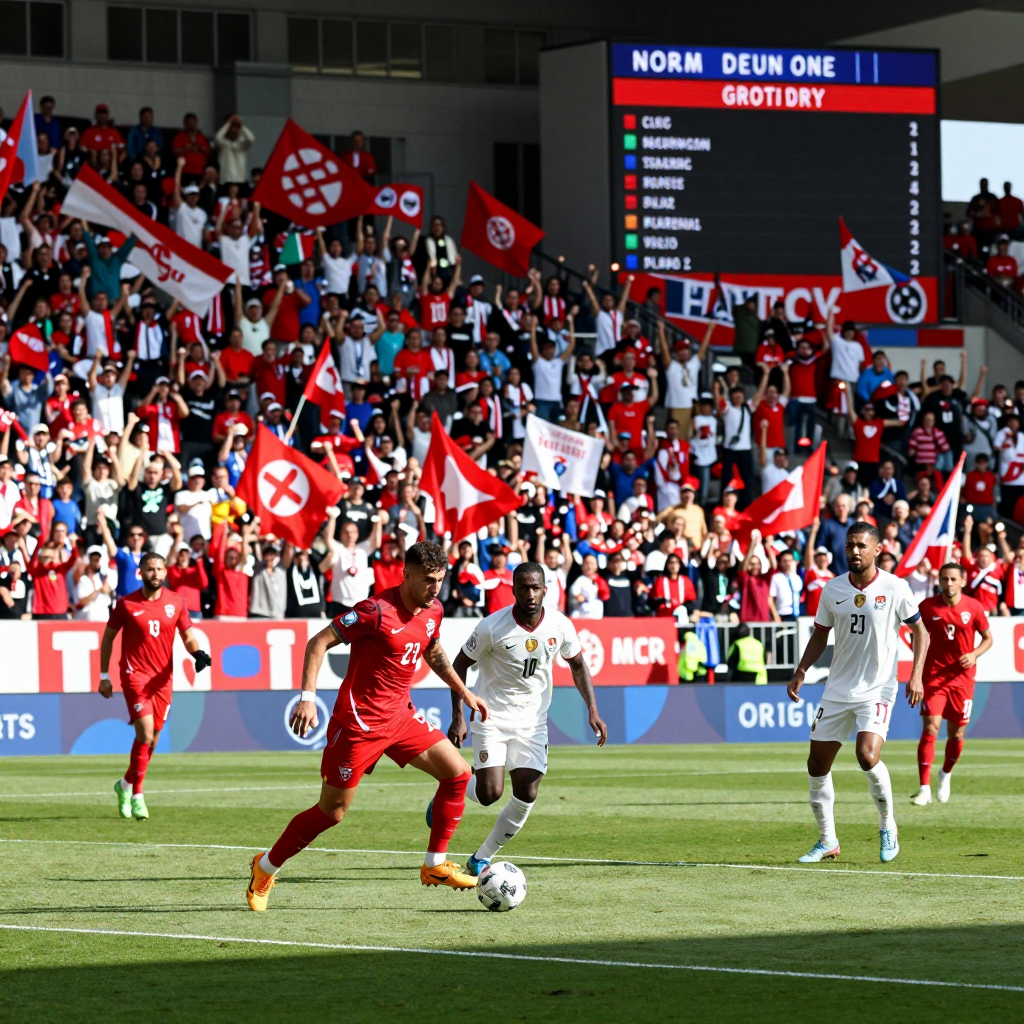
In the North American joint-hosted World Cup, Canada finally earned their first ever point in men's World Cup history. Yet, the stadium wasn’t buzzing with unrestrained joy. Why? The answer is simple. This match was positioned by many U.S. media outlets and betting markets as a game Canada “had to win,” setting high expectations.
The Canada vs Bosnia match at Toronto’s BMO Field ended in a 1-1 draw, a moment that will surely be etched in Canadian soccer history. However, the emotions of the home fans were torn between ‘history’ and ‘reality.’
- Hope: Canada, who had always been left with just “experience” in the World Cup, finally secured a point. The symbolism of achieving this milestone in their home World Cup opener was huge.
- Frustration: At the same time, the fact that they “didn’t manage to win at home despite being favored” lingered heavily. Everyone knew points were just the beginning; to advance past the group stage, a win was indispensable.
The flow of the match amplified these feelings. Bosnia took the lead first, increasing the tension, and although a late equalizer by Cyle Larin in the 79th minute spared Canada from defeat, the mix of “relief cheers” and the simultaneous regret of “we could’ve taken more from this” poured out.
In the end, this draw left Canada with two faces: the hope of a historic first point and the disappointment of falling short of expectations as hosts. From this opening chapter of the North American World Cup, Canada gained not just a result but also the pressure and benchmark that will become clearer starting with their next matches.
The Untold Tactical Story of Canada vs Bosnia: The 4-4-2 Mirror Match and the Impact of Davies’ Absence
At first glance, the Canada vs Bosnia clash featuring identical 4-4-2 formations might seem like a straightforward "power vs power" showdown. However, the real battle was who would first tip the delicate balance—a balance that hinged critically on Canada’s key asset: the absence of Alphonso Davies.
The ‘Mirror Image’ Battle Created by the 4-4-2 Formation
When both teams deploy the same 4-4-2 setup, tactical variables surprisingly decrease. With positions matched one-to-one, the match naturally boils down to two decisive areas:
- Control of the Central 2v2 Midfield Duel: Canada’s Koné and Eustáquio matched up against Bosnia’s Tahirović and Bašić, each trying to neutralize the other. If one side stymies forward passing, the game quickly shifts into battles over long balls and second-chance balls.
- One-on-One Efficiency on the Flanks: In a 4-4-2, if wide midfielders can’t break through or fullbacks fail to overlap effectively and deliver crosses, the attack becomes predictable. Ultimately, success boils down to who wins more 1v1s and gets the ball into the box more consistently.
In essence, this mirror match was less about flashy tactical shifts and more about the accumulation of individual match-up wins that gradually altered the game flow.
Canada Lost Its ‘Cheat Code’ Without Davies
Davies is far more than a star player; he represents a tactical anomaly—a player who breaks the rules within Canada’s attack. His absence robbed Canada of two critical advantages:
Instant Edge on the Flanks (Entry Speed and Ball-Carrying Ability)
The moment Davies touches the ball, he pushes opposing defensive lines backward, instantly breaking the stifling rigidity of a 4-4-2 structure. Without him, Canada was forced to depend more on incremental passing and crosses instead of delivering quick, decisive breakdowns along the wings.A Draw that Pulls the Opposition’s Defensive Resources
With Davies on the field, Bosnia had to stack one side more heavily, inadvertently opening spaces on the opposite flank or in the center. On this day, Bosnia’s defensive lines held steadier, increasing their capacity to apply focused pressure on Canada’s main attacking threat, Jonathan David.
In summary, Canada lost its fastest route to dominance at home, turning the contest into a tightly-fought 4-4-2 versus 4-4-2 showdown.
Substitution Solutions: Rejigging the Game through Direct Play
Facing reduced flank-breaking power without Davies, Canada adopted a practical solution after halftime by shifting toward more direct attacking play following Cyle Larin’s introduction.
Larin, a classic No.9, shields the ball with his back to goal inside the penalty area, and his equalizing goal perfectly exemplified the striker’s hallmark of turning and finishing under pressure. This pivot to direct football is a well-trodden detour for 4-4-2 teams whose breakthrough strategies get stifled.
Ultimately, the tactical essence of Canada vs Bosnia is straightforward:
With formations mirroring each other, Canada had to compensate for the loss of their ‘asymmetric weapon’ Davies by structurally redirecting their strategy—through crossing, second-ball pursuits, and a target striker—and that adaptive shift eventually earned them valuable points.
Dramatic Equalizer and Match Dynamics in Canada vs Bosnia: Cyle Larin’s Super Substitute Role
Imagine the moment in the 79th minute when substitute Cyle Larin changed the air in front of the goal. The momentum in Canada vs Bosnia, which was leaning 1-0, was brought back to square one by a single “striker-like” move. The equalizer, scored right when the home crowd’s hopes were turning into anxiety, was not just a goal but a scene that made the entire heartbeat of the match race again.
The Role Captured in One Equalizing Goal: “Hold, Turn, and Finish”
Larin’s equalizer was almost a textbook example of a classic back-to-goal striker move. After receiving Kone’s pass, he held off the defender with his back turned, created a shooting angle with a short turn, and finished with power. The key to this moment wasn’t flashy dribbling but the nine technical skills of a No. 9 that keep the attack alive even in the heat of physical defense.
Why Larin’s Entry Changed the Flow: Canada Gained ‘Directness’
With Davies absent, Canada’s explosive wing advances were limited, and as the second half progressed, the team increasingly relied on crosses from the flanks and second-line penetrations — but lacked sharpness in finishing. When Larin came on, Canada’s attack transformed.
- There was a point up front to hold the ball, allowing the second line to advance in time.
- Defenders in the box were forced to prepare for aerial/second balls, pushing their line backward.
- As a result, Canada started building not just a “keep knocking until something opens,” but a structure where scoring was inevitably bound to happen.
In other words, Larin didn’t just score a goal; he completed the very attacking shape that enabled Canada to storm the match in the second half.
For Bosnia, “A Defended Draw”; For Canada, “A Missed Victory”
The tone of the game after that equalizer was clear. Bosnia shifted from a team protecting the lead to a team hanging on, while Canada raised their numbers, no longer just avoiding defeat but pursuing a win. Though the game ended 1-1, Larin’s goal granted Canada their first World Cup point and marked a symbolic moment as the “start of the home World Cup.”
The Soccer Dreams and Media Narratives of North America's Co-Hosts: The ‘Must-Win’ and ‘Dark Horse’ Frames Shaped by Canada vs Bosnia
The Canada vs Bosnia match—the first World Cup game held on home soil for Canada—was defined not just by the result but by how the game was framed even before kickoff. Both American and Canadian media packaged this matchup not as a mere group stage opener but as a crucial test where the soccer dreams of North America's co-hosts confronted reality.
The Expectation That ‘Canada Must Win’ Was Set First
North American betting lines and previews cast Canada as the favored team enjoying home advantage. Accompanied by the label “slight favorite,” the atmosphere practically demanded a must-win outcome.
This framing calibrated fans’ expectations like so:
- A win: “A natural, home-host-worthy start”
- A draw: “A missed opportunity, underperforming against expectations”
- A loss: “Shock and alarm bells for the entire project”
When the match ended 1-1, Canada’s first-ever World Cup point held undeniable historic significance—but the narrative was designed so that alongside that milestone lingered the feeling of “failing to win the game they had to win.”
Bosnia Became the ‘Dangerous Underdog’—A Team That Retains Narrative Even in Defeat
In contrast, Bosnia ranked lower and lacked star power, but media cast them as the dark horse. Phrases like “the team that came through European playoffs” and “a team with a knockout punch” offered fans compelling angles to watch for:
- If Canada faltered: “Dark horses proving different breed”
- If Bosnia held firm: “Underdog resistance, giant-killer narrative”
Therefore, the draw read like an ‘incomplete victory’ to Canada but a ‘stronger-than-expected result’ to Bosnia. The same 1-1 score carried emotionally different weight thanks to how the narrative shaped the mood.
The Co-Host Narrative Turned Canada’s Match Into ‘American Content’
What made this game resonate so strongly with American audiences was that Canada is more than a neighbor—it is a co-host. U.S. media leveraged Canada vs Bosnia as a sneak peek at “what unfolds when North America hosts the World Cup.”
- The energy of Toronto’s home crowd itself sent a message: “North America’s World Cup will have atmosphere”
- At the same time, the result broadcast another: “Hosting doesn’t automatically mean dominance”
In this context, Canada became a close point of comparison for U.S. fans. Questions naturally arose: “Can we win easily at home, too?”—questions that amplified the tournament’s tension.
Conclusion: The Emotional Takeaway Crafted by Framing Is ‘Bittersweet Symbolism’
In sum, Canada vs Bosnia was a contest worth more than its 1-1 scoreline. The media-imposed frames of must-win (Canada) and dark horse (Bosnia) preset fan expectations and transformed the emotional reckoning after the match. Canada earned its “first World Cup point” but postponed its “first victory,” while Bosnia missed out on a win but secured the narrative of being a “team that doesn’t break easily.”
Future Implications North American Soccer Fans Must Watch After Canada vs Bosnia
The 1-1 draw between Canada and Bosnia left more questions than just "one point earned." While Canada secured a historic first point in their home World Cup opener, they fell short of the "home victory" scenario anticipated by betting markets and the media. So, how will this result reshape each team’s group stage survival strategy, and what clues does it offer for North America’s long-term soccer outlook?
Canada: The “First Point” Mustn’t Become a Get-Out-of-Jail-Free Card
For Canada, this draw marks a symbolic milestone but also represents a costly opportunity lost. Missing victory in a match where they were favored at home means the remaining games instantly shift into must-win mode.
- Qatar Match Takes on New Urgency: The next game isn’t just about avoiding defeat anymore—it’s about securing an outright win. With only three group matches, the 2 points dropped at home must be reclaimed elsewhere.
- Impact of Davies’ Absence: The lack of his world-class individual skills—explosive dribbling, rapid transitions—exposed a potential monotony in attack. Future matches demand creating width not through individual brilliance but through structured tactics like overlapping runs, two-on-one plays, and quick counterattacks.
- Larin’s Role: The fact that one substitution changed the game's momentum and protected the point is a positive sign. However, if Canada becomes a team reliant on a "late breakthrough," it will risk failure against stronger opponents (e.g., Switzerland). The focus now sharpens on perfecting Plan A.
Bosnia: From “Underdog’s Point” to a “Calculated Point”
Bosnia took the lead away from home but conceded late. Still, in the bigger picture, they achieved the minimum goal of snagging an away point. The crucial question: will this point be a mere “defensive save” or a strategic asset leveraged in upcoming matches?
- Defensive Leadership Proved Vital: Holding firm under second-half pressure exemplifies survival skills essential in knockout-style tournaments. The stronger the opposition, the more key "holding tactics" translate into points.
- Clarifying Attacking Options: Failing to seal the game with a second goal after taking the lead remains a homework assignment. Upcoming matches must see Bosnian counterattacks sharpened—improving final passes and finishing in the box—to elevate them from a “draw-prone team” into a team capable of winning.
- Expanding the Narrative for the U.S. Market: Connections like the “Milwaukee Messi” link offer Bosnia a unique foothold among North American fans. Beyond performance, this narrative power fuels sustained fan engagement throughout the tournament.
Long-Term Outlook for North American Soccer: “Home Advantage” Isn’t an Automatic Win
The clearest takeaway from Canada vs Bosnia for North American fans is this: hosting the World Cup only advances the starting line, it does not guarantee the finish line. Home crowds, familiarity, and shorter travel present clear benefits, but turning those into victories demands tactical sophistication and squad depth.
- Managing Expectations Must Begin Now: With the spotlight on co-hosts, media and betting markets often inflate optimism. Yet, in group stages, small errors immediately cost points.
- Depth of Squad Comes to the Forefront: How well a team maintains performance amidst injuries or absences of key players determines long-term success. Canada’s match underscored how ruthless this test can be.
- The Interplay Between Fan Culture and Results: The fervor in Toronto and Vancouver has already crafted a “host city” atmosphere. What’s next is channeling that energy not into pressure on the team but into a virtuous cycle that lifts on-field performance through smart management and experience.
In the end, this draw will go down as Canada’s “first point,” but it raises bigger questions for North American soccer fans: Can Canada convert home advantage into wins? Can Bosnia turn the underdog story into a realistic round of 16 appearance? The next 90 minutes of the group stage will reveal those answers with the utmost urgency.
Comments
Post a Comment