Canada's First Round of 16 Opens with a Dramatic Goal, Ending South Africa's Fairytale Against Korea Here
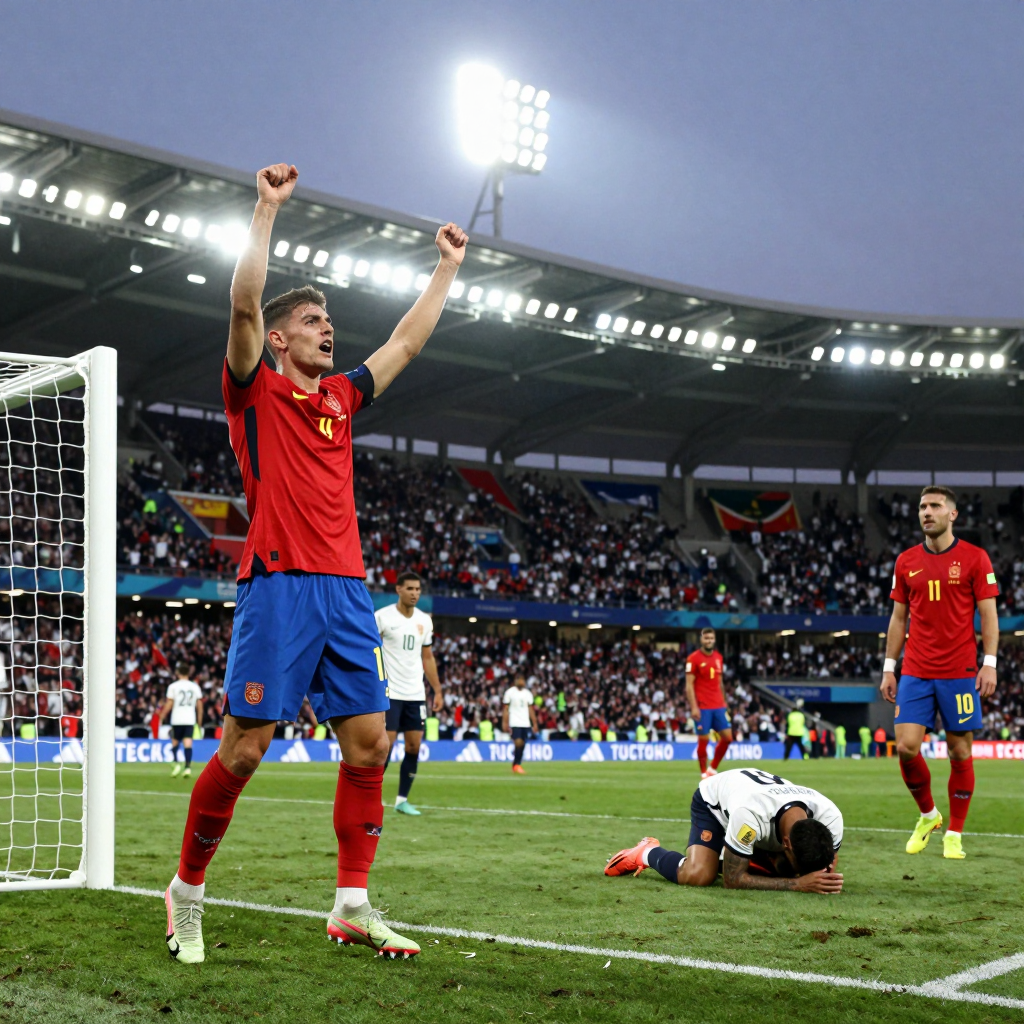 \n
\n
South Africa vs. Canada: Host Nation's Dramatic Victory and a Historic ‘Double’ in World Cup History
In the Round of 32 of the 2026 North American World Cup, host nation Canada sealed their first-ever advancement to the Round of 16 with a dramatic stoppage-time goal. How did this historic moment come to be? South Africa vs. Canada was more than a simple 1-0 result; it was an iconic showcase of how momentum in tournament football can completely change outcomes.
The South Africa vs. Canada Summary in One Line: “The Team That Pushed Until the End Took That One Goal”
As expected from the opening match of the Round of 32, the game was tightly contested. South Africa, the dark horse who advanced by defeating Korea in the group stage, faced Canada, the emerging powerhouse backed by the home advantage. Rather than a lopsided scoreline, the match maintained a 0-0 stalemate for a long time, characteristic of tournament football’s unique flow, ultimately decided by a striking goal in stoppage time.
The Background of Canada’s ‘Theater Goal’ Against South Africa: Persistent Pressure and Set-Piece Accumulation
Canada’s strength wasn’t a single flash of brilliance but the cumulative volume of their attacking play. Their offensive prowess, demonstrated by a 6-0 group-stage victory over Qatar and a consistent trend of generating numerous corners in recent games, solidified their reputation as “the team that keeps pushing to the very end.”
The more South Africa prioritized defensive solidity and held firm, the heavier Canada’s wing attacks and repeated crosses and set pieces weighed on their defense as the match wore on, culminating in the decisive late goal during stoppage time.
The ‘Double’ History Made by South Africa vs. Canada: From First Group Stage Passage to First Ever Round of 16
This victory’s significance goes far beyond simply “advancing to the Round of 16.” Having already made history by qualifying from the group stage for the first time ever, Canada’s win in their first Round of 32 match means they achieved the first-ever advancement to the Round of 16 as well.
In other words, Canada carved out a historic ‘double’ record in a single tournament — first progression through the group stage plus first Round of 16 appearance — proving the host nation’s momentum translated into results. Conversely, South Africa’s fairy-tale run, propelled by their win over Korea, was halted at the Round of 32 by the unforgiving wall of knockout football.
South Africa vs. Canada: A Fateful Showdown Between the Home-Field Advantage of Canada and the Dark Horse South Africa
South Africa, riding the wave of their fairy-tale run after defeating Korea, faced off against host nation Canada, armed with a solid offense. The South Africa vs. Canada match was not just a Round of 32 game but a “fateful matchup” where two teams with opposite momentum trajectories collided head-on. Though sharing the same tournament stage, their journeys and methods of victory vastly differed.
South Africa: Confidence from the Korea Match and Pragmatic, Tournament-Style Football
South Africa made a splash by defeating Korea 1-0 in the group stage. Especially in the first half against Korea, they unleashed 10 shots (3 on target), showcasing bold attacking play and strong momentum.
However, entering the knockout stage, South Africa pivoted to a more pragmatic approach.
- Strength: When their press timing clicks, they can unleash a powerful “one-shot scoring ability” in a short span
- Tactical Shift: Prioritizing defensive solidity and block control to minimize risks inherent in knockout football
- Weakness: If the opponent relentlessly attacks from the flanks and repeatedly wins set pieces, South Africa’s focus and concentration costs skyrocket
In short, South Africa opened their path through momentum and efficiency, but sustaining 90 minutes against top-class teams strained their stamina, focus, and tactical flexibility.
Canada: Host Nation Momentum + Wing Pressure + Set-Piece Accumulation
Canada enjoyed the home-field advantage as co-hosts and already demonstrated their offensive depth in the group stage (6-0 against Qatar). More threatening than flashes of brilliance was their repeated, reliable patterns.
- Strength 1 — Wing pressure with high attacking volume: Aggressively pressing wide areas, pushing deep, then creating chances through crosses
- Strength 2 — Set-piece threat: Averaging 5.8 corners over the last 10 games means even without immediate goals, they consistently accumulate “goal-worthy” situations
- Weakness (from opponent’s viewpoint): Their forward momentum can leave them vulnerable to counterattacks in transition, requiring caution
Canada excelled not in seizing a single big chance but in continuously building opportunities—this relentless accumulation eventually pressured their opponents through to the final moments.
The Verdict: A Clash of the “Endurers” and the “Accumulators”
South Africa’s efficiency, as witnessed against Korea, was impressive, but Canada was the team that consistently piled on pressure through wing play and set pieces. This kind of matchup increasingly strains the defending side as the game progresses, where a single mistake can be decisive.
Ultimately, South Africa vs. Canada became a battle between the underdog striving to extend their fairy tale and the host nation proving their momentum with skill. The result favored Canada, who pressed relentlessly until the very end.
South Africa vs Canada Tactical Battle: Canada’s Sharp Flank Pressure vs South Africa’s Solid Defensive Wall
Canada built attacking opportunities through frequent corner kicks and flank pressing, while South Africa relied on pragmatic block defense to hold firm and look for a decisive strike. This clear contrast in the South Africa vs Canada match boiled down to the question, “Which team could hold on till the end?” The answer came in the form of a dramatic stoppage-time winner.
Canada: Flank Pressure → Accumulated Corner Kicks → Repeated Set-Piece Threats
Canada’s fundamental plan was simple yet incisive. They pressed hard down the flanks, cutting off choices for the opponent’s fullbacks and wingers, quickly advancing the ball high up the field, and continuing relentless attacks with crosses and second balls.
Notably, Canada has recently averaged about 5.8 corner kicks per game, showing that their offense consistently transitions not just to “final shots” but also to “corners and set pieces.” Against a deep-lying team like South Africa, this routine becomes even more potent.
- Flank pressing to extend playing time in the opponent’s half
- Shaking the defense with crosses, then launching attacks again with corner kicks when crosses are blocked
- Using set pieces to create chaos inside the box → testing stamina and concentration
South Africa: Pragmatic Block Defense to ‘Buy Time’
While South Africa showed aggressiveness in the group stage, their approach in this knockout match was more realistic. Instead of boldly pushing their line to counter-press, they locked down the center with a compact block defense, funneled Canada’s attacks toward the flanks, and made “just defending” their core game plan.
This strategy rested on two key points:
- Denying central space, allowing crosses but responding with numbers inside the box
- Using psychological tactics: as the 0-0 persisted, pressure shifted onto Canada
This plan worked well as the score remained tight for much of the game. The problem was Canada’s relentless flank pressure, maintaining intensity to repeatedly win corner kicks and relaunch attacks, gradually sapping South Africa’s focus and stamina in the final 10–15 minutes.
Conclusion: The Final Test of ‘Holding Out’ Football Was in Stoppage Time
The South Africa vs Canada match was a tactical clash between a team “pushing attack volume until the very end” and a team “minimizing risk while waiting for chances.” South Africa’s defensive wall was solid, but Canada found cracks within the relentless waves of flank pressure and set-piece threats, delivering the knockout blow with a stoppage-time dramatic goal.
This is a common formula in tournaments:
Attacks accumulate, and defenses collapse from just “one mistake.” This match stood out as the most dramatic proof of that truth.
South Africa vs. Canada: A Dramatic Moment, the ‘Injury-Time Theater Goal’ Reveals the True Essence of Tournament Football
The deadlock that held at 0-0 was broken by just a single moment. The South Africa vs. Canada Round of 32 opener was dominated by caution, but, proving why tournament football is never over until the very last whistle, it was decided by a theater goal in injury time. This one goal was not just a score—it was the result of cumulative pressure, a fracture in concentration, and the home team’s momentum all converging in a single frame.
The Longer the 0-0 Holds, the Greater the Risk of ‘One Mistake’
In tournaments, the later the first goal comes, the more polarized the teams’ choices become.
- The attacking side takes greater risks, pushing “harder and deeper”
- While the defending side expends energy trying to “hold just a little longer” by tightening lines and closing gaps.
In this match, South Africa adjusted their early momentum into a pragmatic defensive approach designed to control the flow over time, while Canada, fueled by home support, steadily intensified their pressure with a belief that the breakthrough would eventually come. Though 0-0 looked like a secure scoreline, it was actually the most dangerous score, where everything hinges on a final, defining moment.
Home Side Canada’s Relentless Pressure Ultimately Wreaked Accumulated Damage
Canada’s strength lies not in occasional sharpness, but in their ability to sustain attacking volume. By repeatedly utilizing side pressures, crosses, and set pieces, they continually unsettled their opponent. Against such a team, a defensive tactic isn’t about “just holding them off” once; it’s about maintaining the same level of focus for all 90 minutes.
The theater goal in injury time wasn’t just a fault of South Africa’s defense—it reflected the inherent difficulty of sustaining intense resistance until the very end. As often seen in tournament matches, the attack compounds pressure while the defense wears down, and finally, one split-second lapse decides the outcome.
What the ‘Theater Goal’ Teaches Us About Tournament Football: Dominance Comes Not by Numbers, But by Timing
The message from this match is simple. Tournament victory isn’t about dominating throughout the game but about being superior at the crucial, decisive moments. South Africa managed to hold out according to plan for a long time, but Canada maintained their home-driven energy and attacking mindset to the very end, securing the win. Therefore, the 1-0 scoreline in South Africa vs. Canada means more than just a goal—it represents the culmination of choices and pressure built up over 90 minutes.
Reading South Africa vs. Canada Through the Eyes of Korean Soccer Fans: Indirect Benchmarking and Implications
South Africa, which broke Korean hearts, secured their first win in the Round of 32. Then, Canada, the host nation, defeated South Africa with a dramatic goal in stoppage time, becoming the first team to advance to the Round of 16. This single-line result goes beyond a simple “win or loss”; for Korean soccer fans, it serves as an indirect benchmark and a sobering reality check.
The First Message from South Africa vs. Canada: “A Tournament Is a Battle Beyond 90 Minutes—It’s About That Extra 10 Minutes”
South Africa showed efficient play against Korea in the group stage, but against Canada, they ultimately collapsed in stoppage time. In tournaments, “holding up” is a strength, but if focus, risk management, and set-piece defense in the final 10-15 minutes waver, everything can vanish.
From Korea’s perspective, it’s more accurate to interpret this as not simply “we lost because we were weaker than South Africa,” but rather that the match was decided by the required attention to detail until the very end and the ability to minimize mistakes in one-off games.
The Second Message from South Africa vs. Canada: “Home (Host Nation) Momentum Is Real”
As co-hosts, Canada turned both the atmosphere and pressure into energy, effectively harnessing what is called Host Momentum. Even though South Africa defended stubbornly, Canada’s eventual goal was not sheer luck but the result of consistent attacking volume combined with home advantage.
The takeaway for Korean fans is clear: in major tournaments, teams that seize the “momentum” typically accumulate chances at a steady intensity throughout the game, and that pressure eventually pays off.
The Third Message from South Africa vs. Canada: “What We Need Is ‘Quantity of Chances’ and ‘Quality of Finishing’”
South Africa impressed with shot creation against Korea, and Canada’s attacking force exploded enough to claim a big win in the group stage. In contrast, Korea lacked a crucial goal at a decisive moment. The outcome of South Africa vs. Canada highlights this even more sharply.
- For underdogs to win: even limited chances must be seized more sharply
- To become a strong team: pressure on flanks, set pieces, crosses—continually building opportunities to make that “one moment” a reality
Ultimately, this match speaks to Korean soccer fans like this: it’s not about being the team that “narrowly lost” to South Africa, but what it takes to be the team that “ultimately wins” in the tournament. South Africa vs. Canada provided the clearest, most unvarnished reference for that answer.
Comments
Post a Comment