 \n
\n
What is Retirement Age: More Than Just Leaving a Job, The True Meaning of Retirement Age
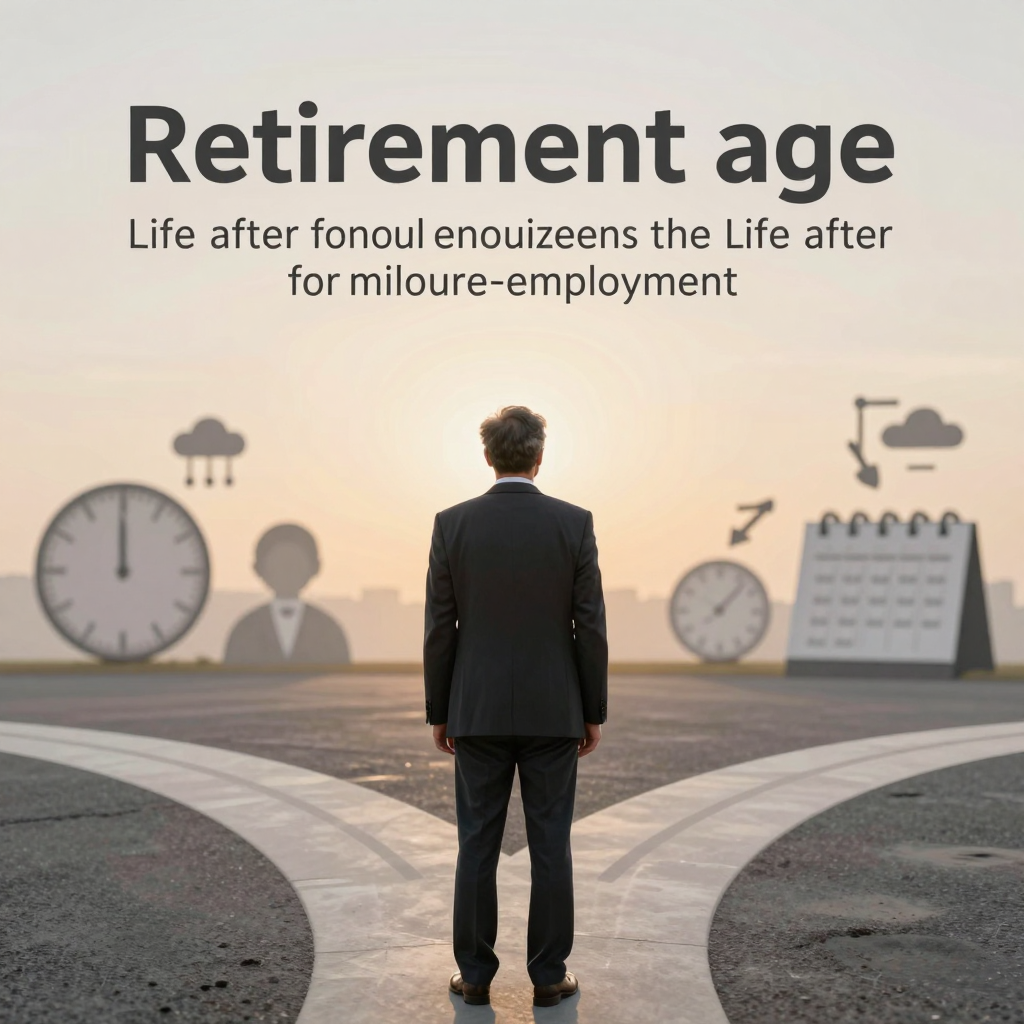
Retirement age is often simply seen as "the age when you stop working." But hidden within it is an astonishing truth. Retirement age is a core system where labor market structures, generational relationships, and individual life planning all intersect at once. In other words, retirement age is not just the day an individual retires; it’s more like a crossroads that transforms the flow of jobs throughout society and the trajectory of life itself.
The word "retirement age" is used in various ways in everyday life, and distinguishing these differences helps clarify the retirement age debate much more clearly.
- Legal/Institutional Retirement Age: The “age at which you must retire” as stated in company or organizational policies (employment rules, collective agreements, etc.). Even if it’s the same age 60, the actual experience varies depending on each company’s regulations and management style.
- De facto Retirement Age: Although the official retirement age remains, the actual moment many leave their jobs is earlier due to restructuring, failed job transitions, performance pressures, or early retirement recommendations. This is why many feel “retirement age is 60, but it feels earlier.”
- Starting Point After Retirement: Retirement isn’t the end, but a turning point where career and life are redesigned. After leaving titles and organizations, people must reconstruct their work, income, relationships, and identity.
Ultimately, retirement age is not just about “when to stop.” It simultaneously asks under what conditions and for how long one can keep working, and how to live life thereafter. The following sections of this article will carefully explore these questions, explaining the structure of the retirement system and why debates about extending the retirement age have recently heated up.
The Retirement Age System in Korea: A Multi-layered Structure and the Gap from Reality
The legal retirement age is generally set at “60 years or older.” But then, what is the ‘de facto retirement age’ that we actually experience? To get straight to the point, retirement age cannot be defined with a single number. Depending on company policies, job types, wage systems, and workforce management methods, the actual retirement timing varies, creating a significant gap between the “retirement age (system)” and the “retirement age (reality).”
The Three-layered Structure of Retirement Age: Regulations, Reality, and Turning Points
In Korea, the concept of retirement age typically overlaps in the following three meanings:
- Retirement Age as a Regulation (Legal/Institutional Retirement Age): The “age at which retirement is mandated,” stated in employment rules or collective agreements
- Retirement Age as Reality (De Facto Retirement Age): The actual timing of leaving the job, often accelerated by restructuring, performance evaluations, early retirement recommendations, etc.
- Retirement Age as a Life Stage Divider (Retirement as a Turning Point): The starting point of a ‘second act in life,’ when careers, income, and relationships are reshaped after leaving the job
In other words, retirement age is less a mere “number” and more a coordinate where systems, practices, and personal life planning intersect.
Retirement Age Is Not ‘One’—A Varied Map across Private Sector, Public Sector, and Job Types
The reason the retirement age system is so complex is that its application is multi-layered.
Private Sector Retirement: Mandatory ‘at least 60’ plus company-specific rules
- Workplaces of a certain scale are required to set retirement age at 60 or older,
- But actual retirement age and its management are determined by each company’s employment rules and collective agreements.
- Even if the retirement age is 60, the perceived experience can differ drastically depending on personnel policies before retirement (transfers, job changes, evaluation criteria).
Public Servants, Teachers, etc.: Separate Retirement Ages by Occupational Category
- Civil servants, teachers, military personnel, and others have retirement ages set by individual laws,
- And operations differ by rank, school level, or job classification, making it problematic to assume that the public sector is “universally stable.”
Post-retirement Reemployment and Contract Conversion
- Many retire upon reaching retirement age but continue working in forms of reemployment (contractual positions, etc.) for a certain period.
- In these cases, although “retirement age is observed,” there are often shifts in employment quality (wages, duties, and job security).
The Core of Reality: Moments When Retirement Age and ‘Actual Departure Time’ Diverge
This is where much of the dissatisfaction among workers starts.
- Even if time remains before the official retirement age, organizational downsizing and intensified performance-oriented policies can increase pressure during mid-to-late careers.
- Some industries experience career breaks when employees fail to enter management roles due to the nature of the job.
- As a result, though the retirement age is 60, the de facto retirement age perceived by the market and organizations is often set earlier.
The bigger this gap becomes, the more retirement age is psychologically viewed not as a “retirement age,” but as a career expiration date.
What Is Overlooked When Retirement Age Is Viewed Only as a ‘System’
Discussions about retirement age are not just about adjusting the numbers. In the real world, the following questions arise simultaneously.
- If retirement age is extended, how will wage systems (especially seniority-based pay) cope?
- To reduce promotion stagnation and rank congestion, is job redesign and retraining feasible?
- If post-retirement reemployment expands, how will job security and treatment of older workers be guaranteed?
Ultimately, the phrase “retirement age 60 or older” alone cannot explain the reality. What is needed now is a concrete interpretation of how retirement age actually functions based on one’s specific organization and job.
The Heated Debate Over Extending Retirement Age: At the Crossroads of Aging Society and Generational Conflict
In an ultra-aged society with declining birthrates, why has extending the retirement age become such a hot social topic now? Life expectancy is increasing, yet jobs remain limited. In this gap, the right to “work longer” clashes head-on with the opportunity for “new entrants,” revealing an uncomfortable reality in the retirement age debate.
The Question Raised by Aging: “Is a retirement age of 60 still realistic?”
In the past, retirement age marked the ‘point of retirement,’ but today it often signals the ‘start of income gaps.’ With longer life expectancy and extended post-retirement years, leaving the workforce around age 60 triggers tangible challenges: a gap until pension benefits kick in, rising healthcare and caregiving costs, and the risk of exhausting savings.
Thus, extending the retirement age expands beyond individual livelihood issues to questioning the sustainability of society as a whole.
The Paradox of Low Birthrates and Population Decline: Fewer workers, yet growing conflicts—why?
As the working-age population shrinks due to low birthrates, the idea of “utilizing skilled workers longer” gains persuasive power. But the labor market is anything but uniform.
- Some industries face chronic labor shortages,
- Some occupations see even tighter hiring gates,
- Many organizations struggle with seniority-based wage systems, feeling burdened by high-paid older employees staying longer.
Ultimately, extending the retirement age is not simply a matter of ‘let’s extend because we’re short on workers;’ it demands a careful assessment of where shortages exist and whose opportunities are shrinking.
The Heart of Generational Conflict: Does extending retirement steal jobs from the youth?
The intensity of the retirement age debate stems from structural reasons, not emotions. Increasing the retirement age can slow down promotion, assignment, and hiring speed within organizations, causing younger generations to worry, “Are the doors really closing tighter?” Meanwhile, older and middle-aged workers desperately cling to the hope that working until retirement age will sustain their later years.
In other words, extending retirement age isn’t about who’s right or wrong, but about how to design the employment ‘pie’ fairly.
The Hidden Issue: Does raising the retirement age mean people can actually work until then?
Even if retirement age increases, if early retirement, layoffs, and high-performance pressure persist, the de facto retirement age may barely change. While policy states “working beyond 60 is possible,” the workplace atmosphere might say, “You should leave before that.”
Therefore, the debate over extending retirement must accompany critical questions such as:
- How to redesign roles and job duties by age?
- How to adjust wage systems (seniority-based vs. task- and performance-based)?
- Can evaluation and placement criteria avoid age discrimination?
Extending the retirement age can be both a solution to aging and a spark for generational conflicts. The crucial point is not just “to what age do we extend,” but whether the extension can happen without pushing anyone out, by transforming the labor market’s structure together.
Survival Strategies in the Era of Retirement Age Extension: Challenges and Opportunities for Companies and Individuals
Extending the retirement age is not just about “working a few more years.” It encompasses wage peak systems, organizational culture redesign, and above all, the reality of the ‘de facto retirement’—where even if the official age is 60, the actual sense of retirement stops in the 50s. Companies must restructure costs and workforce, while individuals need to proactively design ways to extend the shelf life of their careers.
Retirement Challenge for Companies #1: Recalculating Wage Peak Systems and Labor Cost Structures
When the retirement age rises, the first thing to shake is the labor cost curve. The more seniority-based the wage system, the heavier the burden from the simultaneous occurrence of “aging workforce, high wages, and long tenure.” Wage peak systems often emerge as a solution, but companies still face crucial challenges:
- Designing rationality and fairness: Simply lowering wages while keeping the same roles and performance criteria fuels dissatisfaction and legal risks.
- Linking to performance and job roles: To avoid wage peak systems appearing as “across-the-board pay cuts based on age,” companies must design job/role transitions and evaluation systems simultaneously.
- Maintaining productivity of older employees: Budgets must include “costs that enable work,” such as retraining, job reassignment, and health and safety facilities.
The key is that the wage peak system is not just a support tool for retirement age extension but a trigger to transform the entire philosophy of HR and compensation.
Retirement Challenge for Companies #2: The ‘Stagnation’ of Organizational Culture and Promotion Structures
The longer the retirement age, the slower organizations tend to become. When senior positions are held for extended periods, middle managers and younger generations strongly feel they’re “blocked from progressing.” Common side effects include:
- A vicious cycle of promotion stagnation → decreased motivation → weakened performance
- A culture that reinforces “he who endures wins,” where political survival trumps skill development
- Intergenerational conflicts that degrade the quality of teamwork and collaboration
Therefore, as companies discuss extending retirement ages, they must simultaneously prepare alternatives like job-centered organizations, horizontal role systems, and expert tracks (paths outside management). Simply lengthening retirement without changing structure risks long-term organizational vitality.
The Reality of Retirement for Individuals: ‘De Facto Retirement’ Comes Sooner Than ‘Legal Retirement’
For many, retirement is a feeling, not a rule. Under pressures like restructuring, job cuts, evaluation competition, and managerial failures, the moment when a career breaks before official retirement can come unexpectedly. Hence, individual strategies shouldn’t start with “retirement age extension means more security” but with these questions:
- Realistically, how long can I stay competitive in this company?
- What skills and experiences do I have that are valued outside this company?
- Do I have an income structure that can sustain me even if retirement comes ‘suddenly’?
The hotter the debate on retirement extension gets, the more important it is for individuals to design their careers by diversifying the timing of potential retirement rather than fixating on the retirement age number.
Three Personal Strategies to Extend Beyond Retirement Age: Reshaping Competencies, Income, and Relationships
Practical survival strategies for individuals are not complicated—but timing is everything, and they must start now:
1) Translate your skills from ‘in-company qualifications’ to ‘market value.’
- Break down your current work into skill units (planning, sales, data, operations, risk management, etc.)
- Organize your portfolio into forms that work across various industries.
This will accelerate transitions such as reemployment, consulting, or freelancing after retirement.
2) Diversify income sources to reduce retirement risks.
- Relying 100% on salary becomes unstable at retirement.
- Creating multiple small income streams—pensions (including retirement funds), dividends and interest, side jobs or project income—softens the shock of ‘de facto retirement.’
3) Expand your relationships beyond the company.
- Industry networks, associations, communities, and online channels open doors after retirement.
- Especially in older age, trust-based references often matter more than cutting-edge skills.
Retirement age extension challenges companies with costs and restructuring, and individuals with career and life planning dilemmas. The critical point isn’t to wait and see if the retirement age will rise, but to proactively build your own resilient structure that won’t waver regardless of how retirement arrives.
Retirement Strategy: How to Prepare Your Own Life and Work After Retirement
Retirement is no longer the end but a new beginning. Focusing solely on “when to quit the company” only fuels anxiety, but by shifting your perspective, retirement becomes a pivotal moment to restructure your work, income, and relationships. From now on, instead of grand resolutions, boost your chances of success in your second act of life with strategies you can put into practice today.
Retirement Preparation 1) Calculate Your “Actual Retirement Age,” Not Just the “Legal Retirement Age”
The starting point for retirement planning is setting a specific number. However, that number isn’t just the retirement age listed in your company rules.
- Set it conservatively by reflecting the realities of your industry and job: Consider the likelihood of restructuring, promotion system, and job lifespan (replaceability) to estimate “how long I can sustain this role.”
- Break down your plan into 2–3 scenarios:
- Basic scenario (until the official retirement age)
- Conservative scenario (3–5 years earlier than that)
- Transition scenario (assuming a job change or career shift)
- Work backwards on the required cash flow for each scenario: When “how much money I need to earn by when” becomes clear, anxiety turns into a plan.
Retirement Preparation 2) Build a “Skill Portfolio” That Remains Marketable After Retirement
Work after retirement usually takes the form of different kinds of labor, not simply an extension of your current job. Hence, you need a portfolio of skills, not just one.
- Compose it of one core skill + two expanded skills
- Core skill: Your accumulated expertise (industry knowledge, sales, planning, finance, etc.)
- Expanded skills: Abilities that “monetize your knowledge and experience,” such as lecturing, documentation, consulting, coaching
- Transition skills: Common competencies that ease job switching like use of data/AI tools, project management, collaboration tools
- Leave behind verifiable deliverables (a portfolio)
What matters more than certificates is a record of “what you have accomplished.” Organize outputs like reports, project achievements, presentation materials, and training curriculums. They speed up career changes, reemployment, or freelancer transitions. - Experiment small and adjust fast
If you start new learning for post-retirement, test market response with a small project (one lecture, five articles, one consulting case) within three months.
Retirement Preparation 3) Diversify Income: Gradually Lower Your Dependence on Salaries
The biggest risk after retirement is “willingness to work but losing income streams.” The key is designing multiple sources of income.
- Check cash flows from pensions, retirement savings, and personal assets: Just organizing when and how much you’ll receive (payment timing, taxes, withdrawal methods) drastically reduces uncertainty.
- Start side jobs focusing on ‘market connection’ rather than ‘money’: Instead of aiming for big profits from the start, concentrate on building customer bases and channels that will last after retirement.
- Prepare pricing lists for job changes or reemployment: If you roughly estimate your rates per hour/project (lecture fees, advisory fees, project fees), you gain stronger negotiating power.
Retirement Preparation 4) Expand Your Network: Build “Social Capital” Outside the Company
Before retirement, your company is the center of your relationships, but after retirement, networks outside your company become your gateway to opportunities. The goal is to create a “connection structure,” not just “contacts.”
- Regularly engage in one industry community + one local or interest-based community
- Design relationships that give first: When you accumulate information sharing, mentoring, and small favors, offers for advice, projects, or recruitment naturally follow after retirement.
- Polish your online profile: Running just one channel well—LinkedIn, Brunch, or a personal blog—lowers the “cost” of explaining who you are.
Retirement Preparation 5) Use a Company Policy Checklist to Understand ‘Your Rights and Options’
Retirement is also institutional, so understanding your company’s rules can change your strategy.
- The retirement provisions in employment regulations and collective agreements and their applicability
- Whether the wage peak system exists, how wages fluctuate, and related job/evaluation criteria
- The structure and receipt options of severance pay, retirement pensions (DB/DC/IRP)
- The possibility, conditions, and actual practices of reemployment or contract conversion after retirement
Don’t treat retirement as an “inescapable event.” Start by reviewing the areas you can control—your skills, income, relationships, and understanding of policies. Life after retirement doesn’t begin abruptly. Small preparations today open up a world of choices for your second act.
Comments
Post a Comment