 \n
\n
South Korea vs El Salvador Friendly: The Final Test Before the World Cup
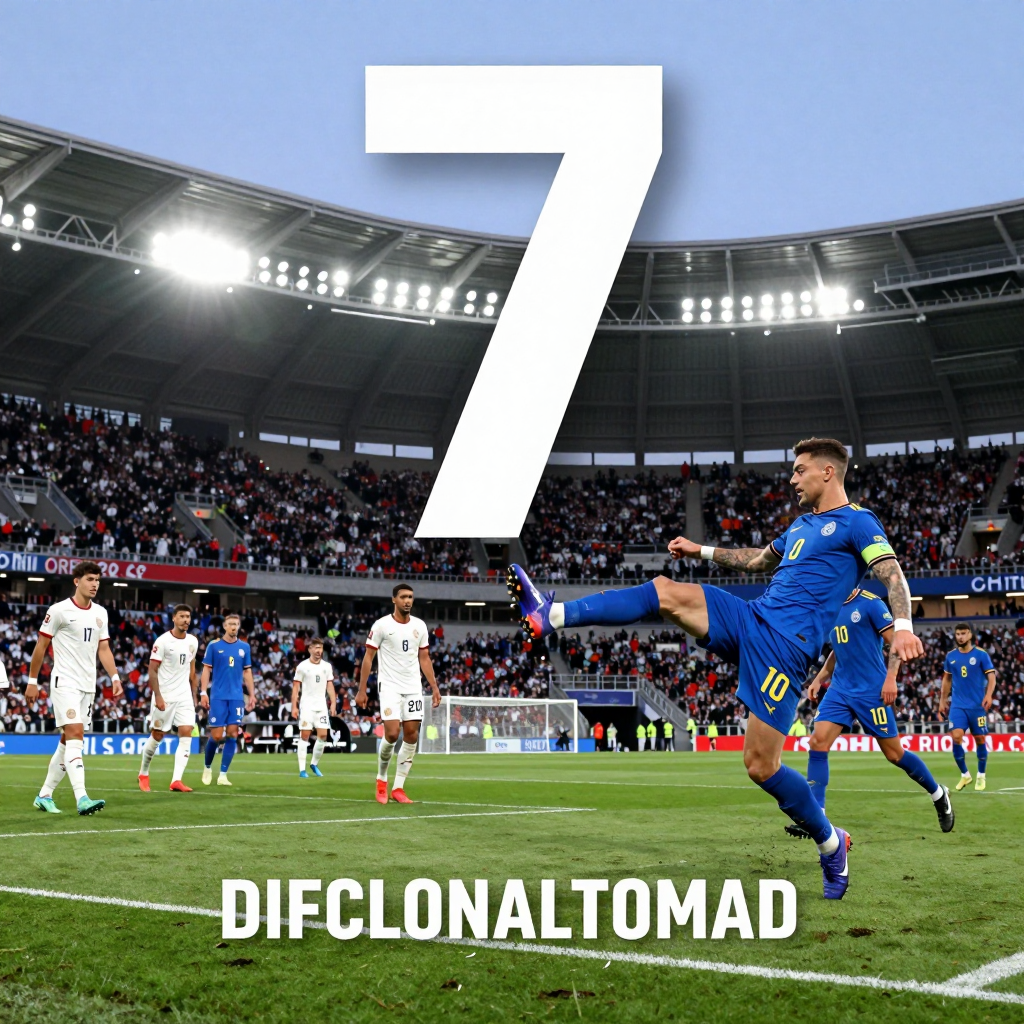
Just one week ahead of the 2026 North and Central America World Cup, South Korea secured a 1–0 victory in a friendly match. Yet, the prevailing feeling right after the game was, “We won, but why does it still feel unsettled?” On paper, the South Korea vs El Salvador match ended in a clean-sheet victory, but in terms of performance, it served as a ‘final rehearsal’ that failed to provide the full confidence a team needs heading into the World Cup finals.
The key focus of this friendly wasn’t the simple scoreline, but rather what was tested and what still fell short.
- Type: A-match international friendly
- Context: Practically the last real match test before the World Cup finals
- Result: South Korea 1–0 El Salvador (clean-sheet win)
So, where did the “disappointment” stem from? The reason is clear. The offense lacked smoothness and ultimately scraped a win through just a single set-piece strike. Repeatedly, the connection broke down when pushing the ball forward against a compact defense, attacks rarely sustained in the final third, and the team failed to create enough ‘convincing scoring opportunities’ during open play.
On the upside, there were definite positives.
- The defensive organization was relatively stable, closing out the game without major threats or conceding goals.
- The goal, a free kick by Lee Dong-kyung, confirmed a valuable set-piece option that can be deployed in the World Cup.
- Starting Son Heung-min from the bench highlighted the clear intention to manage player condition and test tactical plans right before the finals.
In summary, the South Korea vs El Salvador friendly was a case of “passing the result, but with homework left on the process.” At the final test before the World Cup, South Korea confirmed how to win, but simultaneously revealed that the convincing attacking routes that can work against strong opponents still need refinement.
Hidden Strategies and Player Deployments in South Korea vs. El Salvador: The Secret Behind Son Heung-min’s Bench Start
Why did Son Heung-min start on the bench? Though the South Korea vs. El Salvador friendly ended in a 1–0 win, the real story lies not in the scoreline but in what was concealed and tested seven days before the World Cup. Son’s bench role, the captaincy given to Lee Jae-sung, and the flexible back three are not isolated choices—they form a single strategic blueprint.
Son Heung-min’s Bench Start: Not Rest, but Risk Management and Plan Testing
The last rehearsal before the World Cup has one thing the coach most wants to avoid: injury and fatigue to key players. Starting Son Heung-min on the bench was not mere rotation; it was a condition management strategy designed to unleash his explosive power at the most crucial moment of the tournament.
At the same time, this choice posed a pragmatic question:
- Can the team still push the ball forward without Son?
- Can it create chances when the opponent sits back?
- Ultimately, can it control the game?
Son’s bench start was therefore both “saving fuel” and an experiment in how to hold the line without him. The frustrating nature of the offense was a clear sign this experiment did not run smoothly.
Lee Jae-sung as Captain: The Second-in-Command Armband and the Mission to Control the Midfield
With Son absent from the starting lineup, the captain’s armband was passed to Lee Jae-sung—a symbolic move. It offers a preview of who will provide on-field leadership when unexpected situations arise in the tournament.
Tactically, Lee’s role was critical. Positioned alongside Hwang In-beom in midfield, they were tasked to:
- Expand pressing and cover zones broadly,
- Serve as the vital linking piece in build-up play.
While this duo contributed to “stability,” they fell short in producing the decisive passes and patterns needed to break through a packed defense, causing attack breakthroughs to stagnate. Lee’s deployment thus revealed both the strengths and vulnerabilities of Korea’s midfield strategy.
The Real Purpose of the Flexible Back Three: Not Just Defensive Stability but Transition Control and Numerical Advantage
Another clear message from South Korea vs. El Salvador was the use of a flexible back three (shifting to five at times defensively). Outwardly, it provides a sense of "defensive solidity," but the World Cup stakes underline two far more critical elements:
1) Speed in counter-response: Rapidly securing defensive numbers when attack breaks down to minimize risky transitions.
2) Numerical superiority on offense: Pushing the line up adds personnel on flanks and half-spaces, unsettling the opponent’s blocking structure.
Theoretically flexible, this system demands perfect spacing and role distribution; otherwise, the attack often breaks down. The critique that “defense held but offense stalled” reflects this incomplete coherence within the flexible framework.
Conclusion: A Match of ‘Hidden Cards’ and ‘Exposed Challenges’ Simultaneously
In summary, the lineup tried operating without Son Heung-min and still securing results, entrusted Lee Jae-sung with leadership and central duties, and sought to control transition with a flexible back three. The South Korea vs. El Salvador game was less a commanding victory and more a pre-tournament test that sharpened the focus on offensive challenges facing the team’s Plan B.
Korea vs. El Salvador: What Was Behind the Frustratingly Narrow One-Goal Victory?
Victory was secured. However, the biggest question left by the Korea vs. El Salvador match remains: Why did Korea remain stuck at just “one goal” against a team that dropped deep and defended steadfastly? The recurring scenes throughout the game were ‘threatening chances cut off at the crucial moment’ and ‘the final crucial misstep in decision-making.’
Korea vs. El Salvador: Why the Build-Up Failed to Translate Into Forward Passes
While the ball moved relatively smoothly from defense to midfield, speed dropped significantly at decisive moments.
- Midfield connections leaned more towards ‘maintenance’ than ‘advancement’
The Hwang In-beom–Lee Jae-sung partnership showed stability, but killer passes or bold third-line runs to disrupt the dense defense were rare. Longer possession in midfield gave the opposition time to organize their defensive block. - Lack of consistency in utilizing the wings
The flow to spread wide and shake the opponent’s defense was frequently interrupted, forcing attacks into crowded central areas. As a result, Korea repeatedly attacked “where there was no space to enter.”
Korea vs. El Salvador: Shaky ‘Final Choices’ Near the Box
Even when advancing near the box, the finishing sequences lacked smoothness.
- The ball didn’t linger up front
The plan was to build around Jo Gyu-sung and pursue second balls or let the second line continuously make penetrating runs for a follow-up wave. Instead, connections were often cut instantly, causing attacks to reset. - The tempo leading up to shots was too slow
Each extra touch or pass allowed the opponent to reinforce their defense. Against a team like El Salvador that sits deep, ‘quick decisions’ are crucial for increasing scoring chances. At this point, Korea struggled to escape their frustrating rhythm.
Korea vs. El Salvador: Why the Set-Piece Winner Was Both a ‘Solution’ and a ‘Warning’
Ultimately, the winning goal came from a free kick (set piece)—and this carried a dual message.
- Plus: It confirmed a reliable scoring route (set-piece option) that can be utilized in the main tournament.
- Minus: It also signaled that clear patterns to break down defensive blocks during open play were insufficiently developed.
In summary, the 1–0 result in Korea vs. El Salvador leaves more lingering questions of “why didn’t they score more?” than “they won.” The forward momentum of the build-up, tempo near the box, and creativity without key players like Son Heung-min and Lee Kang-in—these three issues shone the brightest in Korea’s final dress rehearsal before the World Cup.
Korea vs. El Salvador Decisive Goal: The Value of Lee Dong-gyeong’s Set-Piece Strike That Secured a 1–0 Victory
It wasn’t an open-play goal but a single strike from a set-piece situation. Yet, this one shot wasn’t just a matter of “luck” — it was a moment that confirmed Lee Dong-gyeong’s exceptional free-kick ability, which carried the full weight of victory. The final score in the Korea vs. El Salvador friendly was 1–0, but the reason many reviews described the game as “frustrating” becomes crystal clear at this point.
The More Open Play Is Blocked, the More Set-Pieces Become the ‘Realistic Solution’
Looking back at the flow of the match, Korea struggled to smoothly break into the box during open play, and clear attacking patterns to unsettle the opponent’s dense defense were few and far between. In such a game, the brightest option is fixed situations like free-kicks and corners.
In other words, this win is meaningful not because it was a “well-executed victory,” but because it demonstrated a way to get results even on a tough day.
Lee Dong-gyeong’s Free-Kick: Symbolizing a ‘Plan B Scoring Route’
The reason many commentators and analysts credit the winning goal to Lee Dong-gyeong’s free-kick is straightforward. Even if clear chances don’t pile up in open play, deciding a match with just one set-piece is a huge weapon, especially in short tournaments like the World Cup.
- Diversifying Scoring Routes: When the attack is blocked, it’s not tactics but “one kick” that secures points.
- Increasing Opponent’s Defensive Costs: The threat of free-kicks forces opponents to be more cautious with fouls and defensive setups in critical areas.
- Expanding Player Options: Even when key players like Son Heung-min and Lee Kang-in aren’t at full throttle, another path to goals emerges.
The Hidden Story: Why This “One Goal” Looked Even Bigger
A 1–0 scoreline sometimes spells anxiety, and the Korea vs. El Salvador clash was no exception. Although holding on through a set-piece is commendable, it also raises the question: “Why was scoring from open play so difficult?”
Ultimately, Lee Dong-gyeong’s free-kick wasn’t just a match-winning goal — it was a ‘fixer option’ that stood out even more clearly in a game where attacks struggled. As Korea’s last rehearsal before the World Cup, this moment turned out to be the most definite takeaway from the match.
South Korea vs. El Salvador: Remaining Challenges and Hopes – A Cold Reflection Ahead of the World Cup Finals
The underwhelming attacking build-up undoubtedly set off warning bells. But if you ask whether the South Korea vs. El Salvador friendly was just a “failed rehearsal,” the answer isn’t so simple. Even amid frustrating play, the World Cup-style checklist of defensive stability, fitness management, and tactical experiments was realistically fulfilled.
The Warning from South Korea vs. El Salvador’s Attacking Play: A Nervous 1–0 Win
The scoreline was a victory, but the process was stark by World Cup finals standards. Especially when the opponents dropped deep and packed the defense,
- the crucial link-up from midfield to the front was frequently broken,
- there was a lack of design in creating scoring chances during open play, and
- the result was a heavy reliance on a single set-piece goal.
If this pattern repeats, South Korea risks becoming a team that not only “grabs chances when they come” but rather one where “chances themselves become scarce” against top-level opponents in the finals. In other words, this 1–0 win leaves a bigger task: diversifying attacking routes beyond just securing points.
Hope from Defensive Stability in South Korea vs. El Salvador: The Most Crucial Foundation in Knockouts
On the flip side, there were clear positive signs. Despite the lack of fluid performance, managing a clean sheet is a formidable survival skill on a chance-filled stage like the World Cup.
Organized defending centered on Kim Min-jae and a flexible 3-back system at least confirmed the team’s ability to “lock down a 90-minute game without major mishaps,” which forms the essential baseline for planning matches in a knockout format.
Realistic Preparation Revealed in South Korea vs. El Salvador: Fitness Management and a Plan B Check
The purpose of pre-World Cup friendlies leans closer to ‘safe preparation’ than ‘spectacular play.’ Starting Son Heung-min on the bench and testing Lee Jae-sung’s leadership role in midfield were choices aiming to simultaneously assess energy distribution and role redistribution.
In short, this match served as a practical test—checking how the team functions while “hiding the best eleven.”
Conclusion Left by South Korea vs. El Salvador: Anxiety in Attack, Hope in Management
Ultimately, the message from this game is clear:
- Attack must become sharper: Patterns to break down compact defenses and finishing efficiency need improvement.
- Defense and overall management are adapting to World Cup standards: Clean sheets and cohesion are major assets.
- Player management and tactical trials were meaningful: More tactical cards increase flexibility during the tournament.
The South Korea vs. El Salvador match was less a “showing we are ready now” and more a “warning that things are risky as is” final rehearsal. At the same time, amid shaky moments, it quietly signaled what it takes to keep the team intact—a subtle but important beacon of hope.
Comments
Post a Comment