 \n
\n
South Korea vs El Salvador: The Final Test Before the World Cup, South Korea vs El Salvador Friendly Match
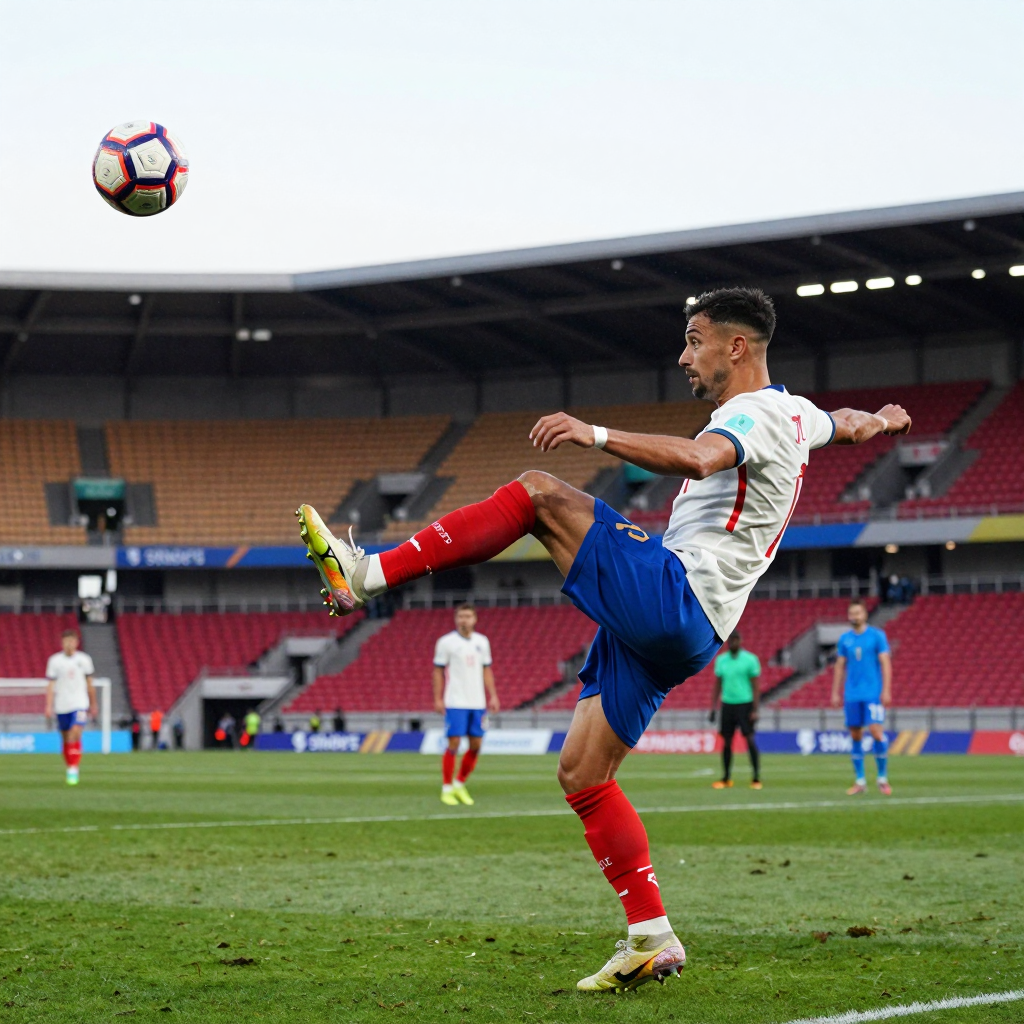
With Lee Dong-gyeong’s stunning free kick, South Korea secured a 1-0 victory. Although the clean sheet looks neat on the scoreboard, the match between South Korea and El Salvador was far from just another friendly. Instead, this game acted as the final experimental ground for the coach to fine-tune the system ahead of the 2026 CONCACAF World Cup. So the big question emerges: What exactly did the coach aim to test with this match?
Why South Korea vs El Salvador Was the ‘Final Check’: Process Over Result
This international friendly took place at BYU South Field in Provo, Utah, USA. The choice of venue sent a clear message. It was designed to simulate the “North American away environment” before the World Cup, allowing the team to experience external factors like travel routes, turf conditions, time zone differences, and physical readiness—operating as close to a real match scenario as possible.
And the scoreline says it all. A 1-0 score isn’t a blowout, but in a trial match, it reflects the ideal balance the coach wanted: experimenting without sacrificing the result.
The Significance of Choosing El Salvador: A North American Style Mock Test
El Salvador is a CONCACAF Central American team, offering South Korea a chance to preview the typical traits of North American teams they might face in the finals: physical battles, quick transitions, and sporadic pressing.
The key here was difficulty calibration.
- Too strong an opponent would make tactical trials difficult,
- Too weak, and the data wouldn’t be relevant for the finals.
El Salvador struck the perfect balance—allowing South Korea to lead possession and execute their tactical checklist, while still facing the distinct rhythm of North American play for a realistic stress test.
The Coach’s Checklist Confirmed in South Korea vs El Salvador: “Can We Function Without Son Heung-min?”
This match had a strong rotation character, combining core players with experimental elements. In other words, while maintaining the spine of the team (midfield and defensive core), the coaching staff tested:
- The frontline combinations,
- Fullbacks and wide players,
- Competition in the second line,
- And the set-piece kickers—
all within the flow of a live game.
The crucial question was this: Can the team run at the same pace even when Son Heung-min is benched or used sparingly? The World Cup won’t see starters solve everything for 90 minutes straight. Therefore, this game served as a reality check on whether a “plan with less star dependency” could work.
The Takeaway from South Korea vs El Salvador: Lee Dong-gyeong’s Free Kick Was an ‘Option,’ Not Just a ‘Goal’
Lee Dong-gyeong’s winning free kick wasn’t just a beautiful goal moment. More importantly, it symbolized something deeper for the team:
- South Korea is not a team opponents can prepare for by solely focusing on key kickers like Son Heung-min or Lee Kang-in;
- Rotation players have the ability to decide a match with a single set-piece moment;
- And the team is layering its set-piece weapons, one of the most efficient tools in tournament play.
Therefore, the value of this South Korea vs El Salvador match goes beyond the “1-0 win.” It lies in the confirmation that the team truly has cards to play at the finals.
South Korea vs. El Salvador: Why El Salvador? The Secret to Adapting to the North and Central American World Cup Environment
What strategic purpose was hidden behind South Korea’s choice of El Salvador as their opponent while preparing for the North and Central American World Cup? Digging deeper than just a match against a simple opponent, this matchup reflects a choice focused more on “the stage and variables of the World Cup” rather than merely the “strength of the opponent.”
Simulating the ‘Away Game Variables’ of CONCACAF in Advance
The game took place at BYU South Field in Provo, Utah, USA. The location itself is a clue. In the North and Central American World Cup, environmental adaptation—including time difference, travel, climate, and characteristics of the grass and stadium—can determine success as much as pure performance.
In other words, the South Korea vs. El Salvador match was more of a rehearsal for the team to get a firsthand feel of “what it’s like to play in North America” rather than focusing solely on the result.
- For the national team, it means the chance to check their away-game routine (travel–recovery–training–match),
- while the coaching staff can test the feasibility of physical conditioning management and squad deployment within an actual schedule.
A Dress Rehearsal for CONCACAF’s Style: Tackling ‘Rough and Direct Football’
El Salvador is a Central American team under CONCACAF. They share styles with the North and Central American teams South Korea could encounter at the World Cup, generally mixing physical duels, quick transitions, and direct play to disrupt the flow of matches.
Facing such a team forces South Korea to inevitably examine the following points:
- Can they maintain stability in buildup play under pressure?
- Are they able to secure midfield dominance in aerial battles and second-ball fights?
- Do they sustain set-piece concentration in games where tempo breaks down and fouls increase?
In essence, El Salvador served as a practical test opponent where South Korea could hold initiative while experiencing the frequent physical intensity typical of World Cup matches.
The Perfect Balance: ‘Final Friendly Difficulty’ for Both Experimentation and Victory
Meeting too strong a team in the final friendly makes experimentation difficult, while too weak an opponent lowers the quality of data gained. El Salvador stands in that middle ground.
South Korea was able to take control of the game and extensively test rotation options, fullback combinations, competitive dynamics in the second line, and set-piece strategies while responding to the opponent’s physicality and transition speed.
In the end, South Korea vs. El Salvador was less a match focused on “winning against the opponent” and more a comprehensive examination of all the conditions necessary to win the North and Central American World Cup. The choice of opponent was strategic from the very start.
South Korea vs. El Salvador: Can the Team Function Without Son Heung-min? Bento’s Final Experiment
At first glance, this match—with a 1-0 scoreline decided by a single free kick from Lee Dong-gyeong—might seem straightforward. But the bigger question in the South Korea vs. El Salvador game was elsewhere.
“Can the national team keep moving at the same pace without Son Heung-min?” To find that answer, the last friendly surprisingly featured a very explicit experiment.
Checking the Blueprint, Not a ‘100% Son Heung-min Dependency’ Plan
Starting Son Heung-min on the bench wasn’t just about managing his condition; it sent a tactical message. The recurrent challenge Korea faces at the World Cup is clear:
- When opponents focus all their attention on Son Heung-min,
- When his positioning needs to be shifted,
- Or when his early impact on the game falls flat,
how quickly and effectively Plan B kicks in often decides the match outcome.
This match wasn’t about assuming but putting Plan B to the test in real game conditions. The real purpose wasn’t sidelining Son Heung-min but examining whether the team’s basic structure holds without him.
Experimental Starters, But a Fixed Core: Who Was the True Pillar of the Team?
True to a final friendly, rotation was part of the plan, but this wasn’t a total overhaul. On the contrary, the key was control.
By limiting the experiment’s scope, the team reaffirmed the core framework they’ll rely on at the World Cup.
- The midfield core (Lee Jae-sung and Hwang In-beom) remained the operational heart.
- Lee Jae-sung, taking the captain’s armband, reiterated his role as the tactical and leadership center.
- Hwang In-beom stood firm as the benchmark for buildup and forward passing, proving his place in the strategy is nearly untouchable heading into the tournament.
- The defensive core, led by Kim Min-jae, justified its position through results.
- The minimal 1-0 win wasn’t about an explosive offense but rather a signal that the team is solidifying the way it preserves leads.
In short, while South Korea vs. El Salvador was “a matchup for finding new combinations,” it was more deeply a clear revelation of who the indispensable pillars are—those who must not falter, no matter who’s missing.
The Untold Story of the Substitutions: Lee Dong-gyeong’s Goal Validates the Competitive Hierarchy
If the starting lineup was about “checking the structure,” then substitutions and set pieces were about “settling the internal competition.”
Lee Dong-gyeong’s free kick goal transcended a simple match-winner—it sent a strong, tangible message about the team’s internal battle for spots.
- It diversified set-piece taker duties, reducing the heavy reliance on Son Heung-min or Lee Kang-in,
- And it reinforced the value of a joker player capable of delivering a decisive moment in the World Cup.
Ultimately, this game didn’t end with the feeling of “frustration without Son Heung-min.” Rather, it provided at least a seed of evidence that scoring routes exist beyond Son Heung-min’s presence. The fact that this came through set pieces—not open play—also candidly reflects the harsh realities of the World Cup stage.
Lee Dong-kyung’s Free Kick Blast and Beyond: A Clue to Korea vs. El Salvador’s Set-Piece Strategy
Lee Dong-kyung’s winning free kick wasn’t just a highlight—it was far more than that. More important than the 1-0 final score between South Korea and El Salvador is what this goal signals about the national team’s evolving set-piece approach. At the heart of this shift lies a World Cup-style question: the value of rotation players.
More Set-Piece Options Mean ‘Dispersed Kickers’ Become the Tactic
Set pieces have traditionally focused on specific stars, but now with Lee scoring the decisive free kick himself, opponents can no longer afford to concentrate their defensive resources on just one or two key players.
- With a variety of kickers in free kick situations, opponents must constantly rethink wall placement, goalkeeper positioning, and defensive line height each time.
- This elevates set pieces from mere “opportunities” to potentially reliable, repeatable scoring routes.
Redefining the ‘Substitute Card’: Lee Dong-kyung as a Plan B Key Player, Not Just a Joker
In tournaments like the World Cup, matches can be decided by a single moment, even if one team dominates overall. Bench players in this context are not just for rest—they are game changers. Lee’s free kick embodies this variable perfectly.
- Few players can come off the bench and raise the expected value of set pieces immediately when the game’s flow stalls.
- Lee is not simply “a substitute who works hard,” but a player who can come on and change the outcome of a match.
The Next Step: ‘Designed Set Pieces’—Turning a Goal into a Tactical Blueprint
However, the real value of this goal lies not in a one-off moment, but in what comes next. The challenge ahead is clear:
- Will the team make Lee’s free kick a dedicated option?
- Or will they fine-tune their strategy by matching kickers based on situations—distance, angle, wall setup—combining him with established players like Son Heung-min and Lee Kang-in?
- Going further, could they pattern not only direct shots but also second balls and rebound plays?
Ultimately, Lee Dong-kyung’s free kick winner against El Salvador isn’t just a goal; it’s a signal of the essential layering of set pieces needed on the World Cup stage. What Lee left behind is not just one goal, but a whole new set of scenarios the opposition must prepare for.
South Korea vs. El Salvador 1-0: Defensive Trust Shown in the Clean Sheet, and the Challenges Ahead for the Attack
While the win was secured, what challenges remain in terms of offensive development and finishing? The 1-0 result in the South Korea vs. El Salvador match looks clean on the surface, but beneath it reveals simultaneously “how complete the team is and what aspects are still a work in progress.”
The Value of a Clean Sheet: A Sign That ‘Managing a Lead’ Has Become Possible
A 1-0 score is a fragile margin. Yet, the fact that the team finished without conceding is significant. Especially against a North and Central American style team, the
- cover during transitional moments,
- second line of midfield resistance,
- concentration of the defensive line
all held steadily, confirming that the national team at least has the “endurance to maintain a lead.” In tournaments like the World Cup finals, it is often not the flashy blowout wins but the ability to accumulate these minimal victories that decide outcomes.
Behind the One Goal: Why Was the Open Play Scoring Route Not Clearer?
The winning goal came from a free kick, which extends the set-piece options. However, it also signals that the route for scoring from open play was not as distinct. The remaining challenges boil down to two key points:
- Consistency in build-up speed and patterns: Even if there are phases where the build-up connects well, when the “final touch” breaks down repeatedly in front of the opponent’s box, the team ends up relying on set pieces for goals.
- Completeness of connection between the frontline and the second line: Whether by positioning a forward like Cho Gue-sung or using penetrating options like Son Heung-min, the crux lies in the timing and type of passes made by the second line. In other words, the issue with the attack appears more related to combinations and spacing than individual form.
When ‘Defensive Stability’ Is Achieved, the Tougher Question Emerges: How to Optimize the Offensive Combination?
The clean sheet builds trust in the team but simultaneously poses a tougher dilemma for the coach. Once there is confidence that the defensive framework can be maintained, the weight of choices shifts toward offense.
- Should the team finish quickly centered around Son Heung-min,
- Set up a target striker with the second line making penetrating runs, or
- Expand the width by increasing full-back overlapping runs?
The South Korea vs. El Salvador match did not provide an “answer” to this question, but it clearly left the challenge of boldly refining and trimming the attacking combinations on a confirmed defensive foundation. Ultimately, what will be needed in the finals is a reproducible scoring scenario built on solidity.
Comments
Post a Comment