 \n
\n
Seoul Subway: Is the Era of ‘Free Transit’ Coming to an End?
What if the free ride policy for those aged 65 and over is soon raised to 70? How would that change our society and transportation welfare system? On the surface, it might seem like a simple question of “At what age should rides be free?” but this issue touches on the Seoul subway’s deficit structure, intergenerational fairness, and the sustainability of urban welfare all at once. That’s why the debate is heated, and finding a conclusion is far from easy.
Why the Debate Over Free Subway Rides in Seoul Is Growing: The Clash Between Aging and ‘Sustainability’
Free subway rides for seniors have long symbolized Korea’s approach to transportation welfare. However, as the elderly population rapidly grows, the scale of free rides expands, and the financial burden ultimately falls on operational budgets.
The proposed change from age 65 to 70 isn’t so much about “cutting welfare” as it is a signal acknowledging the harsh reality that the current system cannot be sustained much longer as is.
Two Core Controversies Triggered by Raising the Seoul Subway Free Ride Age from ‘65 to 70’
1) Fairness: The Uncomfortable Question of “Who Pays and Who Rides Free?”
From the perspective of younger generations, it’s natural to ask, “Is it fair that transportation costs keep rising every month while certain age groups ride for free?” Especially when commuting expenses directly impact household budgets, the free ride system amplifies a sense of intergenerational deprivation.
2) Safety Net: “If Even Transport Costs Are Blocked, Mobility Is Blocked”
On the other hand, seniors argue that free rides are not merely perks but the minimum mobility rights that enable social participation. Considering elder poverty and the burdens of medical and housing expenses, transportation support is not a luxury but rather an essential means of daily survival.
What’s Next for Seoul Subway’s Transportation Welfare? From ‘Free’ to ‘Nuanced Support’
The future direction is unlikely to be a simple yes-or-no answer but will probably move toward more nuanced design. For example,
- Adjusting the age threshold while enhancing separate support for low-income and vulnerable groups,
- Maintaining free rides but restructuring them to reduce operational burdens by limiting times, frequency, or routes,
- Redesigning the system as a whole, combining subways, buses, and other transit modes into a comprehensive ‘urban mobility welfare’ package.
Ultimately, the question isn’t whether to maintain or abolish free rides on the Seoul subway, but who should receive support and in what way that society can accept. Even as the era of ‘free transit’ fades, transportation welfare will not disappear. It will, however, likely transform into a form that demands sustainability and convincingly fair equity.
Commuting Without Kickboards on the Seoul Subway: A Radical Shift in Seoul’s Mobility Patterns
With the complete ban on electric kickboards and e-bikes on the Seoul subway, the “last 10 minutes” of the daily commute have become inconvenient once again. While many relied on personal mobility devices (PM) to cover the home-to-station and station-to-office segments, travelers must now redesign these same routes with new combinations. The core change here isn’t just “no more kickboards,” but rather a complete reshuffling of last-mile transportation options.
The Turning Point in Commuting Routes: The ‘Last-Mile’ Gap on Seoul’s Subway
The sense of loss from banning PMs mostly arises within a 1-2 km distance—
- Too far to walk comfortably,
- Yet bus transfers are cumbersome and time-consuming,
- And taxis can be prohibitively expensive.
This is the quintessential “last-mile dilemma.” In major business districts like Gangnam, Yeouido, and Mapo—where it’s common to have a 15-20 minute walk from station to workplace—commuting fatigue and arrival-time variability are likely to increase significantly.
New Last-Mile Combo Options Emerging Beyond the Seoul Subway
Though inconvenient, the PM ban simultaneously drives demand for alternatives and highlights new choices:
- Strengthening Walk + Bus (or Local Bus) Connections: With more short-distance trips near stations, the value of “brief transfer rides” is back in the spotlight.
- Reemergence of Public Bikes like ‘Ddareungi’: Instead of personal battery-powered devices, shared bicycles managed in station areas could become a growing mobility pattern.
- Shuttle-Style Micro-Mobility: Services like company shuttles, apartment-to-station shuttles, and circulator shuttles in office clusters offer a promising solution for short, reliable trips.
- Increased Use of Taxi and Car-Sharing for the ‘Final Kilometer’: While costly for daily use, these options could see more frequent picks on rainy days, overtime nights, or when running late.
A Return to Seoul Subway-Centric Living: Strengthening Station-Area Communities
An intriguing aspect of this shift is its impact beyond transportation trends, extending into urban living patterns. Without PMs, the convenience of “living a bit further from the station” fades, reigniting preferences for:
- Residential areas close to stations,
- Increased foot traffic and dwell time near station-front businesses,
- Routes centered around easily accessible transfers.
In this way, the Seoul subway transcends its role as mere transportation infrastructure to become an even stronger anchor point for commuting life.
Checkpoints: The Coming Details of Seoul’s Morning Commute
The morning commute is likely to evolve in these ways:
- Access to stations moves from a “quick single move” to a “safe, predictable combination” of travel modes.
- Weather variables like rain, snow, or heatwaves will make alternative transport choices more critical.
- When choosing where to live or work, the focus shifts from just “being near a station” to the connectivity from station to final destination.
Ultimately, commuting without kickboards signals more than mere inconvenience—it may represent a decisive step toward realigning Seoul daily life around public transit once again. The key question now? Who will fill this last-mile void with the smoothest, most efficient service.
Seoul Subway’s ‘Subway Villains’ and the Urban Daily Life Amidst Crowds: A New Cityscape Shaped by Social Media
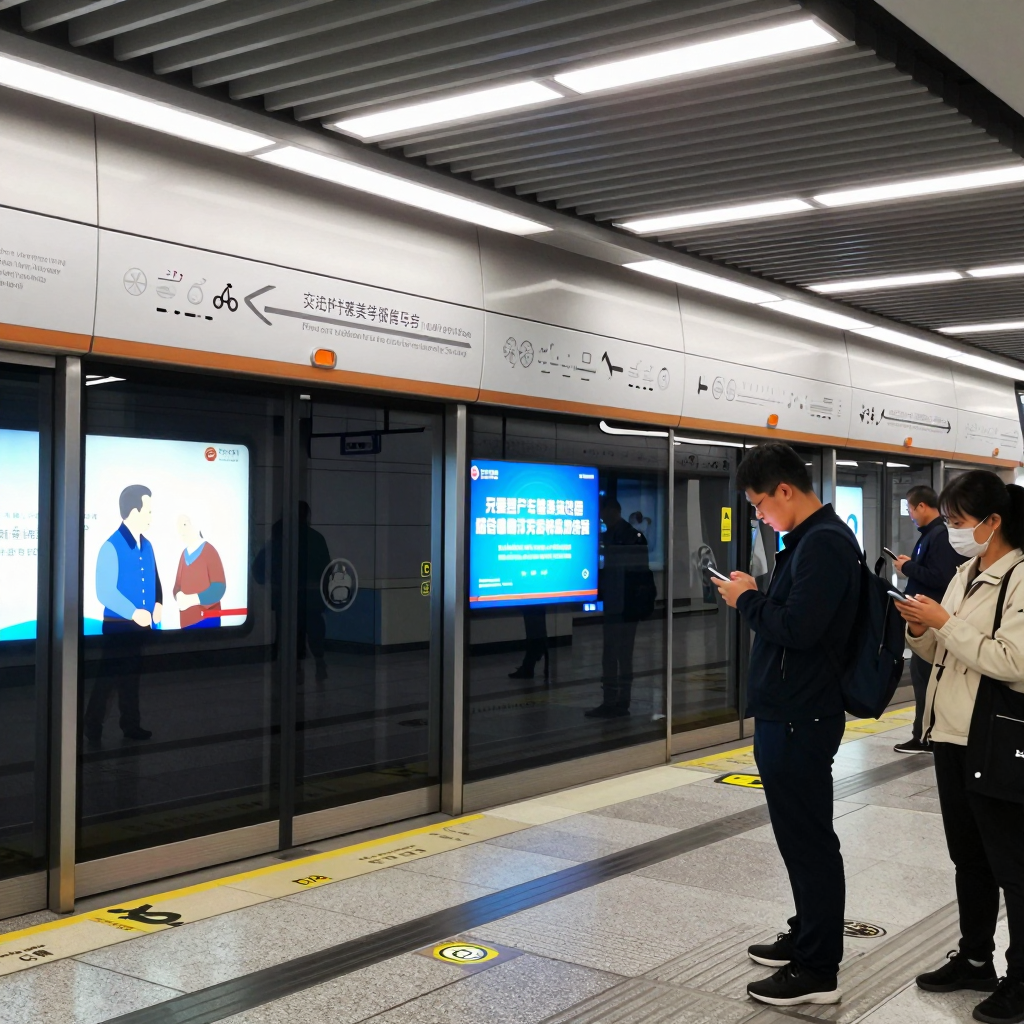
During rush hours on the Seoul subway, everyone has likely encountered certain scenes at least once: people blocking the doors while staring at their screens, individuals stopping dead in the middle of the aisle, or those playing videos without earphones. Nowadays, social media cleverly labels these moments with memes like ‘Cashwalk Villain’ or ‘Subway Villain’ and shares them widely. Although these short videos are made to be funny, they strikingly hit reality right on the nose. They often bring about an uncomfortable kind of empathy — “That’s exactly what that person is doing, and honestly, sometimes I might do the same.”
The Psychology of Congestion Revealed by Seoul Subway Memes
The popularity of the term ‘villain’ is simple to explain. In crowded spaces, even small actions are magnified. What might be overlooked when there are few people instantly becomes ‘a nuisance’ on a packed train. While Seoul’s subway runs efficiently thanks to mass transport strategies, its commuters carry a rapidly accumulating fatigue along with that speed. When that exhaustion meets certain behaviors (blocking doors, standing still in aisles, loud calls), conflicts flare up instantly.
- Increasing congestion → shrinking personal space
- Shrinking personal space → heightened sensitivity to others
- Heightened sensitivity → easy categorization as a "villain"
Ultimately, while the memes spread in the form of laughter, their foundation lies in the tension and physical exhaustion of urban dwellers.
The Real Reason Why ‘Subway Villain’ Content Goes Viral
‘Subway Villain’ content doesn’t gain traction because it’s extraordinary — it’s precisely because it’s so everyday. The subway is a shared stage for nearly everyone in Seoul, and these videos turn that stage into a “mirror for all to see.” Moreover, short video formats reduce explanation and amplify expressions. The idea that “complaining verbally can lead to conflict, but satirizing via video creates empathy” makes the meme even more powerful.
Here lies a critical shift: the Seoul subway has ceased to be merely a place of transit. It has become a space where urban etiquette and stress visibly clash. Rather than focusing solely on the rudeness of individuals, this new landscape is shaped by a culture that instantly transforms such rudeness into “content” to be shared.
The Real Question We’re Asking on the Seoul Subway: “How Does a City Ride Together?”
The ‘Subway Villain’ meme goes beyond mocking individuals. As it repeats, viewers subtly begin to ask themselves:
- Can congestion really be solved by personal manners alone?
- Is enforcing etiquette during universally exhausting times truly the best approach?
- Where does “consideration in public spaces” end as common sense and begin as a systemic issue?
The discourse around villains in the Seoul subway ultimately emerges at the intersection of individual attitudes and urban systems (crowding, flow, guidance, spatial design). That’s why this meme is too accurate to just laugh off. It reveals how sensitively the subway we ride daily reflects our everyday lives.
Seoul Subway Transforms into a Digital Media Hub and Central Stage
The Seoul subway is no longer just a space to “pass time while commuting.” This place, traversed by millions every day, has become a hub for mobile content consumption and a massive urban media platform where K-pop fandom and advertising coexist. As digital and culture intersect, the very landscape of the subway has been completely transformed.
In the Seoul Subway, ‘Travel Time’ Becomes ‘Content Time’
Think about the Seoul subway during rush hour, and the answer is clear: people watch, listen, and save content while they move.
- Short, impactful formats like shorts, reels, OTT clips, and live streams dominate
- Podcasts, audiobooks, and music streaming naturally settle in as personalized media options even in crowded subway cars
Ultimately, the subway is no longer a “waiting time” but is redefined as personalized media consumption time, and brands are eager not to miss out on this opportunity.
Seoul Subway Advertising Evolves from ‘Exposure’ to ‘Experience Design’
Advertising in Seoul subway stations and trains is becoming increasingly digital and sophisticated. Screen doors, digital signage, and station LED boards are no longer simple posters but stages optimized for campaigns based on short video content.
The major shift in advertising is here:
- Instead of targeting “the whole city,” campaigns are designed for specific stations, subway lines, and timeframes
- Events such as new OTT releases, game launches, and brand pop-ups are station-based experiences
In other words, for advertisers, Seoul’s subway is no longer just “a passing route” but a vast urban timeline.
Seoul Subway Becomes an ‘Offline Platform’ for K-pop Fandom Culture
K-pop fandom’s use of the subway space has already become its own culture. Stations and corridors serve as
- Exhibition spaces for fandom campaigns like birthday celebrations and comeback support ads
- Fan hubs where people visit, take photos, and share certification posts online, spreading the buzz through hashtags
In this process, Seoul subway expands beyond “a place to view ads” to become a space where fandom gathers, records, and shares. This vividly illustrates the transformation of urban infrastructure into a content platform.
Seoul Subway’s Next Competitive Edge Lies Not in ‘Transportation’ but ‘Dwell Experience’
As digital transformation deepens, the subway’s competitiveness broadens. Fast and punctual operation remains fundamental, but moving forward,
- Clear guidance amid congestion
- A balanced mix of digital ads and information
- Experience designs that don’t disrupt passengers’ focus
will likely determine the city’s brand through quality of stay.
From now on, Seoul subway is no longer just a means of transportation but the city’s main stage where digital and culture flow together.
The Future of Welfare, Safety, and Digital Innovation for a Sustainable Seoul Subway
With financial burdens, safety concerns, and the mobility rights of the elderly at stake, Seoul Subway has entered a new phase where operational efficiency alone can no longer provide the answers. Issues such as adjusting the free ride system and banning personal mobility devices are not simply regulatory measures—they signal a critical question about which values (welfare, safety, experience) urban public transportation should prioritize. What might the “Next Seoul Subway” look like?
The Sustainability of Seoul Subway: Maintaining Welfare, But Redesigning It
Seoul Subway’s welfare system has long been a source of civic pride, yet shifts in user demographics due to aging and financial pressures demand a sophisticated redesign of the system. The core debate isn’t simply “abolish vs. maintain,” but about ensuring those who need it most receive better access in a sustainable way.
- The discussion around adjusting age criteria should be seen less as a cutback and more as a safeguard to preserve the system in the long term.
- Meanwhile, mobility rights for seniors go beyond fares. True welfare means designing the user environment that includes elevator accessibility, transfer pathways, and safety during peak hours.
Ultimately, the welfare approach of the future Seoul Subway will likely evolve beyond a free vs. paid dichotomy into a smart welfare system that simultaneously satisfies financial sustainability, equity, and mobility rights.
New Safety Standards for Seoul Subway: From Batteries to Congestion and Accident Response, Focused on Prevention
Banning lithium battery devices like electric kickboards may cause inconvenience, but safety on public transportation is an area where prevention is key—once an accident happens, it’s already too late. Seoul Subway’s future safety policies will go beyond simply tightening regulations, shifting operational approaches toward a prevention-first focus.
- Battery and fire risk management: Clarifying carrying standards while strengthening response manuals and facilities both in stations and trains.
- Advanced congestion management: Taking congestion alerts beyond information provision by implementing measures like time diversification, pathway segregation, and optimized train operations.
- Protecting vulnerable passengers: Since peak-time congestion poses safety risks to seniors, people with disabilities, and stroller users, integrated design of guidance, facilities, and operations is essential.
The “Next Seoul Subway” achieves safety not just through more controls, but through systems and user experience designs that lower accident probabilities.
Digital Innovation in Seoul Subway: Transforming Travel Time into Urban Experience
Seoul Subway’s unrivaled strength lies in being a public platform used by millions daily. As digital transformation accelerates, the subway will cease to be just a speedy transit mode and instead become a media platform shaping urban life experiences.
- Real-time optimized guidance for congestion, transfers, and elevator routes: The richer and more precise the data-driven guidance, the less stressful the commute becomes.
- Station-specific personalized information: Offering tourism, commercial, event, and safety updates tailored to the station you are in transforms the subway into a lifestyle navigation system.
- Evolution into a content-driven space: Digital signage, brand campaigns, and fandom cultures will intertwine with station spaces, turning each station into a destination in its own right.
The key criterion is not the technology itself but whether digital services genuinely improve safety, convenience, and fairness. True innovation comes from smart solutions felt by the mobility disadvantaged—not from superficial “smart” displays.
Next Seoul Subway: Solving Financial, Safety, and Experience Challenges Together
In summary, the future of Seoul Subway must intertwine three elements simultaneously:
1) Financial sustainability, 2) Prevention-centered safety, and 3) Digitally enhanced user experience.
If these move separately, conflicts intensify; if designed together, they create solutions. The symbolism of “free subway,” the responsibility as “urban safety infrastructure,” and the expansion into an “urban experience platform” — when Seoul Subway finds this balance, we will meet a next-generation subway that lasts longer, is safer, and is more comfortable than ever before.
Comments
Post a Comment