 \n
\n
Actors: The Essence of Artistic Laborers Beyond Mere Messengers
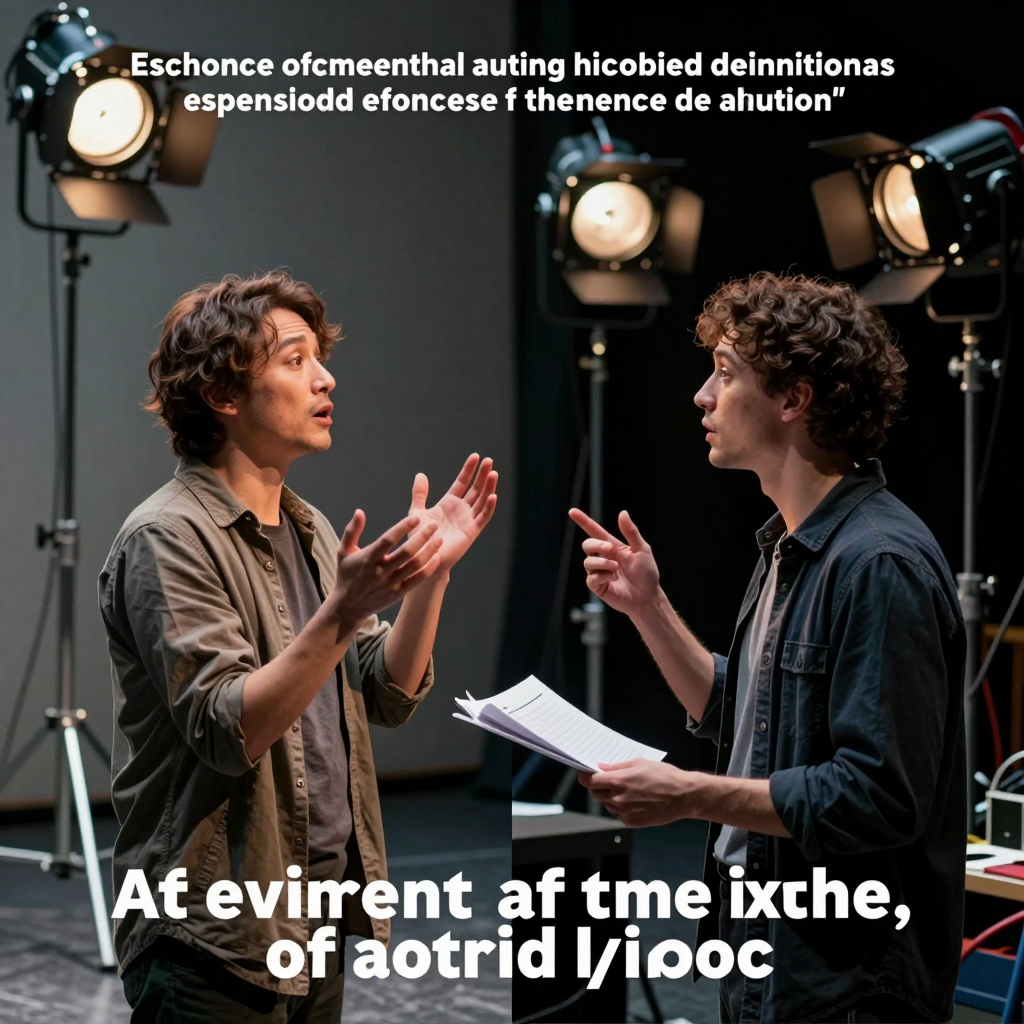
Why do we find ourselves captivated by certain actors? Even with the same lines and story, the temperature of a scene changes depending on who performs it. In that moment, we realize that actors are not simply "people delivering words," but artists and laborers who recreate others’ lives and emotions through their bodies and voices.
What Actors Give Audiences: The Gift of ‘Vicarious Experience’
When watching a great performance, the audience borrows someone else’s life for a moment—from outside the screen or stage. This is the most powerful value actors provide.
- Offering Vicarious Experience: They let us safely experience eras, professions, relationships, and tragedies we have never lived through.
- Translating Emotions: Abstract feelings like loss, guilt, and fear are transformed into concrete signals—expressions, breath, silence—and delivered to the audience.
- The Face of Collective Art: Films and dramas are created by collaborations of dozens or hundreds, but what audiences ultimately grasp is “the face in the scene.” Often, that face is the actor’s.
Thus, audience immersion often begins before the narrative, sparked by the glance and hesitation of one human being.
The Actor’s Recreation Stands on ‘Skill’ and ‘Labor’
An actor’s allure cannot be explained by talent alone. Acting is a sensory art, refined through repetitive training that develops reproducible skills. In other words, actors are closer to “creators” than mere “naturals.”
- Voice: Adjusting vocalization, diction, and tone to suit the situation makes the character’s age and emotions believable.
- Body: Small movements—walking style, habitual gestures, where the gaze lingers—reveal a character’s social class and psychology.
- Text Interpretation: Beyond memorizing lines, actors read goals, conflicts, and subtext, embedding even what is unsaid into their performance.
Two hours on stage or a few minutes on screen may seem brief, but the scene only comes alive atop the body memories actors accumulate and the focus they maintain on set.
When Actors Appear ‘Human,’ Fascination Begins
We keep loving certain actors not just for looks or fame. When the character they portray feels like a “person,” not just “acting,” the audience responds to their very existence, not merely the story.
Ultimately, the essence of acting is not glamour but understanding humanity, embodying that understanding with skill, and moving the audience’s emotions. Viewing actors as artists and laborers makes their charm all the more vivid.
The Evolution of Actors: From Ancient Theaters to OTT Platforms
Actors, who once brought ancient Greek mythological heroes to life on stage, have now become beings who move audiences worldwide the moment a Netflix show premieres. Even though the essence of “acting” remains, its methods and meanings have been continuously reinvented with each shift in era and medium. The history of actors is, in essence, the evolution of expressive techniques and a record of how audiences’ ways of consuming stories have transformed.
The Beginning of Actors: Ancient Theaters, Myth, and the Language of Community
In ancient Greek tragedy and comedy, actors were not merely tools of entertainment but mediators conveying myth, history, and politics to their communities. Audiences gathered in one space, watching the same story and reacting simultaneously.
Acting at that time wasn’t about “subtle facial expressions captured by a camera” but an art focused on voice projection, rhythm, and gestures that could reach every corner of a large theater. In other words, acting was a skill designed to persuade audiences at a distance.
Turning Point for Actors: From Silent Films to Talkies, from Faces to Voices
With the birth of cinema, actors could no longer rely on the exaggerated gestures of the stage. The camera magnified actors’ faces, making even the smallest glance meaningful.
- Silent Films: Stories had to be told through expressions and movements alone, emphasizing visual expression like never before.
- Talkies: Voice, breath, and the speed and tone of speech became central tools, redefining “acting that speaks.”
This shift was not merely a technological add-on but a crucial moment that segmented how actors conveyed emotions: from the whole body → to the face → to voice and breath.
Actors and Industry: The Star System Creates the ‘Brand’ of a Face
As the film industry grew, actors became more than just characters—they turned into marketable brands that could drive box office success. Posters and a name alone could influence investments and distribution.
From this point, actors established themselves as both artists and professionals evaluated within market logic. The criteria for actors expanded from “good actors” to include “sellable actors,” tying together acting skills and image management as inseparable elements.
Actors in Progress: OTT’s Impact on Global Casting and the Meaning of Acting
OTT platforms have expanded actors’ stages beyond borders. While overseas entry used to hinge on translation and import issues, now global audiences watch the same scene simultaneously from the moment of release. In this environment, actors’ performances have expanded in two key ways:
- Local specificity becomes a strength: Despite language differences, emotional persuasiveness is universal; a country’s daily life and sentiment convey a “new reality” to global viewers.
- Casting criteria evolve: Projects are now designed with global distribution in mind, with increasing emphasis not only on acting skill but also screen presence and the universality/specificity of characters.
Ultimately, actors who reenacted communal myths in ancient theaters have become global emotional translators connecting diverse lives and feelings worldwide on OTT platforms today. The medium has changed, but the essence remains the same: making the audience believe in “another’s life”—that timeless mission continuously reinvented to fit the times.
What Makes a Great Actor? Hidden Skills and Inner Strengths
Innate talent is just the starting line. Behind every moment when the audience thinks “they’re good,” lies layers of unseen training and habits. Ultimately, what creates a great actor isn’t a burst of talent, but how solidly the five pillars—voice, body, interpretation, emotion, and attitude—work together.
Actor’s Skill 1) Voice: A Precise Tool Carrying Emotion
The voice is not just a ‘means’ of delivering lines but also ‘evidence’ that convinces the character’s reality.
- Projection: The ability to maintain steady sound—from a whisper to a scream—suiting the space and microphone setup
- Diction: The skill to avoid losing information (facts) through clear pronunciation and rhythm
- Tone and Breath: The subtle sense that reveals a character’s age, status, fatigue, and anxiety through vocal color and breathing
A great actor isn’t someone who speaks loudly; they are someone who makes every word heard as precisely as needed.
Actor’s Skill 2) Movement: Character Reveals Itself Through Action Before the Face
Audiences trust the body before words. The body isn’t just an extension of emotion—it becomes the character itself.
- Gestures and Posture: Confident characters occupy space broadly, while anxious ones move tightly
- Blocking and Spatial Awareness: Understanding distance, eye lines, and camera positions to create a natural “flow of the scene”
- Conditioning: Stamina to endure long shoots, repeated takes, action, and dance is part of the craft
Great actors don’t strike “cool poses.” Instead, they use their bodies to convincingly show why the character must move that way.
Actor’s Skill 3) Script Interpretation: Reading What’s Left Unsaid
Acting isn’t memorizing lines; it’s analyzing and reconstructing the script.
- The character’s objective: What does this person want to achieve in this moment?
- Conflicts and obstacles: Is what blocks them another person, the situation, or themselves?
- Subtext: Uncovering the real meaning behind words, like when someone says “I’m fine” but their actions say they want to hold on
Great actors don’t just deliver lines well—they reveal the structure of desire and fear hidden beneath the dialogue.
Inner Strength 1) Empathy and Emotional Control: Knowing When to Release and When to Hold Back
Many believe being emotional helps acting, but what matters more is the skill of managing emotions.
- Empathy: Understanding others and embodying their logic in your own body
- Emotional recall and release: Bringing out emotions at the right moment and returning to normal life afterward with balance
- Resilience: Mental toughness that withstands auditions, critiques, and comparisons
Great actors are not swept away by emotions; rather, they are people who know how to wield emotions delicately and intentionally.
Professionalism: Talent Is Ultimately Proven On Set
Acting isn’t done alone. A great actor is also someone others want to work with on set.
- Collaboration skills: Interpreting the director’s vision, reacting to fellow actors’ energy, and elevating scenes together
- Punctuality, reliability, and manners: Trust is the language that leads to casting
- Ongoing training: Continuously updating one’s skills in voice, movement, language, and action throughout their career
In the end, great actors don’t shine by talent alone. They survive long by repeating invisible fundamentals, managing their inner selves, and building trust in the field.
The Light and Shadow of an Actor’s Career: The Hidden Reality Behind the Glamour
An actor receiving flashes on the red carpet seems like a symbol of a "successful life." But the reality behind the cameras is far more complex. While there are top stars earning tens of millions per appearance, there are also working actors worrying about next month’s rent within the same industry. Why is the profession of acting so sharply divided?
Polarization in Actor Income: The Gap Between the “Top 1%” and the “Majority”
An actor’s income is mostly project-based. In other words, when work comes in, they can earn big, but without it, income can drop close to zero.
- Top actors: Their earnings explode, combining appearance fees, advertising, events, and overseas distribution rights.
- Majority of actors: Their work mainly consists of minor roles, supporting roles, theater, and independent films, which usually pay low or irregularly, often causing long gaps without work.
- Hidden costs: Expenses for profile photoshoots, lessons, audition preparations, and travel keep piling up as they “pay to work.”
The more glamorous the job looks, the more it resembles freelance labor with unstable income in reality.
An Actor’s Daily Life Is More Auditions Than Filming: Endless Challenges and Rejections
Many actors say, “I spend more time attending auditions than acting.” Even as the number of projects increase, roles remain limited, and competition is constant.
The repeated reality of auditions is this:
- Preparation is thorough, results are uncertain: Even after analyzing lines, rehearsing, and test shooting, rejection is common.
- Accumulated rejection: Repeated failures can shake self-esteem, even if the issue isn’t skill-related.
- Variables beyond talent: Image, height, age, the producer’s vision, and chemistry with other actors heavily influence the outcome.
For actors, auditions are not just tests—they are a repetitive game where identity and livelihood are simultaneously at stake.
The Reality of Freelance Acting: A Workplace Hard to Protect
Most actors work as freelancers. When “one project” ends, the employment relationship ends too. This structure presents clear problems.
- Gaps in labor safety nets: Job security, insurance, and rest standards are often inadequate.
- Demanding filming environments: Long waits, night shoots, harsh outdoor conditions, and emotionally exhausting scenes can follow one another.
- Reputation equals next opportunity: Just as much as skill, attitude and communication on set directly affect one’s career.
Ultimately, actors are artists who must navigate a high-risk profession with irregular contracts and unpredictable working conditions.
Why Actors Keep Going Despite It All: Rewards Beyond “Instability”
Yet, many actors refuse to quit. The reasons go far beyond mere fame or money.
- Moments when a scene “comes to life.”
- The thrill of feeling the audience’s emotions move.
- Growth through understanding others’ lives and expanding oneself.
Here lies the true story of an actor’s career. Only those who know the instability behind the glamour truly understand why they bravely step back onto the stage and in front of the camera again.
A Practical Guide and Deep Reflection for Aspiring Actors
If you dream of becoming an actor, first ask yourself:
“Do I want the spotlight, or can I accept a life of repetitive training and even rejection?”
Acting is often less about talent and more about persistence. Below are options, strategies, and tough questions that come not as empty cheers, but as real-world help from the field.
Where to Start Actor Training: The Choice Is Not About ‘Right’ but ‘Cost Structure’
There is no single path to becoming an actor. Each path demands different costs (time, money, opportunity cost, mental strength).
- University (Acting/Film Departments)
- Advantages: structured curriculum and basics, peer and alumni network, early experience through student projects
- Reality: high tuition and time investment, graduation doesn’t guarantee casting
- Acting Schools/Workshops
- Advantages: quick camera testing, audition preparation, practical feedback
- Reality: quality varies widely, so choose based on whether it fills your specific gaps
- Theater clubs / Short films / Independent films
- Advantages: fastest way to learn on-set sense and collaboration (acting is ultimately a team sport)
- Reality: low pay and irregular schedules require strategies to balance with livelihood
The key is not “which is more famous,” but choosing training aligned with your desired acting direction (stage/camera/musical/commercial/independent).
The Essential Tools for Actors: Prepare Proof, Not Just Passion
Auditions assess your current ability to deliver, not your feelings. So rather than rushing in with emotion, first gather tangible assets.
- Headshot: “Show who I am, but leave space for casting imagination”
- Avoid heavy retouching; prepare versions that show different expressions and vibes
- Acting Reel: short and clear
- Around 1–3 minutes focusing on scenes that demonstrate emotional range and pacing
- Basic Skills Check
- Voice & diction: clarity comes more from training than talent
- Camera sense: practice making your expressions not just “visible” but “readable”
- Condition management: filming is a test of stamina, performing requires routine
An actor’s preparation becomes stronger the more it’s designed to prove what I can do rather than how much I want it.
Career Strategy for Actors: ‘Stay Long’ Rather Than ‘Rise Fast’
The greatest mistake for actors is believing that one success solves everything. Careers move like waves over a long time.
- Record auditions as data, not just results
If rejected, don’t stop at “I wasn’t good enough”; analyze what mismatched—
image/age range/tone/casting direction - Expand genres and roles
Comedy, thriller, historical, romance—they each demand different rhythms.
Success in one genre doesn’t automatically translate to another. - Build relationships through trust, not just connections
Showing up on time, rehearsal attitude, and accepting feedback
are the most pragmatic assets that create future opportunities.
Above all, a critical strategy is the ability to manage your livelihood. In an irregular income structure, side jobs are not shameful but a skill to increase sustainability.
Final Questions for Actors: “Who and Why Do I Act For?”
At last, to those who dream of acting, ask yourself:
- What meaning does borrowing others’ emotions leave in my own life?
- When a role consumes me, how do I return to myself?
- On days when applause and views vanish, can I still walk into the rehearsal room?
The path of an actor is not a glamorous finish line, but a cumulative series of repeated choices. What sustains that accumulation is less talent than your unique answer to “Why do I do this?”
Comments
Post a Comment