The JTBC and JoongAng Ilbo Bankruptcy Crisis: Reasons Why Hong Seok-hyun's 119 Billion KRW Personal Investment Couldn't Prevent It
 \n
\n
Hong Seok-hyun and the Crisis of Korean Media Moguls: Where Did It All Begin?
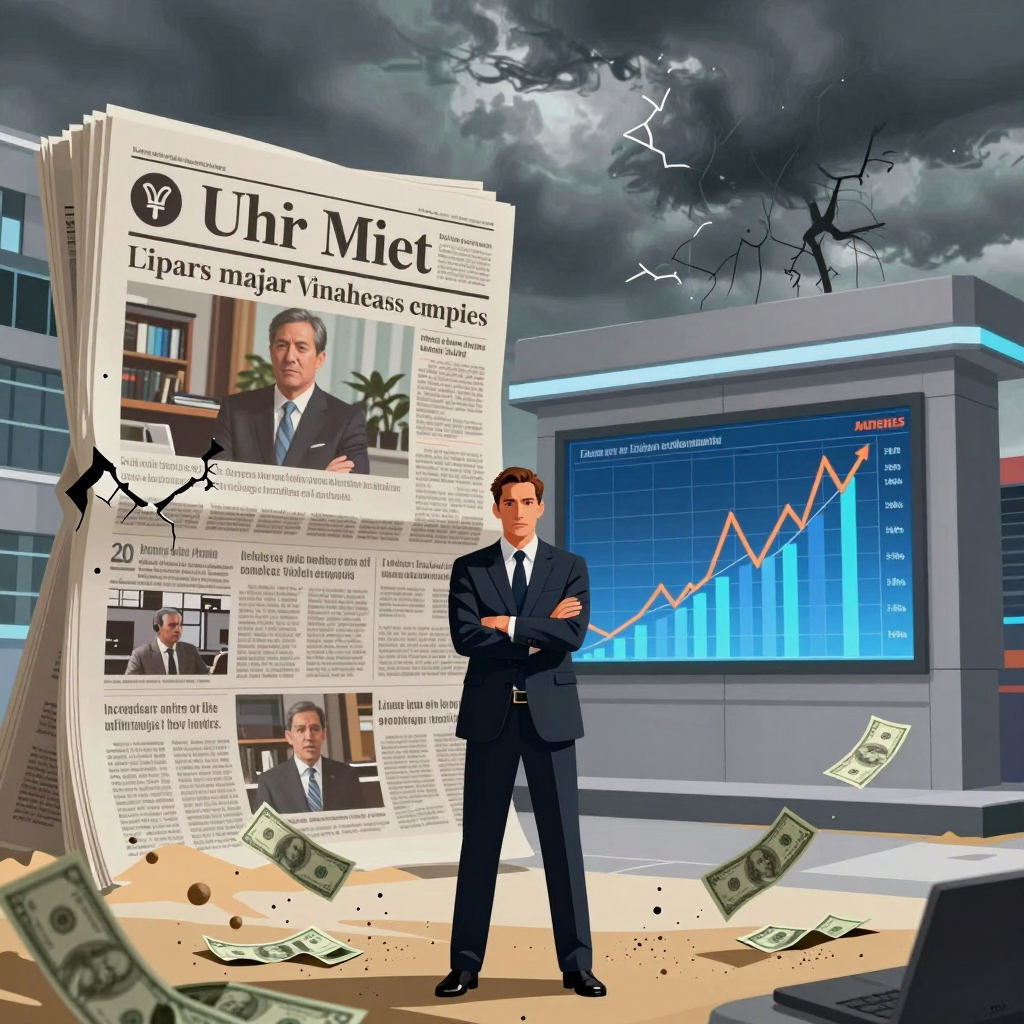
The corporate paper (CP) default crisis at JTBC and JoongAng Ilbo is too significant to be dismissed as merely a "temporary cash crunch of a media company." Moreover, with owner Hong Seok-hyun’s personal funds injection, a mortgage loan on his Hannam-dong residence, and disclosed financial ties involving the Samsung family, the debate quickly transcended mere gossip. Is this incident simply a corporate failure, or does it mark a major turning point in Korea’s media industry?
The Weight of ‘Media Power’ and Owner Structures Symbolized by Hong Seok-hyun
Hong Seok-hyun, the central figure of the JoongAng Group overseeing JoongAng Ilbo and JTBC, has long symbolized the "media mogul" in the Korean media market. Considering JoongAng Ilbo led early digital transformation experiments such as sectioned newspaper formats, specialist reporters, and online news services, this crisis hits even harder.
Why? Because people have started asking: “If even the pioneer of innovation falters, what about the other legacy media outlets?”
Critically, the JoongAng Group’s crisis, intertwined with its owner-centered governance, shifts the risk to an individual level. It has become clear that the company’s safety net amid turmoil is not institutional or dispersed governance, but rather the owner’s personal credit, collateral, and private funds.
The CP Default Surrounding Hong Seok-hyun: The Moment ‘Cash Flow’ Collapsed
At the heart of the crisis lies a simple fact. The default on CP issued by JoongAng Ilbo forced the market to reassess JoongAng Group as a ‘company facing liquidity crisis.’ A CP default sends a more direct warning than mere losses:
“At this very moment, cash isn’t circulating.”
Consequently, rumors of a workout (debt restructuring) surfaced, rapidly spreading the crisis into a broader threat to the group’s credit and cascading risks. Sensational headlines such as “possibility of a chain default” viral on short-form platforms signal how the public has begun consuming this as a dramatically simple crisis narrative.
Questions Raised by Hong Seok-hyun’s Personal Fund Injection and Samsung Family Financial Links
Another major development intensified the crisis: despite Hong Seok-hyun’s personal loan injection exceeding 100 billion KRW and selling part of his shares to raise cash, the default could not be averted.
The public’s takeaway is clear:
- Even with the owner’s personal wealth injected, structural crises cannot be stopped
- And though there’s an image of “financial strength connected to the Samsung family,” once the media industry’s revenue structure shakes, survival becomes difficult
Especially, the mortgage loan on the Hannam-dong residence and the suspected funding via his sister, Hong Ra-hee, provide clues beyond whether “aid existed or not.” They reveal how—or whether—the Korean-style chaebol-media structure operates under crisis.
Why This Incident Signals a ‘Turning Point’ for the Industry
Ultimately, the JTBC and JoongAng Ilbo default episode is not merely the rise and fall story of Hong Seok-hyun. The core issue exposed simultaneously is the collapse of legacy media’s revenue models, intensifying platform competition, and the fragile safety nets centered on owner risk.
Now the question turns to:
Will the JoongAng Group’s crisis be ‘patched up’ through restructuring and asset sales, or will it be the starting gun for a fundamental reorganization under new rules across Korea’s media industry? The next section will explore this trajectory in greater detail.
The Reality Behind Hong Seok-hyun's Default Crisis: An Owner’s Personal Funds Couldn’t Stop the Threat
With a personal injection of 119 billion won, the complete sale of BGF shares, and even a mortgage loan on his Hannam-dong residence, Hong Seok-hyun’s determination to “save the group” sounds resolute when looking at the numbers. Yet, the market’s verdict was the exact opposite. Rather than seeing it as a “sign of resilience,” it was interpreted as a warning signal that “the only cards left are personal assets.”
The Moment Owner’s Money Went In, the Crisis Shifted from ‘Liquidity’ to ‘Trust’
The core issue behind the default of corporate bonds (CP) related to JoongAng Ilbo and JTBC was not simply a shortage of cash. The market reads such defaults as:
- “Normal financial sourcing has been blocked.”
- “Cash flow is so urgent that the gap is filled internally (by the owner), not externally.”
- “Therefore, there is a high risk that the next step will also be blocked.”
In other words, Hong Seok-hyun’s personal fund injection may help extinguish the immediate fire temporarily, but in the long run, it ironically exposes a “structure damaged by external distrust.” Especially because the CP market runs on credit, once cracks appear, the “next maturity” instantly becomes a source of panic.
The Message Sent by Selling All BGF Shares: “Selling Everything We Can”
The move to liquidate all BGF shares, raising about 4.2 billion won in cash to secure liquidity carries profound symbolism. The market interprets this less as “rational asset reallocation” and more along the lines of:
- “Emergency funds are desperately needed.”
- “Not peripheral assets, but anything within reach is being turned into cash.”
- “Liquidity pressures may be ongoing, not one-off.”
At this juncture, the crisis frame widens. It no longer seems a problem confined to one or two affiliates but paints a picture that the entire group is now racing against cash flow speeds.
How the Mortgage on the Hannam-dong Residence and ‘Family Funds’ Amplified Owner Risk
With Hong Seok-hyun pledging his Hannam-dong home as collateral for a loan, alongside reports of borrowing tied to family funds (notably interpreted as having ties to the Samsung family), the situation transcends finance to touch upon governance and reputational risks.
Here, the critical point is not whether “family helped or didn’t help.” Investors and creditors focus on a harsher reality:
- The reliance is on personal collateral, not sustainable cash generation
- Crisis responses depend on the individual owner, not the system (financial structure)
- Consequently, the crisis is more likely to be prolonged rather than resolved
Ultimately, the owner’s “decision” ceases to be a heroic tale and instead reinforces the perception that “this company runs not on a system, but on the owner’s personal wallet,” further deteriorating creditworthiness and bargaining power.
Conclusion: When Personal Funds Signal a ‘Warning’ Rather Than a ‘Solution’
Hong Seok-hyun’s choices in this default crisis have drawn intense scrutiny precisely because they didn’t act as a shield to stop the threat, but rather functioned like a thermometer revealing the crisis’s true depth.
The fact that the owner injected personal money is less an indication of “capacity” and more proof that “normal funding channels have weakened.” And at that very moment, the nature of the crisis shifts from one of liquidity to one of trust.
The Hidden Risk Behind Hong Seok-hyun’s Generational Shift: Central Group’s Third-Generation Succession and Financial Burden
The power center of Central Group has already shifted to the third generation. However, what this crisis reveals is less a story of “successful generational change” and more a structure where financial burdens are even more bluntly transferred to individuals after the succession.
With the third generation reshuffling the equity and signals like tax deferrals secured by personal residences, the market begins to ask: What costs has the succession from Hong Seok-hyun to Hong Jeong-in and Hong Jeong-do left on the group's future?
Control to the Third Generation, Burden on the ‘Home’: The Hidden Side of Succession
Looking at the disclosed shareholding structure, Central Holdings’ weight lies in Hong Jeong-do (55.8%) and Hong Jeong-in (37.2%). Hong Seok-hyun (7.0%) has become more symbolic than practical. In other words, “who makes the decisions” is already settled.
But the problem lies beyond that. Reports that Hong Jeong-in secured a tax payment deferral of about 6.7 billion won by pledging his residence as collateral indicate that as succession proceeds, the owner family’s cash flow does not become more abundant. Rather, it shows a possible strengthening of a leveraged (collateral-dependent) survival method. Succession is not the end; it may mark the starting point where the burden structure genuinely shifts to the ‘personal financial’ level.
Three Risks That Arise When the ‘Owner’s Safety Net’ Weakens
If this moment is viewed merely as a “chaebol succession story,” the core risk may be overlooked. The rising concerns under the third-generation system are:
1) Reduced Defensive Tools in a Liquidity Crisis
Past generations offered cushioning, such as Hong Seok-hyun’s personal funds stepping in. But as generations change and personal collateral is mobilized, the capacity to raise additional funds during crises can quickly dry up.
2) Weakened Negotiating Power in Workouts and Restructurings
From creditors’ perspective, signals from the owner are clear. Providing collateral and securing tax deferrals demonstrate a will to persevere “at all costs,” but conversely, they also prove that the financial buffer has thinned. The fewer the options at the negotiation table, the stronger and more forceful the restructuring process is likely to become.
3) Short-term Management Decisions
If ‘control’ expands after succession but ‘cash flexibility’ is lacking, decision-making naturally narrows to short-term performance and cash realization. Repeated choices such as asset sales, staff cuts, and cuts to content investment risk undermining the competitiveness of a media company rather than strengthening it.
Central Group’s Question: “Control was passed on, but has the Business Model been Inherited?”
This is the core issue. Although shares have been reallocated to the third generation, it is hard to say that the traditional media’s revenue model has become more robust. Rather, the signs of personal collateral and tax burdens revealed during succession suggest Central Group remains heavily reliant on the owner’s personal last stand during crises to maintain ‘family control’.
Ultimately, this succession structure leaves a bigger question beyond just the personnel change after Hong Seok-hyun: How will Central Group design financial stability and business sustainability moving forward?
The ‘Fall of a Media Tycoon’ Narrative Painted by Hong Seok-hyun’s SNS and Short-Form Content
From Instagram Reels to YouTube Shorts, the ‘Hong Seok-hyun insolvency crisis’ did not end as just an economic news story explained through numbers and jargon (corporate bonds, workouts, liquidity). The short-form video format reshaped this event into an emotional narrative of the “fall of a media tycoon,” sparking an explosive mix of empathy, anger, ridicule, and conspiracy theories all at once.
How the Hong Seok-hyun Issue Is Consumed as ‘Emotion’ Rather Than ‘Understanding’ in Short-Form Content
The power of short-form lies in its ability to turn complex financial issues into easily digestible stories in just 3 seconds.
Typical frames are as simple as these:
- Powerful figure → Crisis: An emotional catharsis of “even the privileged inevitably fall”
- Brand → Betrayal/Fall: Connecting trust issues with media companies to a narrative of ‘judgment’
- Personal funds injected → Failure: A dramatic ending of “even pouring money in couldn’t save it”
In this process, the context (changes in the media industry structure, advertising market collapse, platform competition) shrinks, leaving only the protagonist (Hong Seok-hyun) and the incident (insolvency) compressed for sensational impact.
3 Devices by which Hong Seok-hyun-Related Shorts Amplify Controversy
1) Definitive expressions in thumbnails and captions
Words like “chain insolvency,” “it’s over,” and “shocking update” prioritize clicks over fact-checking. As a result, viewers tend to accept the issue as a ‘certainty’ rather than a ‘possibility.’
2) Editing personal relationships into conflict
Family and chaebol networks (e.g., in-laws of the Samsung family) are the most marketable material in short-form. The more relationships are emphasized, the more the issue shifts from a management crisis to a family drama, often turning comment sections into faction battles rather than factual debates.
3) Reinvoking past political issues
Some content drags up past controversies (e.g., tablet PC allegations) to frame the current crisis as a “grand story ongoing since before.” However, because such connections tend to be interpretations or claims rather than verified facts, information consumers need to carefully separate sources and evidence.
What the Hong Seok-hyun Crisis Narrative Leaves Behind: “Corporate Crisis Communication Is Now a Platform Battle”
The key takeaway from this episode is simple. Financial issues start with numbers, but public reputation is decided by narrative. The stronger the ‘fall frame’ created by short-form content grows, the harder it becomes for companies to regain trust—even with official explanations.
Ultimately, this case is likely to remain a clear example beyond Hong Seok-hyun’s personal controversy, highlighting the “speed war of public opinion in the SNS era” that Korean major organizations will face in future crises.
Hong Seok-hyun and the Limits of Korea’s Legacy Media Business: Challenges and Future Scenarios
Traditional newspapers and broadcasters have long sustained themselves through a triangular model of “advertising + subscriptions + brand authority.” But now, all three pillars are simultaneously shaking. The liquidity crisis at JTBC and JoongAng Ilbo, along with the CP bankruptcy issue, signals not just “the trouble of one company,” but serves as a barometer indicating where the entire Korean media industry stands today. And at the heart of this storm is the name Hong Seok-hyun.
The Dilemma of Legacy Newspapers: Digital Shift Without Revenue Following
Newspapers have migrated online for quite some time. The problem is that the “pace at which readers shifted” far outstripped the development of sustainable “revenue models.”
- Structural decline in print advertising: Advertisers moved toward digital platforms where targeting and measurement are possible, and the biggest beneficiaries were portals and platforms.
- Limits of paid subscriptions: Although some outlets introduced paywalls, there remains a high barrier before they become an essential payment in the mass news market.
- Content costs remain steady: Reporting, editing, and fact-checking don’t get cheaper. When revenues decline but costs stay fixed, cash flow inevitably collapses first.
In short, legacy newspapers have yet to fully bridge the gap between “online presence” and “cash-generating ability.”
The Paradox of Broadcast Platform Competition: From Ratings to ‘Viewer Engagement Time’ Wars
Cable channels like JTBC face even more complex pressures. Their competitors are no longer just other broadcasters but include OTT platforms, YouTube, and short-form content.
- Ad market restructuring: Advertising budgets are allocated based on platform data rather than TV schedules.
- Rising content production costs: Global OTT standards have pushed up production costs, weakening local broadcasters’ competitiveness comparatively.
- Shift in news and current affairs distribution: Once dominated by broadcast news for agenda-setting, the function now disperses to clips, short summaries, and algorithmic recommendations.
Ultimately, traditional broadcasters’ battle has shifted from “better programs” to where and how content is consumed.
Risks of Owner-Centric Management: Personal Capital Injection Is a Signal, Not a Solution
What stood out sharply in this phase was the owner’s personal financial injection. The debate around Hong Seok-hyun intensified here. The problem isn’t the act of owners putting in their own money, but how the market interprets it.
- External financing is blocked: When capital markets and financial institutions lose trust, internal (owner) funding becomes the last line of defense.
- Governance structure amplifies risk: Family-owned structures tend to rely on ‘personal assets’ rather than institutional systems to manage crises.
- Communication cost explodes: Financial troubles link directly to “owner risk,” sparking public opinion battles that burden the business further.
In summary, owner injections may prove ‘willpower,’ but simultaneously act as a warning light signaling structural limitations surfacing.
Possible Future Scenarios: Restructuring, Sale, and Brand Reorganization
Realistically, the market sees three plausible paths forward. (These are logical possibilities, not predetermined outcomes.)
Intensive restructuring (cost-cutting focus)
- Streamlining staff, production, and channel operations overall
- Selling non-core assets and reorganizing affiliates
- Provides short-term relief but risks eroding long-term competitiveness
Partial sale or strategic partnerships (including leaving only content assets)
- JTBC’s content capabilities, brand, and production pipeline still hold ‘partial value’
- Rather than holding news, broadcast, and digital as one bundle, a model separating high-value segments and joining with investors may be proposed
Governance restructuring (with expanded creditor influence)
- In workout stages, creditor management and control inevitably strengthen
- This may slow down owner-led decisions but boost transparency and financial discipline
The Path Korean Media Must Walk: Survival Transition from “News Company” to “Media Enterprise”
The core issue here isn’t just the fate of one individual (Hong Seok-hyun). Rather, it is the harsh reality that Korean media cannot keep pace with the price (advertising rates) and speed (distribution structure) of the platform era while maintaining legacy operational models.
Going forward, surviving players must prove:
- Reasons audiences willingly pay for subscriptions (subscription value)
- Direct distribution, community, and data-driven models free from platform dependency
- Governance and financial resilience in organizations—not just reliant on a single owner’s capacity
The next move by JTBC and JoongAng Ilbo is likely to serve as a “future standard” reference for the entire Korean media industry. The current debate is, in essence, a question about the direction of the entire industry.
Comments
Post a Comment