 \n
\n
Brazil: The One Game That Brings Midtown New York to a Halt
Why does a single Brazil vs. Morocco match paralyze traffic and security throughout New York City? Let’s take a closer look at what’s unfolding on the ground.
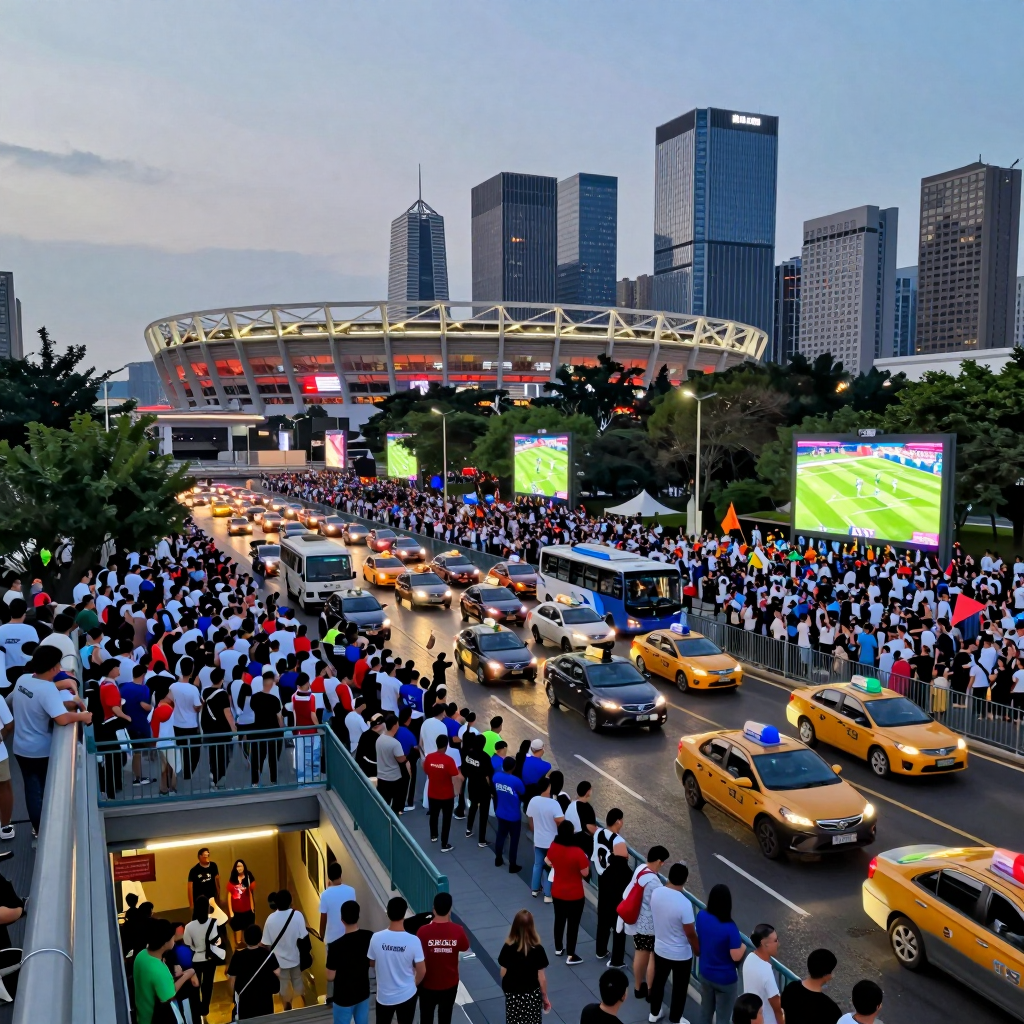
Local New York media hail this match as the “first-ever World Cup game hosted locally,” and have warned of gridlock-level congestion in Manhattan’s Midtown on game day. This signals that the World Cup isn’t just ‘one match’ — it’s a massive event that forces the entire city’s operations to be restructured.
3 Reasons Why the Brazil Match Stops New York in Its Tracks
1) The crowds funnel intensely toward a single point
As fans flood Penn Station to watch the game, the area around the station becomes more than just congested — it turns into a bottleneck where pedestrian flow grinds to a halt. Though New York’s public transit is extensive, it becomes vulnerable when pressure concentrates on a few key transfer hubs.
2) It’s not just a game day — there are other major events too
The challenge isn’t just the game itself. On the same day, Midtown hosts other major sports viewing parties (e.g., Knicks watch parties) and events at Madison Square Garden, resulting in overlapping crowds that amplify congestion rather than disperse it. In other words, the World Cup fans aren’t just adding to the city’s bustle — they’re creating another massive wave atop an already crowded shoreline.
3) Traffic control shifts into a ‘pre-planned operation’
The City of New York has announced repeated traffic and security controls throughout the World Cup period. Near Penn Station, they plan to close 32nd and 33rd Streets from noon onward to vehicles, turning that space into a waiting area for train boarding lines. This isn’t mere detour signage — it’s a transformation of the streets from “vehicular zones” into “crowd waiting and safety zones.”
Brazil vs. Morocco: New York’s World Cup Dress Rehearsal
This Brazil vs. Morocco match reveals more about New York’s choices in hosting the World Cup than just the final score. For fans, it’s a single event to enjoy, but for the city, it’s a test of traffic, security, pedestrian flow, public transit mobilization, and crowd management all at once.
And here’s a fascinating detail: the stadium isn’t called the familiar “MetLife Stadium” but rather the temporary designation New York New Jersey Stadium — as mandated by FIFA regulations. Even the name of this one game symbolizes how the World Cup reshapes the rules of the city and business alike.
The Brazil Match Craze Sweeping Across the U.S.: A Comparison of Watch Party Ecosystems by City
From grassy parks in Dallas, family-friendly plaza events in Albany, to Trevor Noah’s comedy live streams—across America, wildly different ways of “enjoying the World Cup” are unfolding simultaneously around the same Brazil match. The World Cup no longer ends inside the stadium. The combination of city regulations, community languages, and media formats creates unique watch party ecosystems in each locale.
Brazil in Dallas: Downtown Outdoor Festival-Style Viewing
Dallas’s Klyde Warren Park transforms the Brazil vs. Morocco game into a massive outdoor screening, turning the World Cup into a “park festival.” What’s fascinating is that these events aren’t just about putting up a big screen. Notices include rules like no screenings of matches kicking off after 8:30 PM due to noise ordinances, revealing how local regulations shape the World Cup experience on the ground.
Also notable is the prominent use of Spanish commentary, signaling that the Brazil match is designed as “urban content” to actively draw in a multicultural audience, including Latin communities.
Brazil in Albany: Family-Friendly Local Community Watch Parties
In Albany, New York, the same match is consumed through a very different lens. The local event leans into a “family fun and footy” vibe, prioritizing family participation and community bonding over game tension.
The core of this model is that watching the match isn’t the goal itself—the local event is the goal. In other words, the Brazil game functions as a “common language to bring people together,” serving as a reliable anchor content piece on the local event calendar.
Brazil on YouTube: Trevor Noah’s Comedy Live, ‘Second Screen’ Entertainment
Online, meanwhile, match broadcasts fuse with comedy and talk-show formats to create a completely different experience. Trevor Noah’s watch party live stream reframes the World Cup as more than “just sport”—it becomes real-time entertainment.
This shift matters because fans no longer stick to 90 minutes on a single screen. As the match (main screen) blends with reactions, commentary, and memes (second screen), popular games featuring teams like Brazil are continuously repurposed and spread across platforms.
Brazil Watch Party Ecosystem in a Nutshell: Same Match, Different City Dialects
- Dallas: Outdoor park-centered festival style (city rules and language targets shape the event)
- Albany: Family and community-focused (participation experience comes first; the match acts as a catalyst)
- YouTube Live: Comedy and talk fusion (real-time reactions become the content itself)
Ultimately, in the U.S., the nature of the Brazil match shifts depending on “where you watch it.” Some cities build festivals in parks, others host family gatherings, and some platforms create an entertainment show. This layered approach to consumption perfectly captures the American vibe leading up to the 2026 World Cup.
From Betting to Marketing: The Commercial Power of the Brazil Match in the U.S.
Why has the Brazil match become more than just a "classic game" and turned into the frontline of betting platforms and marketing in the United States? The secret is simple. It’s a team that moves people. Viewers, fan events, social content, and wallets—all the money and attention in the U.S. World Cup market flow through the gateway that is Brazil.
Why the Brazil Match Is Perfectly Optimized for ‘Betting Onboarding’
American sports media already package big games like Brazil vs. Morocco as “flagship group stage events.” For example, Fox Sports partnered with Polymarket to launch a campaign offering a promo code (FOX) bonus, betting on this match to be the most efficient draw for new users.
- Recognition: The symbolism as the World Cup’s most successful nation says it all.
- Star Power: Stars from major European clubs like Vinícius Júnior, Raphinha, and Endrick serve as “trusted brands” even for U.S. fans.
- Narrative: Morocco’s recent friendly win over Brazil fuels the kind of revenge match storyline that American sports consumers love to click on.
From the betting platform’s perspective, the ideal game is one that doesn’t require long rule explanations—where even first-time users instinctively hit the bet button. That’s exactly the role Brazil matches play.
The Hidden Formula Behind Brazil’s Magnetism as a ‘Marketing Powerhouse’
Promotions are not just simple discounts or bonuses. The goal is to build a loop of sign-up (onboarding) → first prediction/bet → repeat visits, and Brazil matches fit this cycle perfectly.
- The games themselves are big news, delivering high reach efficiency relative to advertising spend.
- The question “Who will win?” is easy to grasp, lowering barriers to participation.
- Plenty of goals, star moments, and hot debates lead to strong highlight re-sharing.
In this setup, Brazil isn’t just a participating team but serves as a conversion trigger to sell the World Cup in the U.S. market.
How One Brazil Match Drives Simultaneous Monetization Across Media, Platforms, and Cities
What’s fascinating is that commercialization doesn’t stop on screen. In New York, the same Brazil match causes traffic controls and crowd movements, while watch parties in other cities boost local spending. Add live streaming and influencer prediction content, and the content → event → betting/promotion cycle turns into a unified ecosystem.
To sum up, in the U.S., a Brazil match isn’t just a game played by a strong team—it’s a commercial engine driving ratings, engagement, city events, and platform sign-ups all at once. As the World Cup is translated into an American-style business model, Brazil emerges as the most powerful keyword.
A Shining ‘New-look Brazil’ Even Without Neymar: Changing Lineup and the Revenge Match Story
Although Brazil holds the record for the most World Cup wins, this time the spotlight doesn't necessarily have to be on Neymar. With his participation in the opening match uncertain due to consecutive injuries, Brazil is shifting the focus from being a "one-superstar team" to becoming a side where wingers and young talents, honed in Europe’s top clubs, explode simultaneously. So, the question narrows down to one: what kind of comeback can Brazil pull off against Morocco, who defeated them in a recent friendly?
Tactical Reset Made Possible by Neymar’s Absence
Neymar’s presence remains symbolic, but the more his absence becomes a reality, the more naturally Brazil reconfigures its attack away from relying on a single focal point to emphasizing speed, one-on-one destructive power, and wide play. In other words, the key variable shifts from “who replaces him” to “how much faster and sharper they become.”
The New Faces at the Core: Vinícius Júnior and Raphinha
- Vinícius Júnior, drawing on his Champions League-winning experience with Real Madrid, is positioned as the spearhead of Brazil’s attack responsible for direct breaks and space creation.
- Raphinha, backed by his performance at Barcelona, adds options on the flank with his ability for crosses, penetrations, and long-range shots.
This combination doesn’t mean “there is no star,” but rather that the stars are spread out. For opponents, this means more dangerous points to mark, while Brazil’s development is less likely to become predictable.
Why the Morocco Match Feels Like a Revenge Story
What makes this matchup even more compelling is that Morocco recently beat Brazil in a friendly—a record that instills a narrative into the game itself. Coupled with the U.S. fans’ love for a “revenge game,” it instantly raises the group stage’s tension. If Brazil wins, it marks the “start of a new Brazil”; if not, the narrative of “Brazil’s limitations without Neymar” could quickly gain momentum.
Key Point to Watch
The true twist Brazil may show lies not in the scoreline, but in how they turn Neymar’s absence from a ‘weakness’ into a ‘reset button.’ If that transformation proves itself against Morocco, this World Cup Brazil stands a strong chance of being remembered as the start of a new generation, far beyond just a traditional powerhouse.
The Cultural Brand of Brazil: From Stadium Noise to Classical Concert Halls
Brazil has become more than just a football team; it has established itself as a cultural phenomenon within American society. As the World Cup approaches, brazil expands beyond ‘competition’ into sound, rhythm, and communal experience, being reinterpreted in entirely different ways across various cities.
Brazil’s “Street Rhythm”: When Cheers Become Urban Events
During major matches like those at the New York-New Jersey stadium, fan culture doesn’t stay confined within the stadium walls. The flow of spectators, watch parties, and local businesses all buzz together, with cheers and roars (noise) acting as forces that reshape the rhythm of the entire city day. In other words, brazil becomes more than just a team name—it triggers a collective experience that moves the city.
Brazil’s “Community Version”: Turning Park Lawns into Family Festivals
In cities like Dallas, watch parties in parks translate brazil matches into outdoor festivals. People gather around screens, eating and drinking together, creating a multicultural and multilingual viewing atmosphere. In family-friendly areas like Albany, the World Cup settles into the local grammar of neighborhood festivals, making brazil not the ‘away team’ but a theme that bonds community members.
Brazil’s “Concert Hall Version”: Brazil Reborn on Classical Stages
Interestingly, separate from football fever, brazil is consumed in another guise within university concert halls. For example, performances like Wellesley College’s ‘Images of Brazil’ transfer Brazil’s rhythms and musical vocabulary into classical and chamber music contexts, telling Brazil’s identity in ways different from the energy of chants. The same brazil, but here, interpretation and appreciation take precedence over victory or defeat.
Summary: In America, brazil is Not a “Team” but “Content”
Ultimately, brazil is not defined by a single identity in the U.S.
- In stadiums and downtown areas, it is a culture of passion and noise,
- In parks and plazas, a community event,
- And on concert stages, an artistic identity reimagined.
This layered mode of consumption is the clearest proof that brazil has transcended the boundaries of ‘nation/team’ to become a true cultural brand in America.
Comments
Post a Comment