 \n
\n
Why Are Public Livelihood Support Payments Gaining Attention Again?
As high inflation and economic slowdown drag on, livelihood support payments for all citizens are re-emerging across the country. Notably, cases like Sokcho City, where 20,000 KRW is given per person regardless of income or age, raise the question: “Why universal payments, and why now?” This trend signals more than just cash benefits; it points to a shift in the priorities of local policies.
Why Worsening Economic Conditions Are Reviving the ‘Livelihood Support Payment’ Debate
The current pressure isn’t limited to certain groups. Rising prices for groceries, energy costs, and interest burdens directly hit everyday spending, increasing the “widespread economic hardship felt by the majority, not just vulnerable groups.” In such an environment, selective aid risks breeding dissatisfaction and leaving blind spots. For local governments, universal livelihood support payments become a faster and clearer policy tool.
What Sokcho City’s Universal ‘Livelihood Support Payment’ Represents in Policy Change
Sokcho’s approach sends a stronger policy message than just a bold move in scale. “Support for everyone” carries clear administrative implications:
- Reduces application and review burdens to speed up delivery: Cutting income verification and proof shortens the time to payment.
- Expands participation without stigma: Lowering psychological barriers created when aid targets only the “needy.”
- Combines with local economic activation: Using local gift certificates or prepaid cards encourages spending within the community.
In other words, Sokcho’s case should be seen not as a choice between welfare or stimulus but as a combined approach targeting both livelihood stability and local business protection simultaneously.
The Growing Debates Accompanying the Spread of ‘Livelihood Support Payments’
As these payments resurface, debates intensify. Moving forward, questions beyond “how much to give” will gain importance:
- Sustainability of universal support: Is the fiscal capacity sufficient, or is this a one-time measure?
- Effectiveness: Does it genuinely help local small business sales and ease household burdens?
- Transparency in execution: How to prevent fraud and leakage?
Ultimately, the current trend in livelihood support payments reflects a changing approach by local governments to address inflation and economic shocks. Sokcho City’s choice symbolically reveals a shift back from “selective” to “universal,” and from “cash” to encouraging “local spending.”
An Innovative Design of Sokcho City's 200,000 KRW Support Fund through Livelihood Assistance
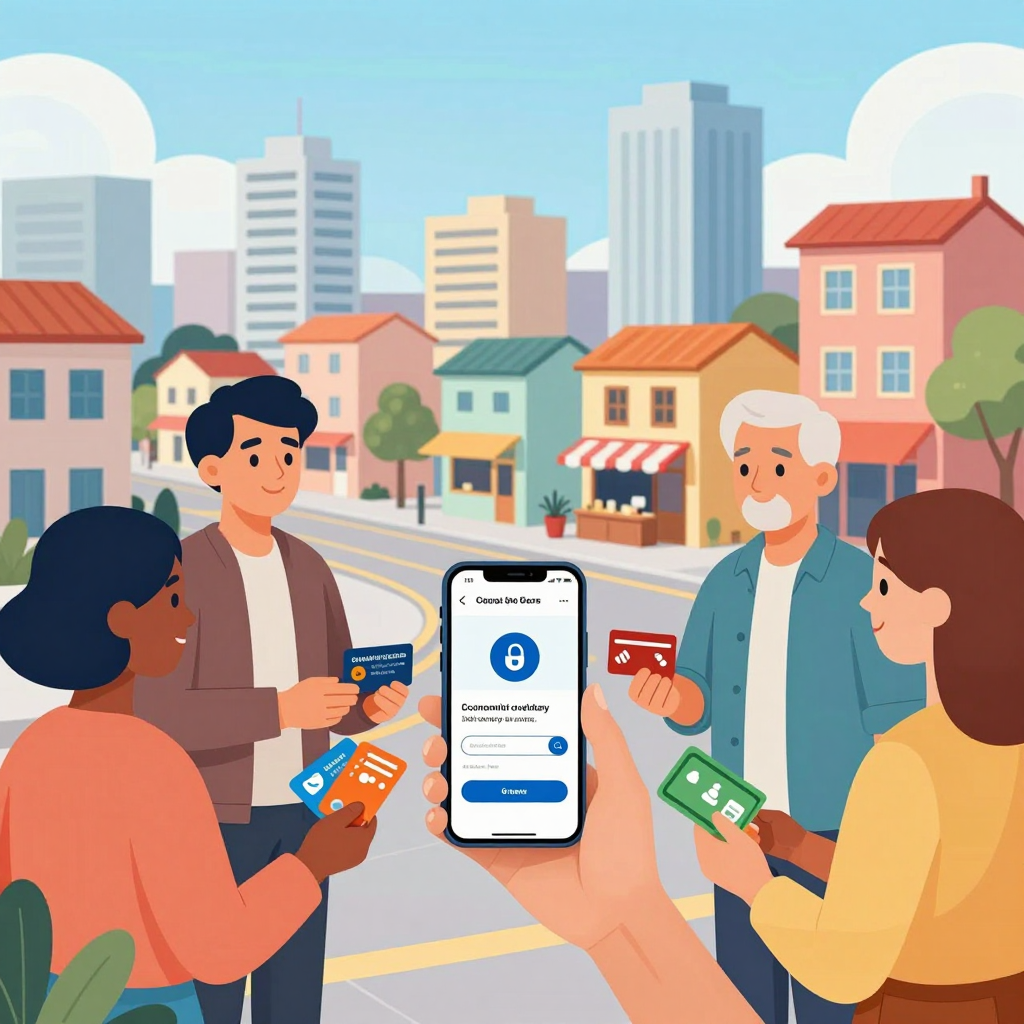
What makes the Sokcho City model stand out is not just the simple fact of “giving 200,000 KRW.” By providing support to all citizens without any income or age restrictions, while designing the aid as local gift certificates instead of cash to keep the economic benefits within the community, it adopts a method that maximizes regional economic impact. On top of that, the integration of a digital app-based application system raises both administrative efficiency and accessibility, making it a cutting-edge livelihood support fund model worth noting.
First Innovation of the Livelihood Support Fund: Truly Universal Support (Minimizing Income and Age Restrictions)
The Sokcho City livelihood recovery fund is not limited to select groups but adopts a universal support structure that broadly includes all residents registered by the reference date.
This design originates from the realistic acknowledgment that the shocks of high inflation and energy prices are not confined to specific classes. As a result, the application process is simplified, the likelihood of excluding eligible recipients is reduced, and conflicts arising from dividing “those who receive” and “those who don’t” are minimized.
Second Innovation of the Livelihood Support Fund: Designing the Direction of Spending with Local Gift Certificates Instead of Cash
This support fund is issued via the Sokcho Love Gift Certificate (charged through the CHAK app) or anonymous prepaid cards, and usage is restricted to partner stores (with annual sales under 3 billion KRW).
The core idea is simple yet powerful: to prevent the support funds from flowing out of the region, thereby increasing the chances that local small business owners will benefit from the sales.
- Cash support: offers high freedom of use but risks flowing into online shopping or large corporations, weakening local economic ripple effects
- Local gift certificate support: narrows usage to focus the impact specifically on local small businesses
Additionally, the use-by date (e.g., November 30, 2026) and the burning of unused balances clarify that the policy goal is not “saving” but stimulating consumption within a short period.
Third Innovation of the Livelihood Support Fund: Enhancing Accessibility through a Digital App Application Combined with Offline Support
Sokcho City has strengthened its digital administration by centering applications on the CHAK app and city hall website. At the same time, it has established measures such as in-person applications at local community centers, proxy application options, and “visiting service” for mobility-impaired residents, creating a system that does not leave behind the digitally marginalized.
Furthermore, to reduce early application congestion, a concentrated application period combined with a day-of-the-week application schedule based on the last digit of birth years was implemented. This helps citizens avoid long waits and confusion, while easing the processing burden on administrative staff.
In summary, the Sokcho City case represents a "designed livelihood support fund" that raises public perception through universal payments, promotes local consumption via local gift certificates, and boosts execution speed and efficiency through digital applications. Even as a one-time support, its meticulous design of “who receives it, where, and how it is spent” offers a benchmark for other local governments to consider.
Livelihood Support Funds: The Dilemma of Fiscal Strategy in a ‘Super Budget’ Era
As the largest-ever budget exceeding 800 trillion won is announced, many ask, “Doesn’t this mean livelihood support funds can be provided more frequently and in larger amounts?”
But the reality isn’t so simple. Caught between expanded spending (strengthening investment) and fiscal efficiency (sustainability), livelihood support funds face an even tougher test.
Why Livelihood Support Funds Become More Sensitive in a ‘Super Budget’
As the budget grows, cash and near-cash support deliver fast policy effects, raising political and social expectations accordingly. Here lies the issue:
- Fixed Expectations: Once support is given, repeated demands often arise in subsequent phases. Even if designed as one-off, it can feel like a ‘semi-permanent policy.’
- Debates over Price and Demand Stimulation: While they boost the economy, these supports also attract criticism for potentially further stoking inflation in certain situations.
- Competition for Funding Allocation: Within the same budget, livelihood support funds vie with medium- to long-term priorities like youth, education, and local investment.
In short, the larger budget size is both an opportunity and an environment demanding a stricter answer to “Why now, and why this approach?”
The Clash Between ‘Expanding Investment’ and ‘Cash Support’
As government fiscal policy leans toward investment-centric approaches, livelihood support funds inevitably face these questions:
- Immediate Relief vs. Long-term Structural Improvement: Immediate help easing household burdens is needed, but in the long run, structural investments in jobs, industries, population, and education offer greater impact.
- Speed of Universal Support vs. Efficiency of Targeted Aid: Universal payments to all citizens are fast and administratively cheap, but under fiscal pressure, there’s growing demand to “focus more robustly on those truly in need.”
Ultimately, livelihood support funds paradoxically stand at the heart of debates over fiscal efficiency because their strength is being a ‘fast-acting assistance policy.’
Designing for Sustainability: The Key to Livelihood Support Funds
Sustainability is not about simply “giving or not giving,” but about how funds are allocated. Three key factors stand out:
Avoid Fixing on a Single Goal
To simultaneously reduce living costs (households) and stimulate consumption (local economies), the design of delivery method, usage, and duration must closely align with the intended targets.Create a Structure That Enables Impact Measurement
Without evidence beyond “it felt beneficial,” the basis for repeated payments is weak. Policy must be evaluated through usage data (industry, region, timing) so future designs can improve.Strengthen Transparent Execution and Control
As support funds grow, sensitivity to fraud and fiscal leakage rises. Within tightening audit and inspection systems, livelihood support funds become a policy where trust must be managed as a cost.
The super budget is likely to become a testing ground not for the ‘expansion’ of livelihood support funds but for how sophisticated their policy design truly is. Ultimately, sustainability hinges not on scale but on whether the cycle of goals-design-evaluation-control works seamlessly as a set.
Strengthening Oversight on Welfare Fund Fraud: What It Takes to Build Trustworthy Support
With the increase in welfare funds, inevitable challenges arise: fraudulent claims, frequent audits, and the accompanying administrative burden. Without careful management, the original purpose of revitalizing local economies through these funds can be undermined, leaving honest applicants and local businesses frustrated. So, how can we ensure genuine “good support” that protects the goal of boosting local spending?
Why Oversight Is Tightening: More Money Flows, More Loopholes Open
Welfare funds are distributed as large-scale budgets over a short period. The key risk points are threefold:
- Application Stage: Abuse of proxy applications, false verification of eligibility (such as residency criteria)
- Disbursement Stage: Duplicate payments, fraud exploiting system glitches
- Usage Stage: Collusion between merchants and users for fake transactions, attempts to convert funds to cash (so-called ‘cash-outs’)
This is why the Audit Board recently announced year-round inspections targeting fraud and fiscal leakage in welfare sectors. Strengthened oversight is not a sign of mistrust but a necessary safety measure as the scale of funding grows.
The Key Is Designing Controls That Balance “Regulation” and “Convenience”
If fighting fraud meant collecting endless paperwork, administrations would be overwhelmed and citizens exhausted. Effective welfare programs combine precise controls with low application barriers.
Leveraging Digital Payment Advantages
Regional gift card apps and prepaid cards restrict spending locations to align with policy goals (local consumption) and record transactions for easy detection of irregular payments. Simply having a transparent trail of “who spent what, where, and when” acts as a deterrent.Risk-Based (Selective) Inspections
Investigating every applicant equally drives up costs. Instead, focusing on anomalies such as:- Abnormal concentration of payments at certain merchants
- Rapid repeated transactions within short spans
- Excessive refunds or cancellations
ensures efficient oversight.
Minimizing Offline Alternatives with Accessibility Focus
While maintaining outreach services for vulnerable groups like the elderly or disabled, on-site counters should limit checks to essentials to ease administrative pressure.
Three Essential Conditions for Trust: Minimizing Losses for Citizens, Merchants, and Administrators
For welfare funds to become a “trouble-free policy,” these three must be clear:
Rules Must Be Simple
Complexities in usage deadlines, locations, or refund policies breed loopholes and complaints. A rule digestible in a single sentence provides the strongest control.Merchant Responsibilities and Protections Must Coexist
While penalizing fraud is critical, transparent settlement processes must also protect legitimate merchants from excessive paperwork and payment delays.Audits Should Focus on ‘Stopping Leaks’ Not ‘Punishing’
With ongoing inspections, the crucial message is: “It’s not about getting caught and ending support, but preventing loss so funds can be sustained and fairly distributed.” This mindset sustains policy trust.
In the end, welfare funds are a shared safety net financed by taxpayers. The better technology and systems are at curbing fraud, the more citizens benefit from the same budget—and the clearer the goal of ‘revitalizing local economies’ becomes.
The Future of Livelihood Support Payments: Between Universal and Targeted, Cash and Local Gift Certificates
The reason livelihood support payments are regaining attention is simple: they provide "immediate, tangible relief." But a more important question remains: Will this policy remain a one-off event repeated in each phase of economic fluctuations and inflation, or will it evolve into a “sustainable safety net” by being absorbed into structural systems like sickness benefits and the Earned Income Tax Credit (EITC)? The future of livelihood support payments is likely to hinge on this crossroads, where design competition will intensify.
The Design Axis of Livelihood Support Payments: Universal vs. Targeted, the Answer Lies in “Context + Objectives”
Livelihood support payments largely fall into universal (for all citizens) or targeted (focused on vulnerable groups) categories, but neither is the “correct” choice—it depends foremost on the policy’s goals.
- If price shocks spread across all socio-economic groups and the goal is to quickly revive local consumption,
- universal approaches are faster and more perceptible.
- If fiscal capacity is limited and crises concentrate on specific groups,
- targeted approaches hold advantages in sustainability and efficiency.
In other words, the key point is not a simple “universal or targeted” dichotomy, but how finely crafted a ‘hybrid portfolio’—choosing universal in some crises and targeted in others—can be designed.
Means of Payment for Livelihood Support: From Cash to “Local Use,” and Then Digital
A notable recent trend is the strengthening of ‘usage restrictions’ on cash-type support. Local gift certificates and prepaid cards relieve household budgets while clearly signaling policy intent.
- Local gift certificates/prepaid cards
- prevent spending from leaking outside the region,
- focus the sales impact on small businesses, and
- encourage rapid spending through expiration periods.
- When combined with app-based payment (digital application and recharge),
- data on application, payment, and usage accumulate,
- enabling policy effect analysis (where, in which sectors, and how much was spent).
Ultimately, livelihood support now revolves not just around ‘how much to give’ but around how the support reaches and benefits the local economy.
The Next Step for Livelihood Support Payments: Moving from One-Off Aid to Institutionalization
As livelihood support payments recur, society begins to ask: “Can we stop giving temporary support every time and make this a system instead?” Here, a prominent direction is transitioning toward structural systems.
- Sickness benefits: Allowing income maintenance while resting during illness, reducing the need for repeated cash aid during crises.
- Earned Income Tax Credit (EITC) and refundable tax credits: Ongoing income supplements for working low-income households, strengthening the “floor.”
- Voucher types (energy, caregiving, etc.): High policy efficiency when price shocks focus on specific expenses (heating, caregiving).
In summary, livelihood support payments are likely to remain short-term remedies injected during sharp economic or inflation shocks, while accumulating experience that leads to their gradual absorption into permanent systems (social insurance, tax refunds, vouchers).
Increasing Importance as Livelihood Support Payments Grow: Audit, Control, and the Infrastructure of ‘Trust’
As support expands, issues like fraudulent claims and fiscal leakage inevitably arise. Especially with gift certificates and prepaid cards, there is potential for abuse through exploiting merchant payment structures, making the success of these policies dependent on the sophistication of audit and control systems.
- Digital payment increases convenience but also
- enhances traceability of payment flows,
- and when combined with ongoing monitoring and ex-post audits, it strengthens policy credibility.
Ultimately, the future of livelihood support payments will hinge not on the amount of money disbursed but on digital operational capabilities + transparent execution + sophisticated targeting (or clear rationale for universality) as core governance competencies.
One-Line Conclusion that Determines the Future of Livelihood Support Payments
Livelihood support payments are increasingly shifting from a “disbursement” policy to an “operational” policy. Choices between universal and targeted, cash and local gift certificates will recur, but the better-supported these choices are by digital delivery systems and audit/control infrastructure, the more livelihood support payments can evolve beyond one-off events into a sustainable living stability system.
Comments
Post a Comment