 \n
\n
The Prelude to a Historic Disaster: Why the 2026 Canada Wildfires Demand Our Attention
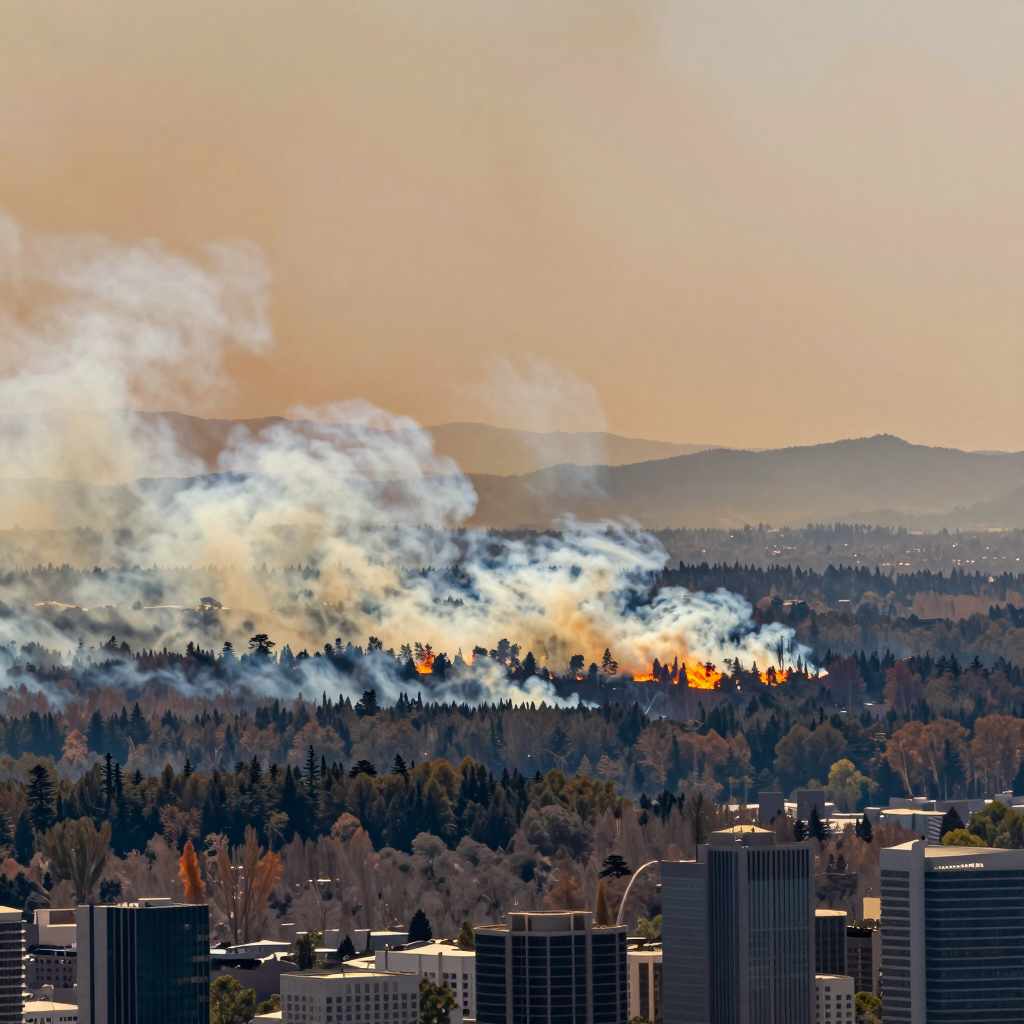
Hundreds of wildfires are blazing across Canada, resulting in an estimated loss of about 2 million hectares. The sheer numbers are overwhelming, but a more crucial question lies beneath: what exactly is simultaneously unraveling behind this terrifying scale? The summer wildfires of 2026 are not merely natural disasters—they mark the onset of a complex crisis shaking climate, health, and the economy all at once.
First, the current situation is far from “just a worse-than-average year.” Canada is experiencing hundreds of wildfires (over 800 simultaneously), many of which are categorized as difficult to control under increasingly adverse conditions. Especially with heatwaves pushing temperatures to around 41°C in some areas, combined with dry air and strong winds, a classic “hot, dry, windy” combination is fueling rapid fire growth. This trio creates an environment where firefighting efforts alone struggle to keep pace, favoring unchecked expansion.
Another key point is that this disaster does not stop at Canada’s borders. The real damage from these fires extends beyond the scorched land to the skies, as smoke and fine particles cross borders. Already, parts of the northeastern and midwestern United States face repeated air quality alerts—hinting that the “summer of smoke” experienced in 2023 might be making a troubling comeback. In other words, the 2026 Canada wildfires are not “just northern news”; they have become a variable that changes the air we breathe and the plans we make in our own cities.
Lastly, the 2 million hectares lost is not just a vast area—it represents severe ecosystem destruction, along with the burden of evacuations, infrastructure strain, and economic losses in local communities. When smoke travels long distances and disrupts everyday urban life—outdoor activities, events, and working conditions—wildfires cease to be mere seasonal occurrences and evolve into a risk for society as a whole.
The critical issue now surpasses counting the number of fires. It is about the possibility that this season’s extreme wildfires could become the new normal for summers ahead. The 2026 blaze has already sounded an alarm with its scale, and the next question is whether that alarm will turn into a repeating reality.
Canada Wildfires 2026: Flames Cross Borders — Wildfire Smoke Engulfs the U.S. Northeast and Midwest
The skies over New York and Michigan are once again shrouded in wildfire smoke. The hazy skies bring back memories of 2023, when New York was painted orange and simply "breathing" became a source of anxiety. This time, it’s not just discomfort—it should be read as a clear warning to our health.
New York: What the Statewide Alert Reveals
With massive wildfire smoke drifting in from Canada, New York has issued a statewide Air Quality Health Advisory. The key point is not merely the “smoky smell,” but the fact that fine particulates in the smoke are rapidly driving up the AQI.
Especially in New York City and the Long Island area, the AQI has surged to around 125, reaching levels where outdoor activities can become dangerous for sensitive groups such as children, the elderly, and those with asthma or heart conditions. When you see hazy skies and feel your throat scratchy, exposure has already begun.
Michigan: ‘Smoke Plumes’ Spreading Across the Great Lakes
Michigan’s situation is even more explicit. The National Weather Service has issued an Air Quality Alert, warning that smoke plumes originating from Canadian wildfires may spread from the Upper Peninsula through the Lower Peninsula and southward.
Geographically positioned along the Great Lakes air pathways, this region experiences sudden shifts in air quality as wind and atmospheric flows change—what looks fine today could become dangerous tomorrow.
A ‘Summer of Smoke and Smog’ Revisited: Why Does It Feel More Dangerous?
The impact of Canada Wildfires 2026 on the U.S. transcends the simple fact that “smoke is drifting here.”
- Simultaneous multi-state alerts: When states like New York and Michigan issue Air Quality Alerts and Health Advisories simultaneously, it signals a large-scale, regional air pollution event rather than a localized problem.
- Fine particulates are less visible but penetrate deeper: The hazy sky is just a warning light—the real threat is microscopic particles infiltrating deep into the lungs.
- It’s not just a problem for sensitive groups: While sensitive populations are hit first, outdoor workers, commuters, and those engaging in summer outdoor activities are also vulnerable to the cumulative effects of exposure.
Practical Checkpoints Readers Should Follow Now
During smoke season, relying on instinct alone isn’t enough. At minimum, adopt these two habits for your safety:
- Check local AQI and statewide advisories daily: Smoke can arrive within hours when air currents shift.
- Adjust outdoor activity levels: The basic rule is “exercise shorter and breathe easier.” If symptoms appear, don’t push through—go indoors immediately.
Borders do not block smoke. And the moment the sky turns hazy, the message has already arrived: this summer is no exception. A heavy message we can’t ignore.
Canada Wildfires 2026: A Crisis in Major Cities—Health Alerts and Economic Fallout Starting in Toronto
Toronto, once labeled as having the "worst air quality in the world," has ultimately canceled large-scale outdoor events. The shocking reality is not just about “a bit of haze,” but rather that air quality risks have escalated to a level that demands immediate reactions from city operations and the local economy. This scene symbolically signals that Canada Wildfires 2026 is no longer an issue confined to Canada alone.
Why Toronto Hit the ‘Cancel’ Button: Health Alerts Becoming the Standard for Daily Decisions
In Toronto, smoke from wildfires caused the AQHI (Air Quality Health Index) to surge beyond 10+ (very high risk), effectively issuing warnings that “outdoor activities themselves may pose health burdens.” Consequently, city authorities canceled the FIFA Fan Festival outdoor cheering event just before the game began.
This decision goes beyond a mere event management problem—it signals that major cities are beginning to incorporate air quality into their ‘safety regulations’. Just as weather forecasts guide daily plans, smoke forecasts and health advisories now dictate city schedules.
Economic Fallout: “Event Cancellation” Is Just the Beginning
The cancellation of outdoor events is not a one-off loss. When smoke and fine particulate matter blanket the city, the domino effect unfolds as follows:
- Tourism and downtown commerce hit: visitor declines, shorter stays, and revenue drops in outdoor-centered businesses (street shops, outdoor terraces, tours)
- Rising operational costs: securing indoor alternative venues, enhancing air purification and ventilation, preparing safety personnel and medical responses—additional expenses mount
- Reduced labor productivity: outdoor workers (construction, logistics, delivery) face work restrictions, increased absenteeism, and project delays
- City brand risks: accumulating perceptions of a “city with poor air quality” deter event hosting and business activities
In sum, the smoke doesn’t just darken the skies—it slows down the very flow of the urban economy.
Toronto’s Decision Calls for Change in U.S. Cities: From Reactive to Proactive Standards
Toronto’s case poses a tangible question for U.S. cities like New York and Michigan, which have repeatedly faced air quality alerts: “What criteria will we use to stop activities when smoke returns?” Moving forward, the following changes are likely necessary:
- Formalize event operation triggers (cancellation standards): pre-announced cutbacks, indoor transitions, or cancellations based on AQI/AQHI levels
- Strengthen citywide vulnerable group protection protocols: robust guidelines extending beyond children, seniors, and respiratory/cardiovascular patients to include outdoor workers
- Enhance indoor evacuation infrastructure: maintain and expand access to ‘clean air spaces’ such as libraries and community centers at all times
- Upgrade smoke forecast communications: move beyond “it’s hazy today” to clear, actionable guidance on how dangerous it is and what must change
In summary, Toronto’s choice amid Canada Wildfires 2026 is not a “rare incident” but rather a warning that North American metropolises have entered an era where air quality must be a core factor in urban risk management.
Climate Change, Policy, and Repeated Crises: Why Are the Canada Wildfires 2026 Getting Bigger Every Year?
A wildfire season that is “longer, hotter, and thicker.” What lies behind this vicious cycle? And what realistic measures can break it? The Canada Wildfires 2026 are not just a random “bad year” — they represent a structurally recurring crisis. The core issue is how climate (the upward leveling of risk) and policy/system (delays in response) amplify each other.
Three Climate Mechanisms Driving the Growth of Canada Wildfires 2026
1) The Wildfire Season Has Lengthened
High-risk periods once confined to specific windows are now expanding forward and backward. Earlier heatwaves and extended dry conditions prolong the very timeframe during which firefighting resources must cope, causing a chronic overload of suppression and prevention capabilities.
2) Extreme Heat and Dryness Transform the ‘Fuel’ (Forests)
Heatwaves and droughts make forests more flammable and lower the threshold for a small spark to trigger massive fires. When “hot, dry, and windy” conditions coincide, fires spread faster and become much harder to contain.
3) Smoke Knows No Borders: Long-Distance Travel Has Become ‘Routine’
Smoke originating from central and northern Canada drifts over the Great Lakes and into the Northeast, exposing regions without fires to a direct air quality crisis. This is not merely about hazy skies; increases in fine particulate matter trigger simultaneous spikes in urban health and economic risks.
Repeated Policy Mistakes Revealed by Canada Wildfires 2026
Reactive Fire Suppression Dominates
The system focuses on all-out response after fires grow, which loses effectiveness in a world of longer seasons and persistent risks. Even though policies to reduce ignition probability (like ignition source control) have become more crucial, their implementation always lags behind.Regulations Tighten, but Enforcement Systems Are Weak
Measures like campfire bans and restrictions on outdoor burning are clearly effective. However, without stringent enforcement, public education, and alternatives (such as safe outdoor cooking infrastructure), such regulations only breed “fatigue” on the ground and reduce their real-world impact.Smoke Response Is Incomplete Without Cross-Border Cooperation
Smoke from Canada disrupts air quality indices (AQI) in U.S. cities. Yet if forecasting, warnings, and health advisories remain fragmented at local scales, citizens receive information too late, and agencies struggle to unify messaging.
Realistic Solutions to Break the Vicious Cycle: A Checklist Beyond Canada Wildfires 2026
1) Shift Prevention from ‘Campaigns’ to ‘Systems’
- Clearly define phased standards for ongoing campfire bans and burning regulations, and
- Provide local communities with concrete guidance (“What exactly should we do?”) covering alternative cooking methods, safety protocols, and consistent penalties for violations.
2) Elevate Smoke (Air Quality) Response to Disaster-Level Urgency
- When AQI alerts sound, individuals shouldn’t have to cope alone; schools, camps, and workplaces must adopt standard action guidelines immediately (criteria for stopping outdoor activities, indoor air management).
- Protecting outdoor workers and vulnerable groups with gear, rest periods, and indoor shelter isn’t just a recommendation—it must become a policy priority.
3) Strengthen U.S.-Canada ‘Joint Smoke Forecasting and Messaging’ Systems
- Different descriptions and standards across regions for the same smoke plumes only create confusion.
- Joint forecasts, interoperable indicators, and standardized warning messages are the minimum necessities in an age of cross-border smoke.
Ultimately, the question posed by Canada Wildfires 2026 is simple: In an era where “putting out fires” alone is not enough, do we have systems to reduce risks before fires grow and minimize damage when smoke arrives? Without answering this, “smoky, smoggy summers” won’t just be events—they will become the season.
Canada Wildfires 2026: What We Must Do Right Now and Lessons for the Future
From monitoring local air quality to protecting our health, here are the smart actions to watch for in the U.S. over the coming weeks. At the same time, we’ll explore the long-term strategies needed to finally put an end to these annual smoky summers. Canada Wildfires 2026 is not just a “northern wildfire” — it’s an event transforming our daily lives and how we manage our health.
Canada Wildfires 2026 Readiness Checklist: Immediate Actions to Change Your Routine Over the Next 2–4 Weeks
Switch AQI checks from ‘once a day’ to ‘as needed’
Smoke plumes can arrive suddenly, driven by wind and pressure changes. Before going out, exercising, or letting kids play outside, always check your local AQI and Air Quality Alerts/Health Advisories first.Focus on the “intensity” of outdoor activity, not just whether to go outside
On hazy days, reducing vigorous physical activity matters far more than simply deciding whether to go out. Running, outdoor sports, and long hours of work can dramatically increase your exposure.Be intentional about managing indoor air quality
Simply closing windows may not suffice. When possible:- Run a HEPA air purifier
- Designate one room as a ‘clean room’ inside your home (keep doors closed, concentrate purifiers)
- Use recirculation mode while driving
These tactics help lower your exposure.
Masks aren’t just “wear if you have one”—the type matters
N95 respirators are far more effective against smoke particles than cloth masks. For those with respiratory issues or on days with health alerts, wearing N95s shifts from optional to essential safety gear.
Health Protection during Canada Wildfires 2026: Priorities for Vulnerable Groups, Outdoor Workers, and Households
Vulnerable groups (children, elderly, asthma/COPD/heart patients) need proactive measures
Responding after coughing, eye irritation, or breathlessness appears is too late. Prepare medications (like inhalers) and indoor air quality strategies ahead of alerts.Outdoor workers face challenges avoiding exposure, so managing it is key
Adjust work hours (early morning/night shifts), increase breaks, wear N95 masks, and maintain air quality in vehicles and rest areas—practical steps to implement on the ground come first.Households need plans for children’s schedules and indoor activity alternatives
Camps, games, and outdoor events may be last-minute canceled or changed. Having indoor backup plans ready in advance will reduce stress significantly.
Lessons Beyond Canada Wildfires 2026: How to Face Summers That Have Become “Smoke Season” — Long-Term Strategies
Individual level: Make a ‘smoke response kit’ a standard year-round item
Stock N95 masks, filter replacements, air purifier operation plans, and indoor clean room setups—not as disaster prep, but as seasonal readiness.Community level: Schools and event organizers should formalize ‘cancellation triggers’
Just as Toronto canceled major outdoor events due to poor air quality, U.S. schools, sports leagues, and festivals should establish clear AQI-based operational rules ahead of time to reduce confusion.Policy level: Tackling cross-border smoke requires “joint forecasting and joint alerts”
Smoke disregards political boundaries. The more precise the U.S. and Canadian agencies’ smoke forecasts, unified messaging, and rapid health guidance become, the more harm can be minimized.
The next few weeks may bring days that swing from clean to hazardous and back again with changing air currents. The biggest takeaway from Canada Wildfires 2026 is simple: by checking air quality like weather, making health protection routine, and uniting communities around clear standards, we can minimize the damage together.
Comments
Post a Comment