 \n
\n
Switzerland vs Colombia: A Historic Round of 16 Clash, Breathtaking Penalty Shootout between Switzerland and Colombia
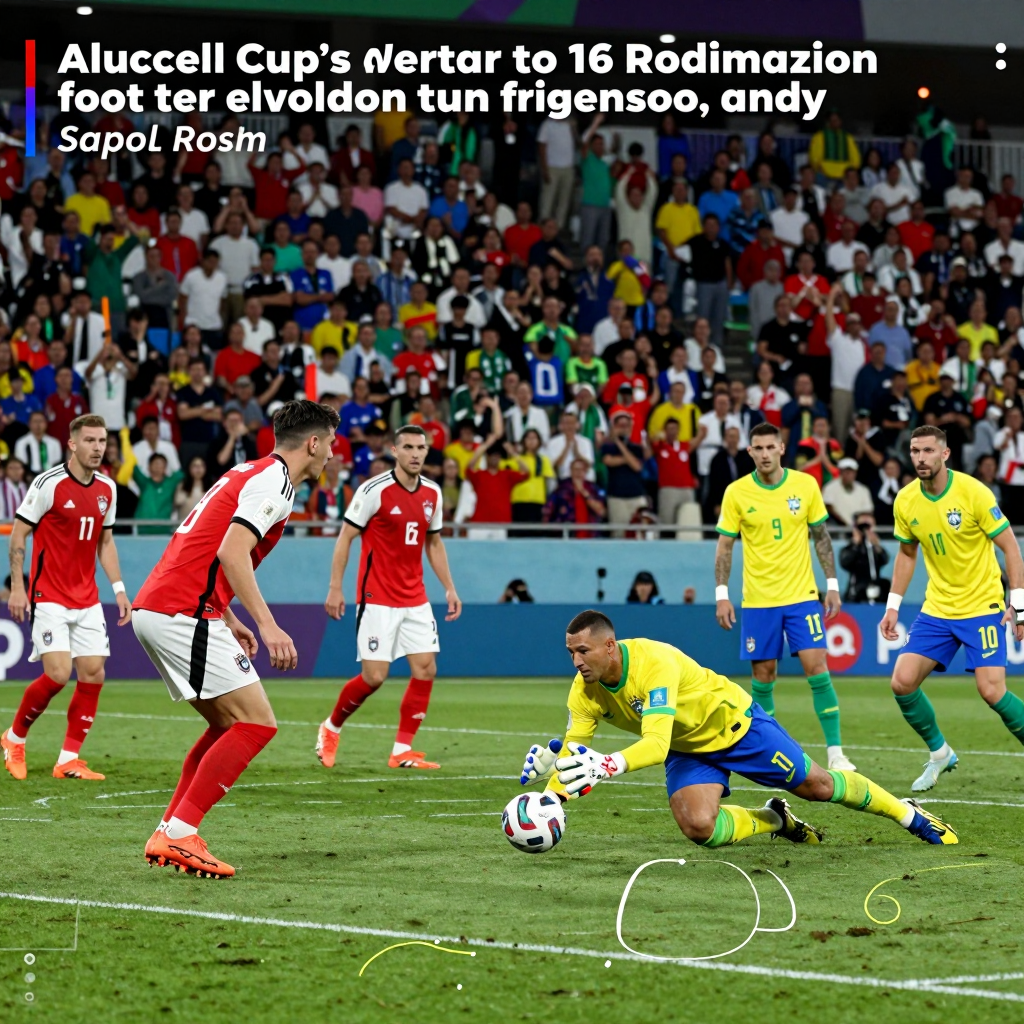
After 90 minutes and extra time ended goalless, the battle for the final quarterfinal ticket was decided by a nerve-wracking penalty shootout. The Switzerland vs Colombia match at Vancouver’s BC Place during the 2026 CONCACAF World Cup shattered the myth that a “scoreless game equals boring,” showcasing the cruel beauty of knockout football where a single mistake and a single save can change everything. In the end, Switzerland emerged victorious in the shootout. Behind this dramatic finale lay several clear ‘secrets.’
Why Switzerland vs Colombia Ended 0–0: Structure Erased Flair
The key to this match was simple. Switzerland eliminated the spaces where Colombia’s strengths could flourish, and although Colombia resisted with high possession and forward passing, the decisive finishing touch never materialized.
- Switzerland’s compact defensive block: They maintained tight lines, blocking half-space penetrations and disrupting Colombia’s favored “central-to-flank link-up” rhythm.
- Colombia’s finishing dilemma: True to critiques about their lackluster xG conversion throughout the tournament, Colombia created chances but failed to convert the crucial one.
- Reality of an under 2.5 goals scenario: The preview’s prediction that “defensive resilience is strong while attacking efficiency is imperfect” hit the mark, resulting in a goalless match through 120 minutes.
Why Switzerland vs Colombia Felt Like the ‘Final Ticket to the Quarterfinals’
This was the last Round of 16 match, the ultimate puzzle piece in the knockout bracket. The tension felt almost like a playoff game.
- The kickoff, near North American prime time (4 PM EST), captured immense attention. Major US networks like FOX and ESPN, alongside live blogs, streamed tactical and statistical insights in real time.
- Both teams entered undefeated as group winners, heightening the sense that “either side could lose” and infusing the match with palpable suspense.
- Switzerland carried the narrative of reaching their first quarterfinal since 1954, while Colombia had to prove their upward momentum against powerhouses with concrete results.
The Real Secret Behind Switzerland vs Colombia’s Penalty Shootout: It Wasn’t Luck, But ‘Management’
While luck plays a big role in penalty shootouts, it’s the habits of the team that invite that luck. Switzerland ‘managed’ a 0–0 draw through extra time, steering the match toward a probabilistic shootout—and that decision paid off.
- Match management skills: Prioritizing risk control over reckless advances, they sustained a “can’t lose” situation for as long as possible.
- Tournament-ending strategy: On days when scoring is blocked, waiting for the opponent’s single slip-up is often the smarter choice. Switzerland pushed that conclusion relentlessly.
- Mental warfare: Colombia entered the shootout burdened by accumulated pressure from their attacking frustration—likely making the final moments even more daunting.
In the end, Switzerland vs Colombia wasn’t “an uneventful game because there were no goals,” but rather a match sharpened by the absence of goals where one single choice became decisive. Switzerland was the team that executed that choice with the truest knockout spirit.
In-Depth Tactical Battle: Switzerland’s Structured European Setup vs. Colombia’s South American Flair
How did Switzerland’s tight defense and Colombia’s possession-based attack shape the flow of the match? This game was far from a simple “0–0”—it was a 120-minute tactical simulation demonstrating exactly how the European style structure can neutralize South American flair. Ultimately, the Switzerland vs. Colombia showdown was decided not by goals, but by who controlled space better.
Switzerland vs. Colombia: The No-Goal Blueprint Crafted by Switzerland’s Compact Block
Switzerland’s key wasn’t about increasing attacking numbers, but about shutting down Colombia’s most threatening zones (half-spaces and the area in front of the box) from the start.
- Maintaining tight line spacing to primarily block central penetrating passes
Even when Colombia tried to speed up the tempo, Switzerland kept the distance between their defensive and midfield lines narrow, shrinking the angles for forward passes. - Prioritizing “preventing goals” in game management
In their build-up play, Switzerland managed risks with steady progression rather than reckless forward pushes, cutting off the “transition speed” Colombia craved. - Resulting in the realization of the ‘under 2.5 goals’ scenario
Many previews predicted strong defensive resilience from both teams, and Switzerland’s structured defense most directly confirmed that forecast.
Switzerland vs. Colombia: Colombia’s Possession Football—Why Having ‘More Ball’ Didn’t Translate into ‘Better Chances’
Colombia’s game revolves around possession and penetrating half-spaces. Centered around creators like Díaz and James Rodríguez, they aim to weave intricate passes and deliver a decisive shot near the box. Yet in this match, possession did not equal dominance.
- Half-space entries were created but finishing efficiency lagged behind
Recent matches showed a disappointing conversion rate relative to high xG, and that weakness was even clearer against Switzerland’s block. - The speed of forward passes slowed at the ‘final ball’
Switzerland locked down the space directly in front of the box, forcing Colombia to cycle wide or recycle possession more often, limiting the quality of shooting chances. - Creativity (flair) existed but lacked a ‘definitive trigger’ to break the structure
South America’s typical unpredictable movements posed occasional threats, but Switzerland’s spatial control prevented individual sparks from igniting continuously.
Switzerland vs. Colombia: How “European Structure vs South American Flair” Led to a Penalty Shootout
The fascinating aspect of this match was that neither side completely dominated; instead, each erased the other’s strengths for an extended period.
- Switzerland slowed Colombia’s attacking rhythm through defensive organization and game management,
- While Colombia used possession and technical skill to prevent Switzerland from advancing comfortably.
With no goals even after extra time, the match ultimately tipped to a penalty shootout—a moment where a single kick outweighed a single mistake. The Switzerland vs. Colombia clash vividly showcased how a collision between flair and stability can inevitably produce a low-scoring thrill, making it a deeply engaging contest for tactical enthusiasts.
Switzerland vs Colombia: Historical Head-to-Head Records, FIFA Rankings, and Hidden Variables
Despite the lack of goals against expectations, what were the strengths and weaknesses hidden within the data between these two teams? Examining how the rankings and past head-to-head records influenced this result makes it much clearer “why it ended 0-0 and why it went to a penalty shootout.”
Switzerland vs Colombia: What the Historical Head-to-Head Told Us—and What It Didn’t
Overall, Colombia has held the upper hand in their past encounters. Notably, Colombia’s victories over Switzerland in official tournaments (such as the 1994 World Cup 2–0 win) and friendlies (for example, 3–1 in 2007) left a strong impression that “Colombia has the favorable matchup.”
However, this Switzerland vs Colombia match took place in a distinctly different tournament environment.
- Limitations of past head-to-head data: Direct comparisons from World Cup stages are rare, mostly centered around friendlies where tactical approaches, motivation, and squad completeness differ, making it unreliable to simply transpose those results.
- Shift in priorities during knockout rounds: At the Round of 16 stage, the focus is more on “not losing” rather than “playing beautiful football.” Even teams with better past records tend to adopt conservative strategies when a single goal can change everything in a knockout setting.
In conclusion, while the head-to-head established a psychological narrative, it hardly served as a direct variable determining the final outcome (0-0 → penalty shootout).
Switzerland vs Colombia: The ‘Narrow Margin’ Frame Created by FIFA Rankings
As of this tournament, Colombia ranked 11th and Switzerland 15th in the FIFA rankings, with Colombia holding a slight edge. This narrow gap signaled not a “dominant vs underdog” scenario but rather a matchup destined to be decided by the finest margins.
This ranking unveiled two hidden hints:
Expectations of Colombia’s ball possession advantage
Typically, the team with the higher ranking is more likely to control game flow (possession, progressive passes, half-space incursions). Colombia was indeed viewed as a team capable of generating “superiority in match content” through possession-based play.Switzerland’s stable, low-goal-conceding structure nullifies underdog status
Conversely, Switzerland, despite the lower ranking, excels in defensive block integrity, maintaining line spacing, and game management. This type thrives in tournament settings because it can neutralize opponents’ strengths and steer the game toward a draw, even against higher-ranked teams.
In other words, although the ranking slightly favored Colombia, Switzerland offset this gap through a “resilient structure,” a factor clearly reflected in the 0-0 scoreline.
Switzerland vs Colombia: Why the Goals Vanished—Hidden Variables Suggested by Data
The match was strongly anticipated as a low-scoring affair, often flagged with an “under 2.5 goals” possibility. Several subtle factors beyond mere defensive prowess played a role:
Colombia’s efficiency dilemma (high xG vs low scoring conversion)
Although Colombia posted decent expected goals (xG) and shot counts recently, their finishing was lacking (e.g., 2.19 xG but only 1 goal against Ghana). Such teams tend to accumulate “nervousness” over time during tournaments, dulling their sharpness when it matters most.Switzerland’s goal suppression as a psychological tactic
Switzerland skillfully disrupted opponents’ rhythm, forced hurried plays, and coaxed “low-quality shots.” Even with possession, the attacking side felt less genuine threat, resulting in simpler, less creative choices inside the penalty area.Match design leading to penalties
Both teams entered the knockout round undefeated through the group stage and Round of 32. Combined with the high-stakes context of the Round of 16, there was a palpable atmosphere where “one mistake ends everything.” In this setting, risk management overtook attacking intent. Ultimately, Switzerland vs Colombia became a “well-guarded match” and a “deliberately tight affair.”
To summarize, while past head-to-head and rankings raised expectations in Colombia’s favor, the real decisive factors were Switzerland’s structural stability versus Colombia’s efficiency challenges. That’s why no goals were scored, and the winner was eventually decided by a penalty shootout—the moment where a single lapse could swing the fate.
Switzerland vs Colombia: The Context and Reactions of American Sports Media and Fans
What did this match mean to the entire United States, watching the World Cup co-hosted by North America? We invite you into the local broadcasts and the passionate scenes of fan support. Although Switzerland vs Colombia at Vancouver’s BC Place was not a “home team game,” it became a symbolic Round of 16 clash that revealed how American media and fandom approach consuming the World Cup itself.
How American Broadcasts Framed Switzerland vs Colombia as the ‘Final Puzzle Piece’
Major U.S. networks positioned this match not just as a Round of 16 game but as the “last ticket to the quarterfinals that completes the Round of 16.” The coverage led by FOX and ESPN emphasized the match as akin to “end credits wrapping up the tournament’s flow,” while outlets like The Athletic elevated the viewing experience from mere commentary to real-time tactical analysis and data-driven insights through live blogs.
Especially notable was the kickoff time at 4 PM Eastern (1 PM Pacific), which left a strong impression that the World Cup schedule was precisely calibrated to the North American audience’s rhythm. Thanks to the timing right before and after work and school, online reactions quickly amplified, making Switzerland vs Colombia a defining example of “how North America collectively watches the World Cup.”
The Viewing Culture of Switzerland vs Colombia: When the ‘City’ Becomes the Stadium Instead of the ‘Venue’
What made this match so special in the U.S. and Canada was that the cheering spirit wasn’t confined to the stadium. In cities with large Colombian communities, sports bars and outdoor screens transformed watch parties into full-fledged events, and social media buzz spread images of fan celebrations not only from Vancouver but from various North American cities simultaneously.
In other words, this was both a “Round of 16 match held in Vancouver” and essentially a “festival taking place across North America at the same time.” Switzerland vs Colombia proved that for American fans, the World Cup no longer feels like watching a distant away game but has become a neighborhood event shared in real time within daily life.
The American-Style Narrative Left by Switzerland vs Colombia: The World Cup After the ‘Dominance of Powerhouses’ Has Ended
Another reason U.S. sports media took a liking to this matchup was its narrative completeness. The contrast between Europe’s ‘organization’ and South America’s ‘flair’ is easy to understand and widely shareable. Moreover, with both teams topping their groups, a 0-0 stalemate over 120 minutes that was ultimately decided by a penalty shootout reinforced the message that “the tournament is ultimately about details.”
Beyond that, pre-match indicators like FIFA rankings, head-to-head stats, and betting odds, which suggested a slight edge, were neutralized throughout the game, embodying keywords beloved by American viewers—upsets, unpredictability, and the survival of underdogs. Switzerland vs Colombia was thus consumed as far more than just a result. It became a neat proof point supporting the North American discourse that “the power map of the World Cup is shifting.”
The Upcoming Quarterfinal: Switzerland vs Colombia — Switzerland's Historic Challenge and Colombia's Bittersweet Outcome
The Switzerland vs Colombia match was decided by “just one penalty shootout,” but the impact goes far beyond that moment. Switzerland advanced to the quarterfinals for the first time since 1954, turning a ‘historic challenge’ into reality. Meanwhile, Colombia, despite elimination, solidified themselves as a new powerhouse through their impressive performance in this tournament. Now, attention naturally shifts to what comes next.
Switzerland: Reaching the Quarterfinals Through ‘Cumulative Strategy,’ Not Just a Single Moment
Switzerland's advance to the quarterfinals wasn’t a mere stroke of luck but the result of consistent teamwork and tactical execution throughout the competition. Despite 120 minutes without a goal, they held firm to their plan, ultimately bringing the high-stakes drama of a penalty shootout into the realm of a well-prepared team.
Now, Switzerland faces even bigger questions beyond the “underdog miracle”: Will this structural stability hold in the quarterfinals? And as opponents grow tougher, how will they address their challenges in offensive efficiency?
Colombia: Elimination Isn’t the End, But the Beginning of Evaluation
Colombia exited the tournament after losing in penalties, but the message they left is clear. Their surprises in the group stage, resilience in the knockout rounds, and style rooted in possession and creativity have redefined Colombia—not as a mere “dark horse,” but as a formidable opponent that must be respected.
That said, as shown in the Switzerland vs Colombia matchup, the gap between high expected goals and actual scoring in critical moments highlights a key issue: finishing efficiency remains a challenge Colombia must solve for the next tournament.
What to Watch Next: The Ripple Effects of ‘History’ and ‘Momentum’
Switzerland will now face the pressure of the bigger stage in the quarterfinals, while Colombia, despite defeat, has elevated their brand value. Ultimately, this match left one team with a new chapter in history and the other with a new standing in world football.
What remains is one question: Can Switzerland carry this momentum into the quarterfinals to become not just an “upset story” but the centerpiece of the tournament narrative? And will Colombia use this experience as a springboard to establish themselves as a major force in the next cycle? It’s time to eagerly anticipate the next chapter of the World Cup story.
Comments
Post a Comment