 \n
\n
Jung Chung-rae’s Overnight 380 Million Won: The Secret Behind the Jung Chung-rae Phenomenon
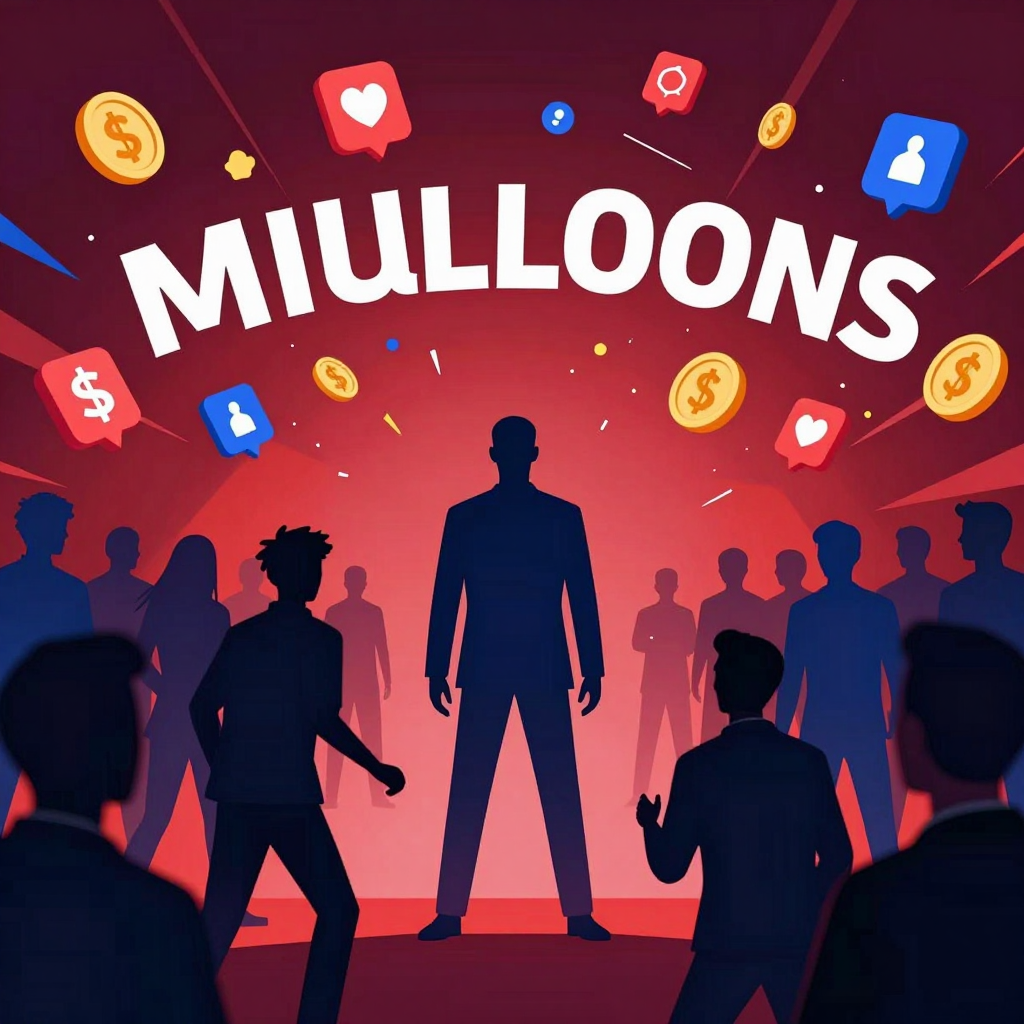
An astounding 380 million won in donations poured in overnight. It’s rare to see a scene where “there are so many political donations coming in that we have to return some.” Yet, immediately after registering as a candidate, Jung Chung-rae revealed that over 7,700 small donations averaging 46,000 won each exploded overnight, forcing him to return most of the excess amount beyond the legal limit (about 360 million won). Where does the power of this tremendous fandom come from?
1) The ‘Digital Mobilization’ Structure Behind Jung Chung-rae’s Donation Explosion
Surprisingly, the trigger for this event was simple. On a YouTube broadcast sympathetic to the pro-Jung Chung-rae camp, it was mentioned that “20 million won in donations is still short,” which immediately caused the donations to snowball.
The key was a signal closer to political “notification” rather than “persuasion.” Once the message that funds were “insufficient” spread, supporters responded not with debate but with immediate action (donations). This isn’t just about popularity—it’s about how quickly a pre-formed online network can push the action button.
2) Why Jung Chung-rae Is Strong: The Cohesion Created by ‘Many Small Donations’
The symbolism of 380 million won overnight lies not in the “big money” but in the participation style.
- It wasn’t a few wealthy backers but a large number of individuals contributing small amounts (average 46,000 won), which strengthens supporters’ feeling of “being part of this game.”
- Small donations become a message in themselves. Rather than simple charity, they function as a preliminary form of political voting signaling “We’re backing you right now.”
- Even having to return excess donations becomes a shared victory for supporters, as it proves “we’ve gathered this much as a collective.”
In short, the Jung Chung-rae donation explosion is less a fundraising event and more a public certification of fandom mobilization.
3) The Language of Jung Chung-rae’s Campaign: When ‘Aljeongjjik’ Becomes a Meme
Along with the donation news, Jung Chung-rae launched the slogan “Aljeongjjik (Got it, I’ll vote for Jung Chung-rae).” This phrase is lighter than traditional political slogans and readily replicable in chat rooms.
This brief expression offers supporters two benefits:
1) Lowers mobilization costs: No explanation needed, easy to share.
2) Builds internal cohesion: Enhances the atmosphere of “we’re already in agreement.”
If the donation explosion was driven by YouTube and online communities, “Aljeongjjik” operates as a linguistic tool that accelerates that momentum.
4) Conclusion: The Jung Chung-rae Phenomenon Is About ‘How it Works,’ Not Just ‘Popularity’
Jung Chung-rae’s overnight 380 million won is far more than a simple buzz. It reveals an integrated mechanism: YouTube/SNS signals → immediate fandom action → reinforced cohesion through many small donations.
As long as this structure holds, Jung Chung-rae is likely to continue being summoned in election campaigns not merely as a candidate but as a “political brand with a mobilization system.”
Jung Chung-rae’s ‘Aljeongjjik’ Meme Politics and the Fusion of Digital Fandom
How did the friendly phrase ‘Aljeongjjik’ become a powerful election slogan that shakes the political arena? The key lies in the fact that this phrase was designed not as a policy statement, but as a participatory signal that can be instantly replicated and spread in digital spaces.
Why ‘Aljeongjjik’ Is So Potent: Short, Light, and Contagious
‘Aljeongjjik’ (meaning “Got it, I’ll vote for Jung Chung-rae”) carries a simple meaning. Yet, it is precisely this simplicity that becomes a weapon online.
- Short phrase = minimal sharing cost: It works immediately in comments, group chats, and communities without needing any context.
- Colloquial style = removes distance: Instead of lofty terms like “fairness” or “common sense,” it feels like replying to a friend, lowering the barrier to entry.
- Declarative form = calls for action: It doesn’t sound like persuasion but like a “decision already made,” strengthening supporters’ confidence.
The Jung Chung-rae campaign pushes this phrase because it effectively transforms voters from mere “audiences to persuade” into active agents of dissemination.
When a Meme Becomes a Slogan: The Self-Propagating Nature of Fandom
Traditional elections rely on candidates crafting messages, organizations distributing them, and voters consuming them. In contrast, ‘Aljeongjjik’ thrives in a structure where voters rework and redistribute the message, making it grow.
In this process, supporters are not just backers but become a content distribution network spreading the meme. Especially in a YouTube- and SNS-driven political environment, a simple phrase morphs into clip titles, hashtags, and comment games—fueling a ‘self-propagating’ cycle. This is where Jung Chung-rae’s digital mobilization power stands out.
Why It Triggers a Surge in Donations: Words Prompt Action
Memes like ‘Aljeongjjik’ don’t just hype the atmosphere—they have real impact. As demonstrated in the Jung Chung-rae case, the language forged online quickly translates into small donations, shares, and voluntary promotion.
In other words, a meme is more than a catchphrase; it’s an action button. Saying “I’ll vote” expresses intent to vote while implicitly signaling “let’s engage now through contributions and promotion.”
The Double-Edged Sword of Meme Politics: Stronger Unity, Narrower Reach
That said, memes can be powerful for “us” but appear exclusive to “outsiders.”
- Inside the base, they build solidarity and momentum, but
- For centrists and opponents, they risk seeming like an overheated fandom politics.
For Jung Chung-rae, ‘Aljeongjjik’ is both a tool to maximize supporter cohesion and a potential frame that could reinforce a “hardline image” going forward. Ultimately, the challenge lies in whether the energy of the meme can be expanded into the language of policies and achievements.
The Jeong Cheong-rae Pro-Cheong Faction and Intra-Party Rules Debate: The Heart of the Democratic Party Power Struggle
The reason why pro-Myung hardliner Jeong Cheong-rae is invoked so frequently during the party convention phase is not simply because his “voice is loud.” The current power struggle within the Democratic Party has moved beyond just competition between individuals (candidates) to a battle over who interprets the rules, who approves exceptions, and which faction takes control in the process—and at the very center of this is the ‘Pro-Cheong’ faction.
Why the Rules Debate Has Become a Power Struggle
Whether to “make exceptions to eligibility rules for certain candidates” during the convention may seem like a technical decision, but in reality, it simultaneously determines the following:
- Who shapes the competitive landscape: Allowing or disallowing candidacy changes the scale and outcome of the race.
- How the party defines its identity: Is it a “party of principles” or a “party of political compromise”?
- Where trust within the party is built: When rules are shaken, the legitimacy of all subsequent decisions about nominations, party positions, and disciplinary actions is undermined.
The strong opposition from Pro-Cheong in this debate should not be seen as mere moralism; rather, it is a political act aimed at holding onto “leadership over the rules.”
The Mechanism Behind ‘Pro-Cheong’ as a Focal Point: Principle and Mobilization
Jeong Cheong-rae has emerged as a core rallying figure in the rules debate for two intertwined reasons.
1) Symbol of Hardline Principles
Jeong’s side (Pro-Cheong) emphasizes the frame of “rules must be rules,” skillfully linking exceptions to eligibility as special favors for certain factions. Here, principle is not just a slogan but an offensive card that puts the opposing camp on the defensive.
2) Rapid Mobilization Backed by a Fandom Base
As seen in his explosive fundraising cases, Jeong has a digital mobilization structure where his supporters respond instantly when a message is delivered. In issues like the rules debate that easily translate into a “good vs. evil” narrative, this mobilization power changes the perceived temperature of public opinion. As a result, party leadership and other candidates treat Jeong’s public stance as a variable that cannot simply be ignored.
Conclusion: ‘Rules’ Are Just the Justification—The Core Is Control
The movements of the Pro-Cheong faction around Jeong Cheong-rae may seem like a contest over who represents principle within the Democratic Party, but at a deeper level, it is a struggle to seize hegemony over party operations after the convention.
In other words, Jeong is at the center not because he articulates certain issues better, but because he is a rare player who possesses both the framing ability and the mobilizing power to transform a rules debate into a power struggle.
The Clash Between Jung Cheong-rae, the 386 Generation, and the Youth: Facing the Debate on Generational Replacement Head-On
The public rebuke by young candidate Kim Bomi is far from just another “generation conflict” news story. It sharply exposes whose “time” the Democratic Party’s power structure currently inhabits and how that structure intertwines with political mobilization (fandom), candidate nominations, and opportunity allocation. This is why the heated debate around Jung Cheong-rae resonates so strongly today.
A Shot Fired by Young Candidate Kim Bomi: “We Acknowledge the Contribution, But It’s No Monopoly”
Kim Bomi clearly recognizes the 386 generation’s “contribution to democracy” but draws a firm line, insisting that this should not translate into “exclusive rights to monopolize politics for 40 to 50 years.” The message is unmistakable:
- When historical legitimacy (the democratization narrative)
- Automatically extends into ongoing holding of power (monopolizing party opportunities),
the space for youth politics structurally vanishes.
This frame packs a punch because the critique doesn’t target a ‘specific individual’ but rather the way political resources are distributed among generations.
Why Jung Cheong-rae Became the Target: Symbol of the 386 Generation and Face of Party Power
Jung Cheong-rae is targeted not simply for being a 386 generation politician but because he is read as one of the most symbolic faces of the Democratic Party’s power landscape in 2026. His strong, consolidated support base, combative leadership style, and influence within the party seem like “driving force” to supporters but appear as a prime example of a “closed structure” to critics.
Kim Bomi’s criticisms (“failed to open the door to the future,” “no reflection”) ultimately boil down to these questions:
- Is the Democratic Party’s leadership creating growth paths for the next generation?
- Or is it more optimized for repeated comebacks of proven figures?
For young people, the issue goes beyond liking or disliking individuals; it’s about whether the ladder to political participation truly functions.
What “48% of 20s Without Party Affiliation” Means: Generational Replacement Is a Survival Strategy, Not Just an Image Issue
The “48% of 20s without party affiliation” figure that Kim Bomi mentioned shifts the generational replacement debate from a moral argument to a problem within the electoral ecosystem. As the supporter base ages, the party increasingly relies on loyal fandom and established organizations, creating a vicious cycle that makes it harder for youth to enter.
At this juncture, generational replacement isn’t about “ousting the 386 generation” but rather about:
- Enabling the youth to accumulate experience as candidates, organizers, and campaigners, and
- Restructuring the party so its message connects with youth issues (jobs, housing, fair opportunities).
Conclusion: Not a Battle of Generations, But a Clash Over Party Design
While it may appear as a conflict between the 386 generation and youth, the real core lies in who the party allocates opportunities to and what kind of leadership it reproduces. Kim Bomi’s direct strike at Jung Cheong-rae revealed the naked truth of that design, and now the Democratic Party must choose:
- Will it further strengthen politics based on strong consolidation and mobilization?
- Or will it expand entryways and stages for youth to grow?
Ultimately, this generational replacement debate isn’t about who is right but asks: What structure will the Democratic Party rely on to endure the next decade?
The Dilemma of Jeong Cheong-rae’s Leadership and the Future of Korean Politics
The biggest question surrounding Jeong Cheong-rae is simple: can his explosive support (fundraising and mobilization power) translate into expansion (embracing centrists, youth, and dissenters)? The scenes of donations pouring in overnight proved his influence, but simultaneously revealed the risk of that influence being trapped in the frame of a ‘hardline image.’
The Paradox of Jeong Cheong-rae’s Strength: Great Mobilization Power, But a Narrow Scope
Jeong Cheong-rae’s leadership fits well with the logic of digital fandom politics. Small-scale donations from many supporters, meme-style slogans, and YouTube-driven dissemination create an organization that quickly rallies and moves fast.
However, this approach inevitably sharpens the divide between “us” and “them,” which can generate the following backlash inside and outside his party:
- The stronger base unity grows, the more polarization accelerates with heightened animosity from the opposition.
- His blunt rhetoric and combative image seize attention, yet the visibility of policy agendas weakens.
- The more party member centrism strengthens, the more likely centrists will perceive the party as a ‘closed organization.’
In other words, Jeong’s power springs from his “sure support,” but paradoxically, the larger that power gets, the harder it becomes to politically broaden his appeal.
The Second Dilemma of Jeong Cheong-rae’s Leadership: The Fine Line Between ‘Principle’ and ‘Faction’
It is also crucial that Jeong stands at the heart of debates about party rules and procedures. Emphasizing principles can cast him as a “leader who respects the rules,” but once this overlaps with intra-party power struggles, those principles can quickly be seen as factional self-interest in disguise.
This revives an old problem in Korean party politics: when language about rules is read as a battle over political advantage, trust inside the party rapidly erodes.
The Future Scenario Jeong Cheong-rae Presents: Where Is Korean Politics’ ‘Fandom-Party’ Heading?
Jeong’s trajectory means more than personal success—it embodies the current currents sweeping Korean politics.
1) Strengthening the ‘Party Member-Centered’ System
The growing influence of registered party members is an irreversible change. The question is whether this will lead to deliberation and true representation or degenerate into mobilization and loyalty competitions.
2) ‘Meme and Clip Culture’ in Political Communication
Short, powerful messages spread easily but weaken the language needed for explanation, negotiation, and compromise that resolve social conflicts.
3) Intensifying Pressure for Generational Change
The challenge to the 386 leadership is less about personal critique and more about structural demands. The moment Jeong becomes a symbol, his choices reflect not just individual strategies but a case study in how the Democratic Party (and broader Korean politics) undergo generational restructuring.
Crucial Point in Watching Jeong Cheong-rae’s Leadership: Can He Move from ‘Mobilization’ to ‘Persuasion’?
Ultimately, the key watching point converges on one question: can Jeong maintain his strength in mobilization while expanding beyond the hardline image to a leadership of persuasion and coordination?
If he succeeds in that transition, he could present an evolutionary model of party member democracy that transcends fandom politics’ limits. Conversely, if he only intensifies mobilization without expansion, his leadership may become a catalyst that accelerates the pace of political division in Korea.
Comments
Post a Comment