A Comprehensive Analysis of Netflix's Donggoong: The Reasons Behind the Mixed Reception of the Global 8th Ranked K-Occult Historical Drama
 \n
\n
Netflix’s Donggung: A New Challenge in Korean Occult Historical Drama
Immediately after its Netflix release, Donggung soared to number one in both Korea and Thailand, and reached eighth place globally. What kind of work could have sparked such a fiery reaction? To put it simply, this series boldly combines the familiar shell of a “palace historical drama” with “K-occult dark fantasy,” igniting both curiosity and controversy simultaneously.
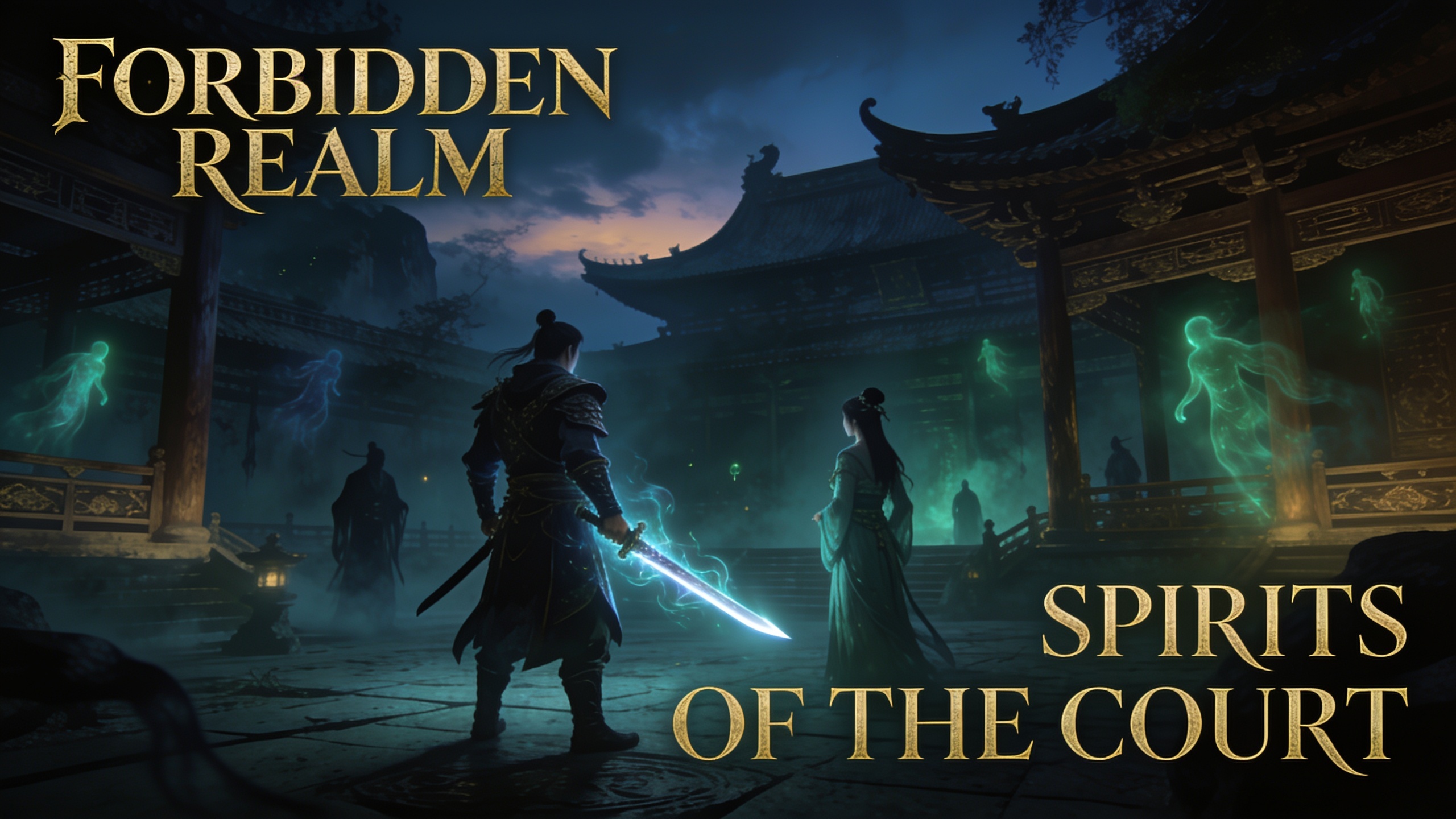
Netflix’s Donggung is a mysterious occult historical drama that follows Gucheon, a man who traverses between the real world and the realm of spirits, and Saenggang, a palace inspector maid who can hear ghosts. Together, they unravel the curse embedded in Donggung and the secrets of the royal family. As crown princes die one after another and rumors of the “pond ghost” envelop the palace, the two protagonists find themselves pulled into the heart of the mystery, bound by a condition that they must lift the curse in order to leave the palace.
What makes this work especially striking is its genre temperature. It goes beyond a simple “palace ghost story” by pushing dark fantasy, mystery, occult, and action into one cohesive whole. The closed-off palace space, the imagery of vengeful spirits and curses, and the action scenes where ghosts are sliced with swords — from a viewer’s perspective, the response is inevitably a mix of amazement with the question, “They actually dared to blend these elements this strongly?” and a sense that “It might be too intense a mix.”
Another key point is Netflix’s strategy of releasing the entire series at once. Thanks to a binge-friendly structure that encourages watching it all in one go, the initial metrics shot up rapidly, resulting in the impressive achievement of number one domestically and in Thailand, and number eight globally. The buzz exploded first, and now only one question remains: how far can the waves of this intense world and its divisive appeal spread through word of mouth?
Netflix's "Donggung": The Birth of Joseon's Constantine, Analyzing Its Unique Genre and Worldview
The world of 〈Donggung〉, where dark fantasy meets the occult, twists the familiar 'ghost story' into something new. The powers of Gucheon, who can slash ghosts, and Saenggang, who can hear the voices of spirits—these abilities go beyond simple fantasy elements, serving as the keys to unlocking the curse on Donggung and the royal secrets. But what hidden rules and costs lie behind these mysterious powers?
Netflix's "Donggung" Genre Blend: Elevating Occult Historical Drama into Dark Fantasy
Netflix's "Donggung" defies easy genre classification. At its core, it’s a palace mystery layered with the texture of dark fantasy, the ominousness of the occult, and the brisk pace of action.
- Dark Fantasy: Expands reality into a darker dimension through the “ghost realm.”
- Mystery: Maintains tension by tracking the continuous deaths of the crown prince and the origin of the curse in Donggung.
- Occult: Employs Korean shamanistic motifs like rituals, curses, and vengeful spirits as the language of its world.
- Action: The narrative engine is driven not just by “seeing” ghosts but by “slashing” them in combat.
Because of this mix, 〈Donggung〉 transcends being “a ghost disturbance in the palace,” taking the form of a genre piece where the worldview itself propels the story forward.
Netflix's "Donggung" Ghost Realm: A Parallel Layer Overlapping Reality
The fascination with 〈Donggung〉 lies not just in “ghosts appear,” but in presenting a rather clear set of rules for how ghosts exist. Rather than a separate otherworld, the “ghost realm” is treated as an overlapping space created by condensed power, secrets, and grudges of reality.
- The palace is depicted as the site where historical grudges and hidden truths are most concentrated.
- Donggung intensifies this concentration to the extreme, so the curse becomes a phenomenon, not just a rumor.
- Consequently, clues emerge not just as documents or testimonies, but as supernatural signals like sounds, presences, and shapes.
Ultimately, the horror in 〈Donggung〉 is not jump scares but a structural terror—“forgotten truths return in other forms.”
Netflix's "Donggung" Power Setting: Gucheon’s ‘Sword’ and Saenggang’s ‘Hearing’ as Detective Tools
The reason this work can be called “Joseon’s Constantine” is that its protagonists do not just fear ghosts but treat them as cases to solve. However, 〈Donggung〉 divides this formula between two characters’ abilities.
- Gucheon: Crosses the ghost realm, sees spirits—and is a being who can slash ghosts with a sword. Instead of a horror genre ‘victim,’ he takes the role of the hunter.
- Saenggang: An inspector court lady who hears the voices of ghosts, acting as a sensor that pinpoints the direction of unseen curses. The focus on hearing over sight is a device that deepens the immersive fear of Donggung.
What’s intriguing is how the two powers complete each other. If Gucheon is the sword, Saenggang is the aiming reticle. This structure allows 〈Donggung〉’s occult world to unfold not as “Once seen, it’s over,” but as a sequential narrative of listening–tracking–confronting–and slashing.
The Questions Netflix's "Donggung" Raises: The ‘Secret’ Behind Power and the ‘Price’ of the Curse
The central hook narrows here: What price moves Gucheon’s sword? Whose grudge is Saenggang’s hearing translating? 〈Donggung〉 frames these abilities less as blessings and more as imperfect keys that connect them to the vast curse of Donggung.
So the viewing focus is simple: while following the events in Donggung to ask “Who is the culprit?” viewers must also trace “What are the rules of this world, and how far will those rules drag these two?” This dual pursuit is where the real thrill of Netflix’s 〈Donggung〉 comes alive.
Netflix’s "Donggung": A Meeting of Masterful Actors, Veteran Creators, and Rising Stars
Nam Joo-hyuk’s comeback project, No Yoon-seo’s first historical drama challenge, and the production team behind "The Devil Judge"—aren’t you curious about the kind of synergy this combination has created in Netflix’s Donggung? To get straight to the point, the early buzz and the “polarizing yet intriguing quality” of 〈Donggung〉 stem directly from the lofty expectations built by this very lineup.
A “Dark Board” Designed by Veteran Creators
Directed by Choi Jung-kyu, known for delivering intense atmospheres and genre direction in works like 〈The Devil Judge〉 and 〈The Red Moon, Blue Sun〉, anticipation soared even before release with the thought, “This time, we’re getting a truly dark palace.” Adding to that, writers Kwon So-ra and Seo Jae-won, who have built Korea-style occult storytelling with hits like 〈The Guest〉 and 〈Bulgasal〉, joined the project, turning it into more than just a historical drama. Instead, it became a carefully constructed system where an occult universe 'operates.'
In other words, 〈Donggung〉 isn’t just atmospheric horror—it boldly foregrounds a genre design that links setting (the spirit world) – incident (curses) – investigation (mystery).
Nam Joo-hyuk's Comeback Driving Force: The Twin Wings of Action and Emotional Depth
Nam Joo-hyuk chose "Gucheon" for his post-military comeback, immediately drawing strong attention. Gucheon’s premise—navigating the spirit realm and slaying ghosts—demands a character with undeniable credibility. Nam’s strength lies in his ability to push this credibility through action and in a face that carries the weight of a wounded soul.
Thanks to this, the action and dark fantasy tones of 〈Donggung〉 effectively elevate early immersion and helped the drama quickly climb the rankings.
No Yoon-seo’s First Historical Drama Challenge: Freshness from a Newcomer Creates Tension
No Yoon-seo’s character, Saenggang, is a palace inspector who can hear ghosts, catching clues and driving the narrative forward. As her first historical drama challenge, this casting brought both freshness and a target for scrutiny—dividing audience reactions in the process.
Still, Saenggang stands as a critical pillar that prevents 〈Donggung〉 from relying solely on romance, maintaining the push of its occult mystery. The newcomer’s fresh face effect adds a powerful layer of realism to the unfamiliar genre blending palace intrigue with supernatural elements.
Jo Seung-woo’s Presence: The Anchor Supporting the World’s “Weight”
Jo Seung-woo’s king character embodies the power dynamics entangled with the palace’s curses and secrets. Such a role risks the world feeling fragile if the performance wavers, but Jo’s involvement lends the drama a central axis and palpable tension. As a result, 〈Donggung〉 achieves a rare balance where the “youthful energy of the leads” and “the gravitas of veterans” coexist seamlessly.
The Synergy This Combination Created—and the Root of Its Polarizing Reception
In summary, the veteran production team’s genre architecture + Nam Joo-hyuk’s comeback energy + No Yoon-seo’s fresh challenge + Jo Seung-woo’s depth turned 〈Donggung〉 into a series you just have to click on. Yet precisely because expectations soared so high, reactions grow even more extreme when storyline developments and directorial choices clash with personal tastes.
Thus, Netflix’s Donggung reads as a project where “casting is marketing” and simultaneously, “casting becomes the litmus test for its review.”
The Netflix Series "Donggung" and Its Maze of Polarizing Opinions: Why Did It Spark Such Extreme Reactions?
Despite its fresh worldbuilding and character design, Netflix’s Donggung has been met with mixed reviews. Right after its release, reactions ranged from “I binge-watched it in one go” to “Why are opinions so split?” What exactly ignited viewers’ enthusiasm, and what left them wanting more?
What Made Netflix’s Donggung Spark “Excitement”: A Knockout Concept and Visuals
A Powerful Blend of Palace and Occult
The confined setting of Donggung, royal taboos, restless spirits, and curses intertwine to hit genre fans’ expectations right from episode one. The novelty of “Occult action in a historical drama?” is the key factor that hooked viewers from the start.Characters’ Abilities Drive the Story
Gucheon, who can move between the spirit world and slay ghosts, and Saenggang, who hears spirits' voices, have clearly defined functions. Each gathering clues through sight and sound propels the mystery swiftly, creating intense immersion—especially effective in the simultaneous full-season release format.Tension Crafted from Horror, Mystery, and Action
The chilling images of palace maids turned ghosts and eerie pond spirits layered with sharp sword fights deliver a compelling visual thrill. Coupled with the emotional development of the two leads, this horror-centered narrative masterfully compels viewers to click “next episode.”
Where Netflix’s Donggung Falls Short: A Sense of Deja Vu, Pacing, and Emotional Fractures
Deja Vu as Both “New” and “Familiar”
Though the Joseon-era exorcism action setting is striking, the story unfolds with familiar genre tropes (curse–clue–twist–twist again), giving the impression that the narrative plays it safe despite the unique setup. This point makes it enjoyable to genre fans but tiresome for others.The More Twists and Info Drops, the Stronger the Need for Worldbuilding
With the alluring concept of the “spirit world,” the rules and costs (why things work, what’s lost) must be tightly woven. Some viewers might feel the pace outstrips the density of explanations, leading to the common critique: “It looks cool, but I don’t fully buy it.”A Chilly Romance Tension
In a show centered on occult and mystery, romance can ease tension, but if introduced too early without sufficient emotional buildup, some viewers feel it disrupts the flow. The split reaction—“I like the romance” versus “The romance breaks my focus on the genre”—highlights a key dividing line.
The Definitive Reason Behind Netflix Donggung’s Polarized Reactions: Differing Expectations
Viewers of Netflix’s Donggung fall broadly into two camps:
- Genre fans who evaluate based on “palace-occult mise-en-scène, character abilities, and horror execution,” and
- Viewers who prioritize narrative completeness, focusing strictly on “the payoff of foreshadowing, plausibility of twists, and emotional credibility.”
In short, this series thrills first through concept, and then overall satisfaction hinges on how well the narrative’s intricacy keeps pace. For some, it becomes “the most intense occult historical drama of the summer,” while for others, it remains “a show with great ingredients that aren’t yet fully polished.”
The Present and Future of K-Occult Seen Through Netflix’s Donggung: The Possibility of Season 2 and Its Market Implications
Netflix’s Donggung, which proved the potential of Korean occult genre, leaves us wondering: Will there be a season 2? Right after its release, it skyrocketed to number 1 in Korea and Thailand, and even reached 8th place globally—clear proof that “occult historical dramas can also succeed in the global mainstream.” At the same time, the polarized reactions raise questions about whether this success will be just a one-time hype or will lead to a franchise expansion.
Market Signals from Netflix’s Donggung: Globalizing ‘Local Folklore’
The significance of Donggung’s early success is not just about its rankings. The key point is that deeply Korean themes such as palaces, curses, vengeful spirits, and the spirit world have been repackaged into an easily understandable genre framework (mystery/horror/action) on Netflix’s global distribution platform, making them competitive worldwide.
In other words, following the hallmark strength of K-content, Donggung managed to retain its local authenticity while delivering immediate genre-based thrills that viewers can dive into. In this sense, Donggung represents an ‘expanded version’ of the recent wave of K-occult.
The Possibility of Netflix Donggung Season 2: Known Facts and Reasonable Predictions
To summarize, no official announcement about season 2 has been made yet. However, considering Netflix’s renewal patterns, the key variables for the outlook are quite clear.
Positive factors (boosting the chance):
- Strong start (chart performance) both domestically and internationally right after release
- Early binge-watching influx, crucial for simultaneous release titles
- Brand differentiation acquired as a rare genre, the occult historical drama
Variables (challenging the chance):
- If the polarized ‘love-or-hate’ reaction continues, completion rates and residual rewatch/viewer word-of-mouth strength could decline
- Due to plot twists and complex settings typical of the genre, whether season 1 satisfactorily resolved key plot threads (“collected the bait”) affects if “season 2 is essential”
- Despite the advantage in global potential, the narrative intricacy required to clearly convey culturally specific contexts (palaces, Korean elements, vengeful spirits) remains a challenge for the next season
Ultimately, the decision for season 2 will likely hinge not on whether viewers simply say “It’s fun or not,” but on viewing data (completion rates, total watch time, new viewer influx). While the early performance is definitely a favorable starting point, the more polarized the reception, the more objectively Netflix analyzes the metrics.
The Future of K-Occult After Netflix’s Donggung: ‘Genre Expansion’ or ‘Niche Taste’?
The greatest legacy Donggung leaves behind is proving that K-occult can break free from being a “cult genre” and become a main title that shakes up the summer season. Going forward, two factors will be crucial to watch.
1) Franchising Occult Historical Dramas
If season 2 happens, settings like the ‘spirit world’ are favorable for expanding the universe. From Netflix’s perspective, serializing genre IP to create long-term engagement content aligns perfectly with their strategy.
2) The Next Evolution of K-Occult: More Universal Emotional Lines
For international audiences, the universality of emotions—like “why the curse happened” and “what the characters have lost”—resonates stronger than the setting itself. To move to the next level, Donggung will need to layer emotional depth and narrative persuasiveness more intricately on top of its genre mechanics.
In short, Netflix’s Donggung is a work that proved the potential of K-occult through its ‘results.’ Season 2 remains uncertain, but the question it raises is clear: “How far can Korean-style occult expand into the global market?” And the answer will become clearer in the coming weeks through viewing data and the next decisions to be made.
Comments
Post a Comment