 \n
\n
Rome–Seattle Alaska Airlines Boeing 787-9 Emergency: A Shocking Beginning and First Clues
A Boeing 787-9 Dreamliner crossing the Atlantic detected abnormal engine vibrations, leading to a declared emergency and ultimately a return to its departure point in Rome. What exactly happened?
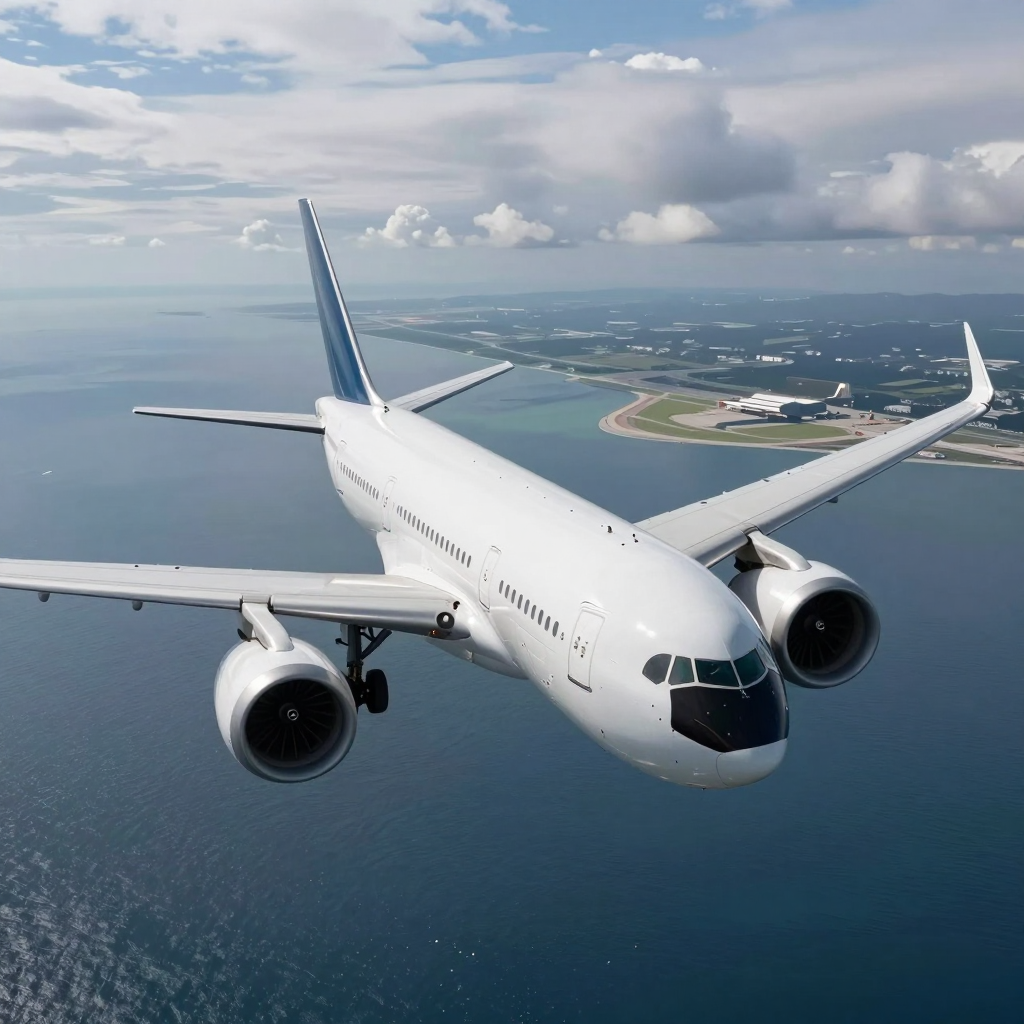
The sequence of events is fairly clear. Alaska Airlines’ Rome (Fiumicino)–Seattle flight took off Sunday afternoon and entered cruise. While flying over UK airspace, abnormal vibrations were detected in one of the engines, causing the situation to escalate rapidly. The aircraft declared an emergency due to technical issues and chose not to continue across the Atlantic, instead turning back to Rome.
A particularly noteworthy point is why the decision to return was made at that moment. The long-haul twin-engine 787-9 operates under ETOPS (Extended-range Twin-engine Operational Performance Standards), where risk management is critical during transatlantic flights. When signs like engine vibrations emerge—especially when their cause is not immediately clear—the crew’s conservative judgment to “return when you can, rather than continue” often proves more reasonable. In other words, this Alaska Airlines Boeing 787-9 emergency was less of a “horror movie scenario” and more an example of a procedure-driven, careful turnback.
According to reports, the aircraft safely landed on Rome’s runway 16R after approximately 5 hours and 30 minutes of flight, then moved to a remote apron. The headline also mentioned “dumping fuel into the sea while returning,” hinting at the possibility of fuel dumping, a common practice for large long-haul jets when returning shortly after takeoff or after extended flight, designed to reduce structural loads on landing caused by overweight conditions—an established safety procedure.
Now, the key question remains: was that vibration merely a sensor alert, or was there an actual engine system anomaly? In the following sections, we’ll carefully unpack what the “engine vibration” warning means in operational terms and why such decisions carry heightened sensitivity during long-haul flights.
Alaska Airlines Boeing 787-9 Emergency: The Reality of Engine Vibrations and the Risks of Long-Haul Flights
Engine vibrations during flight are far more than just a simple “rattle.” Abnormal vibrations detected by sensors can signal critical mechanical damage such as rotating part imbalances, bearing failures, blade defects, or internal contact (rubbing). That’s why, in cases like the Alaska Airlines Boeing 787-9 emergency, when engine vibrations arise on a long-haul route, the crew and operations team don’t debate “enduring discomfort and pressing on” — instead, they first decide whether to cut off the risk right then and there.
Why Engine Vibrations Are a Warning Sign: It Could Be a ‘Progressing Problem’ Rather Than Just Symptoms
An engine is a highly complex system spinning at incredible speeds. When vibrations spike abnormally, it’s not mere noise—it signals that damage could be actively worsening. Especially on extended flights like transatlantic crossings, simply “monitoring” vibrations becomes a risk in itself.
- As vibrations increase, component fatigue can accumulate rapidly,
- In the worst case, this can lead to engine shutdown or catastrophic damage, and
- On twin-engine aircraft, the moment one engine becomes unstable, the entire flight’s safety hangs in the balance.
The Reality of Long-Haul Twin-Engine Flights: ETOPS Means Not Just ‘Can Go’ but Must ‘Come Back Safely’
Long-haul twins like the Boeing 787-9 operate under ETOPS rules. This isn’t just about “having two engines makes it okay,” but ensuring the aircraft can reach a diversion airport safely within a prescribed timeframe, even if one engine fails.
So when engine vibrations are detected, the crew quickly assesses:
- What is the likelihood the situation will degrade into a single-engine operation?
- Will venturing farther over open ocean push the distance/time to the nearest alternate airport beyond regulatory limits?
- If they turn back now, can they minimize overall risk and disruption—including maintenance, rescue, and arranging replacement flights?
The decision to divert over European airspace in this case likely reflects a conservative choice to nip risk in the bud before entering longer oceanic sectors.
Why “Fuel Dumping” Is Mentioned: Managing Weight for a Safe Landing
Long-haul jets carry large amounts of fuel at takeoff, so if they turn back immediately, their landing weight may exceed maximum landing limits. The options are:
- Land overweight, accepting subsequent detailed inspections and operational delays, or
- If conditions allow, dump fuel to reduce weight and perform a safer, standard landing.
The mention of fuel dumping in headlines is less about “dangerous behavior” and more likely a procedural step to reduce airframe stress and ensure a controlled touchdown (official confirmation is needed to verify actual implementation).
Conclusion: In Long-Haul Flight Safety, It’s Not ‘Keep Flying’ but ‘Timing of the Decision’ That Matters
For passengers, engine vibrations might just feel unsettling, but in the cockpit, they are an immediate call for risk assessment and operational action. The key lesson from the Alaska Airlines Boeing 787-9 emergency is clear: in twin-engine long-haul operations, what determines safety isn’t the absence of problems, but how quickly and decisively you turn back the moment trouble starts.
Alaska Airlines Boeing 787-9 Emergency: Navigating Engine Anomalies Amid Strategic Growth and U.S. Aviation Safety Regulations
How did Alaska Airlines manage this incident with their cutting-edge Boeing 787-9? And how do the FAA and NTSB evaluate such emergencies? The detected engine vibration signs and emergency declaration with return flight on the Rome–Seattle leg sharply illustrate the intersection between the airline’s growth strategy of “expanding long-haul routes” and the “regulation-driven conservative safety judgments” that govern U.S. aviation.
Alaska Airlines: Turning ‘Return Flight’ Into a Designed Option, Not a Failure, in Long-Haul Expansion
Operating transatlantic routes with widebody aircraft like the 787-9 isn’t just about flying farther. It demands risk management under ETOPS conditions, alternative airport planning, and robust maintenance and operational decision-making systems.
The key in this case isn’t whether the destination was reached — it’s the deliberate choice to return before entering the longest oceanic stretch. From the airline’s perspective, this reflects selecting the most predictable scenario in terms of safety, even at the cost of expenses such as delays, repositioning, and arranging replacement flights.
Reports confirm the aircraft was safely landed and moved to a remote stand, with replacement flights arranged relatively swiftly. This operational approach hints at the airline’s core capabilities in swiftly mobilizing recovery routines—be it flight operations control, maintenance, or customer service—when problems arise.
Engine Vibration and Fuel Dump: A Standardized Safety Protocol, Not Overreaction
Engine vibration is not merely an inconvenience; it signals a potential severe malfunction scenario involving rotating component imbalance or damage. For twin-engine long-haul aircraft, the critical question is less about “Can we keep going?” and more about “How much risk can be mitigated by turning back now?”
The potential fuel dump hinted at in headlines fits this logic. Long-haul flights often take off with fuel loads exceeding the maximum landing weight, and reducing fuel before landing is a well-established procedure designed to protect the airframe and ensure safety. In short, the Alaska Airlines Boeing 787-9 emergency was less an “exceptional reaction” and more a conservative application of standardized, manual-guided choices.
What the FAA and NTSB Focus On: Cause and Recurrence Over the Emergency Declaration Itself
In U.S. aviation safety, what matters is not simply “Was an emergency declared?” but what data remain, what caused the event, and is there a risk of recurrence?
- From the FAA’s point of view, the investigation usually involves:
- The maintenance history of the aircraft,
- Engine and aircraft system logs,
- Flight data recorder (FDR) output and maintenance inspections,
all to verify regulatory compliance and ongoing airworthiness.
- The NTSB may decide to initiate an investigation based on the nature of the event, regardless of whether there were fatalities or serious damage.
However, based on currently available information, this incident is likely categorized as a precautionary diversion, rather than an “accident.”
Ultimately, this incident raises one overarching question—not whether Alaska Airlines’ long-haul strategy faltered, but how the new long-haul operational framework prioritizes safety in real-world conditions.
Alaska Airlines Boeing 787-9 Emergency: Passenger Psychology, Brand Trust, and the Aftermath of an Emergency Return
After flying for five and a half hours across the Atlantic, the thought of turning back to the departure point, Rome, instantly overwhelms passengers’ minds. Instead of focusing on reaching their destination, the first question that arises is, “Is this plane really safe right now?” This Alaska Airlines Boeing 787-9 emergency was less about the technical sign (engine vibration) itself and more about how that sign imprinted on passengers’ psychology and brand trust.
The Immediate Anxiety Triggered by the Word ‘Engine Vibration’
In passenger experience, the biggest factor is often not the fact but the word. “Vibration” is a term that the average passenger cannot easily assess in terms of cause or risk, so even a brief announcement can spark imaginations rushing toward the worst-case scenario. Especially on long-haul flights,
- cumulative fatigue from hours onboard already weighs heavily,
- there’s a vague tension about crossing the Atlantic—a point of no easy return,
- and the longer the remaining flight time, the greater the uncertainty becomes.
Thus, the decision to return triggers a moment of simultaneous relief and fear.
The Double-Edged Impression Left by the Decision to Return
What’s intriguing is that while the return is a negative experience, it simultaneously acts as a safety-first signal. Choosing to turn back and safely land in Rome instead of pushing toward the European destination can give many passengers the impression that “they didn’t take unnecessary risks.”
However, the felt experience is stark. Returning to square one after five and a half hours of flying means
- shattered plans (hotels, rental cars, connecting flights, business schedules)
- fatigue that feels like an entire day has vanished
- stress from waiting at the airport and a lack of information
Ultimately, passengers judge the airline not just for the return but for “how they handled things afterward.”
Brand Trust Hinges Not on ‘Technology’ but on ‘Communication’
In an emergency, preserving brand trust depends not on flawless operation but on explainability and consistent guidance. What passengers want to know is not complicated technical jargon but these three things:
- Is it safe now?: A message that neither downplays the risk nor incites panic, but reassures control is maintained
- Why are we returning?: The rationale behind the “precautionary measure” (such as a conservative decision before crossing the Atlantic)
- What happens to my plans?: Concrete information on alternatives, accommodations, rebooking, and baggage handling
The fact that, as reported, alternative flights were arranged relatively quickly after the return serves as a key clue to restoring trust from passengers’ perspectives: “At least the next step exists.” Conversely, delays or mixed messages can turn the same incident into a “confusing mess” etched negatively into the brand’s memory.
Conclusion: Crisis Begins with ‘Safety’ and Ends with ‘Response’
From an aviation safety standpoint, this Alaska Airlines Boeing 787-9 emergency can be seen as a case where conservative judgment and procedures worked as intended. Yet, in passengers’ memories, it remains a powerful story of “five and a half hours flying and then back to Rome.” Ultimately, what Alaska Airlines had to protect was not merely the flight record but the final thread of brand trust that completes that narrative—a safe decision backed by responsible follow-up support.
Issues Surrounding the Boeing 787-9 in the U.S. and the Key to Future Safe Operations: Questions Raised by the Alaska Airlines Boeing 787-9 Emergency
The Rome–Seattle return flight by Alaska Airlines is far more than just a “technical issue” headline. Within the phrase alaska airlines boeing 787-9 emergency lies the reality of operating long-haul twinjets (ETOPS), the heavy reliance on sensors and data in new aircraft models, and the critical question: “Who, and how, guarantees safety?” What makes this even more intriguing is the recent case of Air Europa’s 787-9, where a TCAS intervention avoided collision, starkly highlighting the evolving direction of modern aviation safety.
Same 787-9, Different Crises: “Aircraft Malfunction” vs. “Operational System Flaw”
Though both incidents involve the 787-9 on the surface, the nature of the risks differ.
- Alaska Airlines case: The trigger was an airframe/engine signal—engine vibration. Rather than pressing on across the Atlantic, the crew made a conservative choice to return and reduce uncertainty.
- Air Europa case: Rather than an aircraft defect, this was a case where gaps in air traffic control, communication, and procedures were ultimately patched by a last-moment TCAS (Traffic Collision Avoidance System) maneuver.
In essence, one case is about “how humans handle warnings from machines,” while the other is about “how automation supplements human-made operational systems.”
Key to Future Aviation Safety 1: Automation Is Not a Replacement, But an Amplifier
Automation systems like TCAS are undeniably powerful. However, automation is less about fully replacing humans and more about being an amplifier that helps humans execute judgments faster and more accurately.
- Areas where automation excels: sensing (sensors), calculation (collision and separation), immediate commands (evasive maneuvers)
- Areas where humans excel: contextual judgment (meaning of situations), defining risk tolerance (continue flying vs. return), considering passengers and overall operations (alternative flights, airport choices)
In other words, safety quality depends not on “automation exists, so safety is ensured” but on how humans interpret and decide on signals provided by automation.
Key to Future Aviation Safety 2: Conservative Judgments Are Insurance, Not Cost
By choosing to return due to engine vibration signs, Alaska Airlines accepted delays, costs, and operational disruptions. Yet the importance of this choice is clear.
- Risks in long-haul segments become harder to manage over time (especially when entering oceanic airspace)
- Engine-related signals might “return to normal,” but the uncertainty cannot be offloaded onto passengers
- Ultimately, early returns are the most reliable way to prevent worst-case scenarios
The stronger the safety culture, the more organizations prioritize “minimizing uncertainty” over “arriving at the destination.” Seen through this lens, this alaska airlines boeing 787-9 emergency exemplifies a prototypical conservative operation that shuts down risk before it escalates.
Key to Future Aviation Safety 3: Data-Driven Maintenance and Regulatory Follow-up
Modern aircraft like the 787-9 are equipped with abundant sensor, log, and maintenance data. The critical point isn’t “data exists,” but how quickly data can be leveraged to reduce recurrence risk.
- Airlines: monitor for recurrence of same symptoms, reinforce maintenance processes, review operational manuals
- Regulators and investigation frameworks (typical protocols): review flight data, verify maintenance records, check for similar case proliferation
- Industry-wide: if certain engines, parts, or software issues repeat, this leads to strengthened recommendations, guidelines, and inspections
Ultimately, the future of safety will not be judged by “no accidents occurred,” but by the system’s ability to learn from emergencies and make the next one smaller.
Conclusion: The Answer to Safety Is Not ‘Technology vs. Humans’ But ‘Technology + Humans + Systems’
The Alaska Airlines return and Air Europa’s TCAS avoidance each tell one conclusion in different ways: automation is powerful, but safety is only complete when combined with conservative crew judgment and robust operational systems. Designing that balance with precision will be the key variable controlling the trustworthiness of long-haul mainstays like the 787-9 moving forward.
Comments
Post a Comment