Belgium vs Senegal 2026 World Cup Round of 32 Analysis: Who Will Be the US's Opponent in the Round of 16?
 \n
\n
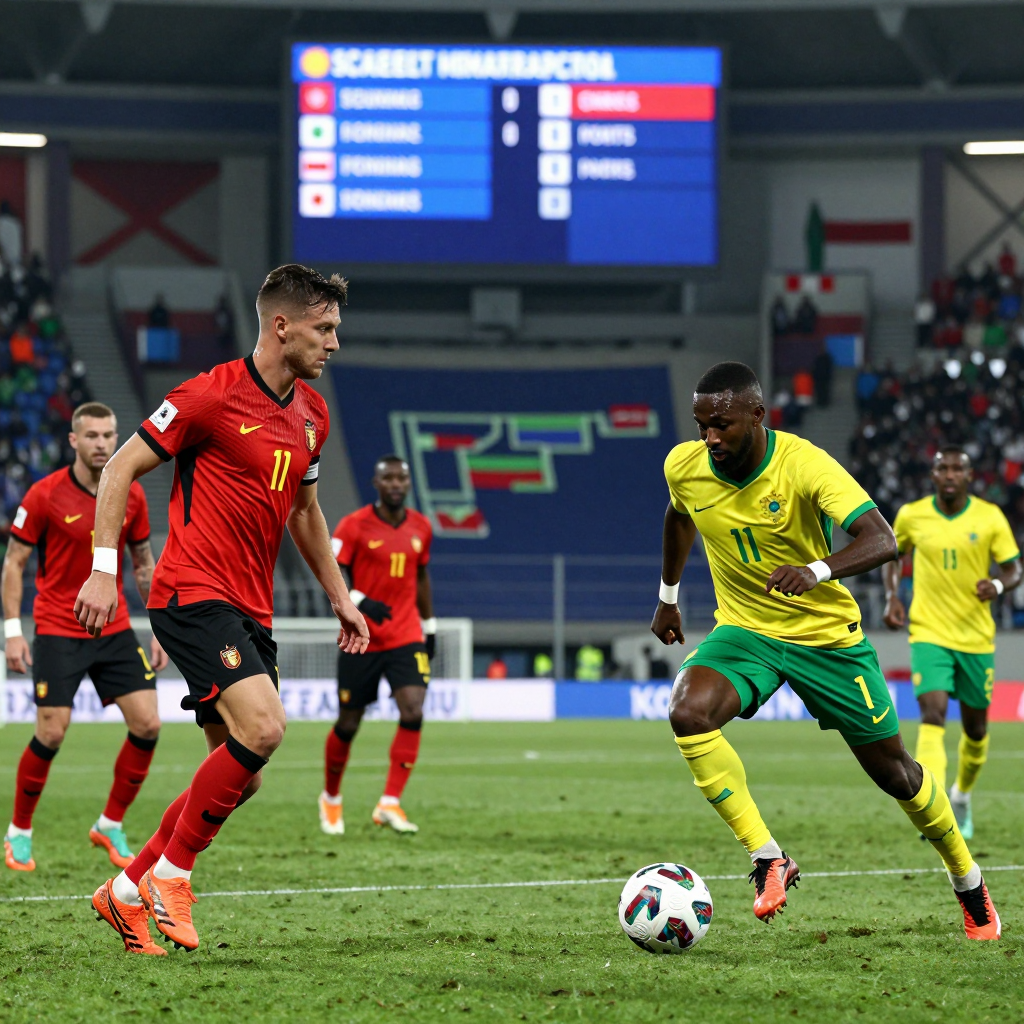
2026 North and Central America World Cup Round of 32: Belgium vs Senegal, a Clash of Destinies
The group winner Belgium meets Senegal, who miraculously survived elimination at the last moment. On paper, the Belgium vs Senegal matchup seems tilted in Belgium’s favor, but the knockout stage always comes down to “who controls the momentum.” Whose strategy and fate will prevail?
This match stands out for clear reasons.
- Belgium erased their early group-stage struggles with a commanding win in the final game, rebounding as group leaders.
- Senegal fell with two straight losses but booked their dramatic ticket to the round of 32 with a thrilling final victory, as their coach declared a “full reset” of team spirit ahead of the knockout rounds.
In other words, this is no simple top dog vs underdog story, but a direct clash of two powerful narratives:
- Is Belgium’s “revival” real?
- Can Senegal’s “reset” spark a stunning turnaround?
Tactically, the picture is just as vivid. Belgium aims to dominate possession and build play patiently, while Senegal plans to leverage intense pressing followed by quick transitions and wide counterattacks. Will Belgium control the match tempo smoothly, or will Senegal break free with a single moment of speed and skill to open the door to an upset? This is exactly why this round of 32 fixture promises some of the most dramatic tension of the tournament.
Belgium vs Senegal: The Resurgence of Europe’s Group-Topper
At first glance, Belgium’s early performances made you wonder, “Are they really the group leaders?” Their 1–1 draw against Egypt and 0–0 stalemate with Iran were frustrating—chances were scarce despite dominating possession, and their attacking flow was repeatedly stifled. However, everything changed with a 5–1 explosion against New Zealand, completely shifting the mood. Now, ahead of Belgium vs Senegal, the big question is clear: What reignited Belgium’s attack?
De Bruyne’s Mastery of “Pace Control” Breathes Life into the Attack
When Belgium’s offense clicks, there’s a distinct pattern. Kevin De Bruyne does much more than simple passing;
- He knows precisely when to push the ball forward quickly (vertical passes), and
- When to slow the tempo to lure the defense out (rhythm adjustment),
executing both in perfect harmony.
Early on, this link was broken, causing attacks to circle redundantly on the wings. But since facing New Zealand, De Bruyne has increasingly crafted that decisive “one moment” from the center. In knockout stages, this type of playmaker can redefine the overall difficulty of a match.
The Secret of the Attack: “Multiple Options” Rather Than a Single Route
Belgium’s emphatic win over New Zealand is significant not just for the scoreline, but because it signals a vital shift: their attack now boasts multiple outlets simultaneously, not just one path.
- Jeremy Doku: A dribbling threat who shakes defenses 1-on-1 down the flanks
- Leandro Trossard: A versatile attacker who shifts positions to exploit spaces
- Romelu Lukaku: The classic striker, owning the box and finishing clinically
In other words, with De Bruyne controlling tempo from the center, Belgium can deploy a complete attacking puzzle—“wing disruption (Doku) → connection (Trossard) → finishing (Lukaku)”.
Why Belgium Gets Stronger in Knockouts
Despite a shaky group stage start, Belgium topped the group thanks to their squad depth and experience—an ability to flip the momentum with a single game. The 5–1 win against New Zealand was the switch-flip, and that momentum is especially dangerous in knockout scenarios.
However, there is one wild card in Belgium vs Senegal. If Senegal manages to press De Bruyne intensely from the outset and disrupt his rhythm, Belgium’s “multiple options” could collapse back into simplicity. Ultimately, this match will likely be the true test of Belgium’s revival: can De Bruyne dictate the game’s pace under pressure?
Senegal: The African Challenger’s Desperate Reset and Counterattack (Belgium vs Senegal)
After back-to-back losses that nearly sealed their fate, Senegal surged into the tournament’s final slot with an emphatic 5–0 victory in their last group match. Just before the knockout stage, the coach’s single word changed the entire atmosphere: “Reset.” It was a declaration to wipe away all the group stage uncertainties, mistakes, and shaky teamwork — treating the Round of 32 as a brand new starting point. This desperation is the key factor that transforms Belgium vs Senegal from a simple comparison of strength into a psychological and high-speed battle.
The Extremes Created by Group Stage Fall and the 5–0 Comeback Surge
Senegal’s momentum was shattered after consecutive defeats to France (1–3) and Norway (2–3). Yet, they exploded onto the scene with a 5–0 thrashing of Iraq to survive.
But this comeback was more than just one win; it sent a clear, shared message to the team:
- “Our fight isn’t over yet.”
- “The tournament knockout rounds are a whole different game.”
The coach’s reset call targets exactly this mindset. The two poor performances serve only as lessons, while the sensation of the 5–0 win becomes the new standard. This mindset shift is often what underdogs need to pull off stunning upsets in knockout football.
Senegal’s Counterattack Plan: Shaking Belgium Not Through Possession, But Through Swift Transitions
Senegal is unlikely to engage Belgium in a direct possession battle. Instead, their strategy is straightforward:
- Apply fierce pressure to cut off Belgium’s midfield play
- Immediately switch play to the flanks, accelerating the tempo
- Finish with a shot on goal in a single counterattack
The real game-changer is the speed weapon of Ismaïla Sarr, whose explosive runs can deliver that knockout punch. The longer Belgium holds the ball, the more Senegal can afford to wait for that one interception. Just a few successful executions of this pattern could instantly tilt the momentum in Senegal’s favor.
The Key to the Upset: Pressing De Bruyne Can Flip the Match
Belgium’s offensive heartbeat is Kevin De Bruyne. Senegal’s most realistic game plan is crystal clear:
- Deny De Bruyne time and space
- Cut off his primary passing options to disrupt Belgium’s build-up rhythm
- Upon winning the ball, launch quick flank counterattacks exploiting the backline gaps
Of course, this comes with huge risk. If the press breaks even once, Belgium can slice through with one perfect pass. That’s why Senegal’s reset relies less on tactics and more on the mental discipline to maintain pressing intensity and defensive focus for the entire 90 minutes.
Conclusion: When ‘Desperation + Transition Speed’ Connects, Belgium vs Senegal Gets Much Wilder Than Expected
On paper, Belgium holds the edge. But Senegal represents one of the toughest puzzles in knockout football —
a team armed with desperate resolve and the ability to flip the game with a single swift break.
Ultimately, the intrigue boils down to one question: will Senegal’s reset remain just a slogan, or will it manifest in the ruthless execution of pressing and counterattacks that rattle Belgium? The moment that answer unfolds, Belgium vs Senegal stops being a predictable outcome and becomes a truly open, electrifying contest.
Tactical Showdown: Belgium’s Organized Possession Football vs Senegal’s Rapid Counterattacks
It’s natural to picture Belgium controlling the game by holding the ball. However, the crux of this match lies in whether that possession advantage becomes a ‘safe dominance’ or ignites Senegal’s lethal counterattacks. In other words, Belgium vs Senegal could unfold as a paradox where “the longer Belgium holds possession, the sharper Senegal’s decisive strike becomes.”
Belgium’s Plan: Press with Possession, Pierce Through De Bruyne
Belgium fundamentally relies on high possession and organized buildup to pin their opponents in their own half. Two key points stand out here:
- Controlling the tempo through the center: De Bruyne’s position and timing when receiving the ball are the engine of Belgium’s attack.
- Varied wide options: When wingers like Doku and Thorzar create one-on-one chances, Lukaku’s finishing pathways become crystal clear.
In short, Belgium aims for a scenario where they “gradually unsettle the opposition defense, then strike decisively with a vertical pass.”
Senegal’s Plan: Press, Steal, Transition, and Sarr’s Blazing Speed
On the other hand, Senegal is a team that thrives not on prolonged possession but on transitions. The key threat in this matchup lies in:
- Early aggressive pressing on De Bruyne: Senegal will likely attempt to disrupt Belgium’s buildup by harshly pressing the midfield maestro from the start.
- Sarr’s counterattack proficiency: The instant they reclaim possession, his pace cutting through the flanks and half-spaces turns into immediate scoring opportunities.
Senegal’s game script is straightforward: “Defend, Disrupt, Sprint, Finish.”
The Game-Changing Moment: When Belgium’s Possession Turns Poisonous
The most thrilling moment to watch is when Belgium pushes up aggressively but loses the ball. While they dominate possession to suffocate their opponents,
- their defensive spaces behind grow wider,
- recovery defense slows down, and
- a single pass can open the floodgates for a counterattack.
Therefore, if Belgium leads in possession but the scoreline doesn’t widen easily, Senegal will gain confidence that “it only takes one moment to break through,” sending the intensity of the game soaring.
Key Takeaway
- Can Belgium secure a safe victory through domination?
- Or will Senegal’s one explosive counterattack flip the tide?
Ultimately, Belgium vs Senegal is less about who holds the ball longer and more about who better manages the moment they lose possession—and that could be the deciding factor of this electrifying clash.
Belgium vs Senegal: Through the Eyes of U.S. Fans—Who Will the U.S. Face in the Round of 16?
For the U.S., this match isn’t just a Round of 32 game. The winner of Belgium vs Senegal will face the victor of USA vs Bosnia and Herzegovina in the Round of 16. In other words, this one match is essentially a pre-scouting battle determining “Who should we prepare for next?”
Key Point 1 for the U.S. to Watch if Facing Belgium: A Battle of ‘Organization + Quality’
Belgium, after a sluggish start in the group stage, exploded offensively in their final match to reclaim momentum as the group leader. If the U.S. meets Belgium, the core issue is clear:
- How to disrupt the build-up centered around De Bruyne: Against a team that can nullify pressure with a single pass, the challenge isn’t just pressing intensity but managing defensive spacing when the press breaks down.
- Minimizing goals conceded even if possession is sacrificed: Since Belgium is likely to dominate possession, the U.S. must meticulously prepare a ‘goal prevention plan,’ covering transition defense and set-piece situations.
Key Point 2 for the U.S. to Watch if Facing Senegal: Don’t Get Dragged Into Their ‘Transition Speed’
Senegal wavered early in the group but survived with a big win in their last game, with their coach declaring a complete “reset” and entering tournament mode. If the U.S. plays Senegal, the match is expected to become more “physical and direct.”
- Stop their counterattack at the source: Senegal thrives on rapid transitions and wing speed. The moment the U.S. loses the ball on offense, Senegal can instantly create dangerous chances.
- Be especially cautious in the first 15 minutes: Teams coming out with a ‘reset’ mindset start with high energy. One mistake early can trigger giving away the entire match’s flow, so the U.S. must stay vigilant.
Conclusion: What the U.S. Needs to Prepare Isn’t a “Team” but a “Scenario”
Ultimately, Belgium vs Senegal is a pivotal point that shapes a completely different game style more than just the opponent's name.
- Belgium brings a possession-based, structured attack,
- Senegal brings a chaotic rhythm of pressing, ball-winning, and transitions.
For U.S. fans watching this match, the focus should be less on “Who wins” and more on How they win. That will reveal the battlefield style the U.S. will face in the Round of 16.
Comments
Post a Comment