 \n
\n
Why Pakistan, Why Now? – Unveiling the Hidden Gigantic Potential
Pakistan, a geopolitical hotspot with a staggering population of 240 million mostly young people. While often seen as a high-risk market that makes investors hesitate, this very perception means that opportunities have yet to be fully priced in. There are five major trends that explain why now is the time to rethink Pakistan.
The Mega, Youthful Pakistani Market: The ‘Engine of Consumption’ Ignites
Pakistan ranks among the top five countries by population, boasting an average age in the early twenties—making it an exceptionally young nation. With rapid urbanization and soaring smartphone penetration, the market is swiftly evolving beyond traditional offline consumption into a digitally-driven consumer economy.
This means that, although purchasing power today may be uneven, the overall market trajectory is unquestionably on the rise. Fields like content, commerce, education, and finance stand to explode the moment smartphones become the very infrastructure for access.
The Paradox of Persistent Crisis: IMF Dependency as a ‘Structural Reset’
Pakistan’s economy remains in near-constant crisis mode, grappling with foreign exchange shortages, inflation, and energy import burdens. Yet recurring IMF programs, while painful, have simultaneously acted as catalysts for
- subsidy cuts,
- currency and interest rate adjustments,
- fiscal and energy sector restructuring
—driving a policy reset under pressure.
In other words, Pakistan is less a market you enter only when conditions are perfect, and more a market where turning points rewrite the rules and new opportunities emerge.
Geopolitical Significance: Pakistan as the ‘Link’ Between India, China, and the Middle East
Pakistan is a key geopolitical hub bordering India, China, Iran, and Afghanistan. The China-Pakistan Economic Corridor (CPEC), a cornerstone of China’s Belt and Road Initiative, leverages this geographic advantage.
This position is far more than a simple transit route; as global supply chains, energy flows, and security landscapes shift, Pakistan could serve as a critical detour and bargaining chip. Evaluating Pakistan through an economic-only lens means missing this strategic dimension.
Pakistan’s Underappreciated Strength: Undervalued Labor and Tangible Industry Foundations
Pakistan’s industrial landscape may not be flashy, but it rests on solid pillars:
- Textile and apparel exports (a traditional source of foreign currency),
- An agriculture base producing grains and cotton,
- Remittances from overseas workers (especially from the Middle East, maintaining relative stability across crises).
These three act as buffers against economic fluctuations. Recently, thanks to English-speaking talent and cost advantages, sectors like IT services, BPO, and startups are gaining room to grow.
Risk is the Filter: Entry Barriers Creating Opportunity
Indeed, Pakistan faces risks including political instability, military influence, security concerns, climate challenges, and infrastructure weaknesses. Yet, this complex web of risks naturally serves as a filter that keeps out those unprepared.
Hence, Pakistan offers greater promise not for short-term gains, but through strategies that build intelligence and partnerships for gradual, phased engagement.
In conclusion, today’s Pakistan stands beyond the tired label of a “risky yet large market.” It is at a unique juncture where youthful demographics, digital expansion, and geopolitical value converge simultaneously. Ignoring it due to risks overlooks the accelerating pace of transformation underway.
Pakistan’s Politics, Military, and the Shadow of Uncertainty
Democratic procedures certainly exist. There are elections, a parliament, and a prime minister who forms a cabinet. Yet anyone who has ever glanced at Pakistani politics inevitably returns to the same question: “So, who really makes the ultimate decisions?” And that question naturally points toward the military. Against this backdrop, the power struggle between Imran Khan and the Sharif family is not merely a contest between political parties but a vivid display of how Pakistan’s ‘unwritten rules’ of power actually operate.
Pakistan’s ‘Dual Power’ Structure: Elected Politicians, But Security Lies Elsewhere
Pakistan is formally a parliamentary democracy, but historically, the military has functioned as the ultimate arbiter of security and foreign policy. The army’s influence is especially entrenched in key areas:
- Relations with India and the Kashmir issue: Military and intelligence judgments directly influence domestic political legitimacy debates.
- Safeguarding diplomacy with the US and China: Whichever way the balance tips, the “security framework” is always invoked.
- Management of nuclear and strategic weapons: As the core narrative of national survival, civilian control remains limited.
Because of this, even if a government emerges through “elections,” it starts off vulnerable—its governance foundation can crumble the moment its relationship with the military frays.
The Two Pillars of Pakistan’s Power Drama: Imran Khan vs. the Sharif Family
Recent Pakistani political narratives often revolve around two figures:
- Imran Khan: Projecting an image of anti-corruption, reform, and breaking the status quo, he especially garnered strong support from younger generations. However, during his tenure, clashes with the entrenched powers (political elites, economic magnates, and institutions) escalated beyond mere political rivalry to a system-versus-system confrontation.
- The Sharif Family (Nawaz/Shehbaz Sharif) and PML-N: Their strength lies in traditional organizational networks, administrative experience, and ties with industry and commerce. They have cultivated a “managerial government” image in economic stewardship and foreign negotiations, but their opponents fiercely label them as a status quo alliance.
The crucial point is that the arena where these forces compete is not just parliament. In Pakistan, after elections, coalition-building, debates over legitimacy, judicial battles, and street politics intertwine, making political life less a “full stop” and more a “continuation.”
Why Uncertainty Intensifies: Politics Morph Into Economic, Diplomatic, and Security Risks
Political instability in Pakistan ripples far beyond headlines. It triggers several critical variables:
- Economy (especially IMF negotiations): The weaker the regime’s stability, the more delayed tough decisions—such as austerity or subsidy reforms—become. The resulting burden shifts to exchange rates, inflation, and investment sentiment.
- Investment climate: Discoordination among central government, provincial authorities, and agencies grows, reducing predictability in approvals and regulations.
- Security and social conflict: As political polarization deepens, protests, harsh crackdowns, and regional tensions tend to escalate.
Ultimately, Pakistan’s political landscape raises a question far bigger than “who will be prime minister.” It hinges on how civilian government, military, institutions, and mass politics temporarily agree on a balance, a balance that determines the speed and stability of national governance.
One Sentence to Read Pakistan
Pakistan’s politics operate within a structure where democratic procedures are overlaid by military influence, and the rivalry between Imran Khan and the Sharif family reveals cracks and realignments in that very framework. The shadow of uncertainty looms large—but once you know where the risks originate, Pakistan begins to appear in a much richer, more three-dimensional light.
Current State of Pakistan’s Economy: The Hidden Appeal of a Low-Cost Market Amid Chronic Crisis
Is there any “opportunity” in a country repeatedly reliant on IMF bailouts with a fluctuating currency? Paradoxically, Pakistan’s entrenched crisis structure frequently opens ‘undervalued zones’ in costs, labor, and markets. From the perspective of Korean companies, it’s worth exploring not for short-term profits but for strategic pioneering positioning.
How Pakistan’s ‘Chronic Crisis’ Transforms the Business Environment
The fundamental premise of Pakistan’s economy is simple. Lacking foreign currency (dollars in short supply) and highly dependent on imports, any rise in energy or food prices immediately shakes the macroeconomy. The result is recurring IMF programs (currency, interest rate, subsidy adjustments), which translate into these realities for businesses on the ground:
- Increased exchange rate volatility: Dramatic ups and downs in import raw material and component prices → pricing policy and inventory strategy become critical
- High interest rates and liquidity pressure: Local partners’ financial conditions fluctuate sharply → need for refined trade terms (advance payment/LC/insurance)
- Power and logistics bottlenecks: Production schedules can be disrupted → key focus on process design, backup lines, and delivery risk management
In other words, it’s not a “no-go market” but rather a market where conservative operational, financial, and supply chain designs open possibilities for entry.
Two Pillars Where Opportunities Emerge Even Amid Crisis: Textiles-Garments and IT
The sectors where opportunities most frequently arise in Pakistan are traditional manufacturing and digital services. The reason is clear: countries in need of foreign currency push exports and service industries, and their young population sustains that demand.
1) Textiles and Garments: Not Just a “Traditional Industry” but a “Foreign Exchange Engine”
Pakistan’s cotton-based textiles and garments represent a flagship export industry. While global competition for manufacturing hubs is fierce, the following points remain valid:
- Accumulated experience across the value chain from yarn to fabric to garments
- Constant demand for upgrades in machinery, dyeing, processing, and quality control (technology/equipment/operations)
- As buyer requirements (delivery, quality, compliance) tighten, standardization and automation solutions grow in value
The sweet spot for Korean companies isn’t just “entering garment factories.” Related sectors like smart factories, quality management, dyeing/water treatment, and energy-saving equipment can showcase even stronger competitiveness.
2) IT and Startups: Outsourcing Opportunities Driven by Low Costs and English-Speaking Talent
Pakistan has a large pool of young, English-proficient talent concentrated in Lahore, Karachi, and Islamabad. IT’s survival amid crisis is straightforward—it’s an industry that generates export earnings (dollars).
- Increasing global project wins in software development, BPO, digital content, etc.
- Smartphones bridging gaps caused by low bank account penetration, fueling fintech and mobile payments growth
- For Korean companies, practical options include development outsourcing, joint development, and cost optimization through local talent utilization
If domestic firms are considering “cost-effective global development,” Pakistan remains a lesser-known alternative compared to India or Southeast Asia, worthy of exploration.
3 Reasons Why Korean Companies Should Look at Pakistan ‘Now’
A structurally embedded low-cost system exists
The repeated crises enhance the relative attractiveness of wages, assets, and service costs—but require sophisticated structuring of exchange rate, contract, and payment terms.It’s a rare market where manufacturing (textiles) and digital (IT) advance simultaneously
Traditional export industries and emerging service sectors coexist, enabling Korean companies to blend their strengths (manufacturing, infrastructure, IT) strategically.Risks can be ‘diversified’ according to the entry approach
Rather than large-scale investments:- Pilot projects →
- Joint ventures/local partnerships →
- Gradual expansion
This phased approach suits the market better. Smaller, fast-learning entry models beat “jumping in big at once.”
In summary, while Pakistan’s economy is undeniably unstable, that instability creates a niche of low costs, talent, and export industries. The key question is not “Will it work?” but “How to enter while controlling risks.”
Pakistan’s Geopolitical Power Game: Navigating Between India, China, the U.S., and the Middle East
From the Kashmir dispute to the heart of the Belt and Road Initiative, Pakistan stands at a crossroads where the interests of global powers collide head-on. Understanding this country requires looking beyond its domestic politics to the strategic choices and balances it attempts among four axes: India, China, the U.S., and the Middle East.
Pakistan-India Axis: Kashmir Fixes Security, Budget, and Political Structures
The starting point of Pakistan’s foreign strategy has long been countering India. The Kashmir conflict is not just a border dispute; it shapes the country’s fundamentals by influencing
- defense spending and military influence,
- investor sentiment and diplomatic risks,
- and strengthening a domestic ‘security frame’ in politics.
As tensions with India rise, Pakistan inevitably adopts security-first policies, structurally pressuring it to postpone issues like economic reforms and attracting foreign investment.
Pakistan-China Axis: CPEC as Both Opportunity and a Double-Edged Sword of Debt and Security
From China’s perspective, Pakistan is a key gateway in the Belt and Road Initiative (BRI), while for Pakistan, it is the biggest external partner to help bridge gaps in power, roads, and ports infrastructure. This partnership is epitomized by the China-Pakistan Economic Corridor (CPEC).
However, the debate has gradually shifted from a “growth engine” to “sustainability.”
- The project’s economic viability,
- debt burden owed to China,
- and local security and facility protection costs
have become critical real-world issues. As a result, balancing a ‘pro-China drive’ with ‘risk management’ has become a key political and economic agenda internally.
Pakistan-U.S./Western Axis: A Legacy of Cooperation and Strategic Distance
U.S.-Pakistan relations have seen a repeated cycle of cooperation and mistrust, especially around Afghanistan. Recently, as the U.S. pivots its focus toward the Indo-Pacific strategy and containing China, Pakistan’s strategic priority has relatively declined.
Consequently, Pakistan favors not cutting ties with the West entirely but adopting a ‘distributed diplomatic portfolio’ that:
- manages risks in finance, sanctions, and market access while
- strengthening ties with China and the Middle East.
Pakistan-Middle East (GCC) Axis: Remittances, Oil, and Emergency Funds Forge Tangible Alliances
Gulf countries like Saudi Arabia and the UAE wield very direct influence on Pakistan’s economy. Worker remittances, energy (oil) supplies, and emergency financial support such as deposits and swaps have consistently acted as a safety net during crises.
While Pakistan maintains presence through symbolism as a populous “Islamic nuclear power,” practically, the more urgent its economic stability, the more its relationship with the GCC becomes less about diplomacy and more a raw survival strategy.
Pakistan’s Choice: “Splitting Risks” Rather Than “Picking Sides”
Ultimately, Pakistan’s tightrope walk converges on pragmatic goals rather than grand slogans. It carefully manages tensions with India; links infrastructure and finance with China; connects market, institutions, and financial systems with the U.S. and the West; and aligns energy supplies and cash flows with the Middle East to diversify dependencies.
Whenever this delicate balance wavers, exchange rates, inflation, and political stability all shake simultaneously—making Pakistan’s geopolitics not just a diplomatic story but an immediate economic variable to watch.
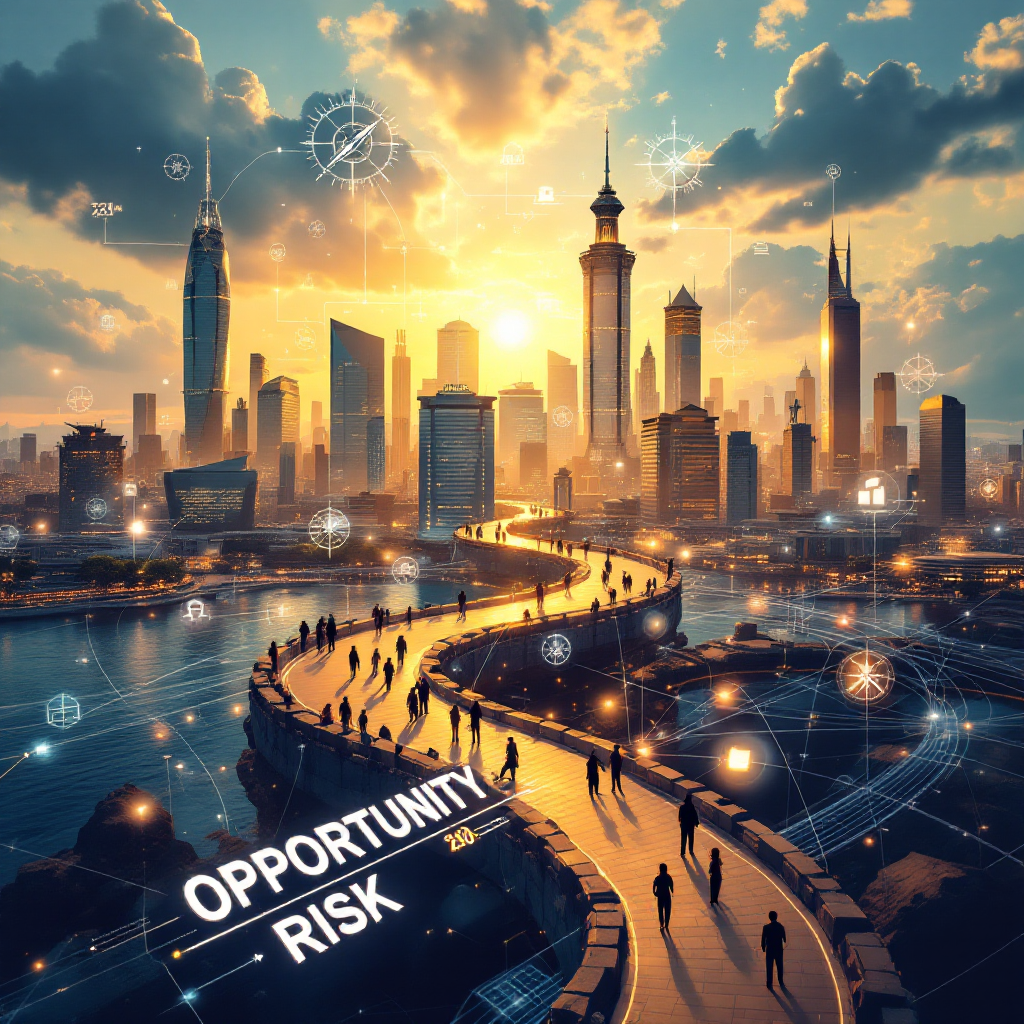
Pakistan: A Vast Experimental Ground Embracing Risks and Opportunities Simultaneously
Climate disasters, infrastructure fragility, political instability… At first glance, headlines often paint Pakistan as a “risky country.” However, by broadening our perspective just a bit, we see that this very instability is also an experimental ground where new market rules and growth pathways are simultaneously being forged. In other words, while the risks are undeniably substantial, there exists a future value that cannot be explained by risk alone.
What Makes Pakistan’s ‘Risks’ Different: The Reality of Structural Vulnerabilities
- Normalization of Climate and Disaster Risks: Mega-events like massive floods can shake the economy and daily life all at once. The structure is such that agricultural productivity, logistics, and housing infrastructure are affected in a domino effect, making these not mere “one-off shocks” but more akin to constant, ongoing risks.
- Costs of Infrastructure and Safety: Limited maintenance and management capabilities for basic infrastructure—roads, transportation, electricity—directly translate into operational risks like accidents, power outages, and logistics delays for businesses.
- Political Instability and Military Influence: Even with elections, the complex power structures can disrupt policy continuity or reduce predictability in the investment climate.
Crucially, these risks are not just reasons to avoid the market—they are also the very factors that fuel the strongest local demand. The more severe the climate, power, and transport issues, the larger the market becomes for technologies and services that solve these problems.
Where Do Pakistan’s ‘Opportunities’ Grow: A Youthful Population and Digital Acceleration
- The Power of a Young, Large Domestic Market: The population size and median age structure steadily drive demand across consumption, education, employment, and housing over the long term.
- Expansion of the Digital Consumer Market: The spread of smartphones has bypassed traditional limitations like low bank account penetration. As a result, there is huge potential for rapid growth in fintech, mobile payments, digital remittances, and online commerce.
- IT Services and Outsourcing Potential: An English-speaking workforce combined with cost competitiveness creates significant “price-to-performance” advantages in software development and business process outsourcing (BPO). This opens possibilities targeting both domestic consumption and export (service) markets simultaneously.
In summary, it is already too late to view Pakistan solely as a traditional manufacturing and agriculture-based country. The digital demand driven by its young population is reshaping the speed and nature of the market.
Reading Pakistan as the ‘Future’: Designing Markets on the Assumption of Risk
The crucial question in Pakistan is not “Are there risks?” but rather, “How do we design with those risks as a given?”
- Stepwise market entry (pilot → scale-up) is more advantageous than aiming for quick wins,
- Multiple scenarios that reflect infrastructure and policy fluctuations are essential, and
- Success frequently hinges on local partnerships and information channels.
Ultimately, Pakistan is not a market to be excluded due to instability—it is a market where new opportunities are created by solving or circumventing that instability. For this reason, Pakistan should be viewed as a vast experimental ground where risk and growth coexist, holding value far beyond mere risk.
Comments
Post a Comment