 \n
\n
Disney+ Transforms into a Fandom Hub: Beyond OTT to ‘Live Entertainment’
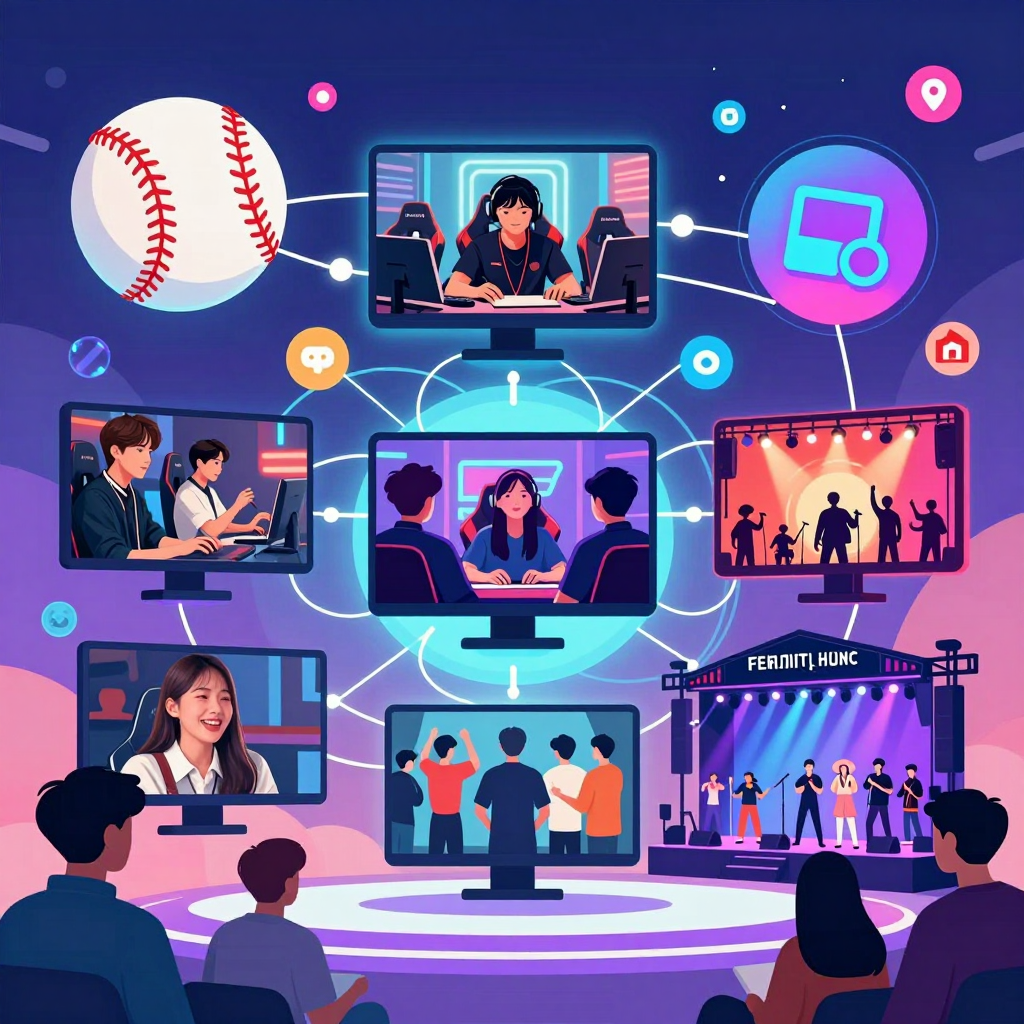
What if Disney+ evolves by 2026 from a simple streaming service into a live entertainment hub encompassing real-time sports, esports, and global music festivals? This shift marks a transition from “OTT you watch and forget” to “a platform you log into every day for games, performances, and events.” In other words, it aims to change content consumption from a single movie or drama episode to a fandom’s calendar of seasons, tournaments, and festivals.
The vision Disney+ presents is clear.
- Sports, with their fixed schedules, boost user visit frequency by encouraging viewers to watch together at the same time.
- Esports has great potential to create ‘participation’ beyond just viewing, thanks to the combination of core fandoms and communities.
- Global music festivals attract fans with distinct genre preferences into the platform, offering choices like “Today, it’s not drama, but a live concert.”
Ultimately, while building on its vast IP library (Disney, Pixar, Marvel, Star Wars), Disney+ plans to expand by adding ‘live events’ as a touchpoint in 2026 to unite fandoms. Moving beyond its familiar image as a family-centric OTT, it aims to become a service users feel compelled to access every day, each for their own reasons. That’s the next stage Disney+ is pursuing.
Disney+ Expands Live Streaming Spectacularly: Sports, Esports, and Music United in One Place
From live MLB broadcasts to the globally exclusive live streaming of the LoL KeSPA CUP, and real-time coverage of the Lollapalooza Festival. Now, one question stands out: How will Disney+’s push to strengthen ‘live content’ reshape our viewing habits and subscription standards?
Why Disney+ Is Serious About Live: From “Occasional OTT Viewing” to “Daily Platform Habit”
Movie- and drama-centered OTT platforms usually see spikes only at season releases. In contrast, live content—packed with games and event schedules—boosts the frequency of user visits itself. Disney+ putting live front and center is an attempt to change the content competition from “number of titles” to “visiting habits.”
Disney+ MLB Live Broadcasts: The Ace to Anchor Baseball Fandom on the Platform
MLB holds a strong fanbase even in Korea. By offering live coverage of key games from the regular season through the postseason, Disney+ becomes not just a VOD library, but “the place you go to watch today’s game.” This shift is powerful once habits form. Users naturally follow through—from pregame previews to postgame highlights and related documentaries.
Disney+ LoL KeSPA CUP Global Exclusive: Bringing the ‘Shared Experience’ to OTT
Esports isn’t just about results—it’s about real-time reactions and cheering together. Disney+’s global exclusive live broadcast of the LoL KeSPA CUP means bringing core fandom moments into the platform itself. The expected impact is simple:
- Fans shift from “consuming clips elsewhere” to watching live broadcasts
- The platform strengthens young viewer engagement through esports
- As live-centric programming grows, Disney+ gains room to design community-driven viewing experiences
Disney+ Lollapalooza Live: Making Music Festivals ‘Front Row at Home’
Global festival live streams like Lollapalooza offer a distinct advantage beyond sports and esports. Even without a specific team, beloved artists rally fans like a united team. When Disney+ streams the festival live, users tune in not for “replays,” but for the irreplaceable thrill of the moment. As a result, the platform secures time slots where fandom surges—across genres.
The Bottom Line of Disney+’s Live Strategy
In sum, Disney+’s live streaming expansion shifts the competition from “what to watch” to “when to tune in.” By gathering sports, esports, and music in one place, it builds a structure where diverse fandoms circulate within the same platform—creating a new ecosystem of habitual, shared engagement.
Disney+ Targets K-Content Market with Korean Original ‘The Empress of My Life’ and Genre Expansion
Shin Min-ah, Joo Ji-hoon, Lee Jong-suk, Lee Se-young. Just from the lineup alone, it’s clear: this is a must-watch series heading to Disney+’s fall roster. The original series ‘The Empress of My Life’ has already raised fans’ expectations through its teaser posters showcasing Empress Navier’s symbolic choices even before its release. The big question remains: Can the premium K-drama strategy extend its reach to global fandoms?
What Disney+ Bets on with ‘The Empress of My Life’: Not Just Local Hits but Global Simultaneous Targeting
‘The Empress of My Life’ isn’t merely a tool to capture Korean subscribers. Disney+ has a clear goal:
- Lowering barriers to entry from episode one with proven IP + star casting
- Using buzz generated in Korea as a springboard to connect with Asian and global viewing flows
- Most importantly, creating a subscription incentive with the exclusivity of a “K-original only available on Disney+”
In other words, this series is designed not just to be a hit on its own but to serve as a compelling reason for audiences to subscribe to Disney+.
When Does the ‘Premium’ K-Drama Formula Work? When Stories and Moments Ignite Fandom
What truly mobilizes global fandoms is surprisingly simple: a narrative that allows emotional immersion into characters and iconic moments (memes, memorable lines, relationships) shared across social media that spark explosive interest. Even the title ‘The Empress of My Life’ carries a powerful promise. With clear conflict structures and dramatic choices front and center, it resonates even with overseas audiences.
For Disney+, the more successful this series is, the stronger the learning effect becomes that “there’s a reason to wait for Korean originals on Disney+,” paving the way for future K-original launches.
Disney+ Broadens Genre Horizons: From ‘Family OTT’ to ‘Adult Taste’
Beyond Korean originals, Disney+ is actively expanding its genre spectrum on the platform. For instance, with darker-toned mystery and thriller originals (like ‘Furious’), Disney+ signals a clear move away from being pigeonholed as a “family-only” service.
This combination matters for a simple reason:
- Widening the audience with romance/narrative-driven K-dramas
- Securing adult viewing hours through thriller/mystery genres
- Ultimately transforming Disney+ from “an app for specific genres” into a go-to platform for everyday viewing
‘The Empress of My Life’ stands right at the core of this shift, poised to become the most popular and symbolic card in Disney+’s evolving playbook.
Disney+ Ad-Supported Plans and Promotions: The Hidden Side of a Changing Subscription Model
What has replaced the vanished free trial? Disney+ is breaking away from the ‘free preview → paid conversion’ formula, reinventing its subscription model to run an ad-supported (low-cost) plan + a premium (high-cost) plan + partnership promotions (lowering entry barriers) all at once. On the surface, it looks like more choices, but underneath lies a clear goal: securing subscribers while defending ARPU (average revenue per user).
The End of Disney+ Free Trials: From “Free Entry” to “Conditioned Benefits”
After discontinuing its 1-month free trial, Disney+ has shifted from simply offering free access to leveraging partner-based incentives (telecom providers, memberships, points).
The key here is that benefits are no longer “free to all” but are granted only to those who subscribe through specific channels. From the platform's perspective, this reduces reckless trial users and allows for more precise targeting of customers with higher payment potential.
Introducing Disney+ Ad-Supported Plans: Capturing Price-Sensitive Users Without Sacrificing Revenue
The ad-supported plan is Disney+’s answer to the question: “Does lowering prices reduce revenue?”
The principle is straightforward.
- Users sensitive to price are led to the ad-supported plan,
- Users who dislike ads remain on the premium plan, and
- Ad-supported users generate dual revenue streams: subscription fees plus ad revenue.
In other words, the ad-supported plan is less a discount product and more a ‘gateway’ expanding the customer base. Especially in a saturated OTT market, strong content alone isn’t enough—price and perceived value must convince simultaneously.
Annual Discounts, Coupons, and Partnership Bundles: Designing to Reduce Subscription ‘Friction’
Filling the void left by fewer free trials are annual discounts, coupons/codes, and partnership bundles with telecom providers. This combo appears to users as “a cheaper way in,” but from the platform’s perspective delivers:
- Encouragement of annual payments: lowers cancellation risk and stabilizes cash flow
- Partnership promotions: share customer acquisition costs (CAC) with partners or run campaigns more efficiently
- Coupons/points: amplify perceived benefits beyond simple discounts, boosting conversion
Ultimately, Disney+ promotions converge on one conclusion: they’re optimized not for “letting users watch free for longer,” but for “making it easy to start paid subscriptions and keep them active longer.”
Core Summary of Disney+ Subscription Model: “Bring More People In—Make More Money”
In short, Disney+’s pricing changes reflect a new phase in the subscription economy—not just simple price tweaks.
- Ending free trials: focusing on increasing conversion rather than indiscriminate giveaways
- Ad-supported plans:吸 price-sensitive users + supplement ARPU with ad revenues
- Partnerships/coupons/annual discounts: lower entry barriers while designing for long-term retention
The clear point of focus now is this: as Disney+ expands live and original content, will this subscription model fuel a virtuous cycle of “content investment → viewing habits → long-term subscriptions”? The answer will determine its success or failure.
Disney+ and the Future: Maintaining the Platform or Focusing on Content Licensing?
Wall Street analysts are posing a provocative question: Could Disney increase its corporate value by up to 40% if it shifted focus from directly operating its streaming platform (Disney+) to concentrating on content production and licensing sales? So where is Disney+’s medium to long-term strategy headed?
Why Keep the Platform: “A Business That ‘Directly’ Owns Its Fandom”
Choosing to maintain Disney+ means much more than just running an app. It’s a strategy to keep subscriber data, payment relationships, viewing habits, and fandom enthusiasm all locked inside the platform.
Especially with upcoming changes in 2026—such as incorporating live sports, esports, and global festivals—Disney+ could evolve from an OTT service you “occasionally turn on for movies and dramas” into a habit-forming service you log into every day for games and events. At this stage, the platform becomes not just a distribution channel but the very hub of fandom.
The Case for Licensing: “Wider and Faster Cash Flow”
On the flip side, a licensing-focused strategy is what Disney has excelled at in the past.
After theatrical releases, Disney sells rights to broadcasters and other OTT platforms, maximizing revenue through multiple channels. From Wall Street’s viewpoint, the issue is straightforward: streaming demands ongoing expenses for production, marketing, and infrastructure, while profitability improvements may lag behind. This perspective sees Disney+’s exclusive supply as a move that sacrifices external licensing revenue and exposure opportunities.
Disney+’s Likely Middle Ground: A Hybrid of Exclusivity and Distribution
The realistic scenario is less about shutting down the platform entirely and more about centering Disney+ while mixing exclusivity with licensing according to circumstances. For example:
- Franchise hits, originals, and live events that define the platform’s identity stay locked on Disney+
- Content where revenue recovery and wide exposure matter adopts a windowing strategy (licensing) to boost turnover
Ultimately, the key question converges into one: Can Disney+ leverage live and original content to create “a reason subscribers can’t quit,” while effectively managing cost structures to prove profitability? Whoever solves this puzzle could well decide Disney’s fate for the next decade.
Comments
Post a Comment