 \n
\n
Dodgers vs Yankees: The 2024 World Series Rematch That Will Define the Second Half
Last year's champions, the Dodgers, are set to clash once again with the storied Yankees in a marquee matchup that signals the start of the 2026 second half. Aren't you curious why this rematch is sparking such intense passion among American baseball fans, and what’s changed since then? To get straight to the point, this series isn’t just a popular showdown—it’s being viewed as a realistic barometer that will shape the second half landscape.
The strongest reason lies in the fact that the memories of the 2024 World Series still linger in the same venue, Yankee Stadium. In Game 5 back then, the Dodgers flipped the momentum with a huge fifth inning, sealing a thrilling 7–6 comeback victory and even celebrating with champagne in the visitor’s clubhouse. For Yankees fans, it’s remembered as “the night the ground was taken away,” while for the Dodgers, it’s become an iconic moment symbolizing their dynasty. That’s why this Dodgers vs Yankees showdown, despite being a three-game regular season series, is naturally treated by American media as an October preview.
What heats up this rematch further is the stark contrast in the two teams’ current status. The Dodgers are cruising with the best win percentage in the league, reinforcing their “dynasty team” narrative, while the Yankees remain contenders, yet start the second half with the looming question: “Do they have what it takes to win it all?” In other words, this three-game series carries weight far beyond the standings.
- For the Dodgers, it’s a stage to prove the continuation of their dynasty, and
- For the Yankees, it’s closer to a reset button against the same opponent, on the same field.
Add to this the timing—the very first weekend of the second half—and this series transforms from just a “premium matchup” into a signal game that sets the tone for the months ahead. It’s not just about wins and losses; from the moment impressions are made about who stays more composed and who looks like a more complete team, the storylines for these two clubs will take on entirely different hues moving forward.
Dodgers vs Yankees: The Intersection of Past Glory and Present Destiny
The scene from 2024 comes rushing back. The Dodgers, who flipped the game by scoring five runs in the fifth inning alone, went on to seal the World Series right at the same Yankee Stadium. The champagne celebration that filled the field and the visiting clubhouse was not just a record of victory—it was a symbol etched with emotional undertones in this rivalry. And now, on that very stage, the Dodgers vs Yankees face off once again.
What makes this three-game series truly special is that “rematch” is not just a marketing phrase. Having recently claimed the World Series title, the Dodgers share a collective memory of how to win. On the other hand, the Yankees don’t erase that painful memory; instead, they carry it with them. The experience of watching their rivals celebrate a championship on their home turf is a burden, but at the same time, it becomes the fiercest fuel to turn this series into a narrative of revenge or redemption.
What’s truly fascinating is how the “present destiny” functions differently for each team. For the Dodgers, this series is a test of continuity, a chance to prove their dynasty. The question, “Are we still that team?” must be answered not just through results and depth, but also through their attitude in high-stakes moments. For the Yankees, it’s a verification of identity—“Are we really contenders?” There is no room for excuses when facing a powerhouse, especially in the most painful arena for a rematch.
Ultimately, the essence of this series isn’t about replaying a scene from the past. It’s about who can fill the gap left by the champagne and silence with their baseball of today. The Dodgers aim to summon the familiar air of victory once again, while the Yankees seek to shatter that atmosphere and rewrite their own story. This Dodgers vs Yankees isn’t just a big matchup—it’s a stage where two teams’ time and emotions collide head-on.
Dodgers vs Yankees: Dynasty Dodgers vs Yankees embroiled in ‘Winning DNA’ controversy — Current Power Analysis
The Dodgers enter the Bronx carrying the best winning percentage in all of MLB, while the Yankees face scrutiny amid criticisms of lacking championship experience. This Dodgers vs Yankees matchup isn’t just a straightforward comparison of rosters—it’s a stage that reveals how lineup depth and clubhouse ‘DNA’ truly determine the rightful champion.
Dodgers: Lineup Depth Proven by ‘MLB-Best’ Performance
The Dodgers’ 61–36 record, the league’s highest winning percentage, is a testament to the team’s excellence. External analysis recognizes the Dodgers for their strength not just in short-term form but in their full-season profile (consistency) and, above all, lineup depth.
In other words, even with fluctuations in individual players or variability in starting pitching, the lineup is structured to consistently lift the team’s baseline performance. Such a team is not about “winning big one game,” but about maintaining a steady edge through a three-game series.
Another critical factor is the accumulated habit of winning built through back-to-back championships in the past two years. The intangible assets like routines in big games, shifting momentum, and pinpoint focus in crucial innings create an unquantifiable stability that doesn’t show up on the stat sheet. This is exactly why the Dodgers are regarded as a ‘dynasty’.
Yankees: Contender Power vs ‘Winning DNA’ Gap Debate
The Yankees also boast a solid 54–42 record and possess the firepower to shake up the second half. But what stands out in this series is less their ceiling and more the need for verification.
Legend Alex Rodriguez’s comment—that for a franchise with 27 titles, the team’s clubhouse has surprisingly few true champions—reinforces the narrative that the Yankees’ current weakness lies not in skill but in experience and context.
This makes the Yankees’ lineup choices symbolically significant. Utilizing Cody Bellinger in left field as an opener isn’t just a matchup tactic, it’s a signal that they’re entrusting the core of “players with championship experience” to take command against the Dodgers. The key question is how players like Bellinger, Goldschmidt, and Domínguez can generate not just a “big hit” but a sustained flow of consecutive scoring against the Dodgers' pitching staff.
Which Looks More Like a ‘True Championship Team’? Depth-Dominant Dodgers or Proof-Driven Yankees
To summarize, the current power dynamics in the Dodgers vs Yankees showdown break down like this:
- Dodgers: Lineup depth + full-season consistency + accumulated championship experience → a team that “doesn’t crumble even when shaken”
- Yankees: Star power and competitive fire are evident, but under “winning DNA” scrutiny, they must prove themselves against elite opponents in a series
Ultimately, this series is likely to serve as the first litmus test of the second half, revealing not just who wins and loses but what it takes for the Yankees to transition from a “good team” to a “champion team,” and why the Dodgers remain the most trusted title contender in the league.
Dodgers vs Yankees: Blazing Starting Pitcher Showdown and Symbolic Lineup Decisions
The atmosphere of the first series of the second half is usually about “resetting,” but this Dodgers vs Yankees matchup is different from the very start. The opening game features a direct clash between Roki Sasaki vs Gerrit Cole, and the Yankees send a clear message by choosing to put Cody Bellinger in left field in their lineup. The combination of these two elements means that this series is about much more than a simple win—it shapes the flow of the second half and the psychological battle ahead.
Sasaki vs Cole: A Duel Between ‘Power Stuff’ and a ‘Proven Ace’
On the surface, Cole looks more stable. His season ERA, career track record, and proven ability to perform in “big games” all give him the edge. The Yankees’ decision to start Cole on the very first day of the second half clearly signals their intention to seize the early momentum against the Dodgers dynasty.
On the other hand, Sasaki’s season ERA may look volatile, and that instability can’t be ignored. But his strikeout ability (with 80 Ks) reveals that once he locks down the strike zone, he’s the kind of pitcher who can shut down an opponent quickly and efficiently. The first critical crossroads is clear:
- Can Sasaki keep walks and extra-base hits under control early to safely get through five innings?
- Can Cole minimize mistakes against the Dodgers’ deep lineup and win the pitch count battle?
This matchup isn’t just a battle of “ace vs rookie,” but boils down to experience prevailing versus pure electric stuff overwhelming. The answer will set the tone for the entire series.
Yankees’ Use of Bellinger in Left Field: A Symbol Beyond Strength
The most striking aspect of the Yankees’ lineup is the starting role for Bellinger. Especially given that they face the Dodgers, this choice carries heavy symbolism. Within the Yankees organization, where talk of “championship DNA” is rampant, putting a player who has actually won a World Series front and center is more than a tactical reply—it’s a declaration.
Bellinger’s presence resonates in two ways:
- Clubhouse message: “We see this series not just as an event but as a true test.”
- On-field strategy: In a situation with key hitters missing or struggling, the lineup aims to approach a ‘complete’ form, balancing right and left hitters and defensive positioning.
From the fans’ perspective, it also triggers emotions. A name that once symbolized the Dodgers’ strength now returns in a Yankees uniform to face the same rival. With this one scene, the Dodgers vs Yankees rivalry is primed to transcend stats and become a compelling narrative.
Conclusion: The First Game Decided Not by Pitching, but by the ‘Initial Message’
As the second half begins, both teams face the same challenge. The Dodgers must prove their “dynasty momentum,” while the Yankees must show the “look and feel of a championship team.” That answer will likely come down to small moments—Sasaki’s first pitch in the top of the first, Cole’s first crisis management in the bottom of the first, and Bellinger’s first plate appearance. These seemingly minor scenes will define the direction of this thrilling series.
The Tense Eve Painted by the Betting Market and Air Quality: Dodgers vs Yankees
What makes the upcoming Dodgers vs Yankees three-game opener so special is that the outcome cannot be settled by mere power rankings. The betting market is locked in a fierce tug-of-war, reflecting almost equal win probabilities for both teams, while above the field, the smoky skies of the Bronx, hazed by Canadian wildfires, add another layer of tension. Few moments before a game heighten anticipation like the setup where “skill is evenly matched, and variables abound.”
Odds Close to a ‘Pick’em’: Betting More on ‘Day-of Condition’ Than Team Prestige
Both sportsbooks and prediction markets treat this matchup as virtually 50:50. Moneylines that refuse to tilt toward one side suggest that subtle factors—like a starter’s control on the day, bullpen fatigue, or a single clutch performance in scoring position—carry greater weight than brand power or season records.
Notably, the total runs line (set at 9) favors the mention of an under (low-scoring) scenario, hinting that despite the star-studded lineups, the actual contest could unexpectedly turn into a pitchers' duel or bullpen game.
The Direction of ‘Sharp Money’: Shifting Focus from “Who Will Win?” to “How Will They Win?”
When heavy bets concentrate on a particular team, it’s not just a popularity contest—it often indicates smart money anticipating a specific game script. Instead of simply asking “Who wins?”, bettors think in terms like “By how many runs, and via what scoring pattern?”
In this setup, the flow of the first one or two innings becomes critical. If the starter holds strong without early runs, the chance of an under outcome grows. Conversely, early walks and extra-base hits can quickly disrupt the carefully balanced market expectations.
The Hazy Bronx Skies: Air Quality Variable Influences ‘Psychology’ and ‘Game Management’
This series comes with the added factor of air quality (AQI) concerns. Even if forecasts suggest a normal game, lingering haze can tax players’ breathing, and teams might tactically lean toward more conservative bullpen use or cautious pinch-running and defensive substitution choices.
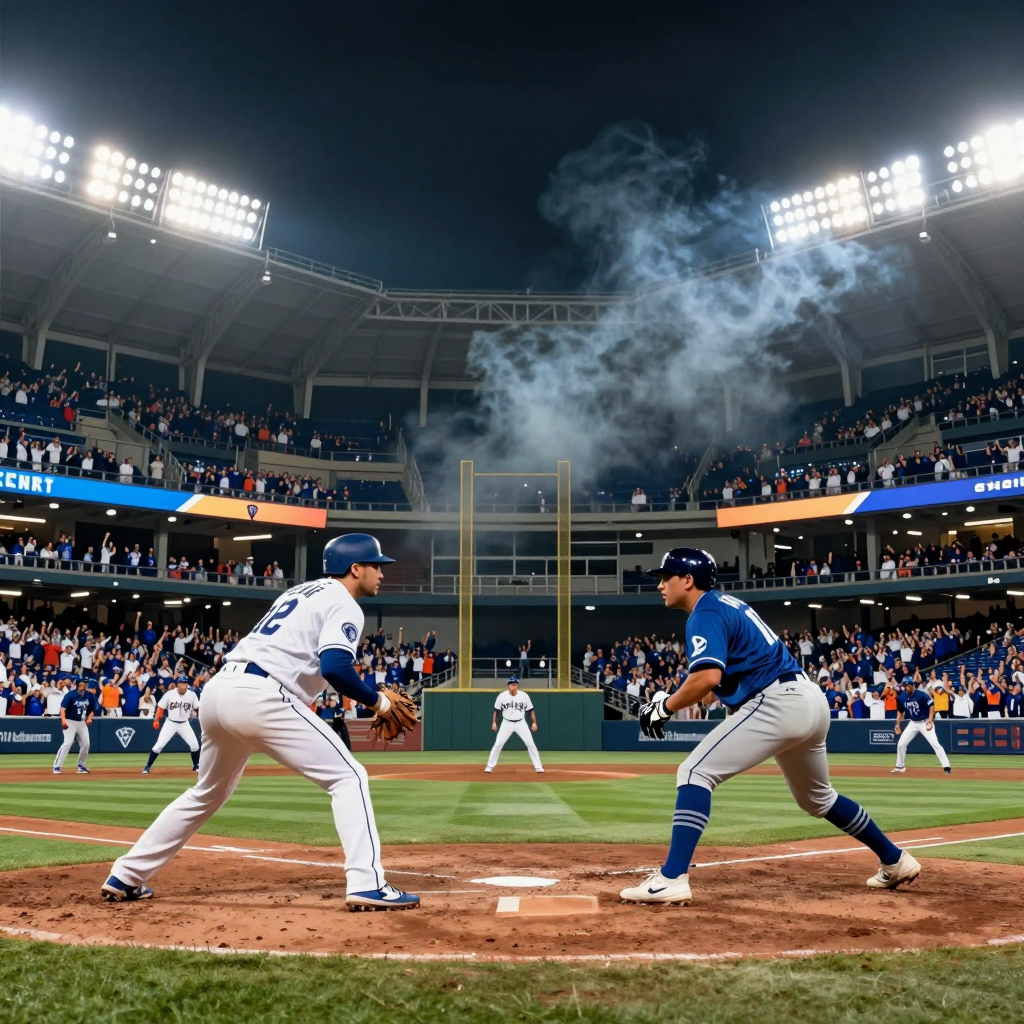
Above all, this hazy atmosphere carries symbolism. At Yankee Stadium, where the memory of the 2024 World Series still looms, the blurred skyline transforms the entire event from a “celebration” into a high-stakes crucible charged with tension.
Conclusion: Near-Deadlock Odds and a Battle of Variables
In summary, this Dodgers vs Yankees series opener is less about “Which team is stronger?” and more about “Who manages the variables better?” The razor-thin betting lines and the uncertain Bronx air quality set the stage for a contest with enough intrigue to potentially shift the tone of the entire second half of the season, starting right from opening weekend.
Comments
Post a Comment