 \n
\n
Who Is Mitch McConnell, The Titan of Washington Power?
Mitch McConnell has represented Republican power in the U.S. Senate for decades. But does he still remain at the center of the “Washington power structure” today? To answer this question, we must first examine how Mitch McConnell has built and maintained his power.
Elected from Kentucky, Mitch McConnell is the quintessential establishment figure within the Republican Party. Serving as the Senate Majority and Minority Leader through the Obama, Trump, and Biden administrations, he has become synonymous with “how Senate Republicans operate.” His influence hasn’t been rooted in speeches or popularity. Instead, he wielded power in unseen realms—Senate rules, vote counting, and crafting negotiations during crises.
At the core, he has long played three critical roles:
- Internal broker: Mediating between hardliners and pragmatists within the party to forge “votes that count”
- Deal maker: Engaging in behind-the-scenes negotiations with Democratic leadership to prevent catastrophic clashes like government shutdowns
- Signal sender: Communicating to markets and stakeholders the Washington predictability that “a deal will eventually be reached”
However, in early 2024, Mitch McConnell publicly announced plans to step down as Senate Minority Leader, opening the door to a generational shift. This decision is more than a personal retirement—it's a pivotal moment determining whether the Republican Party remains an ‘institution-centered party’ or tilts further toward a Trump/MAGA-style ‘mobilization-centered party.’
In other words, the best way to understand today’s Mitch McConnell is not to ask whether he remains on stage, but whether the negotiation and coordination grammar he created still functions within the Republican Party and the Senate. It is precisely here that repeated signals—seen in politics and media—indicate that the titan’s presence is no longer as commanding as it once was.
‘Vacuum’ and Strange Changes: The Current State of Mitch McConnell in 2026
The sight of Mitch McConnell walking directly into the Senate hearing room feels like a signal that he is “still active.” Yet, at the same time, descriptions like ‘vacuum’ and ‘really weird’ trail his name. This paradox of his simultaneous presence and absence is the key to understanding McConnell in 2026.
What His Attendance at Hearings Means: “He Hasn’t Disappeared”
In the spring of 2026, reports that McConnell appeared at a congressional hearing reveal at least two things:
- He has neither fully retired nor vanished from the political stage.
- At least symbolically, he remains one of the Republican Senate’s ‘senior statesmen.’
In other words, a single photo effectively disproves rumors of his disappearance. But the immediate follow-up question is: Does his mere presence mean his influence still works?
The Significance of the Word ‘Vacuum’: The Shift in How Influence Operates
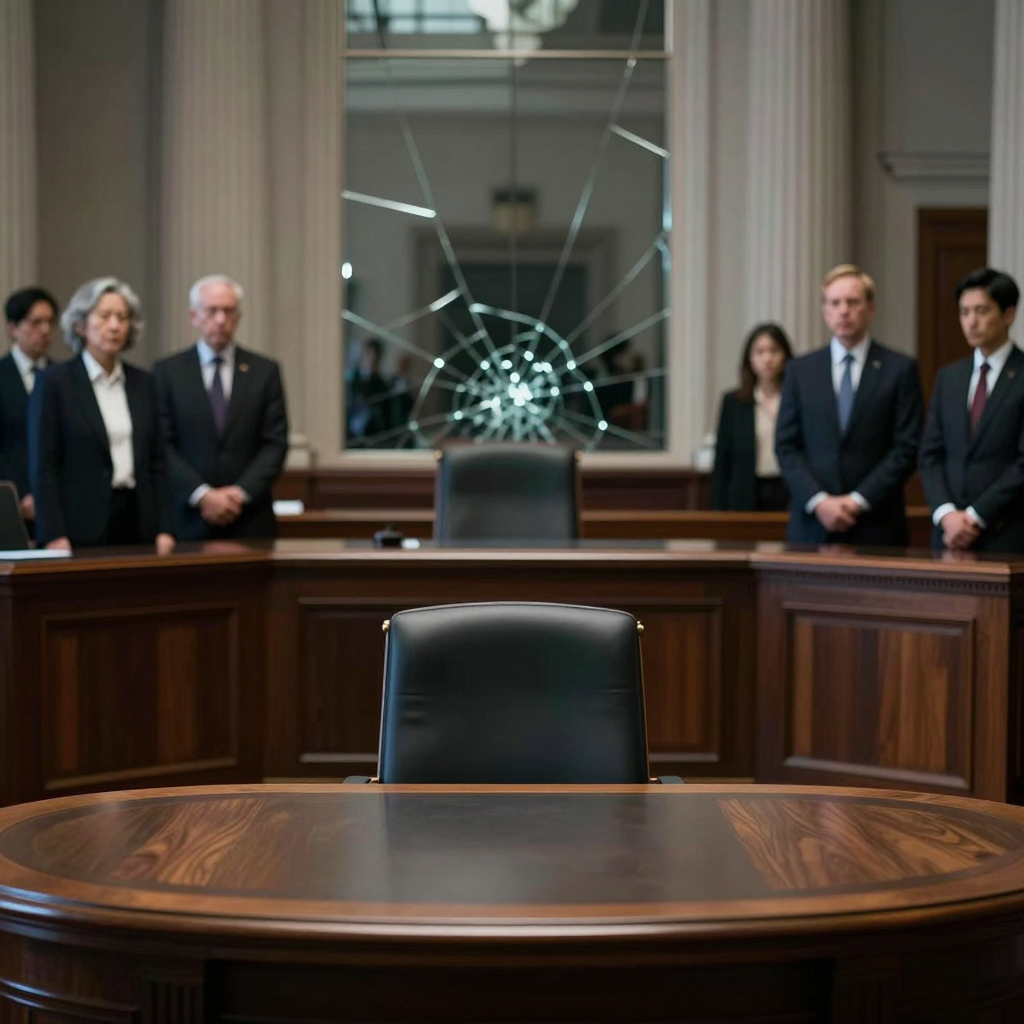
In the past, McConnell acted as an invisible coordinator in budget negotiations, shutdown prevention, and party arbitration. So when the term ‘McConnell’s vacuum’ comes up in times of budget or political upheaval, it’s not just about one person missing—it’s more like diagnosing that the engine of Washington-style dealmaking is weakening.
- His ability to manage hardliners and pragmatists within the party isn’t what it used to be
- The backchannel negotiations with Democratic leadership have loosened
- The market’s faith in a “deal will eventually happen” has faded
Ultimately, the ‘vacuum’ points less to physical absence than to a gap in political functionality.
The Meaning Behind “Really Weird”: Signs of a Power Realignment Beyond Health Concerns
When progressive media outlets say McConnell is “getting really weird,” they’re not just sensationalizing his health issues. More fundamentally, it reflects the sense that the Republican Senate’s power structure is in an unstable process of reshuffling.
- Who will become the true coordinator after McConnell?
- Is Trump/MAGA-style pressure politics shaking even Senate operating rules?
- Are major deals on budgets, security, and foreign policy becoming harder?
Because answers to these questions remain unsettled, observers inevitably find McConnell’s situation “weird.”
Conclusion: Mitch McConnell in 2026 Appears as a Figure Who ‘Shows Up but Cannot Stabilize the System’
In summary, McConnell in 2026 appears on stage but no longer provides the steady assurance he once did at the heart of budget and political operations. That’s why scenes of his attendance exist alongside evaluations of a ‘vacuum.’ The key point now isn’t his personal condition but to whom and how the ‘negotiation, arbitration, and signaling’ roles McConnell once held are being transferred.
Health Crisis and the Republican Power Vacuum: What Does It Mean? — Warning Signs Surrounding Mitch McConnell
While age and health problems may seem like personal issues, in Washington they directly shake the mechanics of power. Especially when a longtime Senate Republican “whip” like Mitch McConnell falters, that vacuum isn’t just a single vacancy—it represents the simultaneous loss of negotiation skills, trust signals, and crisis management capabilities.
Why Mitch McConnell’s Health Concerns Turn Into a ‘Political Risk’
Since 2023, concerns about McConnell’s health have repeatedly drawn attention, and with his leadership resignation plans announced in early 2024, the “post-McConnell” era officially began. Here’s the crucial point: his health issue isn’t about sympathy or a mere hiccup, but it raises structural questions, such as:
- Who will mediate internal party conflicts? The figure who once bridged hardliners and pragmatists weakens.
- Who will engineer ‘backroom deals’ with the Democrats? The longer public standoffs drag on, the cost of compromise rises.
- Who will provide predictability to the markets? Without the signal that “compromise will eventually happen,” uncertainty increases.
In other words, health concerns transcend an individual’s condition to serve as a barometer of the political system’s stability.
How the ‘Vacuum’ Shakes Budget and Political Management
Some reports characterizing McConnell’s absence as a “vacuum” are symbolic but telling. In the past, during budget stalemates or government shutdown threats, McConnell simultaneously managed intra-party vote counting, leadership persuasion, and negotiation channels with Democrats—crafting near-catastrophe compromises.
But as his presence weakens, the Republican Party becomes riskier via these paths:
- Internal consensus slows down: As hardliners label negotiations as ‘betrayal,’ leadership finds progress difficult.
- External negotiation power weakens: From the Democrats’ perspective, if “a reliable counterpart” erodes, deals become harder to seal.
- Crises become chronic: Instead of major agreements, only short-term patches repeat, growing fatigue in both policy and markets.
Political vacuums mean a vacuum of time, and that lost time makes crises costlier.
Why Financial Markets React First: The Absence of a “Predictable Deal Maker”
It’s no coincidence that McConnell’s vacuum is raised amid budget drifting fueling market anxiety. Markets price not so much the content of specific bills, but the credibility of the decision-making mechanism—“Will this system ultimately reach a deal?”
- Delays in negotiation add a risk premium across Treasury bonds, currencies, and stocks.
- Political uncertainty in the U.S. spillovers chain-reactively to nearby markets like Canada.
- The more entrenched the belief that “politics can’t conclude,” the higher the volatility in response to minor shocks.
Ultimately, Mitch McConnell’s health crisis and leadership decline signals more than just an internal power shift in Washington—it can be read as a breakdown in the trust circuit between politics and markets.
Trump vs. McConnell: The Unfinished Shadow of a Power Struggle (Mitch McConnell)
Trump and the MAGA movement aim to redesign the future of the Republican Party around an ‘activist’ core. So, what kind of outcome will the void left by Mitch McConnell, who wielded institutions and negotiations as his weapons, lead to? This question goes beyond a mere clash of personalities—it draws a critical dividing line over how the Republican Party will operate power going forward.
Same Party, Different Languages of Power: Institutionalism vs. Loyalty Politics
- Mitch McConnell has long been a believer in the ‘power of procedure’—Senate rules, vote counting, committee authority, and behind-the-scenes negotiations. He has maximized the party’s practical gains by mediating between hardliners and moderates and steering deals with Democrats to avoid cataclysms like government shutdowns.
- In contrast, Trump and MAGA prioritize ‘mobilizing public opinion’ and ‘loyalty tests’ over ‘rule sophistication’. They tend to pressure rather than persuade opposition, and use compromises less as achievements than as rallying signals.
This divide expands the internal GOP debate beyond “who is more conservative?” to a question about the very operating system (OS) of politics within the party.
The Republican Party ‘After McConnell’: The Void is the Direction
A recurring keyword in recent developments is ‘void.’ As Mitch McConnell recedes from leadership and his influence wanes, the Senate GOP risks being pulled in one of two directions:
Acceleration of a MAGA-Centered Realignment
When ‘who stands with Trump’ becomes the priority over negotiation and procedure, compromise on major issues like budgets, national security, and foreign policy grows ever harder. Internal dissent is handled through public pressure rather than adjustment, and leadership transitions from mediator to ‘megaphone for the front lines.’Attempt to Rebuild Institutional Conservatism
On the other hand, some senators may seek to restore ‘Senate-style conservatism’ that signals predictable legislation and market stability. Yet this effort faces limitations, as Trump’s influence and the party’s primary system make it difficult to recreate a strong central axis as before.
Why Does This Fight Spill Into ‘Budgets’ and ‘Markets’?
The Senate ultimately moves on numbers and deals. As Mitch McConnell’s roles—internal mediation, bipartisan negotiation, signaling to markets—are diminished, the traditional expectation that “a deal will eventually be reached” during budget standoffs wavers. This can swiftly translate political gridlock into financial market instability, uncertainty among allies, and weakened administrative policy drive.
The Remaining Question: The Outcome of the ‘Unfinished Battle’
Trump and MAGA want a Republican Party that seizes power through faster and clearer factional splits. Meanwhile, the party symbolized by Mitch McConnell is one that wins—slowly but surely—within the system. The real question is whether the space left by McConnell’s exit will be filled by the art of compromise or by loyalty contests. And that outcome will soon decide whether Washington’s predictability endures or fades away.
The Future of American Politics: Uncertainty in the ‘Post-Mitch McConnell’ Era
His departure signifies more than just a change of one individual. The power vacuum emerging as the stable pillar of American conservative politics gradually fades, and the true nature of the uncertainty created by that vacuum, are now the most critical variables in Washington.
After Mitch McConnell, Who Will Take on the Republican Senate’s ‘Coordinating Role’?
From the moment Mitch McConnell announced his resignation as the Republican Senate leader, the question was not only “Who will be the next leader?”
The more fundamental question is: Who can replace the function of bringing together hardliners and pragmatists, brokering last-minute agreements, and sending the reassuring signal to markets and allies that “it will eventually be settled”?
So far, he has simultaneously fulfilled these roles:
- An internal mediator healing divisions within the party
- A behind-the-scenes negotiator who reaches compromises with Democratic leadership
- A political signal sender reducing uncertainty during budget and debt ceiling standoffs
If this function weakens, negotiation in Washington becomes delayed, agreements become costlier, and outcomes become more unpredictable.
How the ‘Vacuum’ Spreads Anxiety to the Markets: New Risks in Budget Battles
Recent reports symbolically describe his presence as a “vacuum.” In budget standoffs and similar crises, as the expectation that “someone will eventually close the deal” fades, markets increasingly price in policy risk.
In other words, the diminishing influence of Mitch McConnell is not just a personnel issue — it signals a fundamental change in how governance operates.
- Negotiations shifting from ‘leader-centric’ to ‘fragmented faction bargaining’
- Increased likelihood that shutdown-averting agreements will become last-minute political events
- U.S. political uncertainty spilling over into financial markets and allied trust
When Washington’s long-standing mantra of “America eventually compromises” shakes, uncertainty rapidly spreads beyond political headlines.
Trump/MAGA vs. Institutionalists: The Direction of ‘Post-Mitch McConnell’
Mitch McConnell has embodied the classic institutionalist wing within the GOP, while Trump and the MAGA movement have intensified populist battles for loyalty, public opinion wars, and mobilization politics. This tension is not a temporary conflict but an identity struggle that will decide what kind of party the Republican Party becomes.
The ‘Post-McConnell’ era can be summed up as:
- Will the GOP maintain the traditional conservative party’s negotiating grammar?
- Or will it accelerate toward becoming a personality-driven, movement-based party?
What he left behind is not just a seat, but a toolkit and momentum for wielding power. Depending on who and how that vacuum is filled, the next decade of American politics could be far more turbulent than before.
Comments
Post a Comment