 \n
\n
The Beginning of "True Education": The History of Democracy and Human Rights Education
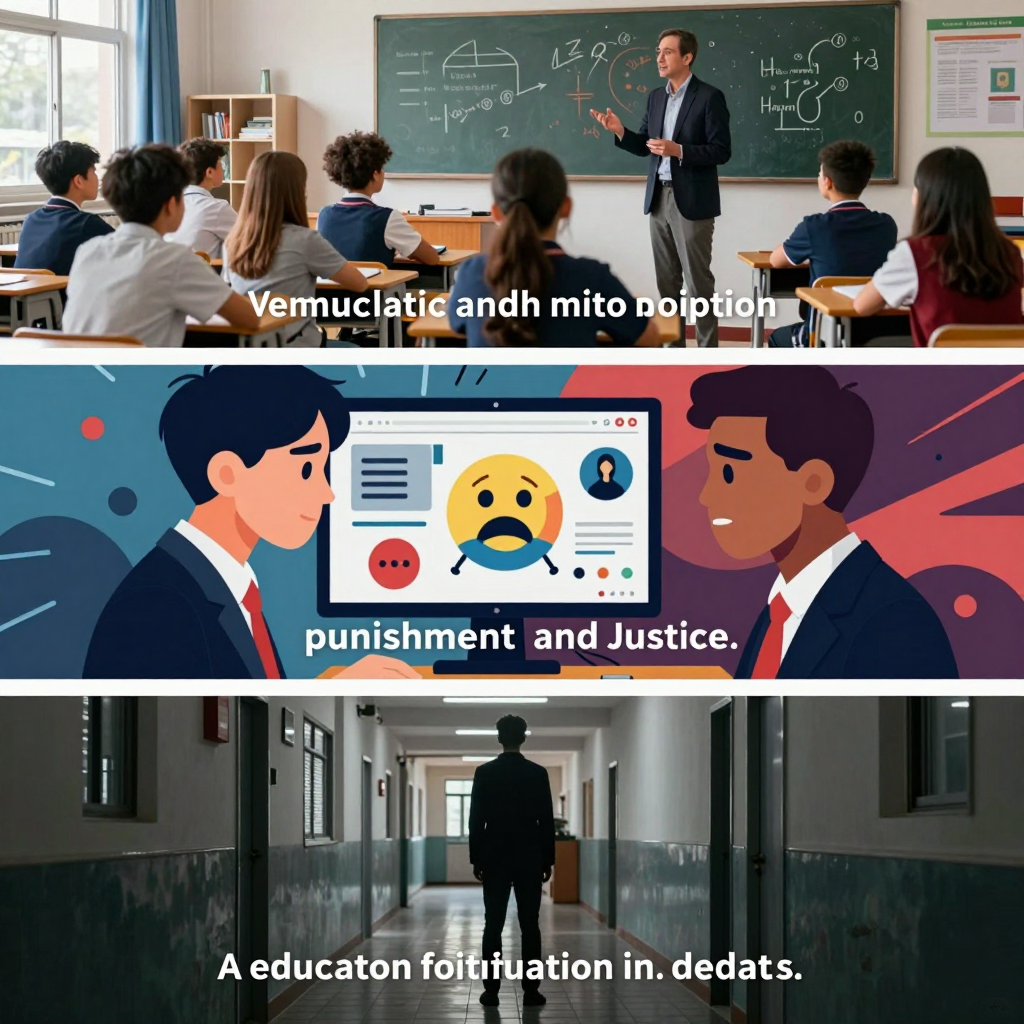
What was the philosophy behind the term "true education" when it first appeared? Although today it is sometimes used online to mean "let's put them in their place," its origin was almost the exact opposite. In the authoritarian educational reality of the 1980s and 1990s, teachers from the Korean Teachers and Education Workers Union (KTU) posed a simple question: For whom does education exist? It was through the search for this answer that the name "true education" was born.
The Consciousness Behind “True Education” That Tried to Transform Classrooms
Schools at that time tended to prioritize grades and discipline. KTU teachers criticized the system as “education that injects knowledge and demands obedience,” proposing instead that children should be seen not as memorizing students but as thinking and questioning citizens. Here, true education was not just a “nice phrase,” but a field-centered declaration aimed at redefining the purpose of education.
Core Philosophy of True Education: Democracy and Human Rights, Not Oppression
Early true education emphasized the following values rather than punishment or control:
- Democracy and Human Rights: Education that teaches dignity and rights, not silence before authority
- Critical Thinking and Questioning: The power to ask for evidence and engage in discussion, beyond just memorizing answers
- Life and Citizenship: Classrooms not just for exams, but for developing abilities to live within communities
In other words, true education was both an ethical standard to “raise children as human beings” and the language of educational democratization expressing that schools must reflect society.
Why Was “True Education” Necessary? A Name That Questions the Purpose of Education
KTU advocated for true education not as an ideological slogan, but because the field had lost its educational direction. When the question shifts from what to teach to why we teach, classrooms turn into factories for exams, and students are evaluated solely by scores. True education attempted to bring education back to being an issue of people and community at that critical point.
When we speak of “true education” again today, the first thing to restore is this beginning: the history of teaching democracy and human rights—not the thrill of retribution—that was the original meaning of the name “true education.”
The Changing Meaning of "True Education" Online: The Rise of Harsh Punishment and Punitive Memes
Why has "true education" become a symbol of online harsh punishment, meaning "discipline them by force if necessary"? The key lies in the word shifting from the language of educational philosophy to the language of venting anger. As issues like school violence and juvenile crimes are repeatedly exposed, and a sense of helplessness grows from “no one takes responsibility in reality,” the online space has become a place that consumes the catharsis of retribution before seeking solutions.
The Moment "True Education" Becomes a Meme: Instant "Let's Teach Them a Lesson" Remedies
In communities and comments sections, saying “We need to provide true education to the perpetrator” no longer means ‘correcting through teaching’ but rather enforcing order through harsh punishment. Here, true education shifts from a process (guidance, dialogue, healing) to an outcome (retribution, punishment, humiliation), even allowing violent expressions to be wrapped in the guise of "legitimate education."
- A word once embedded in the language of education
- Is recoded with the emotion of punishment
- And solidifies as a punitive meme that delivers a sense of relief.
"True Education" and the Juvenile Offender Debate: Punishment Framed by Anxiety
This meme culture grows stronger when intertwined with debates over juvenile offenders. Each time a serious crime occurs, demands intensify to “lower the age of criminal responsibility,” and policies tend to lean toward harsher punishment by targeting serious, major, and repeat crimes.
As a result, the equation true education = severe punishment spreads more naturally. The concept of ‘education’ shrinks to a mere tool of social discipline, while youth are increasingly viewed not as “developing citizens” but as “potential threats.”
The Distortion of "True Education": Contradictions in Selective Punishment
The problem is that harsh punishment rarely works as a consistent “principle.” While there are cries for strict punishment in some cases, when certain offenders (prestigious school students, symbolically “promising” youths) appear, calls for leniency emerge, citing “concerns for their future.”
At such times, true education becomes less a standard of justice and more an emotional tool drawn upon when public outrage flares. Victim-centered recovery or discussions on safe school environments get sidelined, fueling distrust through the perception of “some are forgiven, while others face harsh punishment.”
Questions Left by Online "True Education"
The transformed online notion of true education raises uncomfortable questions:
- Are we trying to compensate for failures in education solely through punishment?
- Is the language of anger replacing the language of “justice”?
- After the thrill of “teaching a lesson” fades, does the school actually become safer?
Ultimately, today’s true education is a word born from the desperation over broken classrooms. Yet, when that desperation fails to move toward restoration and prevention and instead hardens into a meme of retribution, its meaning can easily be distorted.
The Drama Syndrome: Classroom Scenes That Spark Empathy and Debate, and the Collision over the Meaning of True Education
Imagine a fictional world where a ‘Teacher Authority Protection Unit’ appears to sternly punish students. The drama
The Catharsis of True Education: “Since We Can’t Do It in Reality, Let’s Do It Through Drama”
The popularity of
- Vicarious anger release: As news of school violence, classroom breakdowns, and teacher authority violations repeat, the public’s feeling that “someone must be held accountable” builds up. The drama channels this emotion all at once.
- Clear-cut perpetrator-victim narrative: Unlike the complicated reality, the drama’s justice is swift and sharp. Therefore, the word ‘true education’ often shifts from its original educational philosophy to a meaning closer to “satisfying punishment.”
- Compensation for teachers’ helplessness: As the perception grows that procedures and regulations fail to protect teachers in actual classrooms, the figure who enacts “strong intervention” becomes increasingly appealing.
In short, the ‘true education’ depicted in the drama serves as a fantasy fulfilling many people’s missing sense of agency in reality—who intervenes, who takes responsibility, and how order is restored.
The Education Sector’s Discomfort: True Education Should Be About ‘Restoration,’ Not Punishment
However, reactions from educators are mixed—and understandably so. The concern is straightforward: if the solutions shown in the drama were applied in real education settings, schools could quickly become punishment-centered spaces.
What the education sector emphasizes is closer to this than heroic retribution:
- A system of prevention–response–restoration: Conflict isn’t resolved with “a single scolding.” Devices for preventing recurrence and restoring relationships (counseling, mediation, restorative practices, protective frameworks) must operate together.
- Balance between student rights and teacher authority: If reinforcing teacher authority simply means suppressing students, there’s a risk of reverting to authoritarian education of the past.
- The complexity of reality: Problematic behavior is intertwined with family background, mental health, peer culture, and flaws in the school system. While punishment is swift, it doesn’t structurally solve the problem.
Ultimately, the education sector’s vision of ‘true education’ is not about “disciplining by force,” but rather about designing restorative solutions that allow schools to truly educate again. The question raised by the drama becomes clear here: will we consume ‘true education’ as the thrill of punishment, or will we redefine it as a method to rebuild our shattered classrooms?
The Real-World Version of True Education: How Are Teacher Rights Protection and Recovery Systems Being Experimented With?
Beyond the dramatic ‘retribution’ portrayed in TV shows, what kind of true education policies are actually unfolding in schools today? Education offices nationwide are rapidly designing systems that emphasize prevention, response, and recovery over punishment, grounded in the conviction that “protecting teachers is equivalent to protecting instruction and students’ right to learn.” The key question is not about a single ‘one-shot’ solution but whether a sustainable framework encompassing the entire lifecycle of incidents can be established.
Translating True Education into a ‘Teacher Rights Protection System’: Chungnam Office of Education’s Launch of the Teacher Rights Protection Officer
The Chungnam Office of Education boldly introduced what they call the “Chungnam-style true education,” unveiling a Teacher Rights Protection Officer system. The focus is on creating a dedicated body that answers the question: “Who will take responsibility, and how, from start to finish when issues arise in the classroom?”
- Designed as a specialized institution directly under the superintendent: This signals a refusal to leave issues like teacher rights violations, malicious complaints, and conflicts as isolated ‘individual teacher problems’ that schools must handle alone.
- Integrated prevention, response, and recovery support: The system connects preemptive measures, reactive responses, and post-event recovery in one seamless flow, prioritizing ‘prevention of recurrence.’
- A dual structure of teacher rights protection and recovery teams: Separating ‘blocking functions’ from ‘restorative functions’ aims to enhance operational efficiency.
In essence, true education here shifts away from “punishing someone and ending the matter” toward establishing an administrative and professional support system that allows teachers to continue teaching uninterrupted.
Seoul’s Experiment in True Education: Post-‘Teacher Rights Protection Five Laws,’ Is the System Functioning in Schools?
Following the revision of the so-called Teacher Rights Protection Five Laws, Seoul has created a Seoul-style education activity protection system and is actively discussing whether it is being properly implemented on the ground. Beyond the existence of laws and regulations, one critical question remains:
- “Do schools actually have a structure that enables them to operate according to manual procedures during complaints and conflicts?”
- “Is the division of roles between schools and the education office clearly defined for special complaints, including malicious ones?”
- “Is there a functioning support route that prevents teacher burnout and helps normalize lessons?”
At this stage, true education becomes less about ‘correct answers’ or ‘levels of discipline’ and more a matter of the operational capacity to keep the school environment intact.
Why Is ‘True Education’ Now Converging on Teacher Rights Protection? Teachers on the Edge and Collapsing Classrooms
The surge in teacher rights protection policies stems not from simple public opinion but from the tangible pressures teachers face. With the escalating risks posed by malicious complaints and misreported child abuse, teachers have been voicing distress over classrooms where they want to guide but simply cannot. Ultimately, the teacher rights debate has expanded beyond individual emotional issues to a fundamental question of whether schools can sustain their public mission of teaching.
In summary, real-world true education is increasingly defined as:
- Moving away from a retribution-centered narrative
- Establishing conflict-handling procedures and support infrastructures
- Restoring the daily lives of teachers and students to a recoverable state
For this experiment to succeed, the critical standard won’t be how harshly offenders are punished but whether the cycles of prevention, response, and recovery stay consistently connected without breaks.
The Current Debate on “True Education”: Confusion Fueled by Politicization and Populism
The reason “true education” has become a heated topic again is not simply due to the popularity of a drama or online memes. It’s because this term has been dragged into the language of politics, causing its meaning to quickly fracture. Some view “true education” as a rallying cry for restoring teachers’ authority, while others see it as a warning sign threatening students’ rights. Caught in the middle, schools grow more exhausted, and conflicts easily degrade into “camp versus camp” battles.
Especially during election seasons, simpler messages win out:
- Saying “We must protect teachers” immediately gains sympathy,
- and “We must protect students’ rights” is equally hard to reject.
The problem arises when these two collide, and “true education” is used not as a nuanced solution but as a weaponized frame attacking the opposing side. As the debate gets louder, the complex realities of schools vanish, leaving people stuck choosing between oversimplified options like “strict punishment or neglect.”
The Two Poles Divided by “True Education”: Teachers’ Authority vs. Students’ Rights, Punishment vs. Restoration
The politicized discourse on “true education” generally clashes along two axes:
Teachers’ Authority vs. Students’ Rights
Teachers claim they’ve lost the “right to teach” under the threat of malicious complaints and reports, while from the perspective of students’ rights, there is wariness about a return to authoritarianism. Both perspectives highlight real issues, but when framed as battles, they only stir mutual fear.Punishment vs. Restoration
Online, “true education” often becomes a call for “discipline and punishment.” Conversely, education policies and experts stress system-level issues like prevention, intervention, and restorative follow-up. In short, venting anger through punishment and rebuilding schools through restoration point in different directions.
If this gap remains unresolved, “true education” won’t solve problems but will become a word that breeds distrust between sides.
Questions We Must Ask to Move Beyond “True Education”
To end the chaos, the debate must shift away from “Who speaks the truer ‘true education’?” toward asking:
What are the minimum principles schools must uphold?
Without safety, learning, and dignity, no education can genuinely take root.When teachers’ authority and students’ rights collide, what criteria guide judgment?
Structures must rely on procedures, documentation, professional judgment, and clear accountability—not personal emotions.What mechanisms exist to prevent recurrence beyond mere punishment?
Discipline should be a beginning, not an end. Prevention, relationship restoration, separation measures, and support systems must be part of the conversation.Are policies designed to win votes or to transform actual classrooms?
The more “true education” becomes a slogan, the more classroom details slip away. Ultimately, success depends on implementation, not just rhetoric.
There is no single sentence to conclude the “true education” debate. Yet the direction is clear: only by returning from easy political slogans to concrete systems and principles that make schools work again can this term truly become a language for the future of education.
Comments
Post a Comment