The Ultimate Guide to the Yalu River: Exploring History, Geopolitics, and Environment of the Border River
 \n
\n
The Yalu River, the Hidden Boundary of the Korean Peninsula: The History and Present Shaped by the Yalu River
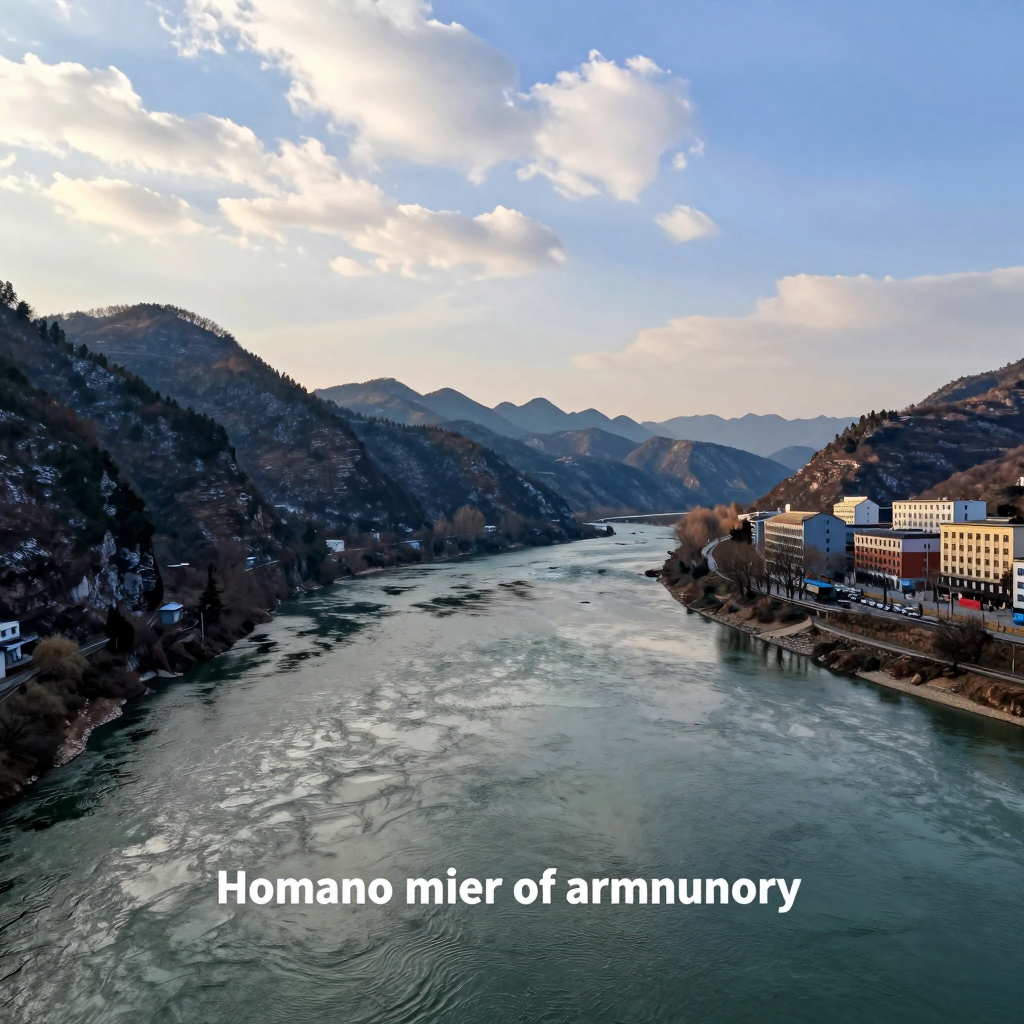
A river about 790 km long, originating from Baekdu Mountain and flowing into the West Sea. The Yalu River is not just a natural feature, but a space that renews the reality of a ‘boundary’ every day. On maps, it appears as a single line, yet upon that line lie layered memories of war, border economies, and unreachable landscapes. So, what role has this river played in the history and present of the Korean Peninsula?
Moments When the Yalu River Became a ‘Boundary Line’
Flowing between China (Liaoning and Jilin provinces) and North Korea (Ryanggang, Jagang, and North Pyongan provinces), the Yalu River functions as a national border river. This means the flow of the river is not just a waterway but the line of nations, control, and conflict.
- Historically, it was a defensive line and gateway. Since ancient times, the area around the Yalu River served as a passage to Liaodong and Manchuria, often acting as the standard for recognizing “where our land ends.”
- In modern times, it transformed into a corridor of war. Through the First Sino-Japanese War and Russo-Japanese War, this region became a stage for great powers’ military operations, drastically reshaping its landscapes.
- During the Korean War, it solidified as a symbol of the ‘Red Line.’ As represented in the phrase “up to the Yalu River,” it operated as a psychological and strategic boundary dividing China’s involvement and the war’s turning points.
To understand the Yalu River is ultimately to retrace how the Korean Peninsula’s boundaries were formed and maintained.
Today’s Yalu River: The Reality Created by Invisible Crossings
Today, while the Yalu River appears as a ‘closed border,’ it simultaneously serves as the most sensitive barometer of North Korea-China relations. Especially, the Dandong–Sinuiju section is often cited as the core axis of North Korea-China exchanges, where sanctions, blockades, and reopenings leave direct marks on the river’s surroundings.
- The river remains a crucial route for trade and logistics. When official transactions shrink, gray zones expand; when signs of reopening emerge, changes in crossing volumes are spotted as signals.
- At the same time, the Yalu River reveals the paradox of infrastructure. For example, structures like the New Yalu River Bridge, built on the premise of connection but failing to complete the link, make the bridges resemble thermometers measuring political and economic temperatures.
In the end, the Yalu River is not “a place stopped because it’s a border,” but rather, a place where more is at stake precisely because it is a border.
Summing Up the Yalu River in One Sentence
Flowing from Baekdu Mountain to the West Sea, the Yalu River is a ‘border river’ that simultaneously carries division and war, exchange and control, potential and limitations. Following this river, one begins to see how the Korean Peninsula’s present, which we believed we knew, actually balances precariously atop its very boundaries.
The History of the Yalu River: A ‘Border River’ That Became a Stage for War and Peace
From ancient times through the modern era, the Yalu River has been more than just a natural landmark—it has been a border persistently asking, “Where do we end and they begin?” At the same time, it served as a theater of war where armies, refugees, trade, and ideologies collided. Though the river itself has always remained in place, the order surrounding it has changed dramatically with each era.
Yalu River History 1) Ancient and Medieval Times: A Border Where Territory and Identity Clash
Since the Goguryeo period, the Yalu River region served as both a gateway to Liaodong and Manchuria and a defensive line. The river was both a “path to cross” and a “line not to be crossed,” a tension that became even clearer during the Goryeo and Joseon dynasties.
In particular, during the late Joseon era, the Yalu River and Tumen River repeatedly appeared as symbols of the border. To some, it was a line guaranteeing security; to others, it represented migration, land reclamation, and military control. It was a clash of different national imaginations over the very same river.
Yalu River History 2) Modern Era: The Battlefields Forged by the Sino-Japanese and Russo-Japanese Wars
From the late 19th to early 20th centuries, the Yalu River was dragged into the heart of East Asia’s power struggle.
- During the First Sino-Japanese War (1894), as Japan expanded its influence over Korea and Liaodong, the Yalu River area became a site of battles and military logistics. Following the war, with treaties and the reordering of international relations, the Yalu River ceased to be merely a regional river and began to be recognized as an international political boundary.
- The Russo-Japanese War (1904) also turned the area around the Yalu River into a strategic military stronghold amid fierce contests over Manchuria and the Korean Peninsula.
From this period onward, the Yalu River was less a livelihood space for locals and more frequently invoked as a military corridor chosen by great powers redrawing the map.
Yalu River History 3) The Korean War: The Moment ‘Yalu River’ Became a Red Line
The Yalu River leapt onto the world historical stage during the Korean War. The phrase “up to the Yalu River” uttered during the UN forces’ northward advance became more than a geographic goal—it sparked visions of the war’s end. Yet this phrase was simultaneously perceived by China as a direct security threat, prompting the entry of the Chinese People’s Volunteer Army crossing the Yalu and the bombing of nearby areas, which dramatically shifted the course of the conflict.
Afterward, the Yalu River carried divergent memories. In some narratives, it became the ‘river of support and solidarity’; in others, it stood as the ‘border of intervention and escalation.’ In short, during the Korean War, the Yalu River was a line that triggered a global response the moment it was crossed.
Yalu River History 4) The Ongoing Question Today: How Does a Border Become Peace?
Famous for its war-torn history, paradoxically, the Yalu River remains a site that questions the conditions for peace today. Borders both block and connect; they can hinder but also facilitate exchange and cooperation. Reading the river’s repeated wartime memories ultimately leads to the question: “How do borders create tension, and how can that tension be eased?” Understanding this river sharpens our grasp not only of the Korean Peninsula’s and Northeast Asia’s past but also of the choices facing us now.
The Yalu River: The Barometer of Today’s North Korea–China Relations
Why does the New Yalu River Bridge connecting Dandong and Sinuiju stand nearly complete yet linger for years with the nickname “the ghost bridge”? The answer goes beyond mere construction delays—it's tied to the role the Yalu River plays in today’s North Korea–China relations. This river remains the most tangible surface where trade, sanctions, quarantine, and infrastructure collide.
The Heart of Yalu River Trade: The Dandong–Sinuiju Line
Among the Yalu River border areas, the Dandong–Sinuiju stretch isn’t just symbolic—it’s the frontline. Here, trucks, railroads, and port operations interlock, concentrating North Korea–China exchanges.
Looking at this line reveals the flow:
- Increased exchange signals: North Korea’s growing dependence on China and rising inflows of daily necessities
- Decreased exchange signals: the activation of variables like tighter sanctions, internal controls, and quarantine measures
In other words, the Yalu River serves not only as a border but also as a thermometer of bilateral relations.
The Yalu River’s Sanctions ‘Gray Zone’: Where Legal and Informal Coexist
The frequent mention of the Yalu River despite UN sanctions is because it’s a passage where the impact of sanctions is measured. Observers monitor not just openly visible legal trade, but also informal transactions that adapt and continue in various forms.
When large-scale trades are blocked, logistics grow smaller and routes more dispersed. Such shifts underscore the Yalu River area as more than a simple border—it's a frontier where economic adaptation unfolds.
Why the New Yalu River Bridge Became a ‘Ghost Bridge’: Politics Movements Over Infrastructure
The New Yalu River Bridge is often introduced as a future-ready border facility with wide lanes and modern design. Yet limitations in functionality and delayed operations reflect forces beyond engineering:
- Delay in North Korea’s connecting infrastructure (roads, customs, hinterland development)
- The harsh reality of opening a major logistics artery amid sanctions
- Policy calculations in North Korea–China relations aiming to “keep it open, but at a manageable level”
Thus, the bridge isn’t just an unused structure—it symbolizes the pressing question of how fast and how wide openness across the Yalu River should be allowed.
The Yalu River and COVID-19: Lockdowns and Restarting Reveal the ‘Mode of Control’
During COVID-19, the Yalu River went beyond measuring relations—it turned into an experiment in national control. North Korea’s stringent border lockdown wasn’t just a health measure; it was a demonstration of how far trade and movement could be shut down.
As operations resumed gradually with freight trains and trucks, the Yalu River once again stood as a boundary reflecting politics and economics simultaneously.
The fastest way to understand the Yalu River isn’t by looking at a map, but by watching the moments when the bridge’s lights turn on and off. Whether the New Yalu River Bridge fully “opens” or remains “open-but-monitored” offers the most intuitive clue to what mode North Korea and China’s future relationship will take.
The Yalu River’s Water, Power, Environment, and Conflict: Another Face of the Yalu River
Remembering the Yalu River solely as a “border river” means seeing only half the picture. This river is not just a boundary line of war and diplomacy—it is a complex system that simultaneously generates electricity (energy), stores and releases water (water resources), and embraces pollution and ecology (environment). Especially when you think of the Supung Dam, originally designed as one of East Asia’s largest hydroelectric power projects, the story of the Yalu River expands beyond a simple landscape into a matter of ‘operation’ and ‘coordination.’
The Power Map of the Yalu River: Energy Heartbeat Created by the Supung Dam
The dams along the Yalu River basin are not mere civil engineering works—they are energy infrastructures embodying the intertwined interests of two neighboring nations across the border. At the center is the frequently mentioned Supung Dam (Supung Hydroelectric Power Station).
- The Supung Dam began construction during the Japanese colonial period and is recognized as a symbolic facility designed primarily for large-scale hydroelectric power generation.
- Even today, the Yalu’s hydroelectric power is discussed in close connection with North Korea’s power situation, as well as the energy and industrial demands of China’s Northeast region.
- The key issue is not just “there is a dam,” but how water is stored and released, and how electricity is allocated and managed. At this point, the Yalu River takes on the language of politics and economics immediately.
The Paradox of Yalu River Water Resource Management: When Cooperative Assets Become Conflict Factors
While dams generate electricity, they also control water flow. Therefore, water resource management in the Yalu River basin inevitably becomes sensitive during flood and drought seasons.
- During floods, gate releases can determine downstream water levels and damage,
- During droughts, maintaining reservoir volumes can reduce water availability downstream.
Within this structure coexist the expectations of “everyone benefits through cooperation” and the tension that “when coordination fails, everyone bears the consequences.” As climate change increases the frequency of extreme floods and droughts, the Yalu River ceases to be just a backdrop and becomes a testing ground for governance (management systems).
Yalu River Pollution and Ecosystem: Water Issues Spilling Across Borders
Another face of the Yalu River is its environment. Especially in downstream border city areas, industrialization and urbanization pose recurring water quality concerns.
- On China’s downstream side (e.g., near Dandong), industrial zones, urban sewage, and agricultural runoff overlap, repeatedly raising alarms about water quality deterioration.
- On the North Korean side, information is limited, but the lack of purification infrastructure and possible industrial discharges are frequently cited, making this a typical case of cross-border environmental issues.
From an ecological standpoint, the Yalu River basin holds great potential with estuaries, wetlands, and migratory bird routes. Yet, development pressures and political constraints easily create gaps in research and conservation efforts. As a result, the Yalu River is less a “scenic river” and more a river where energy, urbanization, and ecology clash simultaneously.
A Core Perspective on Reading the Yalu River: See It as a ‘System,’ Not Just a ‘River’
The Yalu River is a waterway, but in reality, it is a system connecting power generation – water resource control – environmental burdens – cross-border negotiation. Therefore, the most practical way to understand this river is not by asking “where does it start and where does it flow?” but by tracing who manages the water for what purposes, and where the resulting impacts accumulate.
The Yalu River in Culture and Its Upcoming Challenges
The Yalu River, etched into memory through songs, literature, and tourism, is more than just a “river flowing along the border.” It is a symbolic space layered with emotions and perspectives shaped by division. The reality that crossing the river directly is difficult only fuels stronger imagination of the Yalu, which then returns as narratives and images that cement our perceptions. So, the pressing question now is simple: What kind of story will we remember the Yalu River by, and what challenges will we treat it as moving forward?
The Yalu River in Songs and Literature: Where ‘Borders’ Become Narratives
The Yalu River is a frequently evoked motif in both South and North Korea. Beyond its physical impression as a long and majestic river, meanings such as “a river to cross,” “a river to protect,” and “a river that turns back” are layered on.
Especially in popular songs, folk songs, and literature, the Yalu River alternates between two faces:
- The stage of ethnic narratives: Collective experiences like anti-Japanese resistance, war, and separation intertwine with the image of the river.
- The scenery of division: The situation where people “can see each other but cannot reach each other” across a single river functions as a metaphor.
At this point, the Yalu River is less a precise geographical feature and more a symbolic map onto which era-produced emotions are projected.
The Yalu River Consumed by Tourism: Experiencing the ‘Visible Division’
Today, the river’s image in tourism is primarily shaped through the Chinese border city, especially Dandong. Sightseeing boats, observation spots, and structures preserving war relics transform the river into a “visible split.”
The core of the tourism experience is often less about the scenery itself than the felt contrast: a bright, bustling city on one side versus a restricted landscape on the other. This contrast is repeatedly reproduced in travel content, fixing the Yalu as a “window onto system comparison.”
However, this viewpoint risks erasing the living context and reducing the river to a mere spectacle. How we view the Yalu is closely tied to how we understand the world beyond the border.
Today’s Debates on the Yalu River: ‘Reality’ as Revealed by Research Keywords
Recent discussions around the Yalu River have moved beyond “appreciation” toward concrete issues. Especially in research and policy discourse, the main themes include:
- Borderland Studies: Viewing the border not as a line but as a living space intertwined with people, goods, and informal economies.
- Sanctions and Informal Economy: Tracking how enforcement, evasion, legality, and gray zones coexist.
- Climate Change and Water Governance: Floods, droughts, dam operations, and downstream damage emerging as cross-border problems.
- The Politics of Narrative and Image: Analyzing how the Yalu, “more vivid because it cannot be crossed,” is reconstructed through media.
In other words, the Yalu has become both a cultural object and a subject of data and policy, sparking new debates in the gap between these dimensions.
Upcoming Challenges: Shifting the Yalu River from ‘Symbol’ to ‘Management’
When thinking about the future of the Yalu River, what matters is not a “grand story” but a “more realistic consensus.” The challenges ahead can be roughly categorized into three:
- Establishing minimum standards for cross-border environmental cooperation
Water quality, ecosystems, and the preservation of estuaries and wetlands cannot be solved by one side alone. - Enhancing transparency of water and energy infrastructure
Dams and hydropower are cooperative assets but also potential sources of conflict, making information sharing and coordination mechanisms crucial. - Reflecting on the ‘ethics’ of tourism and content
Moving beyond consuming contrasts to narratives that include the lives and historical contexts of border residents.
Ultimately, the Yalu River asks us: Will we leave this river solely as a symbol of division, or will we expand it into a real space for addressing shared challenges? Once we grasp this question, the Yalu stops being a backdrop in the news and becomes a central subject for shaping the future.
Comments
Post a Comment