What Do Park Ji-sung and Lee Young-pyo Know? Seo Gang-il's Shocking Statement and the Power Struggle in Korean Football
 \n
\n
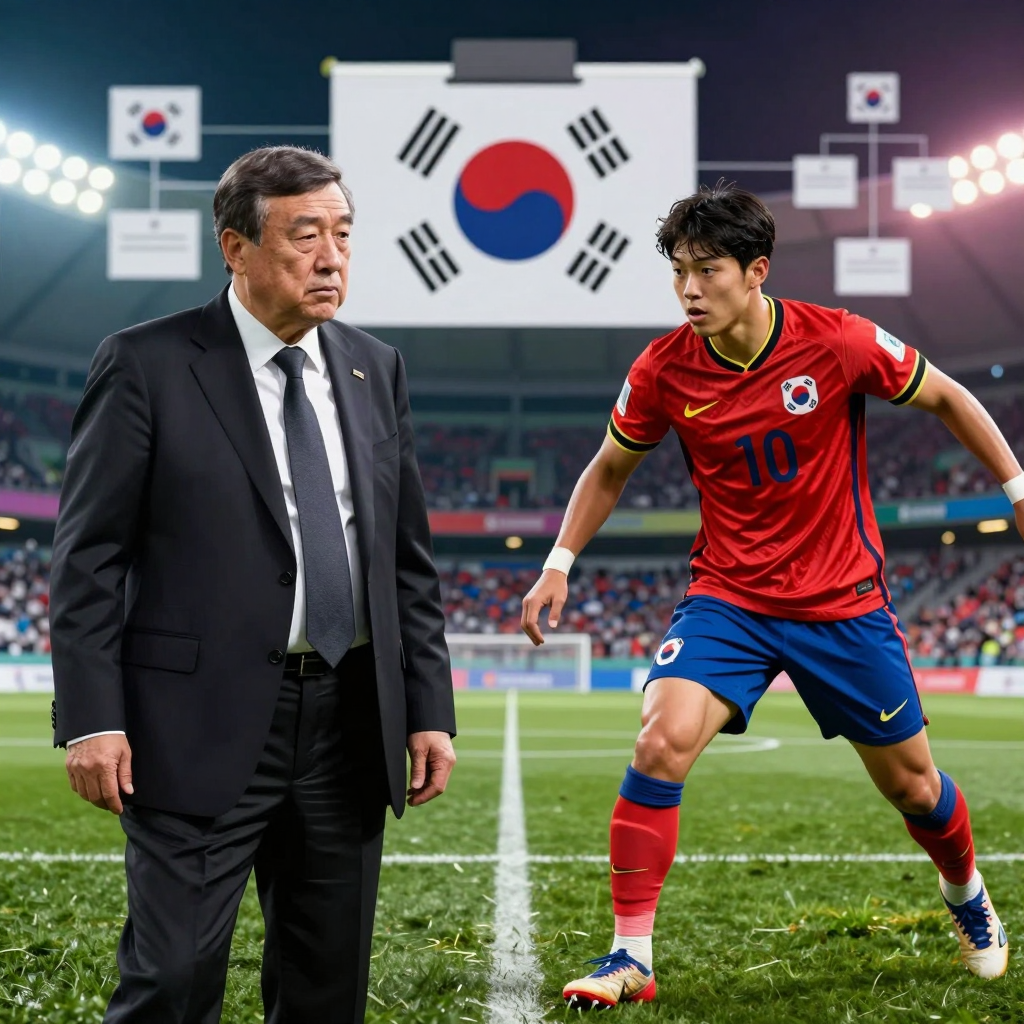
Seogang Il, President of Jeonbuk Football Association, Stands at the Epicenter of Power in Korean Football
At the moment when the K-Football Innovation Committee, led by Park Ji-sung and Lee Young-pyo, loudly proclaimed the need for change, there was one figure who fired back with the sharpest rebuttal: Seogang Il, President of the Jeonbuk Football Association. What began as a simple interview snowballed into igniting the long-suppressed power structure debates within Korean football.
Although not much of Seogang Il’s personal history is public, he currently serves as the president of the Jeonbuk Special Self-Governing Province Football Association and is recognized as a key pillar within the mayor/province association group, which wields significant influence over the Korea Football Association’s (KFA) decision-making. This point is crucial. Governance in Korean football has long faced criticism for being driven, not by grassroots fans, but through internal association networks and electoral systems, with mayors and provincial association presidents seen as the core players in this structure.
The spark for controversy was his blunt remarks. Seogang Il sharply criticized the innovation committee by implying, “What do Park Ji-sung and Lee Young-pyo really know…?”—directly challenging whether former star players can legitimately lead reform. At the same time, he urged them to “stop just criticizing and run for the association president election themselves,” framing the innovation committee’s push for reform as an “illegitimate external pressure.”
Moreover, he clearly opposed the move toward introducing a direct election system for the president, arguing that instead of changing the bylaws and election methods, a swift by-election under existing regulations should take priority. While this rationale sounded like an effort to “minimize administrative gaps,” given that the innovation committee and fans are demanding a “complete overhaul of the system,” Seogang Il’s messages inevitably come across as defending the status quo.
In the end, the reason Seogang Il stands at the heart of the debate is simple. He embodies the intersection where the language of change, as symbolized by Park Ji-sung and Lee Young-pyo’s innovation committee, clashes against the traditional operational methods, represented by the mayors and provincial association presidents. If Korea football’s biggest issue today is no longer “who is right” but who and how the association will be governed, then Seogang Il, President of the Jeonbuk Football Association, has become one of the most explicit figures revealing that conflict.
Establishment vs Reform: Remarks by Sogang-il, Former Jeonbuk Football Association President, Reveal Conflict with Park Ji-sung and Lee Young-pyo
The phrase "What do Park Ji-sung and Lee Young-pyo know…" goes beyond mere controversy over blunt remarks and sharply exposes where Korean football is currently divided. While the surface debate appears to focus on ‘qualifications,’ beneath it lies a concentrated clash over generational change and the restructuring of power.
The Symbolism of ‘Legends’ vs. the Logic of ‘Administration’
The Innovation Committee, involving Park Ji-sung and Lee Young-pyo, is popularly seen as the face of reform. Their trust earned as national team players, on-field experience, and public expectations combine to create the image of “those who will change the Association.”
In contrast, Sogang-il, former Jeonbuk Football Association president, bluntly challenges this symbolism. Framing it as “playing as a player and administrative reform are different,” he attempts to redefine the influence of star players as critics who have legitimacy but lack authority and responsibility.
The Core of the Remarks Is Not ‘Qualification’ but ‘Authority’
Sogang-il’s message can be summarized as follows:
- If you want to criticize, run in the election and take responsible power
- Instead of changing the bylaws, things should proceed according to existing regulations (such as by-elections)
In other words, the issue with the Innovation Committee isn’t that “their content is wrong,” but rather “under what procedures and authority they speak.” This is what fuels the conflict. The reform camp argues that ‘the current structure is problematic,’ while the establishment counters that ‘the very method of changing the structure is the problem.’
What This Conflict Symbolizes: Not a Generation Clash but a Power Struggle
On the surface, it looks like a generational battle between “young legends vs. local association presidents,” but at its core, it’s a clash between an elected structure (direct elections) and the existing delegate-centered system (indirect elections).
The more the Innovation Committee pushes for direct elections, the more the group of city/provincial association heads—whose influence lies in the traditional delegation system—feels their power base threatened. Thus, this debate is not just a personal spat but a structural war over who holds the ‘decision-making power’ in football administration.
Key Points for Readers Not to Miss
- Sogang-il’s remarks reveal that his stance, not just his wording, is critical: it openly marks the line of resistance to the Innovation Committee’s reform drive.
- Park Ji-sung and Lee Young-pyo’s influence stems less from ‘experience’ and more from public opinion and symbolic capital, making the backlash fiercer.
- Ultimately, the decisive arena isn’t the verbal battle but the institutional changes (direct vs. indirect elections) and election schedules: who arranges the game faster will determine the next phase.
The Debate Over Implementing Direct Election: Jeonbuk Football Association President Seo Kang-il Faces the Future of Football Governance
The core of the reform debate within the Korea Football Association is not simply about “who will become president.” It’s about who and how the president should be elected, as these rules fundamentally determine the power structure. Thus, the current clash between the push for direct elections and the insistence on maintaining the existing indirect election system is, in essence, a war over the very future of football governance.
At the heart of this conflict stands Seo Kang-il, president of the Jeonbuk Football Association, the clearest voice pressing the brakes on change.
Is Direct Election ‘Reform’ and Indirect Election ‘Stability’?
The innovation committee summarizes direct election as follows:
- Transition from a small cadre of delegates to an electoral system more directly reflecting field members and public opinion
- Enhance the transparency and accountability of association management
On the other hand, the existing indirect election system is defended with the logic that
- Decision-making centered on electorates (city/province associations, federations, etc.) allows for faster and more predictable governance.
The problem lies in the fact that the indirect system has lingered for so long that it has come to be seen as a “closed circle,” building up fatigue that exploded into demands for direct elections. At this juncture, Seo’s opposition reads not merely as procedural debate but as a flat refusal of structural reform itself.
Seo Kang-il’s Two Core Arguments Against Direct Election
Seo Kang-il’s reasoning is relatively straightforward.
1) “Bylaws mandate a by-election within 60 days” — a frame emphasizing rules and speed
He believes that the longer the president’s seat remains vacant, the more unstable football operations become, including national team management, coach appointments, and international tournament preparations. Therefore, he insists on “holding a swift election according to existing rules rather than overhauling the bylaws.”
In other words, the direct election debate is framed not as reform but as an unnecessary delay.
2) “Direct election is realistically impossible” — denying the feasibility itself
While direct election may seem ideal in theory, Seo highlights numerous practical challenges: defining the electorate (players, coaches, club members, referees, fans?), managing the election, costs, and potential disputes — ultimately arguing that it is “not feasible.”
Yet this argument also functions as a convenient “impossibility thesis” favoring the status quo because it is easier to conclude “it can’t be done” than to design a system that makes it possible.
Why the Question “Why Reject Change?” Remains
Beyond the direct election debate itself, Seo Kang-il’s staunch opposition creates wider ripples because
his criticism of the innovation committee (implicitly questioning the credentials of figures like Park Ji-sung and Lee Young-pyo) shifts the focus of the controversy from institutional design to a battle over the legitimacy of power.
- The innovation committee argues, “To resolve distrust in football circles, we must change the structure.”
- Seo counters, “Football administration must prioritize experience and rules; shaking this risks systemic paralysis.”
Ultimately, this conflict boils down to one crucial sentence:
“Representation and transparency” versus “stability and continuity.”
Now, South Korean football is forced to choose which value it will prioritize.
Interests and Shadows of Power: Overseas World Cup Observations and the Entrenched Cartel — Seo Kang-il, Former President of Jeonbuk Football Association
Support for observing the North American World Cup funded by the association’s budget. On the surface, it carries the plausible pretext of “inviting officials,” but why does this scene directly lead to the heart of Korea football’s power dispute? The key lies not in the support itself but in the direction of the relationships that support creates.
"Support" Can Sometimes Be the Most Powerful Message
According to reports, under former Chairman Chung Mong-gyu’s administration, officials from city and provincial football associations were provided with local match viewing opportunities (including airfare and accommodation) for the North American World Cup funded by the association’s budget. Seo Kang-il, former president of Jeonbuk Football Association, is said to have also received this support. Seo acknowledged the facts but drew the line by stating the “business class upgrade costs were self-funded.”
However, public discomfort begins here.
- Regardless of any rule violations, a picture emerges in which ‘those who receive benefits publicly defend the system that provides those benefits.’
- This combination immediately triggers frames like “favoritism,” “line-up,” and “preserving vested interests.”
How the ‘Business Trip Culture’ Erodes Trust
International visits and business trips are often packaged as common practices in sports administration. But the questions football fans ask are simple.
- Was that budget truly spent to enhance the competitiveness of Korean football?
- Who was selected, and by what criteria?
- What achievements were publicly disclosed after the visit?
The less clear the answers to these questions, the more overseas observations are read as political investments rather than work. Especially in a structure where votes from city and provincial association presidents are crucial in the Korea Football Association presidential election, "spectator support" is interpreted less as a mere convenience and more as a device to unite allied forces.
Where the Entrenched Cartel Controversy Escalates
As Seo Kang-il, former Jeonbuk Football Association president, strongly criticizes the Innovation Committee and direct election movements while defending former Chairman Chung Mong-gyu, suspicions of an “interest-tied cartel” intensify. The important point here is not about individual likes or dislikes but the structure.
- The relationship connecting central (association) and local (city and provincial associations) entities through budgets, personnel, and support
- The flow that leads to vote consolidation and maintaining the system (favoring an indirect election method) in election phases
- And the resulting gap with fan public opinion
Ultimately, the controversy over overseas World Cup observation support is not about “who went” but becomes a symbolic scene revealing how Korean football administration has reproduced power structures. What infuriates fans is not the cost itself but the perceived chain of ‘silent consensus’ that this expenditure appears to create.
The Future of Korean Football and Solutions to Conflict Through the Case of Seokang-il, President of Jeonbuk Football Association
The reason why Seokang-il, President of Jeonbuk Football Association’s remarks caused a fierce wave of reactions is not simply a matter of ‘reckless remarks controversy,’ but because it compressed in one scene the structure of a direct clash between vested interests and reform forces. Following this issue reveals clearly where Korean football is blocked and what must change for it to move forward.
The Essence of the Conflict: Not a Personal Fight but a Battle Over ‘Power Design’
On the surface, it looks like a verbal clash between Park Ji-sung and Lee Young-pyo’s reform committee and Seokang-il’s side, but the core issue is “who has the legitimacy to control the football association.”
- The existing structure holds power in a representative indirect election system centered on regional chairs such as city and provincial football association heads,
- While the reform committee proposes a direction closer to a direct election (or power decentralization equivalent) based on broader participation.
In other words, this conflict is not about “who is more famous,” but a collision over the gateway to power (method of election) and the use of power (oversight and transparency).
The Possibility and Limits of Reform Revealed by the Seokang-il Issue
The significance of this debate lies in widely confirming the reality that Korean football can no longer regain trust with the existing operating methods alone. Especially among fans, the sentiment that “this will repeat unless the association’s structure itself changes” is strong. This point clearly serves as momentum for reform.
On the other hand, the limits are unmistakable.
- If the groups holding actual voting power under the current system are passive toward change, major reforms like direct elections are easily delayed at the stages of statute revisions, elections, and power adjustments.
- The “60-day by-election” administrative gap frame functions as a strong argument to push reform discussions into the realm of “unrealistic ideals.”
Ultimately, the Seokang-il phenomenon shows where change gets blocked when the desire to “change” clashes with the logic of “not now” from those managing the system.
Solutions to Conflict: A Stepwise Consensus Model Instead of ‘Winner Takes All’
What Korean football needs for its future is not a method to completely oust someone, but a package of institutional agreements that reduce mistrust.
Short-term (immediately): Make transparency a fixed standard
Budget execution, overseas visits, business trips, decision-making minutes—these influence trust regardless of election methods. To reduce “who is right” disputes, the visible rules must be strengthened first.Mid-term: Design the electoral system beyond the dichotomy of ‘direct vs indirect’
If full direct elections are difficult, compromise solutions that increase representativeness and accountability together are possible through expanding the electorate, adjusting proportions, and strengthening conflict-of-interest regulations.Long-term: Build professional governance that transcends the star player vs. administrator divide
To turn the symbolism of former stars and the experience of existing administrators from opposition into division of labor, power should be placed not in individuals but in committees, audits, and transparency systems.
The controversy surrounding Seokang-il, President of Jeonbuk Football Association, is uncomfortable but also an important warning. For Korean football to advance to the next stage, the answer must come not from “who will take control of the association,” but from “what mechanisms keep anyone from acting arbitrarily.”
Comments
Post a Comment