 \n
\n
How Youn Yuh-jung and ‘Beef 2’ Are Changing the Emmy Landscape: The Signal Sent by the Emmy Nominations 2026
The news that Korean actress Youn Yuh-jung has been nominated for the Emmy Award for Outstanding Supporting Actress is astonishing on its own. But the bigger point lies elsewhere. The real change revealed by the Emmy nominations 2026 is that Asian presence is moving beyond mere on-screen roles, reaching into the core narratives and creative power within American TV awards. So, what is the secret behind this rapid shift?
What Youn Yuh-jung’s Nomination Symbolizes: The Shift at the Heart of Emmy Nominations 2026
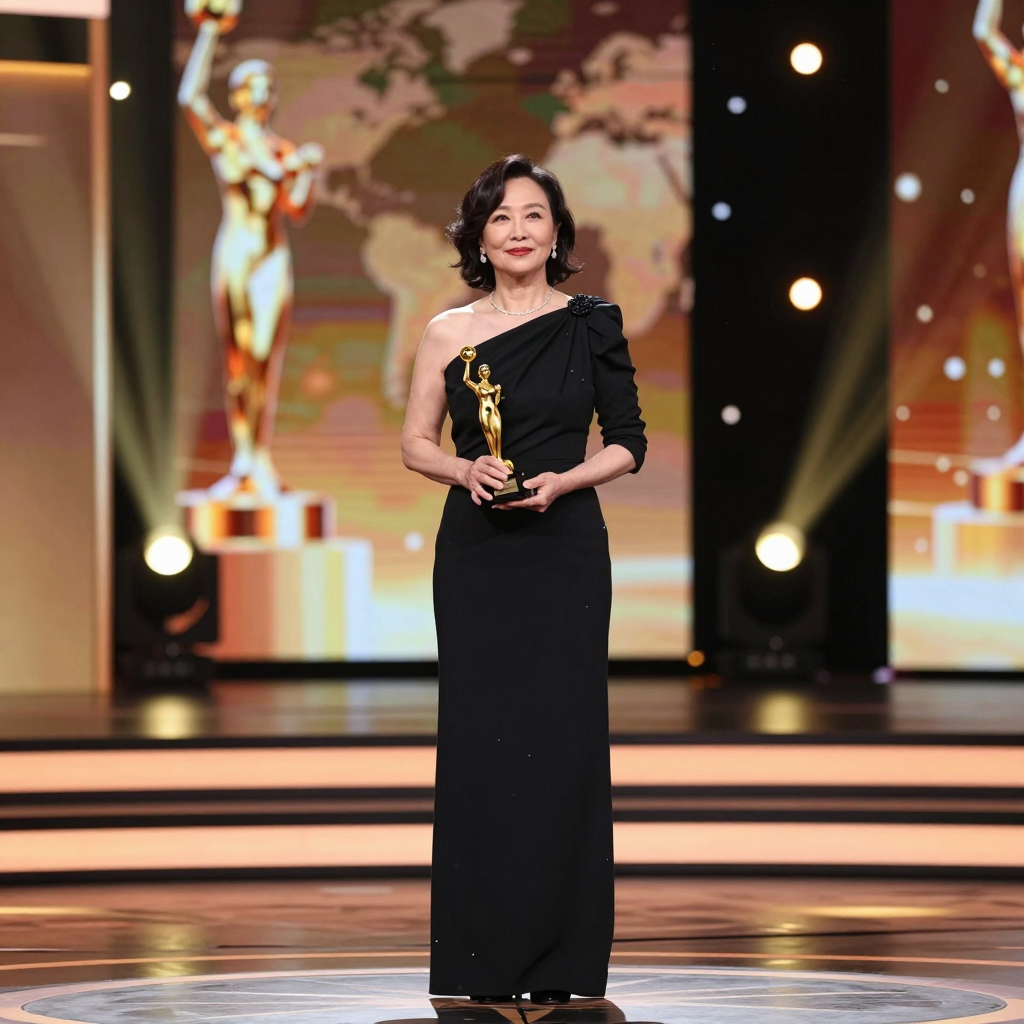
Youn Yuh-jung’s nomination cannot be simply summarized as a “triumph for a Korean actor.” Having already won an Oscar for the film Minari, she has now secured a prestigious TV accolade contender with Netflix’s Beef Season 2. This moment signifies one thing: the arena of “prestigious acting” recognized by the U.S. is relocating from cinema screens to streaming series—more specifically, to global co-produced content.
Youn Yuh-jung’s character, Chairman Park, is fascinating as well. This is not a survival story of an immigrant but an exploration of Asian Americans’ conflicts and tensions embedded in the upper echelons of American power structures. In other words, the narrative focus has shifted from “efforts on the margins” to “cracks at the center.” The Emmy’s official recognition of this type of storytelling through acting nominations is a crucial signal in this announcement.
The Overwhelming Presence of ‘Beef 2’: Emmy Nominations 2026 Validate Global Prestige TV
Beef 2 standing out in multiple categories including Outstanding Drama Series, acting, directing, editing, and costume design is no coincidence. Built on a dense single-season narrative, the show pushes the boundaries between film and series as a frontrunner of the Limited/Anthology format—exactly the kind of content the Emmys are currently responding to most strongly.
What matters here is not “because it’s Netflix.” The global production system Netflix has built—filming in Korea, multinational casts, and creative leadership from the diaspora—has now become Emmy’s mainstream grammar. The Emmy nominations 2026 no longer assess only domestic U.S. industry. The standard for “the best TV consumed in America” has already internationalized.
Asian Creative Voices Entering the Core: The Power Shift Revealed by Emmy Nominations 2026
What makes this moment especially powerful is that the nominee list goes beyond mere diversity. Beef 2 is driven at its core by Korean-American creators setting the tone and message, with Asian actors anchoring the narrative’s central axis. In other words, this is no longer just about representation—it’s about creative control.
At this juncture, Youn Yuh-jung’s nomination reads not as “a single star” but as a result of a new ecosystem. Emmy nominations 2026 confirm that this ecosystem is no longer an exception. Now, the question isn’t “Is it possible?” but “How quickly will this become the norm?”
After ‘Minari’ and the Oscars, Youn Yuh-jung’s Historic Challenge Extends to TV with Emmy Nominations 2026
Youn Yuh-jung, the first Korean actress to win an Oscar for Best Supporting Actress, has once again taken center stage in American awards by receiving an Emmy nomination. This Emmy Nominations 2026 moment is more than a personal achievement; it signals a shift in the industry as a film star at the pinnacle of her career proves her prowess on the premium TV stage in the streaming era.
A Symbol of ‘Crossover’ from Film Language to TV Narrative
With Minari, Youn Yuh-jung demonstrated what acting that transcends borders truly means. Yet, the Emmy Awards differ from the Oscars in their evaluation criteria. They demand longer narrative arcs, episode-by-episode emotional design, and a rhythm that hinges on viewer immersion. Despite this, Youn’s entry into the race for acting awards in the ‘Limited or Anthology Series or Movie’ category is a powerful signal that her acting range defies the grammar of any medium.
The Message Carried by the Character of ‘Chairman Park’: Asian Power Beyond Immigrant Narratives
In Netflix’s Beef Season 2, Youn Yuh-jung portrays ‘Chairman Park,’ a Korean billionaire who acquires an American country club. This role is crucial because it places an Asian character not on the fringes as a struggling immigrant, but at the very heart of American capital and power structures.
Youn’s dry yet sharp acting tone prevents this character from being simply consumed as “a successful immigrant” and instead becomes a device that exposes discomfort and tension. Ultimately, this nomination officially raises the question on the Emmy stage: just how far can Asian narratives expand?
What the American Entertainment Industry Reads in Youn Yuh-jung’s ‘Prestige’
The impact of these Emmy Nominations 2026 is massive regardless of whether she wins. Youn has overcome the most conservative ‘gates of authority’ with her talent despite her intersecting identities as a non-native English speaker, an elderly woman, and an Asian. This journey aligns perfectly with the streaming era, where global casting and co-productions have become the norm.
In other words, Youn’s nomination is not merely a career highlight for a single actress; it is an industry declaration that the epicenter of global stardom is no longer confined to movie theaters but has shifted to premium television.
Netflix’s ‘The Angry People 2’: The Secret Behind Its Record Emmy Nominations in the Limited Series Category for 2026
Why has ‘The Angry People 2,’ nominated in 16 categories, become the most talked-about work at the Emmys? This outcome is not just another success story of a “hit Netflix show,” but rather a clear signal that the Limited/Anthology series format has risen to become a central pillar of premium TV. The very structure of ‘The Angry People 2’ receiving nominations spanning Best Picture, acting, directing, editing, costume design, and casting is proof of this shift.
It Wasn’t Just the Show—it Was a Strong Production Line Across the Board
A hallmark of multi-award-nominated works at the Emmys is not standing out in just one category (e.g., acting), but being consistently recognized across the entire production process. ‘The Angry People 2’ earned nods not only for major acting contenders (Youn Yuh-jung, Carey Mulligan, Oscar Isaac, Charles Melton) but also for directing, editing, costume design, and casting—acknowledged as a “package of excellence.”
In other words, a powerful story + precise casting + directing/editing that maintain genre tone harmonized as one, forming the core of its expansive reach at the 2026 Emmy nominations.
Why the Limited/Anthology Format Is ‘Emmy-Friendly’
Mini and Anthology series compress narratives into one season, ensuring completeness while demanding film-quality performances and directing. ‘The Angry People 2’ could sustain its omnibus nature yet deliver strong character arcs and themes because this format structurally supports being “short but intense.”
From the Emmy voters’ perspective, the Limited/Anthology format makes the show’s achievements crystal clear within a single season, facilitating simultaneous nominations across Best Picture, acting, and technical categories.
Netflix’s ‘Global Production’ Moment as a Competitive Edge
This season’s production is so globally integrated that it involved shooting in Korea and a Korea-U.S. co-production. Crucially, this global factor is not merely an exotic backdrop but a functional tool that heightens narrative tensions around class, anger, and identity.
The Emmys’ recognition of such projects in key categories sharply clarifies one formula in the streaming era: global production capabilities equal awards competitiveness.
The Buzz Created by ‘Asian-Centered Creative Control’
‘The Angry People 2’ stands out far beyond simple cast diversity. With Korean-American director Lee Sung-jin steering the tone and message with full creative control, the series hits the contemporary themes that the Emmys favor—those deeply debated in today’s American society.
As a result, rather than portraying immigrant hardship stories, characters like Youn Yuh-jung’s lead a post-immigrant narrative (highlighting Asians already in positions of power and capital), generating both buzz and critical persuasion.
In summary, the record number of nominations for ‘The Angry People 2’ is no accident but the outcome of the intersection of format (Limited/Anthology), industry dynamics (global streaming), and creative excellence (simultaneous achievement in acting, directing, and technical craft). It stands as the clearest indicator for reading the landscape of the 2026 Emmy nominations.
Emmy Nominations 2026: Asian Actors and Directors Reshape the Landscape of American Premium TV
What does the Asia-led “Innocent People 2,” featuring Korean-American director Lee Sung-jin, actor Charles Melton, and Youn Yuh-jung, signify beyond mere expanded casting? The message this work delivers in the Emmy Nominations 2026 is clear. Asians are no longer just “faces on screen”; they are now recognized as the decision-makers behind which stories are told, in what tone, and how they are crafted.
From Casting Diversity to Creative Leadership
For a long time, Asian presence at American award shows was often misunderstood as ticking off a “diversity checklist.” But “Innocent People 2” shifts the focus entirely.
- Director Lee Sung-jin functions as the creative control tower, shaping the series’ world and emotional core,
- Youn Yuh-jung commands the narrative as a symbolic supporting role (Oscar-nominated for Best Supporting Actress) that re-centers the story,
- Charles Melton demonstrates that Asian actors are not confined to “specific role types” but are serious contenders in the acting race.
In short, this marks a move from Asian artists being objects of ‘representation’ to becoming performance-based creative authorities that the industry relies on and persuades.
The ‘Post-Immigrant Narrative’ Becomes the New Grammar of Premium TV
Youn Yuh-jung’s role as a Korean billionaire who acquires an American country club is far from the typical immigrant success story. Beyond hardship and adaptation, this is a tale of an Asian figure already wielding power and capital stepping into the epicenter of American social tensions. This approach directly tackles the questions premium TV recently loves to explore—class, anger, identity, and power—through Asian characters.
The importance of this shift is simple: Asian narratives are no longer “stories belonging to a specific community,” but have become the driving engine of universal drama that American audiences passionately engage with.
Emmy’s Recognition Goes Beyond ‘International Cast’ to ‘Artistic Excellence’
That “Innocent People 2” is recognized not only for acting but also directing, editing, costume design, and casting indicates that the 2026 Emmy nominations do not treat internationalization as a “token message” but evaluate it based on the overall artistic completeness of the work.
In other words, the global/Asian elements weren’t mere bonuses; the final product qualified as a work meeting the density and persuasiveness premium TV demands, securing its nomination.
Ultimately, the biggest change revealed in these nominations is this: Asian actors and directors have entered American premium TV not as “invited guests,” but as players rewriting the game. And “Innocent People 2” is poised to remain the clearest exemplar of this transformative shift.
Emmys in the Global Era: A New Standard of ‘Diversity’ and ‘Internationalization’ Revealed by the Emmy Nominations 2026
The central significance of the emmy nominations 2026 goes beyond “who made the list” to highlight what the U.S. TV industry has begun to recognize as the ‘standard.’ Youn Yuh-jung’s nomination for Supporting Actress and the prominent presence of Korean-American Netflix co-productions vividly demonstrate that diversity and inclusion have moved past mere “value statements” to become catalysts for shifts in creative control and industry structures.
From ‘Representation’ to ‘Leadership’: An Upgrade in the Diversity Discourse
Until now, Hollywood’s diversity conversations have often been evaluated superficially based on “whether the number of characters has increased,” repeatedly sparking debates about tokenism. But this nomination announcement signals something different.
Asian actors are now competing in major acting categories, Korean creators are shaping the tone and message of the projects, and the works are simultaneously recognized across multiple categories like Best Series, Directing, Editing, and Costume Design. Diversity has evolved from a “gesture of inclusion” to a yardstick for production capabilities that drive both box office success and artistic excellence.
Emmy’s ‘Internationalization’ Is Not a Trend but the New Normal
As the Emmys step into the heart of the global streaming era, the traditional U.S.-only production framework is rapidly losing ground. Series filmed in Korea, featuring multinational casts and co-production structures, have shown strong performance in the nominations, reflecting how the awards are adapting to industry realities.
In other words, the Emmys are no longer “an internal celebration of American TV” but are becoming a quality certification system for global content reorganized around the U.S. market.
The Road Ahead: A Virtuous Cycle of ‘Global Production – Global Winning’
If this momentum continues, the next stage is clear:
- An increase in Korea-U.S. joint projects designed from the planning phase with Emmy-caliber formats in mind
- A rise in works where Asian actors and creators are not “casting options” but central pillars of storytelling
- The refinement of strategies by streaming platforms to enhance premium TV competitiveness by leveraging global locations and multilingual, multicultural narratives
Ultimately, the emmy nominations 2026 prove that “diversity” and “internationalization” are no longer optional but have become the new standard adopted by the U.S. TV industry for survival. The fact that Korean and Asian creatives stand squarely at the heart of this standard makes this announcement the most pivotal turning point yet.
Comments
Post a Comment