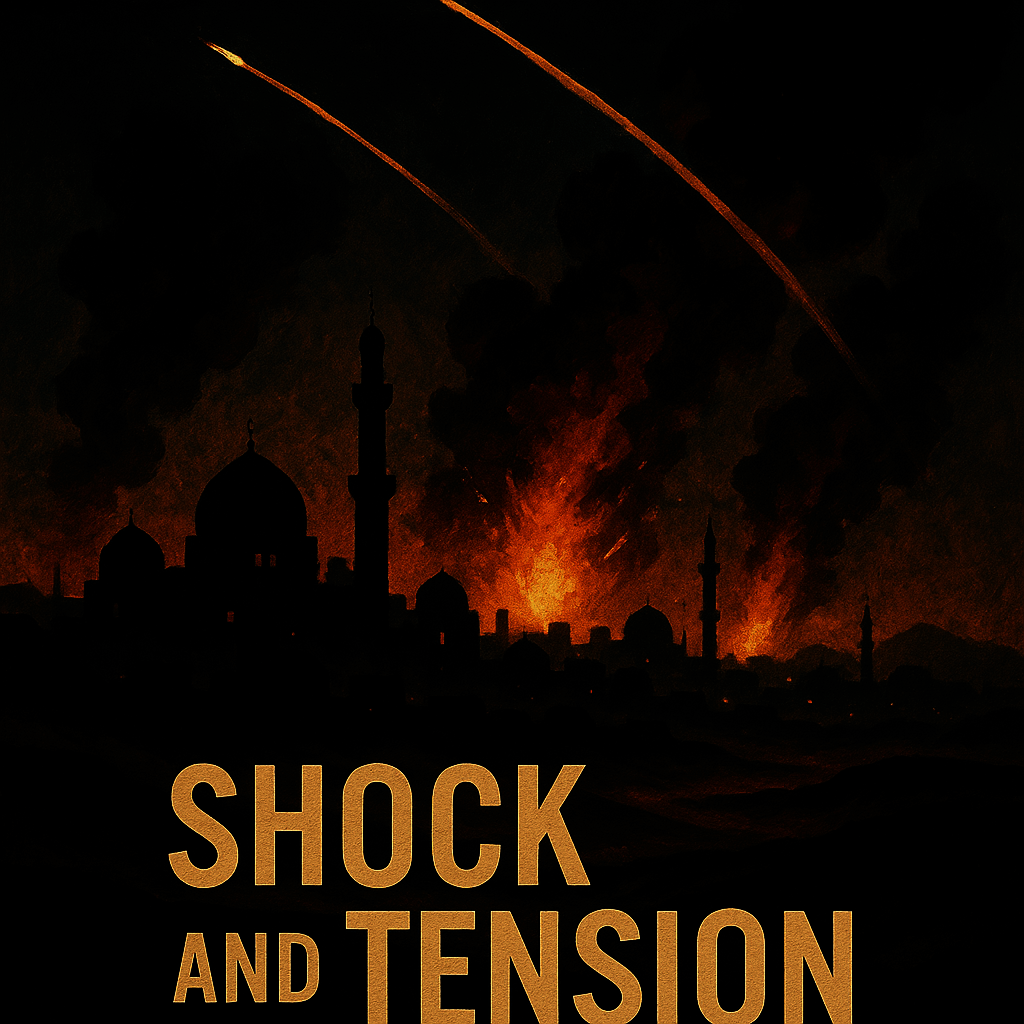
Dawn-Shattering Airstrike: Israel Attacks Iran, Shaking the Middle East's Balance of Power
On June 13, 2025, explosions echoed over Tehran’s skies—Israel’s sudden 'preemptive strike' shattered Iran’s early morning calm. Who struck, why, and how did this moment tilt the military balance?
Israel’s assault on Iran instantly escalated tensions across the Middle East. Six military bases near Tehran and two high-security residential complexes became precise targets of Israel’s strikes. The attack’s primary objective was to halt Iran’s nuclear program and eliminate top commanders of the Islamic Revolutionary Guard Corps (IRGC).
Among the most significant developments is the presumed death of IRGC Commander-in-Chief Hossein Salami. Salami was a pivotal figure overseeing Iran’s ballistic missile systems and regional proxy support. Alongside him, key nuclear scientists were reportedly targeted, delivering a severe blow to Iran’s nuclear development capabilities.
Israel’s "Israel attacks Iran" operation goes beyond a mere military strike—it marks a strategic move dramatically shifting regional power dynamics. By undermining Iran’s nuclear ambitions, Israel has reaffirmed its military dominance within the region.
However, the international repercussions are unavoidable. While the United States denied involvement, it issued stern warnings to Iran. Middle Eastern nations voiced deep concerns over rising regional tensions. Moreover, economic impacts surfaced, including surging global oil prices and increased volatility in financial markets.
Israel’s assault signals a new chapter in the Middle East. With potential Iranian retaliation, escalating instability, and complications in nuclear negotiations on the horizon, the global community’s diplomatic intervention has never been more vital. The world now watches closely to see how this single airstrike will reshape the Middle East—and beyond.
Precision Strike Targets: Israel Attacks Iran – Who Was Targeted?
Israel’s attack on Iran was not just a military action but a meticulously calculated strategic choice. The deaths of Hossein Salami, Commander-in-Chief of the Revolutionary Guard, along with a series of nuclear research scientists, clearly reveal Israel’s intentions. So, why did Israel choose to risk such a dangerous game?
Revolutionary Guard: Neutralizing the Source of Iran’s Power
Israel’s first target was Hossein Salami, the head of the Revolutionary Guard. Salami was the key figure overseeing Iran’s ballistic missile systems and support for pro-Iranian forces in the region. His elimination is expected to deliver a severe blow to Iran’s military strength and regional influence. This was one of the core objectives of the Israel attacks Iran operation.
Striking Nuclear Scientists: Thwarting Iran’s Nuclear Ambitions
The second major target was the scientists leading Iran’s nuclear program. Reports indicate that at least two key researchers were killed in the attack. This move demonstrates Israel’s intention to directly weaken Iran’s nuclear development capabilities. The Israel attacks Iran operation aimed not just at short-term military damage but at crippling Iran’s long-term nuclear roadmap.
The Risky Game: Preemptive Defense and Regional Dominance
Why did Israel take such a perilous gamble? First, it stems from the urgency over Iran’s advancing nuclear capability. Israel perceives that if Iran acquires nuclear weapons, its own security would be gravely threatened. Second, it relates to the competition for supremacy in the Middle East. The Israel attacks Iran operation also sought to curb Iran’s growing influence and demonstrate Israel’s military dominance.
This attack underscores how seriously Israel views the Iranian threat and its readiness to take any risk to eliminate it. The Israel attacks Iran incident was more than a mere military clash—it was a pivotal strategic decision that could shape the future of the Middle East.
Turmoil in the Global Markets and the Silent Giants: The Aftermath of Israel Attacks Iran
The news of Israel’s airstrike on Iran sent shockwaves through markets worldwide. International oil prices soared by over 5% in an instant, while South Korea’s KOSPI index plummeted below the 2900 mark. This vividly illustrates the immediate impact that instability in the Middle East has on the global economy.
What draws particular attention are the reactions of the major powers. The United States stated that it was not involved in the strike, yet it repeatedly issued warnings to Iran. This reveals a delicate U.S. stance—implicitly supporting Israel’s actions while avoiding direct intervention.
Meanwhile, Middle Eastern countries, including Jordan, expressed concerns over the rising regional tensions without openly condemning Iran. This cautious diplomatic maneuvering reflects the surrounding nations' efforts to maintain balance between Israel and Iran.
The ‘Israel Attacks Iran’ incident goes beyond a mere military clash, triggering widespread repercussions in the global economic and political landscape. The surge in international oil prices and heightened financial market volatility demonstrate the direct influence of this event on the world economy, while the restrained responses from major countries highlight the complex dilemmas each faces amid the intricate Middle Eastern dynamics.
Going forward, close attention must be paid to Iran’s response, the international community’s mediation efforts, and the consequent reactions in the markets. This episode serves as a critical reminder of how geopolitical risks continue to profoundly affect the global economy.
Spreading Sparks: Retaliation Scenarios and the Future of the Middle East After Israel Attacks Iran
Following Israel's attacks on Iran, the Middle East has transformed into an unstable powder keg. With the possibility of an immediate Iranian counterattack escalating, the entire region is engulfed in tension. How exactly might Iran retaliate?
1. Drone Strikes: The Threat of Precision Attacks
Iran, equipped with advanced drone technology, is highly likely to attempt precise strikes on key Israeli facilities. This strategy delivers a powerful message while avoiding direct military confrontation.
2. Hezbollah and Hamas: The Beginning of a Proxy War
Lebanese Hezbollah and Palestinian Hamas, supported by Iran, could launch rocket attacks against Israel. This allows Iran to pressure Israel effectively without direct involvement.
3. Maritime Blockade: Economic Impact
Controlling the Strait of Hormuz to disrupt international oil transport is another conceivable tactic. Such a move could cause major turmoil in the global energy market, dealing economic blows to Israel and its allies.
4. Cyber Attacks: The Silent War
Iran’s advanced cyber warfare capabilities might be utilized to paralyze Israel’s critical infrastructure. This new form of modern warfare can create severe chaos without physical confrontation.
If these retaliatory actions escalate into full-scale war, the Middle East risks descending into unpredictable chaos. Now, more than ever, international mediation efforts are crucial. The world watches in anxious silence to see how the crisis sparked by Israel’s attacks on Iran will unfold.
The End of 'Preemptive Strikes': The Future of Hegemonic Competition After Israel Attacks Iran
Israel’s attack on Iran occurred at the crossroads where ‘nuclear non-proliferation’ clashes with ‘regional hegemonic competition.’ This event has further heightened instability in the Middle East. How can we manage the shockwaves it has unleashed?
The Limits of Preemptive Strikes
Israel’s “Israel attacks Iran” operation may have delayed Iran’s nuclear program in the short term. However, it simultaneously intensified Iran’s resolve for retaliation. Once again, it proves that preemptive strikes cannot be a fundamental solution.
A New Phase in Hegemonic Competition
This incident has ushered the Middle East’s hegemonic competition into a new phase. Direct military confrontation between Israel and Iran will also affect the strategic calculations of neighboring countries. Particularly noteworthy are the movements of regional powers such as Saudi Arabia and Turkey.
The Role of International Mediation
In the current situation, the international community’s role as mediator has become more crucial than ever. The positions and actions of major powers like the United States, the EU, Russia, and China will be key variables shaping the progress of future developments. However, with each nation’s interests deeply entangled, effective mediation faces significant challenges.
The Future of Nuclear Negotiations
The “Israel attacks Iran” event will also profoundly affect the future of nuclear negotiations with Iran. Iran is likely to strengthen its determination to develop nuclear capabilities, making talks with the international community even more difficult. A new framework for negotiations is urgently needed.
Challenges for Regional Stability
How can Israel, Iran, and the international community recover from this shock? Easing military tensions and returning to dialogue must be urgent priorities. Simultaneously, long-term approaches such as building regional security systems and enhancing economic cooperation are necessary.
The recent “Israel attacks Iran” incident has once again highlighted the complex dynamics of the Middle East. Achieving the dual objectives of nuclear non-proliferation and regional stability demands more creative and comprehensive strategies. The wisdom and cooperation of the international community are more critical now than ever before.
Comments
Post a Comment