India's Explosive 256 Points: Second All-Time High Score in T20 World Cup! Zimbabwe Defeated by 72 Runs
 \n
\n
India vs Zimbabwe: India’s Record-Breaking Victory Rewrites T20 World Cup History
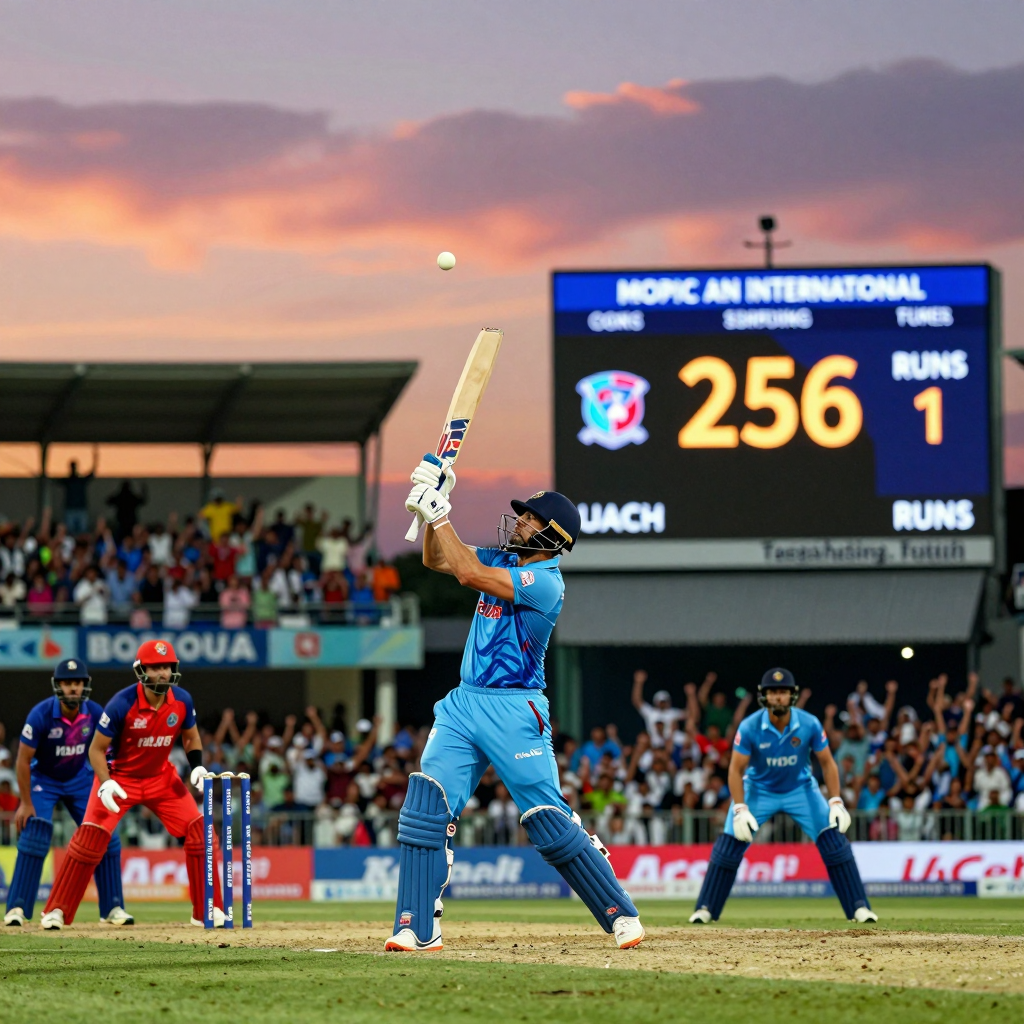
India stunned Zimbabwe with a massive 72-run victory in the T20 World Cup Super Eight, setting an astonishing new record. The scoreboard reveals more than just a win—it tells a story of sheer dominance. India 256/4, Zimbabwe 184/6. So, what was the secret behind India’s incredible triumph over Zimbabwe?
The biggest key was the consistent aggression maintained from start to finish. India produced one of the highest scores ever in T20 World Cup history during this match. Their 256/4 not only shattered India’s previous tournament best of 218/4 but also ranks among the top scores in the entire T20 World Cup annals. It wasn’t just a “one-time explosion”; rather, it was a textbook high-scoring scenario where the team got rolling early, accelerated in the middle overs, and unleashed full power in the final phase.
What completed this flow was the clear division of roles in the batting lineup. Abhishek Sharma quickly lifted the momentum, while Ishan Kishan and Sanju Samson aggressively piled on runs from the start, steadily building the pressure. The pivotal moment came in the latter half. Hardik Pandya’s explosive 50 off just 23 balls created an uncatchable gap, and Tilak Varma added finishing firepower in minimal deliveries, pushing the total to an almost surreal level.
The numbers speak for themselves. India smashed 17 sixes, effectively changing the entire course of the tournament. Add to that the fours, and India amassed an incredible 170 runs in boundaries alone. This wasn’t about a good start or a couple of big overs—it was a relentless boundary-producing machine that dismantled Zimbabwe’s plans. Even without bowler errors, prolonged boundary hitting forced the fielders back, and from that point, the match locked firmly into India’s control.
Zimbabwe did not collapse easily. They started powerfully at 44/0 in the Powerplay, and Brian Bennett’s unbeaten 97 was certainly impressive. However, such a towering target is almost impossible to chase with just one solid innings. Midway, Axar Patel’s intervention and key spells like Arshdeep Singh’s 3/24 quickly shrunk Zimbabwe’s chase from a “possibility” to a mere “hope.”
Ultimately, this India vs Zimbabwe match was not just a big win—it was a showcase of why India is a top contender. A record-breaking batting performance, bowling that cut short the chase, and a tempo that never wavered throughout the game. With this single match, India shook up the Super Eight standings and seized complete momentum heading into the next round.
The Monumental Score of 256/4 in India vs Zimbabwe: The Secret Behind It
256/4 is not just a number. It shattered India’s highest-ever T20 World Cup score and set a record as the second-highest team total in the history of the entire tournament. So how did this incredible score become a reality?
The Premise of the Explosion: An Unshaken Aggressive Strategy from the Start
In the India vs Zimbabwe match, the Indian batting lineup didn’t plan to “finish strong” but rather built momentum from the very beginning with boundaries (fours and sixes), steadily increasing the pace toward the end. By actively taking control of the scoring flow early on, the risk decreased in the middle overs, allowing the batsmen to take even bolder shots.
The Key to the Record: Efficient Hitting That Extracted Big Runs off Short Balls
The essence of 256/4 isn’t just “hitting a lot,” but hitting quickly.
- Abhishek Sharma fired up the innings with 55 runs from just 30 balls,
- Hardik Pandya transformed the game’s momentum by smashing 50 runs in just 23 deliveries,
- Tilak Varma perfected the finish with an unbeaten 44 off 16 balls.
This succession of 2-3 sudden accelerations leaving no breathing space for the opposition transformed the score from merely “high” to an almost surreal number.
Power Proven by Numbers: 17 Sixes and 170 Runs in Boundaries
India smashed an astonishing 17 sixes in this match, and combined with fours, amassed 170 runs solely through boundaries. In other words, a significant portion of the 256 wasn’t built through singles and twos, but by shaking the scoreboard with powerful shots. Matches like these crush bowling tactics as any delay in strategy adjustments leads to an unstoppable collapse.
Why It Wasn’t Just the ‘Highest Score’ but Total Game Domination
The real fear of 256/4 lies not just in the record, but in how this score locked down the entire match. The chasing team faced a demand for a “perfect innings” rather than a “normal run rate” from the get-go. Even though Zimbabwe reached 184/6, the huge gap India created was never bridged.
256/4 was no lucky one-off explosion but the product of a precisely crafted start, fierce acceleration in the middle, and a controlled finish. This razor-sharp execution is the secret that turned the India vs Zimbabwe match from a ‘majestic win’ into a truly ‘monumental’ triumph.
The Electrifying Performances of India’s Key Batters Against Zimbabwe
Why did the dazzling firepower of Abhishek Sharma, Hardik Pandya, and Tilak Varma result in India’s explosive total of 256/4? The answer is simple: each player took turns sharply accelerating the tempo in their respective phases, leaving Zimbabwe’s bowling no room to breathe.
Abhishek Sharma completely swung the early momentum in India’s favor with 55 runs off just 30 balls (4 fours, 4 sixes). As his quick-timed boundary strokes emerged, Zimbabwe had no choice but to spread the field, opening up scoring opportunities through singles and doubles. In other words, his 50 runs weren’t just a single big hit but the foundation that shaped the entire innings’ attacking strategy.
Hardik Pandya epitomized the ‘finishing power’ of the match. He reached 50 runs in only 23 balls and sealed the death overs with back-to-back sixes, effectively nullifying any tactical calculations Zimbabwe might have had. What made his late assault especially crucial was that Zimbabwe was already trapped in a position where changing defensive plans was futile. His seamless, relentless hitting pushed the scoreboard to a whole new level.
Tilak Varma ‘sealed the deal’ with an unbeaten 44 runs off 16 balls. In a crushing victory, finishing batters often go unnoticed, but Tilak squeezed maximum efficiency from a brief stint at the crease, propelling the total to historic heights. Thanks to him, the India vs Zimbabwe contest evolved from a chasable target into an unattainable mountain crowned right from the start.
Ultimately, India’s overwhelming triumph was not a one-man show but the result of a batting relay of early surge (Abhishek) – late explosion (Hardik) – final acceleration (Tilak). Because this chain never broke, the awe-inspiring total of 256/4 became reality.
India vs Zimbabwe: India's Power Hitting—The Winning Formula Behind 17 Sixes
A staggering score explosion fueled by 17 sixes and 17 fours. This match was more than just a display of good batting—it was a classic power game that put up 170 runs solely through boundaries, effectively crushing the opponent’s motivation to chase early on. So, what strategy and skills fueled India’s explosive batting against Zimbabwe?
1) Simplifying the Score with a “Boundary-Focused Plan”
India’s batting lineup built their innings not by accumulating 1-2 runs steadily, but by designing a boundary-centric scoring structure. They mixed fours and sixes consistently, but at crucial moments, pushed the gap further with sixes, thereby shifting the burden of required run rate pressure onto the opponents themselves. Once they hit their rhythm, every missed ball meant “6 runs,” making it tough for bowlers to find a safe route.
2) Timing the Shots: Turning Short and Slot Balls into Opportunities, Not Mistakes
In a high-scoring game, the difference is made not by power alone, but by the timing and quality of impact. India avoided recklessly pulling at short-pitched balls and instead executed rapid body rotation to repeatedly send the ball flying straight down the ground and toward mid-wicket. Especially in the later overs, even the slightest short or loose delivery became a boundary, tightening options for Zimbabwe’s bowling attack.
3) The Chain Reaction Created by Role Division: Fast Start → Stable Middle → Clinical Finish
India’s power hitting was no one-man show; it was a clear relay with defined roles for each phase. They surged momentum fast at the start, minimized dot balls in the middle to maintain flow, and sealed the innings with Hardik Pandya’s lightning-fast fifty and Tilak Varma’s finishing touches, propelling the total beyond any chance of defense. This structure made it impossible for the opposition to contain the threat by targeting just one batsman.
4) What 17 Sixes Signify: The Crushing Pressure of “One Mistake Ends It All”
A high six count is not merely a show of firepower but a nightmare for bowlers, implying that a single over can derail their entire bowling strategy. India’s heavy hitting established a commanding position early on, so even when Zimbabwe fought hard during the initial powerplay, their chase calculations were thrown into disarray. Ultimately, this power hitting was not just about scoring runs—it became a winning formula that dominated the game’s psychological battle as well.
What This Victory Means and Future Outlook: India vs Zimbabwe
With this commanding win, India has taken a significant step closer to advancing to the semi-finals. Beyond simply the 72-run margin, this match was the clearest demonstration in the Super Eight of how India can dominate the game. The India vs Zimbabwe encounter marks a turning point where India has seized control of the tournament’s momentum.
The Practical Significance of India’s Win Over Zimbabwe
India’s 256/4 is impressive on its own, but more crucial is the manner of victory. Maintaining an aggressive tempo from the start, and with Hardik Pandya and Tilak Varma raising the level of finesse in the middle overs, the team convincingly proved that “big scores come from strategy, not luck.” Such a victory changes how future opponents will approach India—altering their bowling plans, field placements, and willingness to take risks.
Despite Zimbabwe’s strong start at 44/0 in the powerplay, timely interventions by Axar Patel and decisive deliveries from Arshdeep Singh turned the tide back in India’s favor. In other words, India has confirmed not only explosive power but also how to suppress counterattacks effectively.
Why the Upcoming West Indies Match Is Essentially the Semi-Final After India vs Zimbabwe
India now faces what can literally be called a semi-final on Sunday against the West Indies. While the huge score set in this last match boosts confidence, it also sharpens the challenges for the next game.
- Maintaining an aggressive start: The approach of building runs early and disrupting the opposing plan worked well and is likely to continue.
- Risk management in the middle overs: Facing a team like West Indies with potent hitting power and unconventional bowling demands precise tempo control rather than just “going harder.”
- Bowling in the first six overs: Allowing a strong start like Zimbabwe did would spike the difficulty dramatically. While the lesson from this win is “you can always claw back,” at the highest level, giving fewer chances early on is safer.
Zimbabwe’s Final Chapter in India vs Zimbabwe
Though this defeat concludes Zimbabwe’s journey, qualifying for the Super Eight itself was an achievement. Their impressive run—beating Australia and Sri Lanka—with Brian Bennett’s unbeaten 97* showcased how individual talent can shine on the world stage. However, against India, the explosive batting lineup and sharp boundary-hitting power proved overwhelming, decisively tipping the game.
Ultimately, this match was an accelerator for India’s semi-final push and the closing chapter in Zimbabwe’s growth story. Attention now naturally turns to the next game. Will India carry this momentum into the West Indies clash and take a truly decisive step forward? That question makes the upcoming match especially compelling.
Comments
Post a Comment