Tottenham's UCL Nightmare: Goalkeeper Kinski Concedes 3 Goals in 15 Minutes, Suffering a 2-5 Defeat to Atletico
 \n
\n
The Beginning of a Nightmare: The Shocking First Leg of Atlético vs. Tottenham in the UCL Round of 16
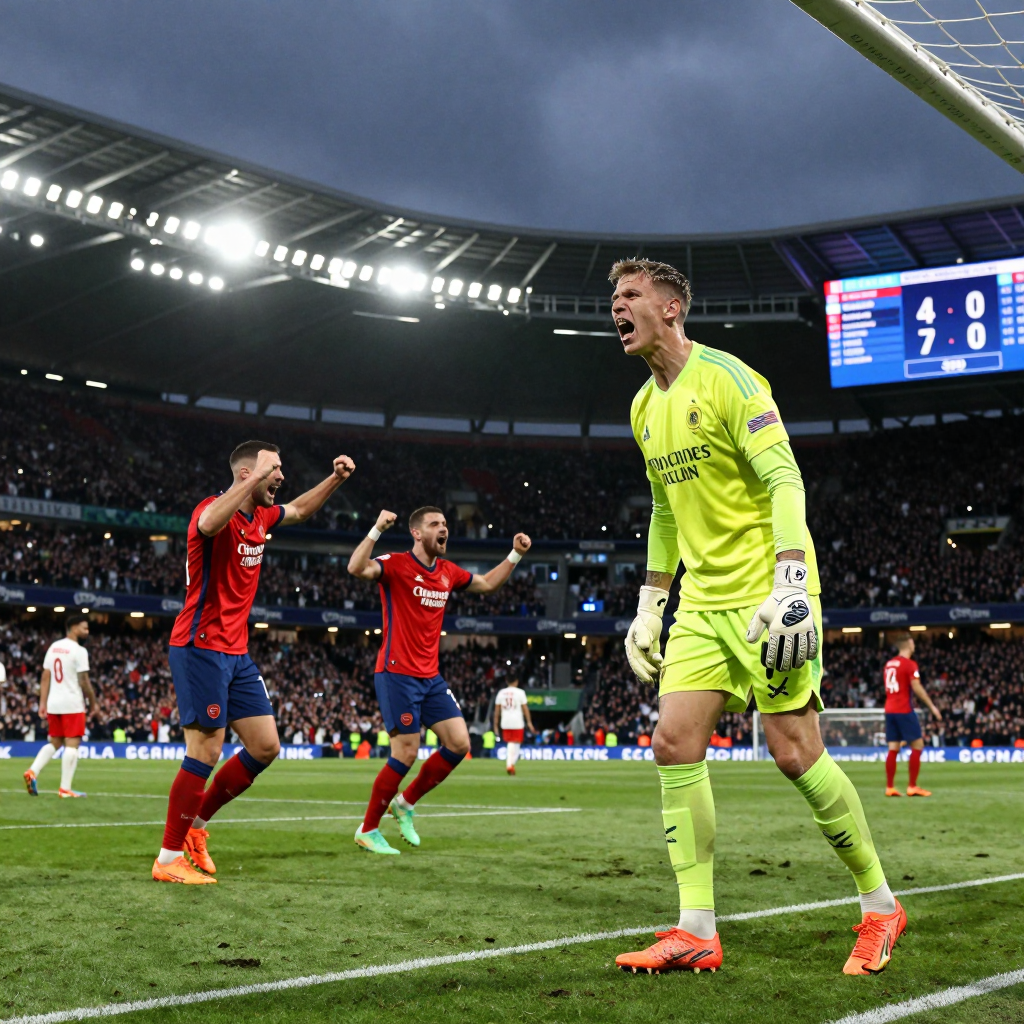
How did Tottenham end up conceding three goals within the first 15 minutes, handing over complete control of the match? And were goalkeeper Antonín Kinský’s consecutive mistakes merely ‘individual errors,’ or signs of a deeper structural fracture?
The Round of 16 first leg between Atlético and Tottenham at the Riyadh Aer Metropolitan Stadium tilted heavily from the start. Before Tottenham’s tactics or game plan could even come into effect, mistakes piled upon mistakes, creating an ‘irreparable flow’ against them.
The first crack appeared right at the build-up’s starting point: the goalkeeper. In the 6th minute, Kinský slipped as he tried to clear the ball, losing his balance—and Julian Alvarez seized that split second. After losing possession, the ball was quickly passed to Marcos Llorente, who scored the opening goal. More fatal than conceding was that this moment exposed Tottenham’s ‘psychological bottom’ far too early.
Then, in the 14th minute, an unbelievable defensive lapse followed. Center-back Micky van der Ven failed to handle a rolling ball in front of him properly, and Antoine Griezmann finished without hesitation. A team shaken once cannot control small variables. As mistakes spread from the goalkeeper to the defenders, ominous signs grew that this wouldn’t be a one-off incident, but rather a ‘chain collapse.’
The knockout blow came just a minute later, in the 15th minute, when Kinský mismanaged a backpass again. He lost the ball to Alvarez, leading to the third goal—and Tottenham had to practically abandon all their game plans. The key ‘secret’ here is clear: Kinský’s errors can’t be reduced to technical issues alone. Rather, they reveal how the team’s disrupted connections under early pressure dumped excessive burden on the goalkeeper. In other words, the individual slip didn’t end at the personal level; the team’s instability magnified the impact on him.
Ultimately, Tottenham made the extraordinary decision to substitute starting goalkeeper Vicario in the 17th minute. But by then, momentum had completely shifted to Atlético. The Atlético vs. Tottenham clash was more than just about conceding goals—it was about a collapse in the first 15 minutes that severely narrowed the options for the remaining 75 minutes.
Atletico vs Tottenham: The Shockwave of Early Consecutive Mistakes—Kinski and the Defense’s Collapse
It was more than just simple errors. Kinski’s slip and the defense’s critical failures were not just a single goal conceded but a domino effect that shattered the entire balance of the match, swiftly turning Tottenham’s powerless downfall into reality. The one-sided tilt of the Atletico vs Tottenham Round of 16 first leg from the very start was due to the speed and destructive force of this chain collapse.
15 Minutes into Kickoff: The Moment the Match’s Backbone Crumbled
Tottenham effectively lost the game within the first 15 minutes. Goalkeeper Kinski gave up scoring opportunities repeatedly in a short span, causing the defensive line and midfield’s decision-making to falter drastically.
- At the 6th minute, during a clearance, Kinski slipped and lost possession, allowing Atletico to calmly convert the opening goal.
- At the 14th minute, center-back Van der Pen mishandled a routine ball, handing Griezmann a decisive chance that led to the second goal.
- At the 15th minute, another mistake during a backpass gifted Alvarez a goal.
The key here isn’t “just bad luck” but the fact that fundamental errors occurred in succession. One mistake can be recovered from, but when repeated repeatedly in a short span, the team’s tactics break down and switch into ‘survival mode’.
Defensive Insecurity Exacerbated the Mistakes
It wasn’t just Kinski’s fault. The defenders failed to handle the ball safely, and their response after conceding was disorganized. Especially like in the second goal, when an error happened without heavy pressure, it sent a strong signal throughout the team that “something is off today.” That insecurity instantly made line control, pass choices, and second-ball reactions more cautious, ultimately giving the opponent even more attacking chances.
Early Substitution Tells Us: It Was Not Tactics But Psychology That Shattered
Coach Tudor’s decision to replace Kinski with Vicario at the 17th minute was less about form and more like an emergency patch to stop the psychological collapse. The goalkeeper symbolizes stability at the back, and when that symbol wavers early, the defense struggles to push the line up or hold firm. As a result, Tottenham focused more on damage control than building attacks, completely surrendering the flow of the match to Atletico from that moment.
The chain of mistakes in the opening 15 minutes delivered a shockwave far beyond the scoreline. The Atletico vs Tottenham match during that period transformed into a battle where “one team gained confidence while the other lost it,” and even the subsequent consolation goals were far from enough to mend the massive cracks.
Atletico vs Tottenham: The Impact of the Goalkeeper Switch and Limited Counterattack
Did the emergency substitution of Vicario completely change the game’s momentum? To put it simply, while it succeeded in preventing further collapse, it was too late to reverse a match that was already slipping away. With Kinski’s consecutive mistakes leading to a 0-3 scoreline within 15 minutes, the 17th-minute change was less a “tactical gamble” and more of a psychological emergency treatment. After Vicario came on, Tottenham’s buildup from the back regained some composure, and at least a minimal level of organization was restored. However, once the score gap widened, even a single save or steady ball handling wasn’t enough to shift the course of the game.
Tottenham seemed to spark hope for a comeback with Poro’s goal in the 26th minute, but the reason the chase didn’t translate into consecutive goals was clear.
- Collapse of the game plan due to early heavy conceding: The original intentions for line management and pressing intensity vanished, replaced by urgent attempts to catch up that simplified their play.
- Atletico’s mastery in managing the lead: Instead of recklessly responding, Atletico invited Tottenham forward and struck decisively when needed. Alvarez’s additional goal in the second half perfectly illustrated the precision of this “one deadly blow.”
- Attacking success as isolated ‘events’ rather than sustained ‘momentum’: Although Poro’s goal and Solanke’s second-half strike were valuable, the lack of persistent pressure and control over second balls between them prevented a chain reaction of goals that could close the gap.
In the end, Vicario’s substitution was meaningful in slowing the pace of conceding goals, but what Tottenham truly lost in the Atletico match wasn’t just one goalkeeper—it was their confidence and entire game plan that crumbled during the first 15 minutes.
Atletico vs Tottenham: Shining Moments Amid Despair – Alvarez’s Dazzling Rush and Griezmann’s Pass
How did Atletico Madrid’s forwards turn Tottenham’s lapses into golden opportunities in this match? The answer is simple. It wasn’t about waiting for mistakes but provoking errors and instantly striking with unmatched speed. Especially Alvarez and Griezmann stood out brightest amidst the ruthless flow of the game with their seamless combination play, never missing a crack in the opponent’s defense.
Atletico’s High Press Transformed Tottenham’s ‘Momentary Shake’ into a ‘Decisive Moment’
As Tottenham faltered early on with shaky ball control and questionable passes, Atletico immediately intensified their high pressing. The key was that this pressure was not just about disruption but aimed at stealing the ball leading directly to goals. Alvarez relentlessly shadowed the first pass routes between goalkeeper and defenders, cutting off options, while Griezmann positioned himself a step back, reading the space to anticipate “where the ball would drop.” Tottenham’s slight carelessness quickly turned into a concession.
Griezmann’s Single Touch Completed Atletico’s ‘Decisive’ Turning Point Against Tottenham
Alvarez’s second goal in the second half encapsulated the nature of the game. Griezmann didn’t just deliver a pass; with a volley, he engineered the direction and speed that instantly shattered the defensive line’s balance. At the moment the ball was airborne, Tottenham’s defenders were locked simultaneously in gaze and feet, and that brief hesitation turned fatal.
What made this pass exceptional wasn’t merely its flair. Before Tottenham’s defense could decide whether to retreat or intercept upfront, the ball had already delivered the verdict. Griezmann was the player who turned Atletico’s attack from a build-up into a final judgment.
Alvarez’s Sprint Showed the Perfect Formula for Penetration Against Tottenham
The scene that followed Griezmann’s pass wasn’t just a sprint but a textbook example of reading and tearing open space through penetration. Alvarez charged in a straight line from midfield to Tottenham’s goalmouth, erasing the defenders’ recovery time.
For Tottenham, there was ultimately “no time to regroup.” Just as they scrambled to reorganize after the press, Alvarez’s run stole that chance entirely.
Atletico vs Tottenham: A ‘Highly Refined’ Attack Crafted Over Tottenham’s Mistakes
This emphatic victory can’t be explained by Tottenham’s self-destruction alone. Atletico exploited that gap not spontaneously but through synchronized harmony. Alvarez’s relentless initial press and straight penetration combined with Griezmann’s timed passes turned Tottenham’s instability into a series of vivid scenes.
Even amid despair, the moments that made the crowd hold their breath came from the very toe-tips of these two players.
A Catastrophic Ending and Its Heavy Implications: The Epic Self-Destruction Lesson Left by Atlético vs Tottenham
What message did this shocking result leave for Tottenham? The 5-2 first-leg Round of 16 defeat in Atlético vs Tottenham was more than a mere thrashing—it was a vivid demonstration of how rapidly a team can collapse when it self-destructs. Early chain reactions of mistakes between the goalkeeper and defenders exposed not tactical flaws but how collective unraveling snowballs into utter disaster.
Self-Destruction Begins Not with the Number of Errors, but with the ‘Chain Reaction’
Tottenham effectively lost the match within the first 15 minutes. A single mistake can be recovered from, but once errors start triggering more errors, tactics and Plan B lose all meaning. This defeat stings deeply because the conceded goals reflected not the opponent’s perfection but their own collapse. Such losses leave lasting trauma on individual players and sow seeds of distrust across the team.
Attempts at Recovery After Substitutions Were There, But Broken Trust Held Them Back
The early halftime goalkeeper change was a swift crisis response, yet it was already too late to reverse the mood. Although Tottenham pulled a goal back and even scored again, the momentum relentlessly favored Atlético. This wasn’t primarily a tactical issue but a classic symptom of a team losing its fundamental asset: a sense of stability. Even when attacks improved slightly, defensive uncertainties lingered, turning small mistakes into costly goals.
The Violent Clash over a Header Reveals Decayed Performance and Worsened Morale
The aggressive confrontation during a late-game aerial duel went beyond mere mind games. Falling behind by a wide margin stoked emotions, further undermining focus and dragging its impact into the next match. Especially on high-tempo, high-pressure European stages, failure to control emotions equates directly to failure in match management. What Tottenham urgently needs is not just a "change of mood," but first and foremost emotional reset and restored discipline.
The Takeaway Tottenham Must Grasp: ‘Error Management’ Is as Crucial as Tactics
The clearest lesson from Atlético vs Tottenham is unmistakable. Against strong teams, a single mistake means conceding a goal, and conceding a goal invites mental collapse. What Tottenham must do for the next game is simple but vital:
- Minimize risks in the buildup phase by simplifying choices
- Reinforce communication between defenders and goalkeeper
- Establish a “minimum safeguard” where the team stands firm together amid turbulence
Whether this defeat remains just an “unlucky day” or serves as a wake-up call transforming the team’s core lies now squarely on Tottenham’s response.
Comments
Post a Comment